Artwork
Alexander Hamilton
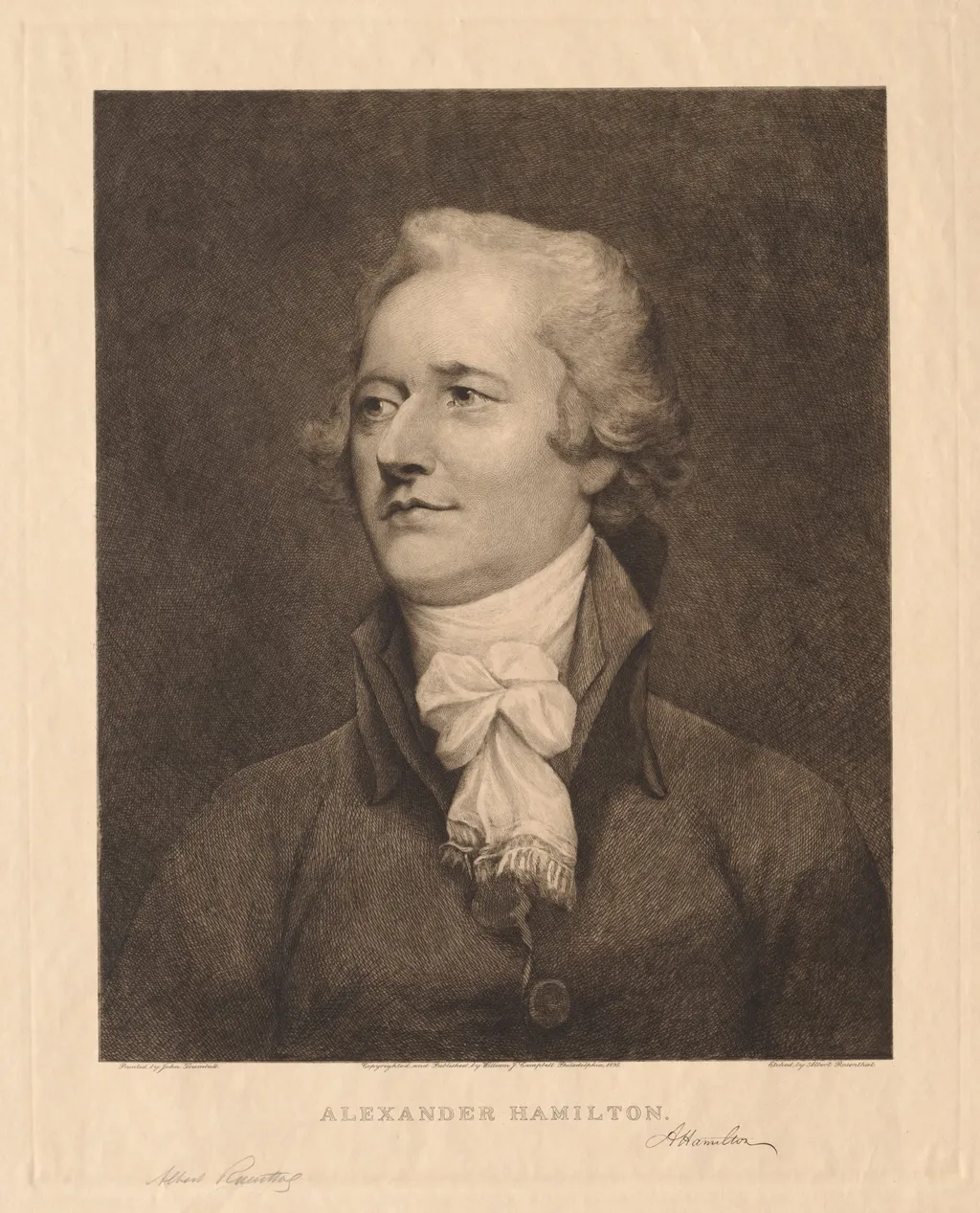
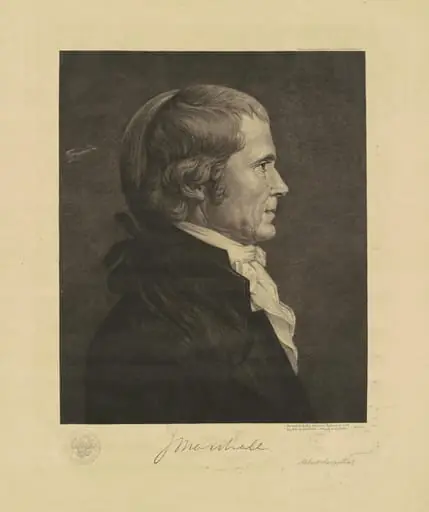
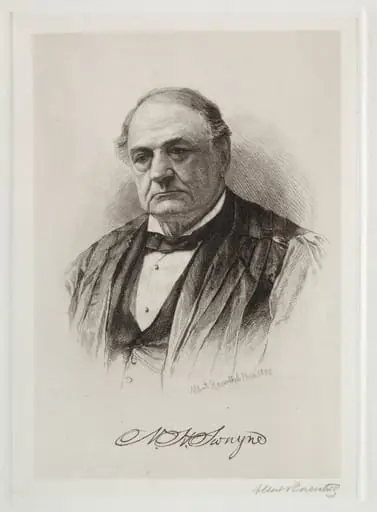
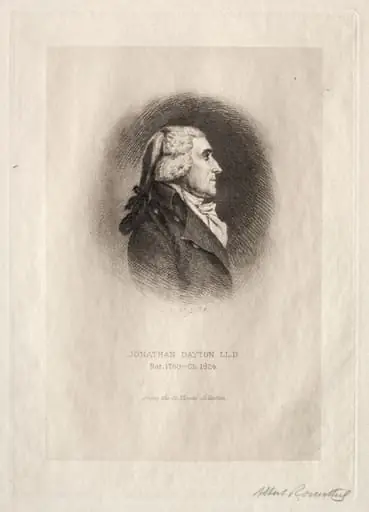
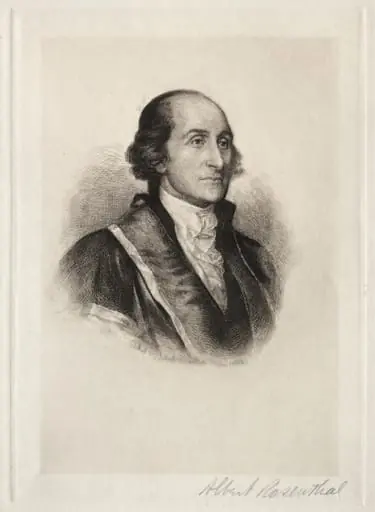
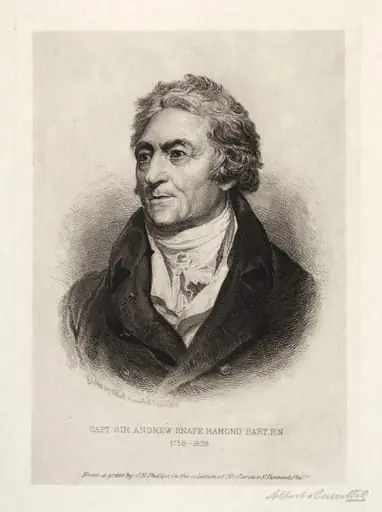
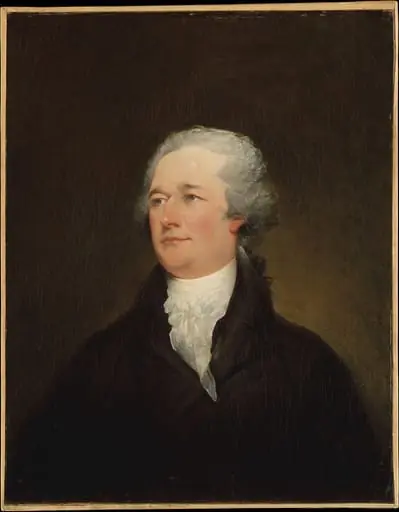
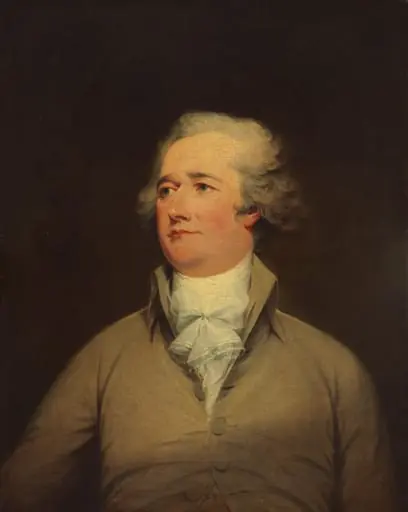
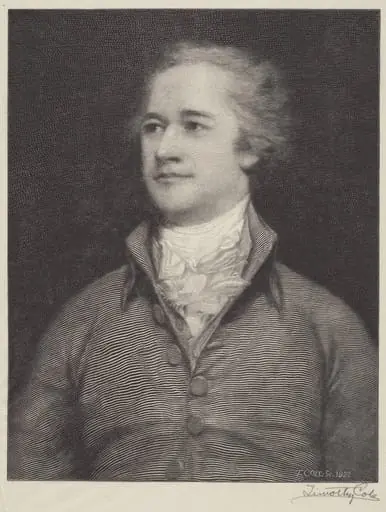
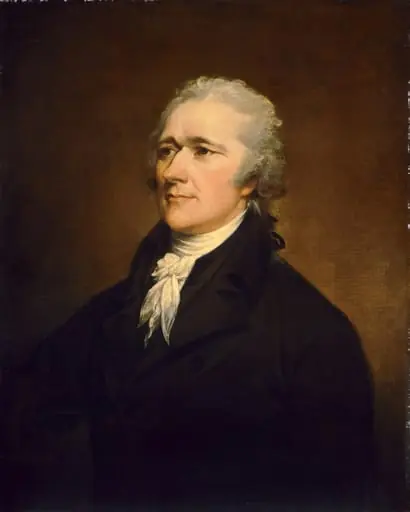
Alexander Hamilton is a print by the Impressionist artist Albert Rosenthal. It dates from 1895 and is held in the collection of the Cleveland Museum of Art.
About this work
Overview
Rendered as a lithographic print, the image captures Hamilton in profile with restrained detail, emphasizing his facial structure over decorative elements.
Albert Rosenthal, a Philadelphia-based artist known for his work in portraiture and printmaking, created this black-and-white portrait of Alexander Hamilton in 1895. Rendered as a lithographic print, the image captures Hamilton in profile with restrained detail, emphasizing his facial structure over decorative elements. The work resides in the collection of The Cleveland Museum of Art, where it is valued for its historical resonance and technical clarity.
Subject & Meaning
The portrait depicts Alexander Hamilton, one of America’s founding figures and first Secretary of the Treasury, in a moment of quiet intensity. His furrowed brow and direct gaze convey a sense of resolve, aligning with his public reputation as a disciplined and intellectual statesman. The absence of symbolic objects or setting strips the image to its essentials, focusing attention on Hamilton’s character rather than his achievements.
Technique & Style
Rosenthal employed lithographic techniques to achieve subtle tonal gradations, using chiaroscuro to model the contours of Hamilton’s face and collar. The background is uniformly dark, isolating the figure and enhancing the three-dimensionality of his features. Lines are deliberate but not overly refined, giving the image the immediacy of a sketch while retaining the precision of a printed portrait.
History & Provenance
Created in 1895, the print emerged during a period of renewed interest in early American leaders, decades after Hamilton’s death. Rosenthal produced it as part of a broader effort to document historical figures through accessible graphic media. The work entered The Cleveland Museum of Art’s collection in the 20th century, where it remains a representative example of late 19th-century American portraiture in print.
Context
In the late 1800s, American institutions sought to reinforce national identity through visual representations of founding figures. Lithographs like this one were widely distributed in books and exhibitions, serving educational and commemorative purposes. Rosenthal’s approach reflects this trend—prioritizing clarity and dignity over artistic flourish, aligning with the era’s preference for factual, sober portraiture.
Legacy
Though not widely exhibited today, the print endures as a quiet testament to Hamilton’s enduring presence in American memory. Rosenthal’s restrained style influenced later illustrators who sought to portray historical figures with psychological depth without romanticization. Its presence in a major museum collection affirms its role in the visual documentation of U.S. history.
Artist & collection
Artist
Albert Rosenthal (January 30, 1863 – December 20, 1939) was an American portrait artist, printmaker, writer, and collector from Philadelphia.