Artwork
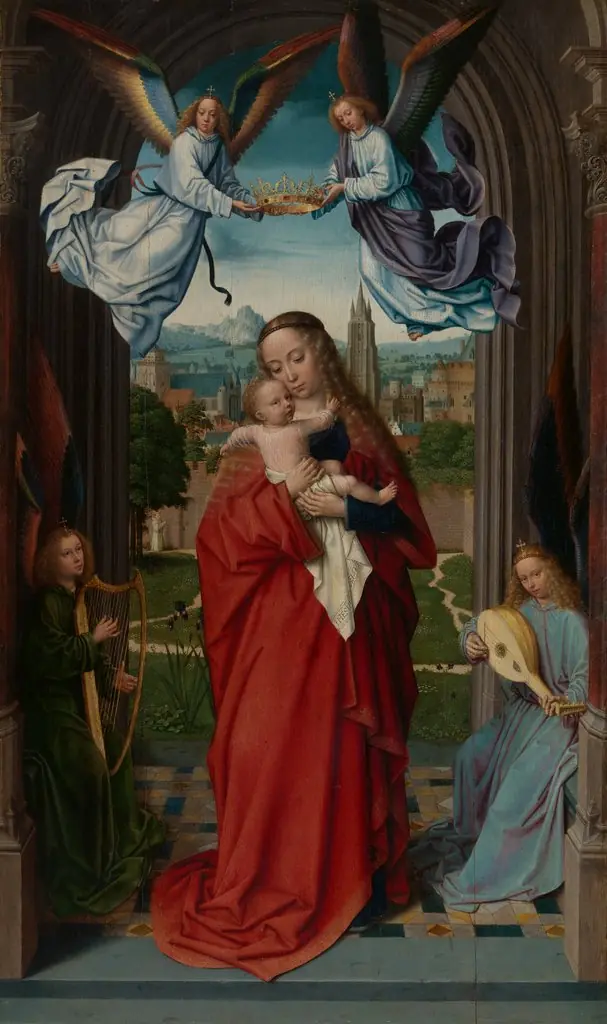
Virgin and Child Crowned by Angels
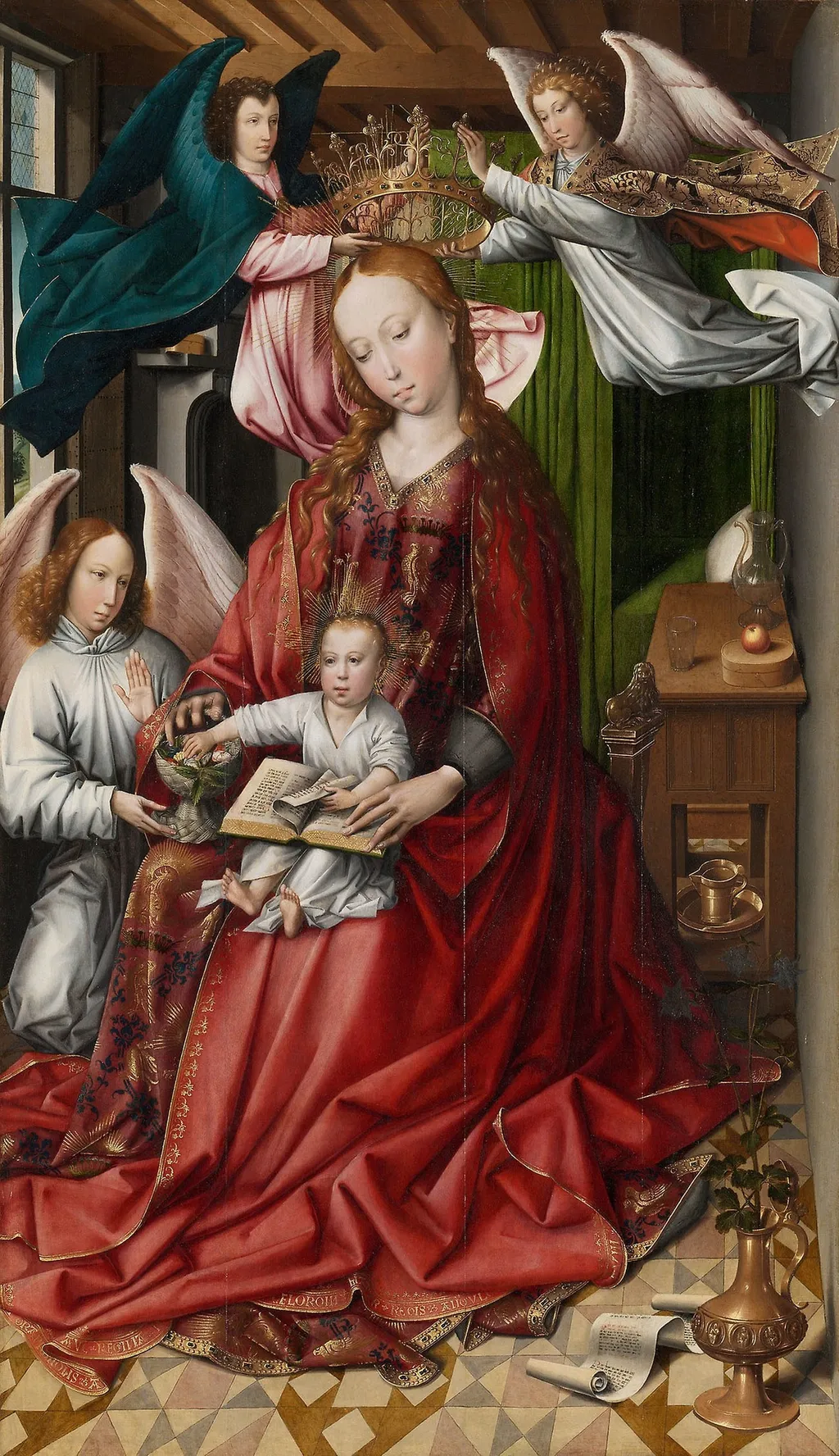
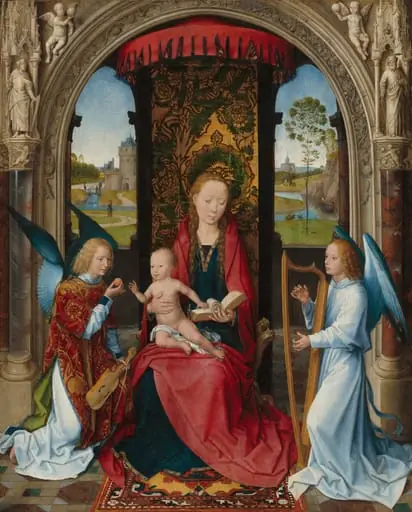
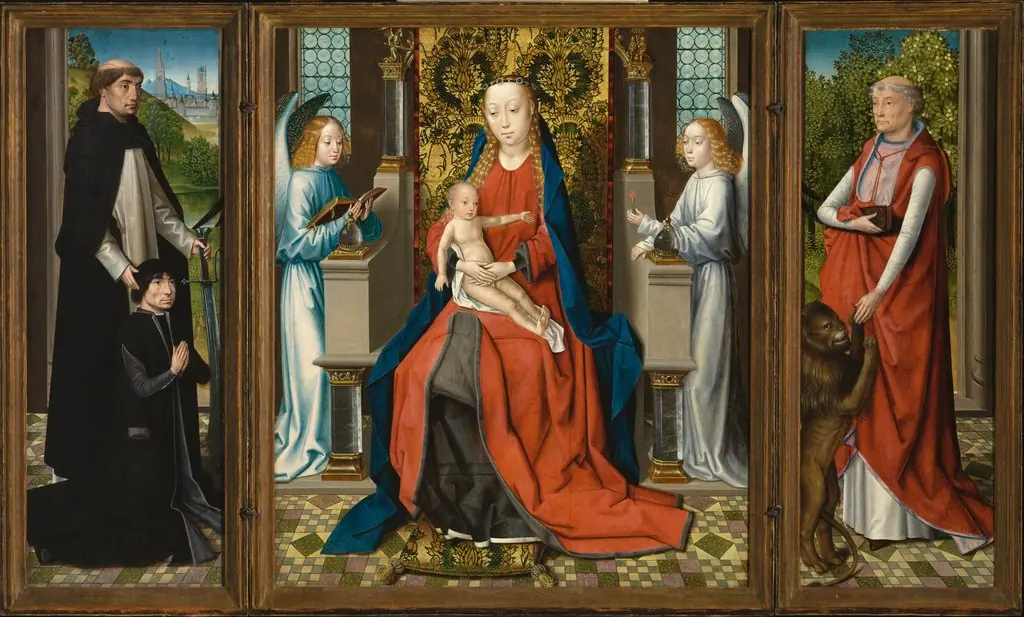
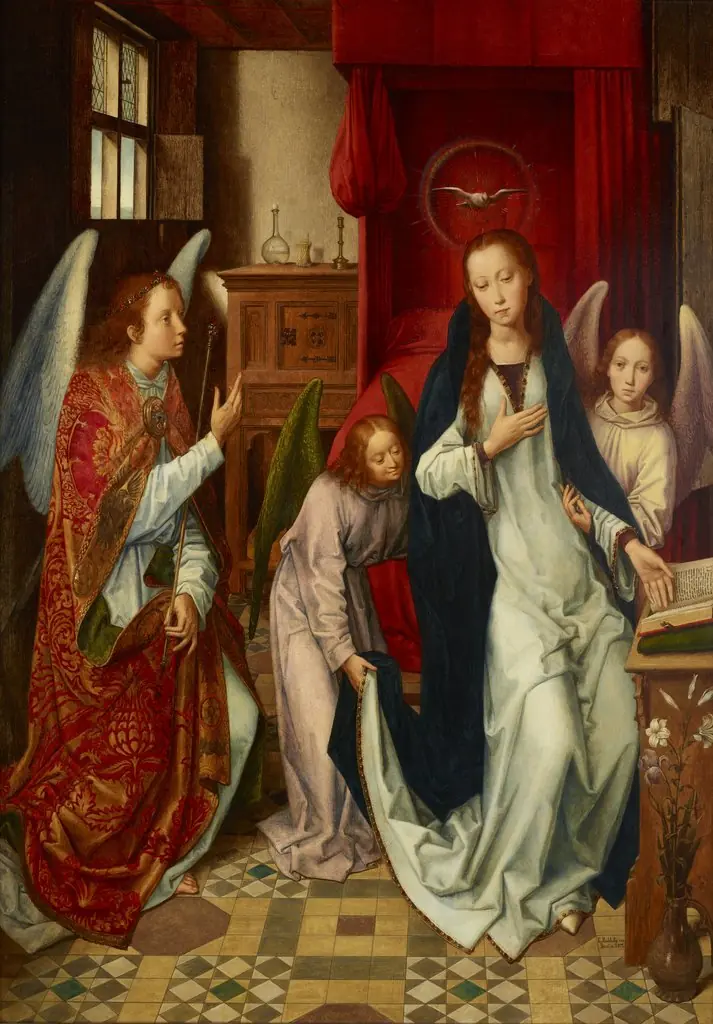
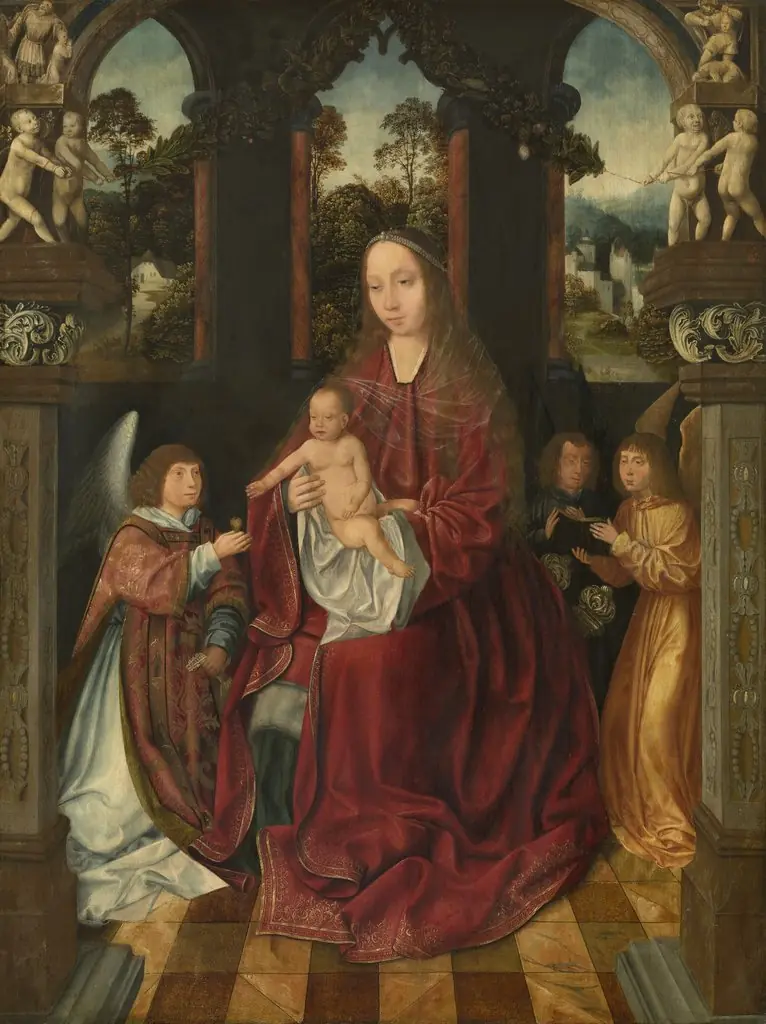
Virgin and Child Crowned by Angels is an oil painting by the Northern Renaissance artist Colijn de Coter. It dates from 1496 and is held in the collection of the Art Institute of Chicago.
About this work
Overview
Painted in 1496 by Colijn de Coter, this oil-on-panel work presents a devotional scene of the Virgin Mary and Christ Child under celestial honor.
Painted in 1496 by Colijn de Coter, this oil-on-panel work presents a devotional scene of the Virgin Mary and Christ Child under celestial honor. De Coter, active in the Brussels-Antwerp region, specialized in religious imagery for private and ecclesiastical use. The composition centers on Mary’s coronation by angels, a theme rooted in medieval theology and popular in Northern Renaissance altarpieces. The painting is now part of the Art Institute of Chicago’s collection.
Subject & Meaning
The Virgin, seated in quiet dignity, holds the Christ Child who gazes at a book—symbolizing divine wisdom. Three angels surround them: one lifts a jeweled crown above her head, another cradles fresh blossoms representing purity, and the third observes in reverence. The act of coronation affirms Mary’s role as Queen of Heaven, a doctrine emphasized in late medieval piety. The intimate setting suggests a private devotional context, inviting contemplation rather than public spectacle.
Technique & Style
De Coter employs fine brushwork to render textures with precision: the gold embroidery on Mary’s robe, the delicate veining of angelic wings, and the glossy surface of the candle and cup. The dark, recessive background and tiled floor create spatial depth, while the soft modeling of flesh and fabric reflects Northern Renaissance attention to material realism. Color is restrained yet rich, with crimson and gold dominating to convey sacredness without excess.
History & Provenance
Commissioned likely for a private chapel or wealthy patron’s devotional space, the painting entered the Art Institute of Chicago’s collection in the 20th century. Its survival in good condition suggests careful preservation, possibly within ecclesiastical or aristocratic households before its modern acquisition. No early documentation of its original location survives, but its style aligns with other works from de Coter’s Brussels workshop.
Context
In late 15th-century Flanders, images of the crowned Virgin were common in both public altarpieces and personal prayer objects. De Coter’s version reflects the era’s theological emphasis on Mary’s intercessory power and her elevated status in Christian devotion. The inclusion of domestic details—books, a candle, patterned tiles—grounds the sacred in everyday life, a hallmark of Northern Renaissance art that bridged the divine and the familiar.
Legacy
Though not widely known outside specialist circles, de Coter’s work exemplifies the quiet intensity of late medieval Netherlandish painting. His careful balance of symbolism and realism influenced contemporaries and later artists in the region. This painting remains a representative example of how religious themes were rendered with intimate detail for personal meditation, preserving a devotional tradition that persisted well into the Reformation.
Artist & collection
Artist
Colijn de Coter (c. 1440–1445 – c. 1522–1532) was an early Netherlandish painter who produced mainly altarpieces. He worked primarily in Brussels and Antwerp. His name was sometimes given as Colijn van Brusele (Colijn…