Artwork
Madonna with Angels
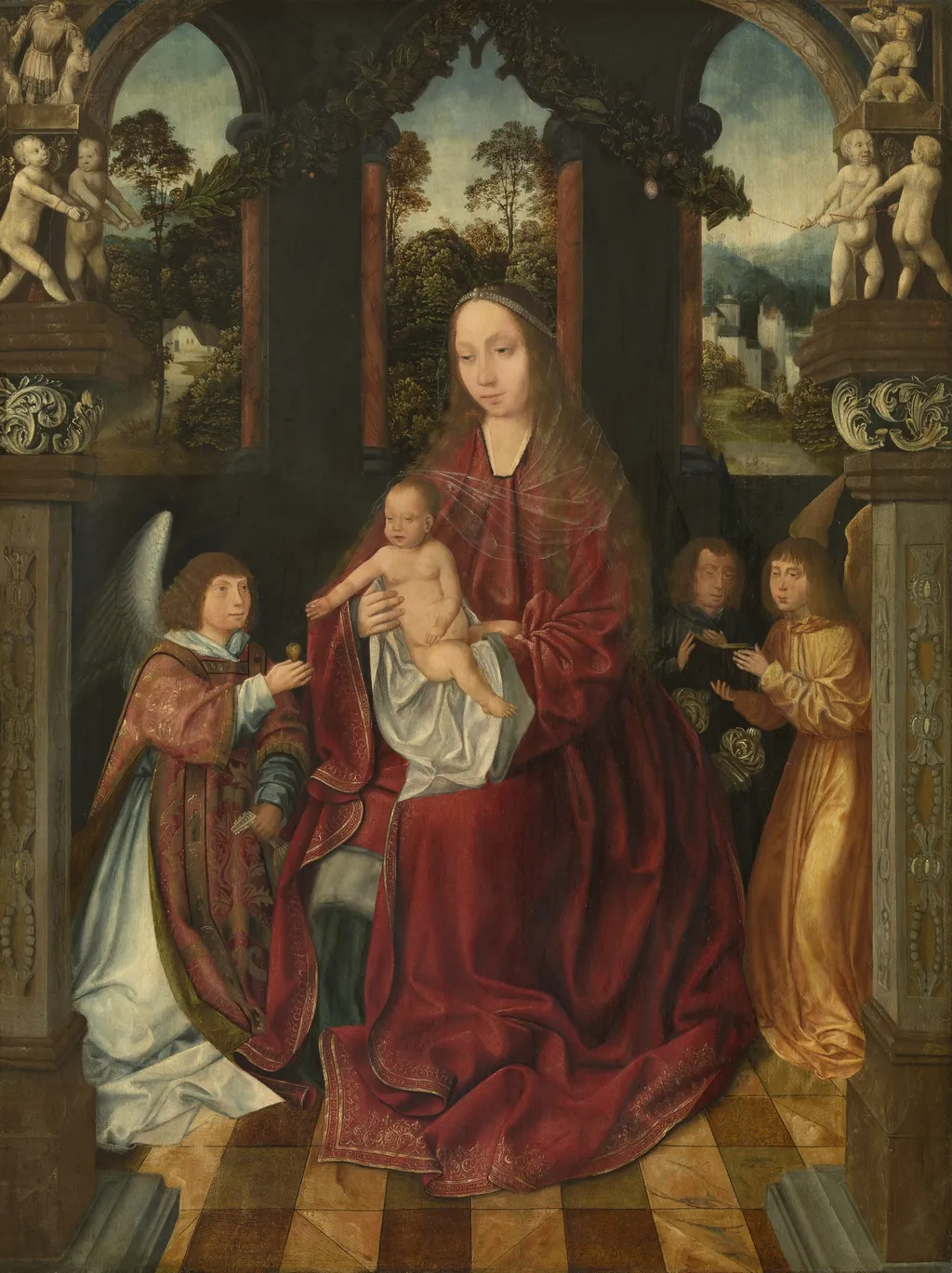
Madonna with Angels is an oil painting by the Northern Renaissance artist Master of the Holy Blood. It dates from 1510 and is held in the collection of the Royal Museum of Fine Arts Antwerp. Created in 1510, this oil painting portrays the Virgin Mary holding the infant Christ, surrounded by two kneeling angels.
About this work
Overview
The work exemplifies the devotional imagery typical of early 16th‑century Flemish art and is part of the collection of the Royal Museum of Fine Arts in Antwerp.
Created in 1510, this oil painting portrays the Virgin Mary holding the infant Christ, surrounded by two kneeling angels. The composition is set against a stone floor and a distant landscape, with small cherubic figures visible through arched openings above. The work exemplifies the devotional imagery typical of early 16th‑century Flemish art and is part of the collection of the Royal Museum of Fine Arts in Antwerp.
Subject & Meaning
The central figure, a solemnly gazing mother in a deep red mantle, cradles the newborn whose hand rests on her arm, emphasizing the intimate bond between mother and child. Flanking angels, one cloaked in red and the other in gold, appear to present an offering, perhaps a symbolic gesture of reverence. The diminutive nude children in the windows suggest heavenly witnesses, reinforcing the painting’s focus on divine intercession and the sanctity of the Holy Family.
Technique & Style
Executed in oil on panel, the artist employs a nuanced chiaroscuro that models forms through contrasting light and shadow, giving the figures a three‑dimensional presence. The rich red drapery is highlighted by fine gold threading, while the polished stone floor reflects subtle illumination, enhancing spatial depth. The handling of texture and the restrained yet detailed rendering align with the Northern Renaissance aesthetic prevalent in Bruges at the time.
History & Provenance
Attributed to the Master of the Holy Blood, an anonymous Early Netherlandish painter active in Bruges, the piece reflects the workshop’s characteristic devotional subjects. After remaining in private hands for several centuries, it entered the Royal Museum of Fine Arts Antwerp’s holdings, where it has been displayed as part of the museum’s Flemish Renaissance collection.
Context
The painting emerges from a period when Bruges artists blended Gothic traditions with emerging Renaissance naturalism, producing works that balanced intricate detail with emotional restraint. Its iconography—Mary, Christ, angels, and cherubs—mirrors the liturgical commissions of the era, intended for private contemplation or chapel adornment, and illustrates the region’s devotional practices during the early 1500s.
Own this work as a print
Artist & collection
Artist
Master of the Holy Blood (active 1510–1520) was an Early Netherlandish painter, whose workshop was located in Bruges (Belgium).

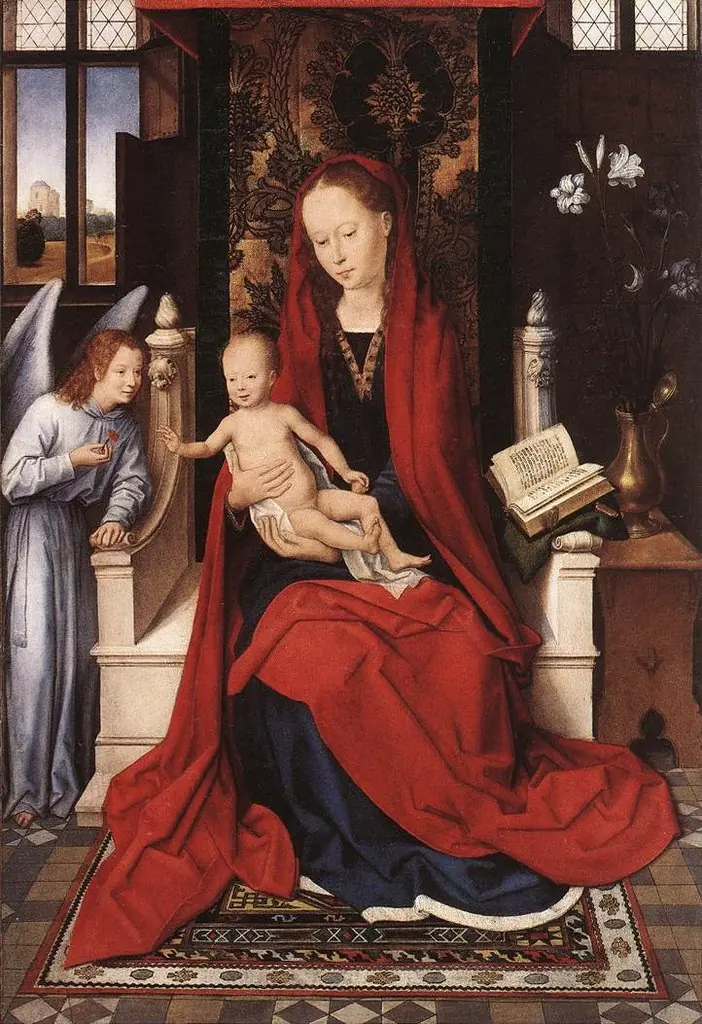 Enthroned Madonna and Child with Angel
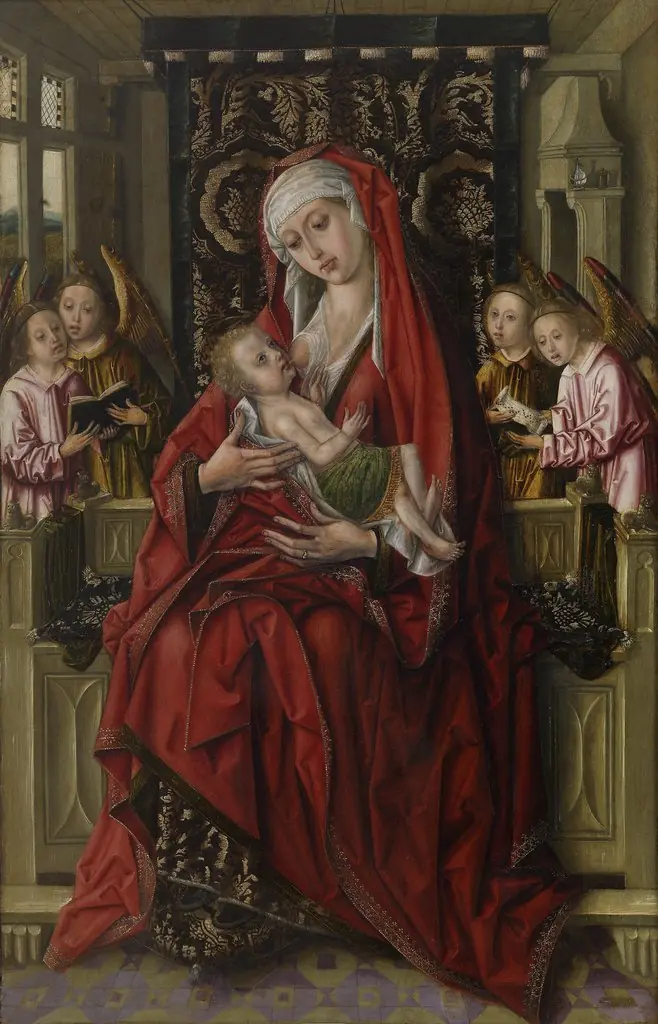 The Virgin Nursing the Child
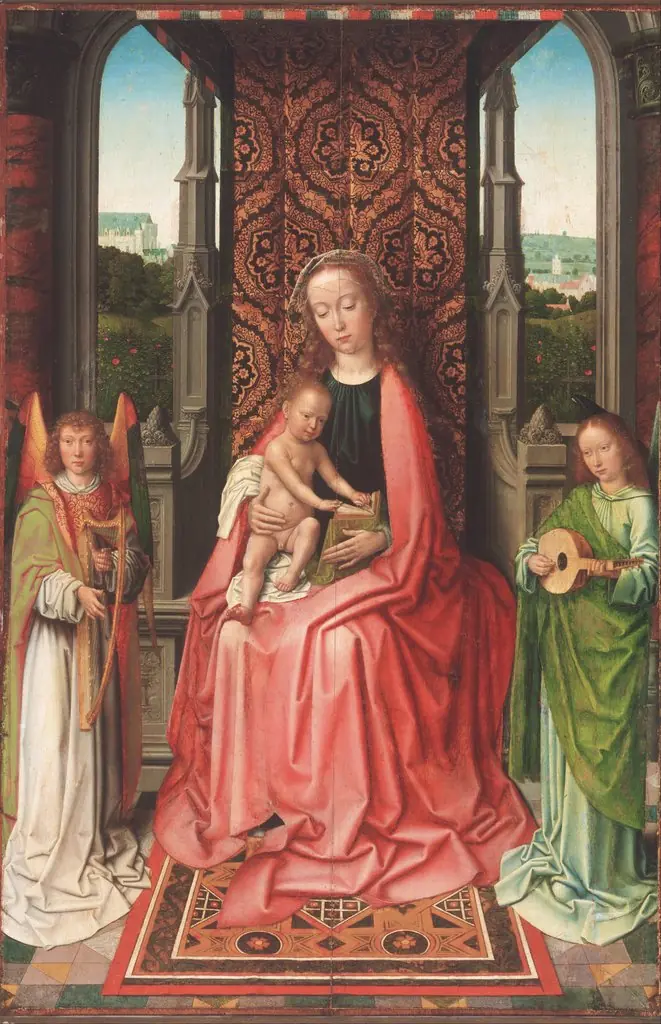 Enthroned Virgin and Child, with Angels
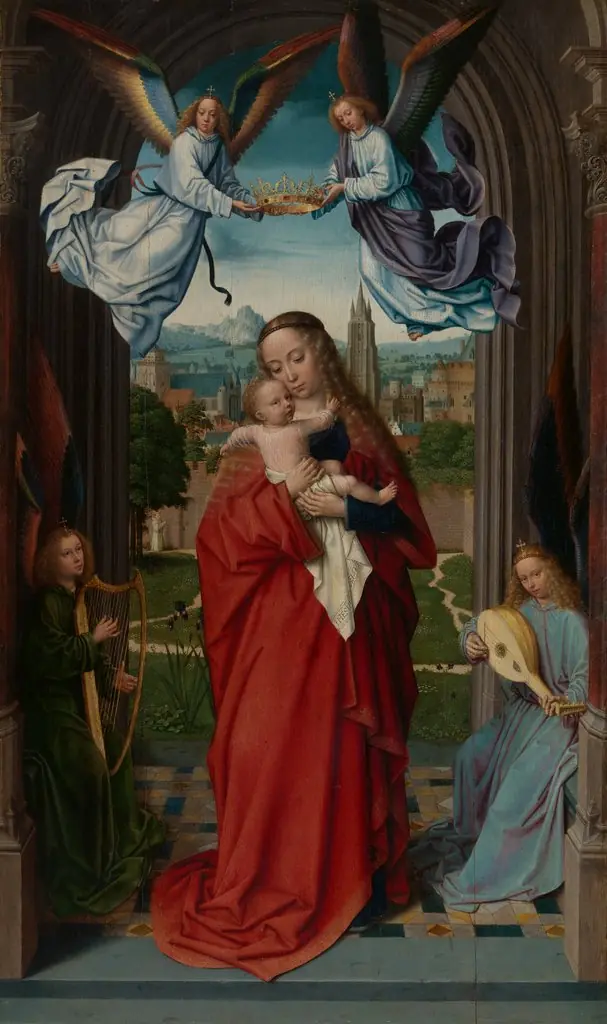 Virgin and Child with Four Angels
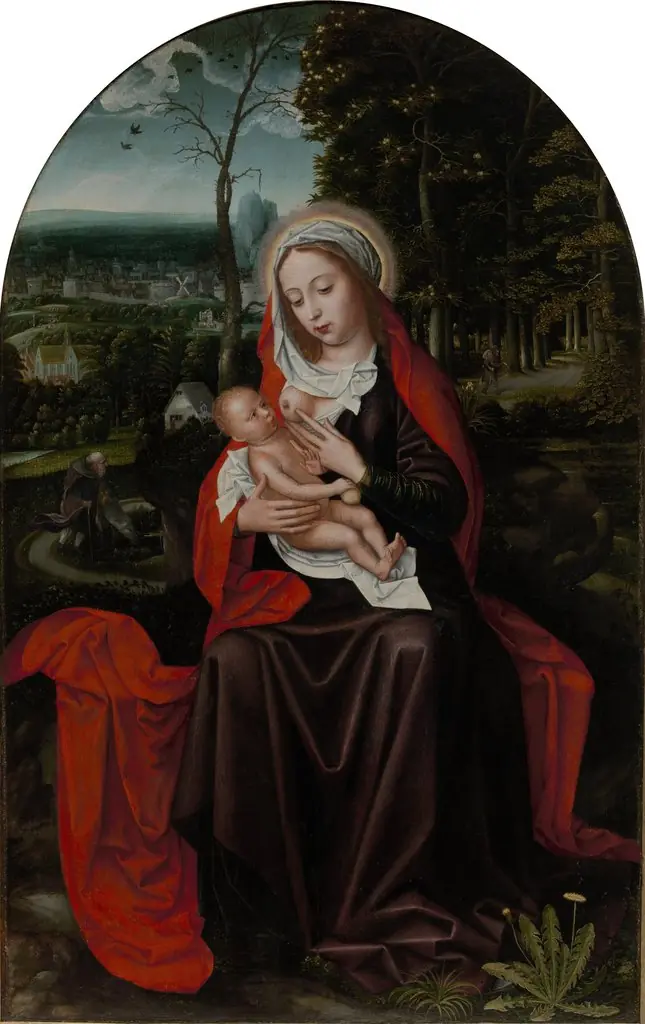 Rest on the flight into Egypt
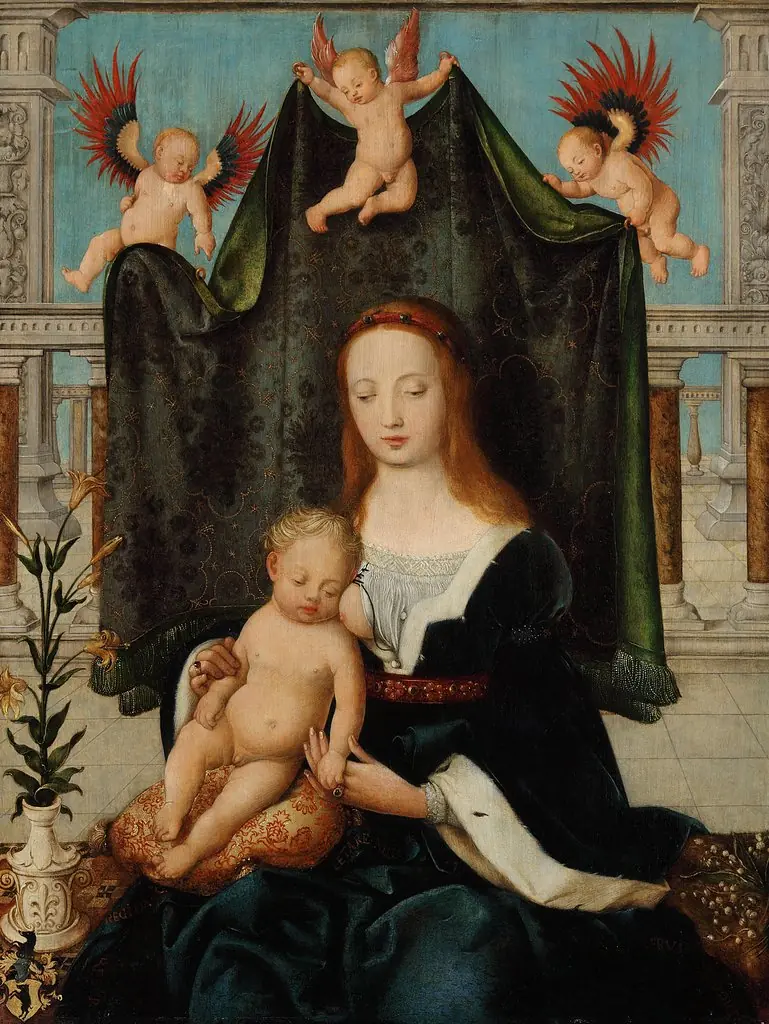 The Virgin and Sleeping Child
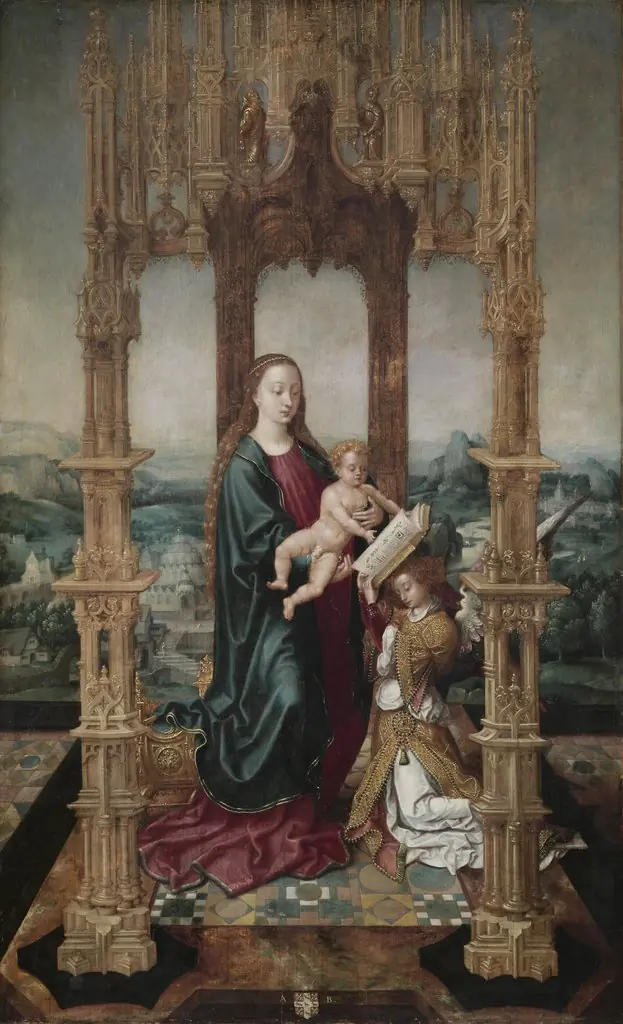 Virgin and Child under a Canopy
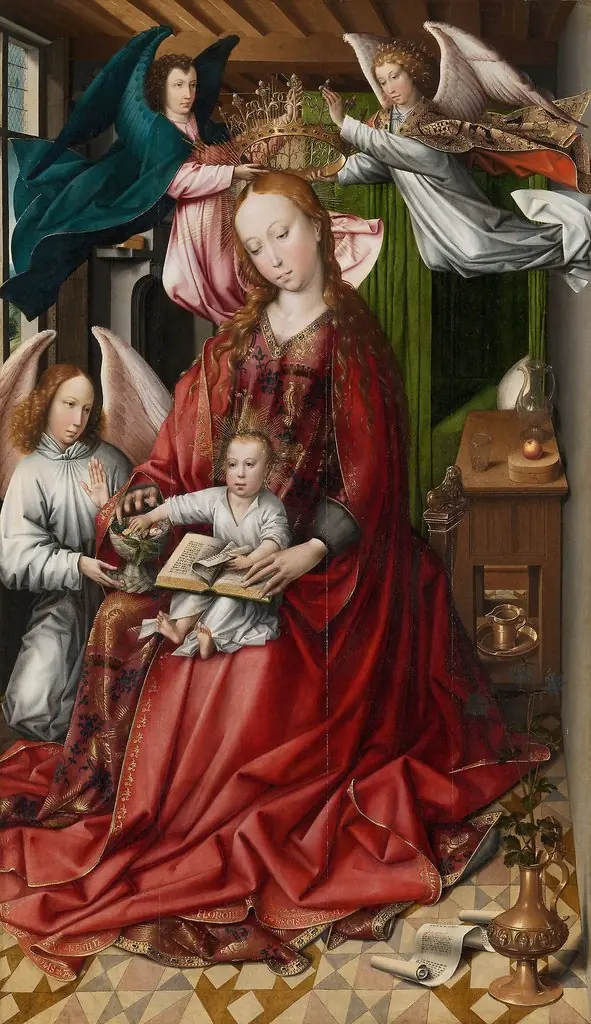 Virgin and Child Crowned by Angels
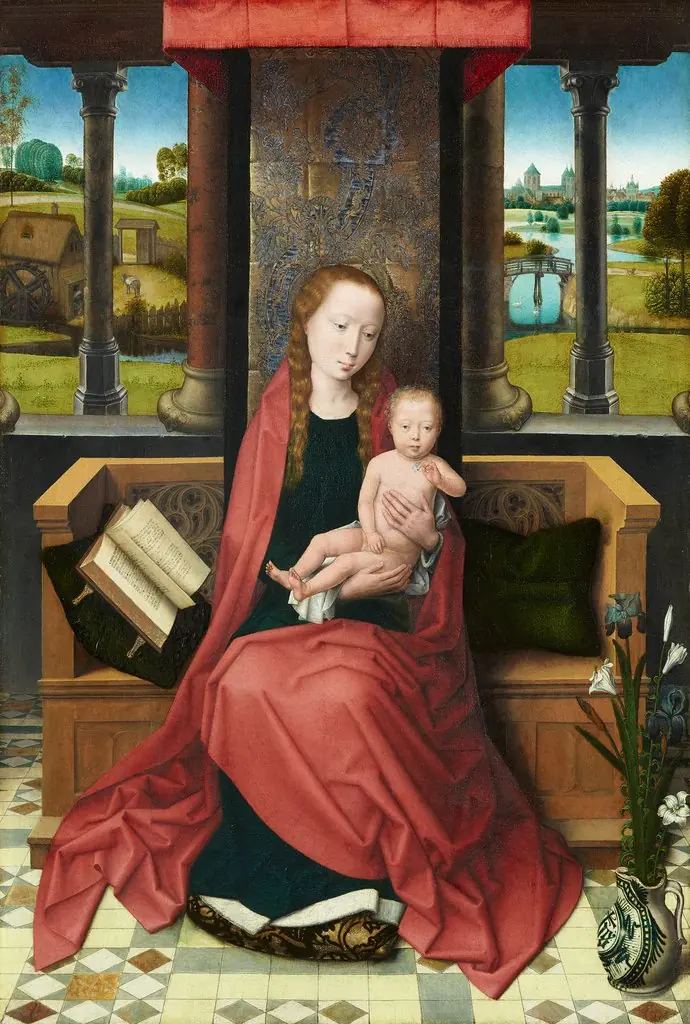 The Virgin and Child Enthroned
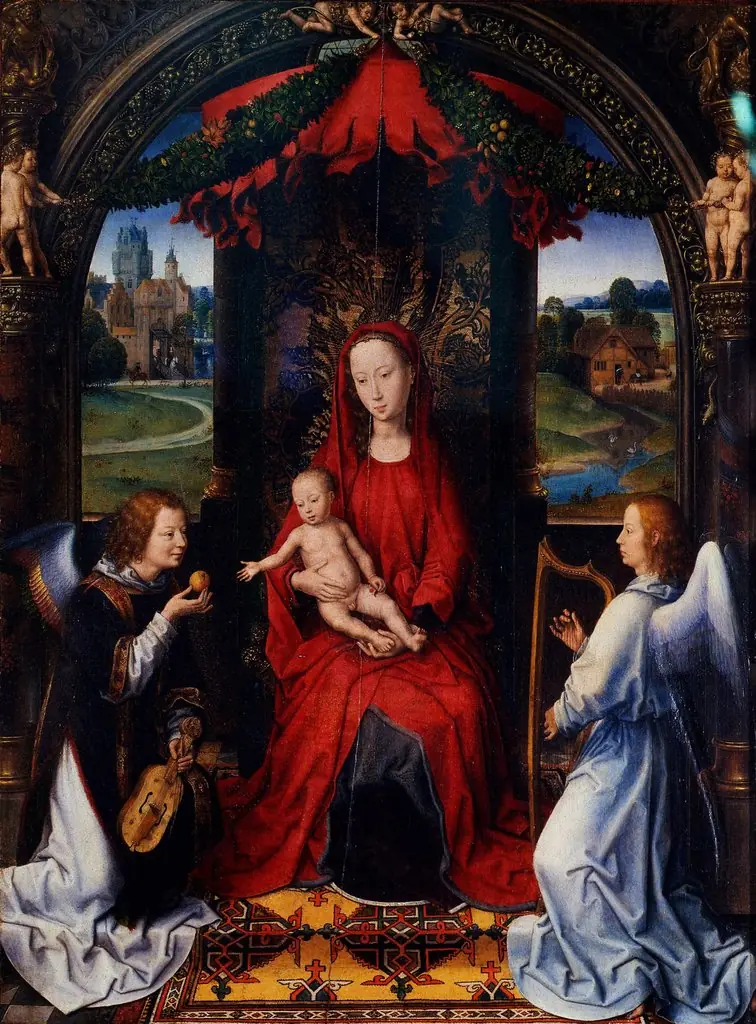 Madonna enthroned with child and two musical angels