Artwork
A Goat, a Ewe, and a Ram
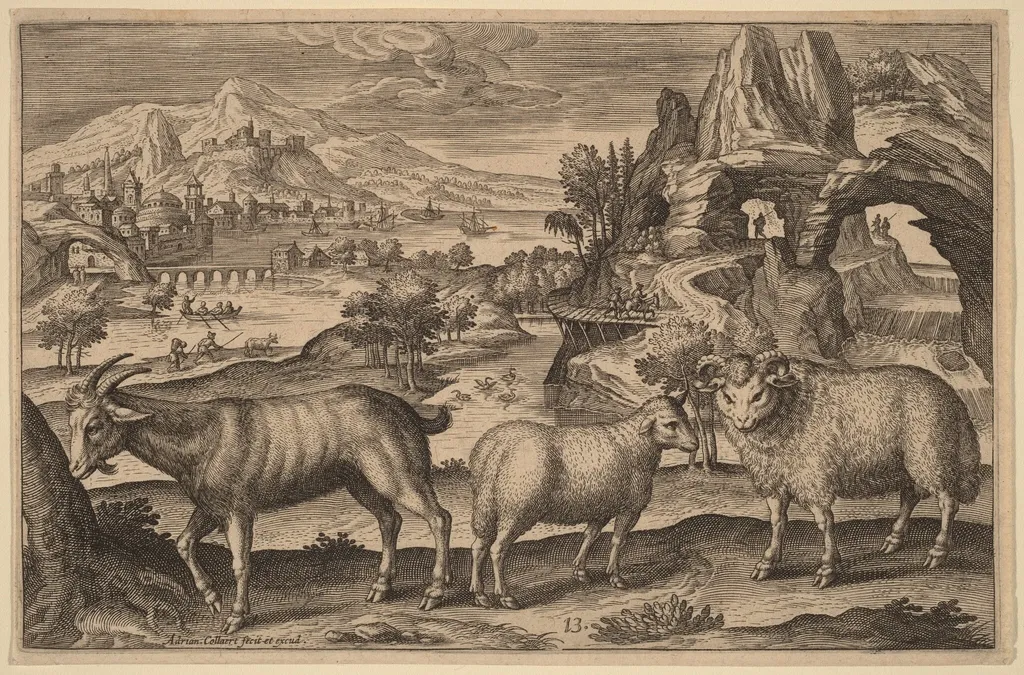
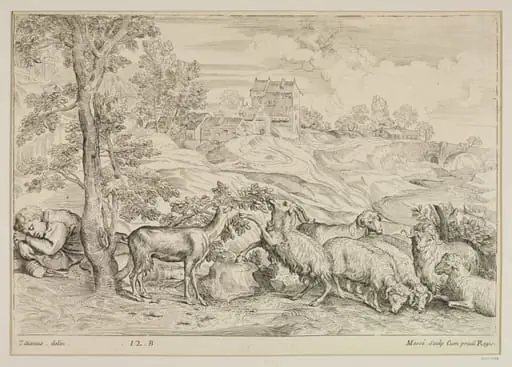
A Goat, a Ewe, and a Ram is an ink print by the Renaissance artist Adriaen Collaert. It dates from 1597 and is held in the collection of the National Gallery of Art.
About this work
Overview
The composition balances the close‑up animal group with a distant landscape that includes fields, a winding road, and figures at work.
Adriaen Collaert’s print, titled *A Goat, a Ewe, and a Ram*, dates from around 1597. Executed as an engraving on laid paper, the work presents three domestic animals positioned in a rural setting that opens onto a small settlement with a bridge, church spire, and a river. The composition balances the close‑up animal group with a distant landscape that includes fields, a winding road, and figures at work.
Subject & Meaning
The central focus is a goat, a ewe, and a ram, rendered with meticulous attention to their coats and posture, suggesting a study of pastoral life. Behind them, the vista of a modest town and agricultural activity hints at the interdependence of livestock and human labor in late‑sixteenth‑century countryside, emphasizing a harmonious, everyday scene rather than a symbolic narrative.
Technique & Style
Collaert employed fine, intersecting lines to model volume and create atmospheric depth, particularly in the distant mountains, trees, and water. The engraving’s tonal gradations arise from varying line density, a hallmark of the Northern European print tradition. The detailed rendering of fur and foliage demonstrates the artist’s skill in translating texture onto the smooth surface of laid paper.
History & Provenance
Created circa 1597, the print belongs to a period when Collaert was active in Antwerp, collaborating with publishers who specialized in animal and genre subjects. While specific ownership records are scarce, the work has circulated in collections of early modern prints, appearing in catalogues of Flemish engraving and serving as a reference for later animal studies in printmaking.
Artist & collection


 Four Bulls
 Untitled
 Landscape with a Milkmaid
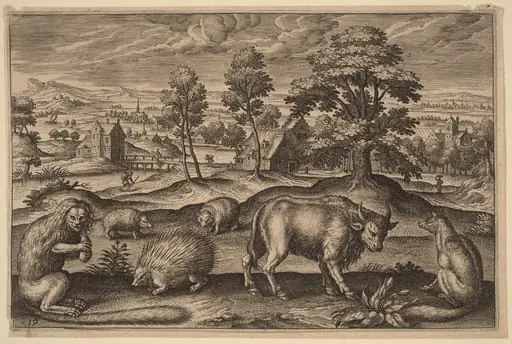 A Monkey, a Porcupine, Two Hedgehogs, a Buffalo and a Fox
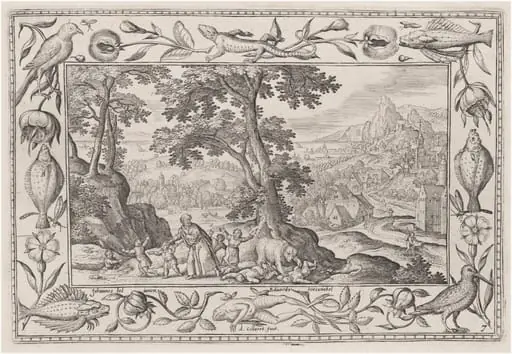 The Mocking Children Cursed by Elijah and Eaten by a She-Bear
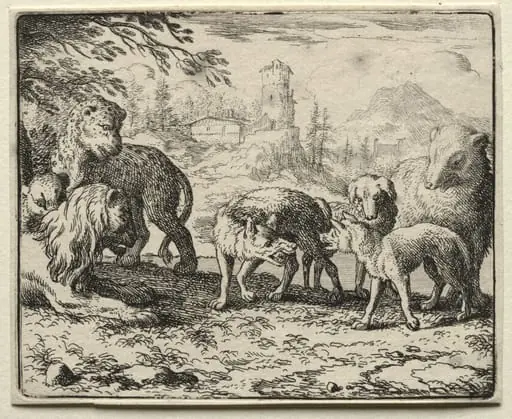 Reynard the Fox: The Condemnation of Reynard
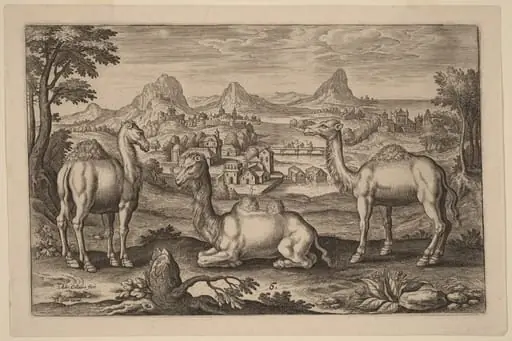 Two Dromedaries and a Camel
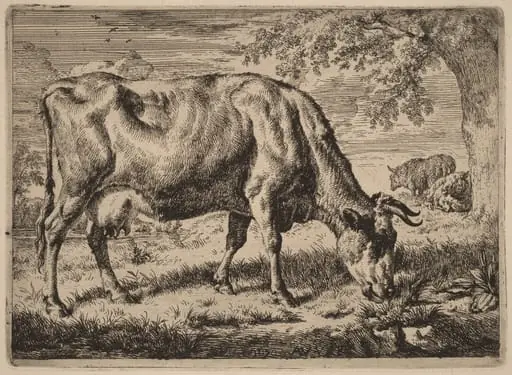 Grazing Cow with Two Sheep
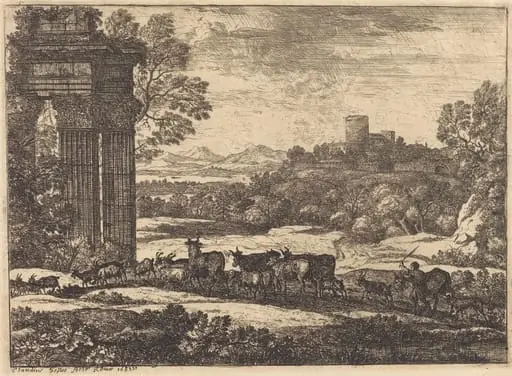 The Herd Returning in Stormy Weather (Le troupeau en marche par un temps orageux)
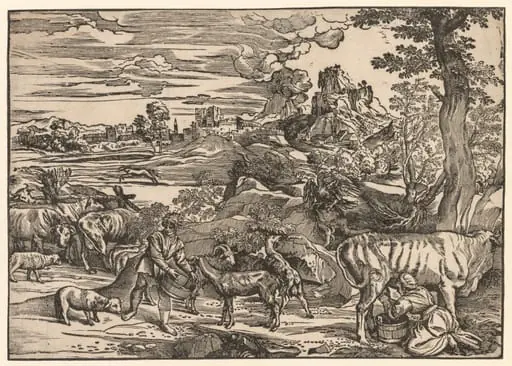 Landscape with a Milkmaid
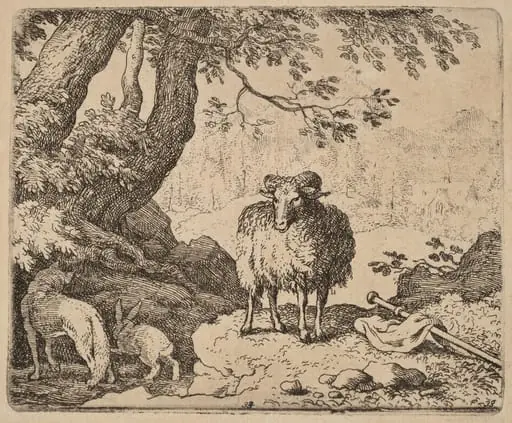 Reynard Returns Home, Accompanied by the Ram and the Rabbit
 Landscape with a Herdsman and Goats