Artwork
Reynard Returns Home, Accompanied by the Ram and the Rabbit
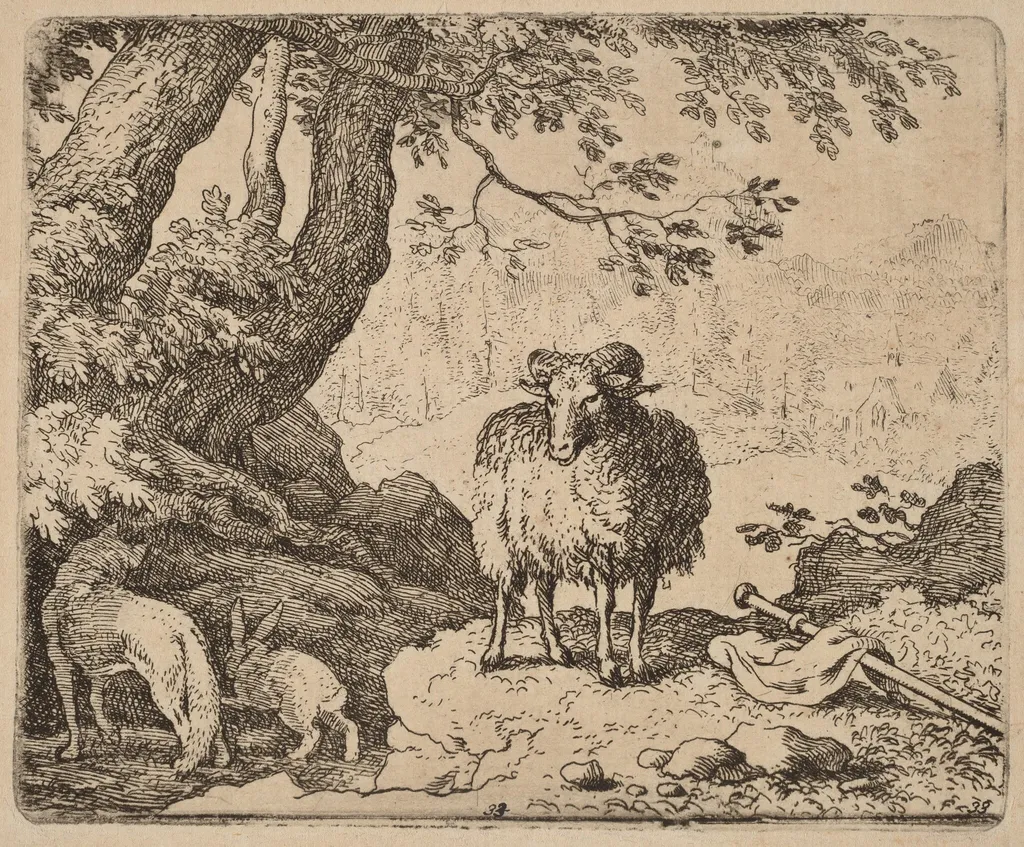
Reynard Returns Home, Accompanied by the Ram and the Rabbit is an ink print by the Baroque artist Allart van Everdingen. It dates from 1650 and is held in the collection of the National Gallery of Art.
About this work
Overview
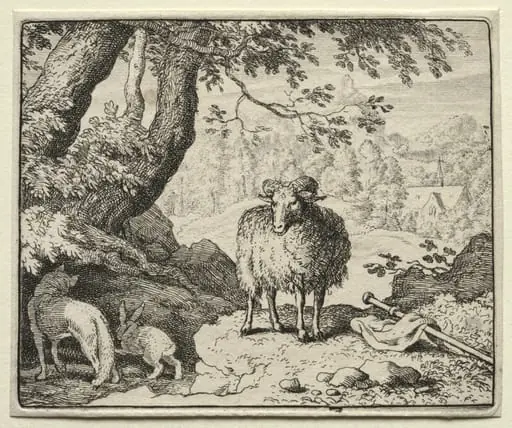
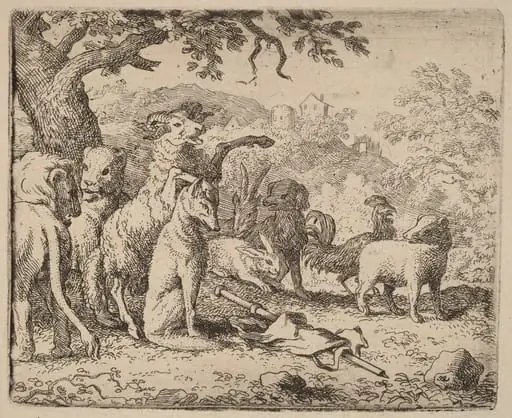
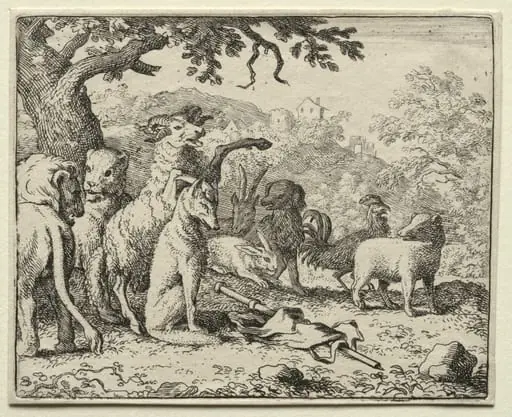
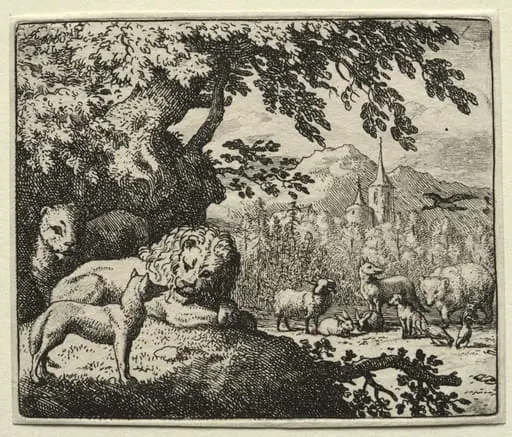
Created around 1650 by the Dutch artist Allart van Everdingen, this etching illustrates a moment from the medieval Reynard the Fox tales. It captures the cunning fox returning home with two companions: a ram and a rabbit. The scene is rendered in fine, controlled lines typical of etching, emphasizing movement and character through posture and detail rather than narrative clutter.
Subject & Meaning
The image draws from the folkloric Reynard cycle, where animals embody human traits. The fox, upright and alert, leads the way, suggesting authority or cunning. The ram and rabbit follow passively, one bearing a bundle—possibly a token of the journey’s outcome. The composition reflects the animal world’s social hierarchies, subtly critiquing human behavior through allegory.
Technique & Style
Van Everdingen employed etching to achieve fine linear detail, using acid to bite into a metal plate for precise, expressive marks.
Van Everdingen employed etching to achieve fine linear detail, using acid to bite into a metal plate for precise, expressive marks. Fur, foliage, and rocky terrain are rendered with dense, deliberate strokes. The rabbit’s bundle and the fox’s curled tail are rendered with subtle economy, enhancing realism without ornament. The background tree twists dramatically, adding tension to the quiet procession.
History & Provenance
The print emerged during the Dutch Golden Age, a period rich in printmaking and illustrated storytelling. Van Everdingen, known for landscapes and literary subjects, likely produced this as part of a series or standalone image for collectors. Its survival in multiple museum collections suggests early appreciation for its narrative clarity and technical refinement.
Context
Reynard tales were widely circulated in Northern Europe, often used to satirize social and political structures. Van Everdingen’s etching reflects a cultural interest in animal fables as moral mirrors. Unlike theatrical depictions, his version is intimate and restrained, aligning with Dutch artistic values of quiet observation and domesticated symbolism.
Legacy
This work contributes to the tradition of animal allegory in Northern European printmaking. While not widely reproduced today, it exemplifies how 17th-century artists translated oral literature into visual form with psychological nuance. Its influence is seen in later illustrators who favored subtle narrative over overt drama.
Artist & collection
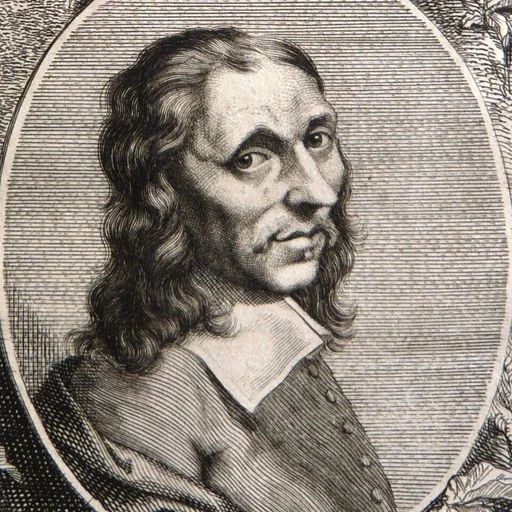
Artist
Allaert van Everdingen (Dutch pronunciation: ; bapt. 18 June 1621 – 8 November 1675 (buried)), was a Dutch Golden Age painter and printmaker in etching and mezzotint.