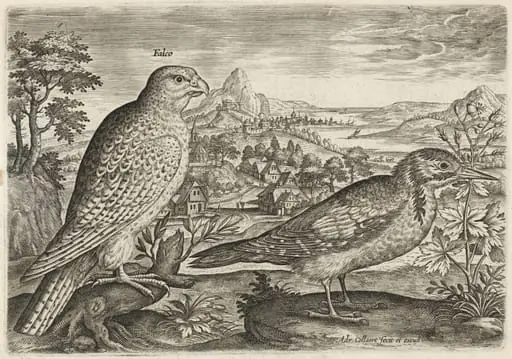
Artwork
Jay and Finch
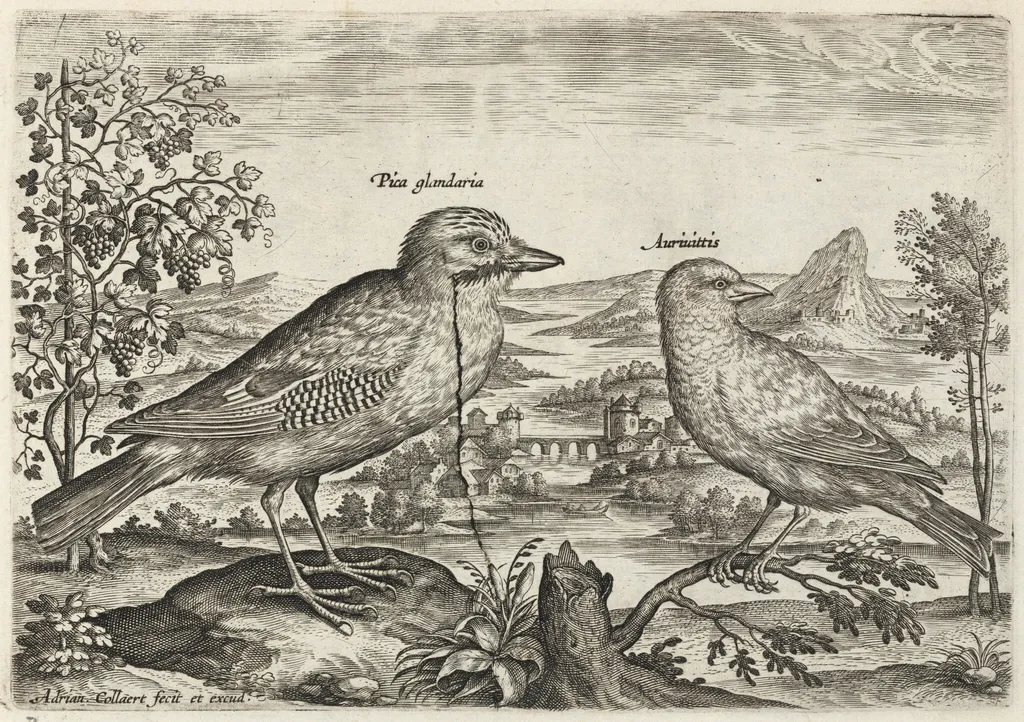
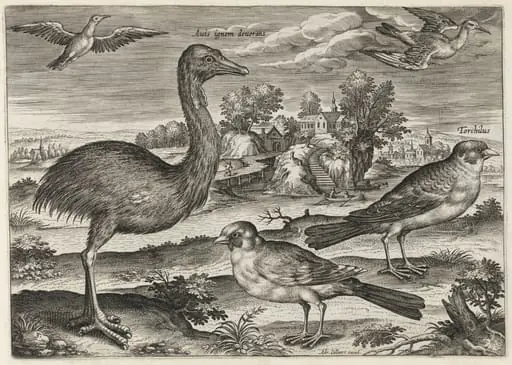
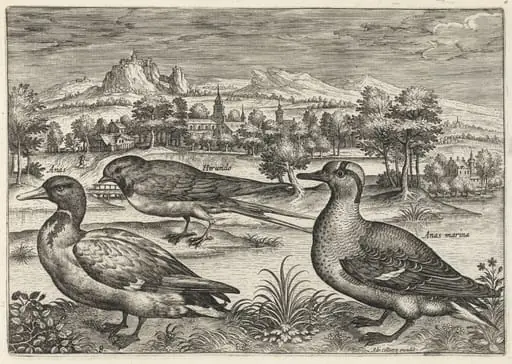
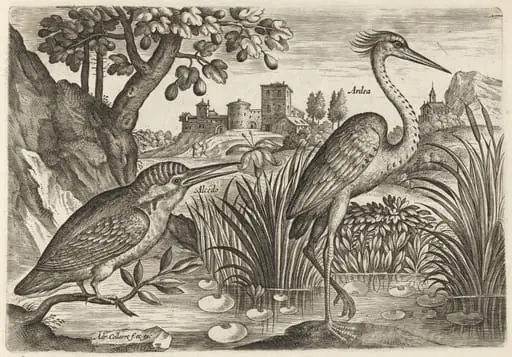
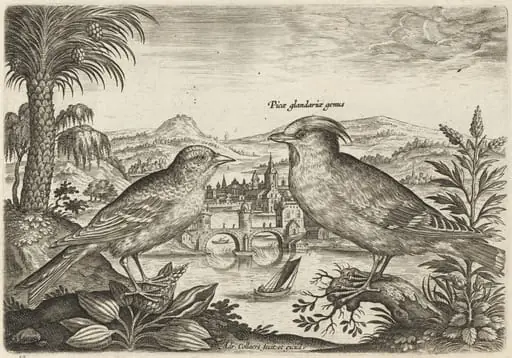
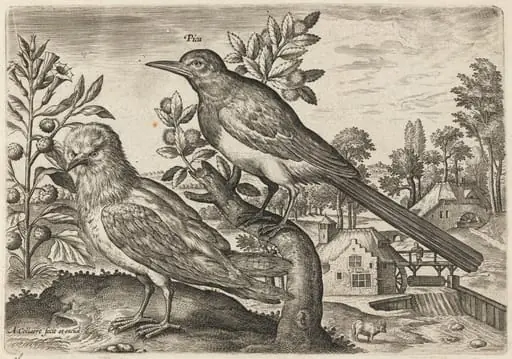
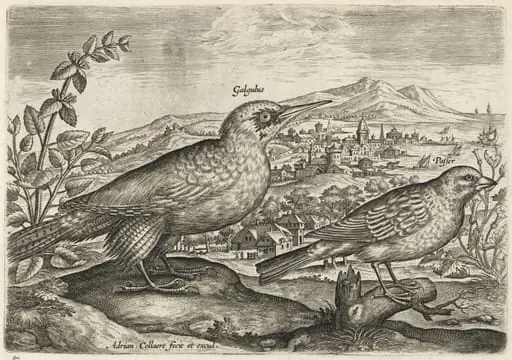
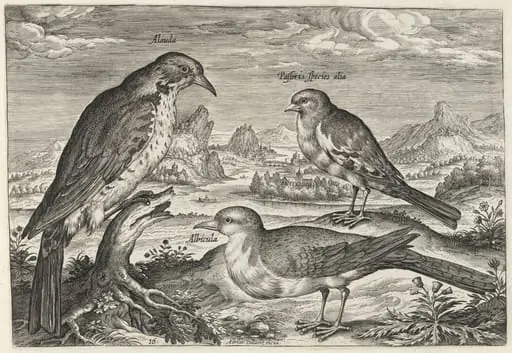
Jay and Finch is an ink print by the Renaissance artist Adriaen Collaert. It dates from 1600 and is held in the collection of the National Gallery of Art.
About this work
Overview
Adriaen Collaert created this engraving around 1600 on laid paper, depicting two birds perched on a branch against a distant landscape.
Adriaen Collaert created this engraving around 1600 on laid paper, depicting two birds perched on a branch against a distant landscape. The work belongs to the printmaking tradition of the late Renaissance, emphasizing natural observation through precise line work. The composition isolates the birds as the central subject, with a subtle backdrop of a rural village and bridge, suggesting a harmony between wildlife and human settlement.
Subject & Meaning
The engraving features a jay and a finch, rendered with attention to their distinct plumage and physical traits. Their Latin labels—*Pica glandaria* and *Auriparus*—reflect the scholarly interest in natural classification during the period. The pairing may allude to the diversity of avian life, possibly serving as an educational or decorative image for collectors interested in natural history, rather than symbolic allegory.
Technique & Style
Collaert employed engraving, a method involving incised lines on a copper plate, to achieve fine detail and tonal variation. The birds’ feathers are rendered with delicate cross-hatching and fine stippling, contrasting with the looser, more distant rendering of the landscape. The clarity of the birds against the softly suggested background demonstrates a deliberate focus on the subjects, typical of Northern European naturalist prints of the era.
History & Provenance
The print was produced in the early 17th century, likely in Antwerp, where Collaert was active as a designer and engraver for publishers. It may have been part of a series of animal studies intended for dissemination among educated audiences. Few original impressions survive, and those that do are held in institutional collections, indicating its limited but enduring circulation among natural history enthusiasts.
Context
This work emerged during a period of growing interest in the natural world, fueled by exploration and the rise of scientific illustration. While not part of a formal botanical or zoological treatise, it aligns with the trend of depicting flora and fauna with accuracy and care. The inclusion of Latin names reflects the scholarly language of the time, bridging art and emerging natural science.
Legacy
Collaert’s engraving contributes to a broader tradition of European printmaking that elevated natural subjects to the realm of refined art. Though not widely known today, it represents an early effort to document wildlife with both aesthetic precision and taxonomic intent. Its survival in museum collections underscores its value as a historical artifact of Renaissance naturalism.
Artist & collection