Artwork
Kestrel and Great Spotted Woodpecker
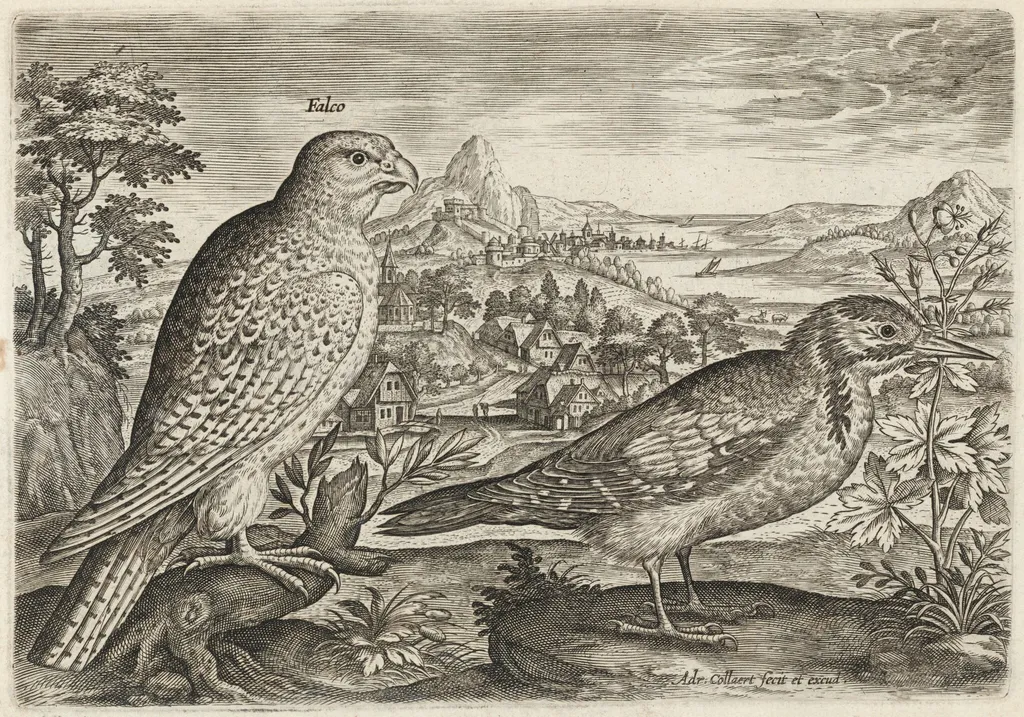
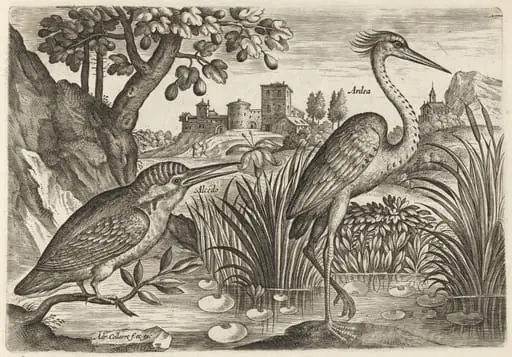
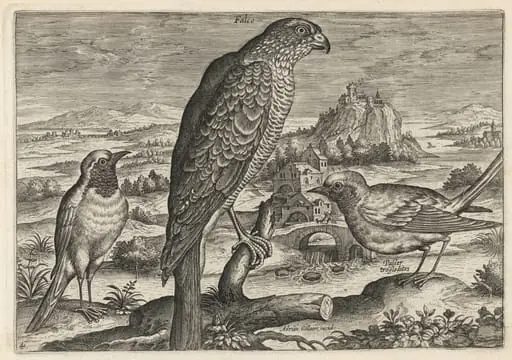
Kestrel and Great Spotted Woodpecker is an ink print by the Renaissance artist Adriaen Collaert. It dates from 1600 and is held in the collection of the National Gallery of Art.
About this work
Overview
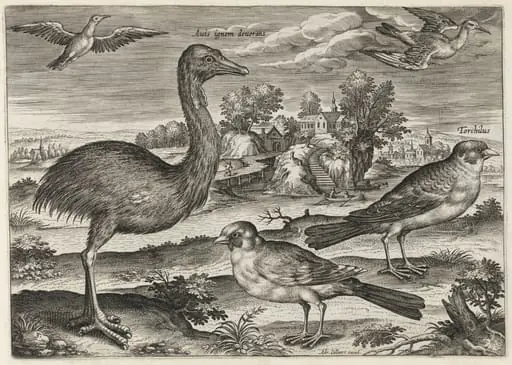
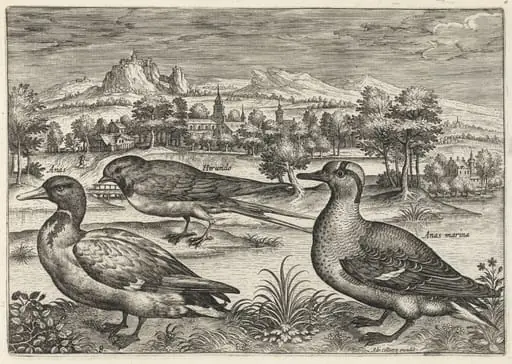
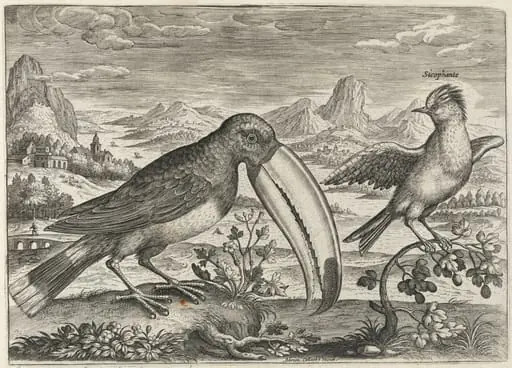
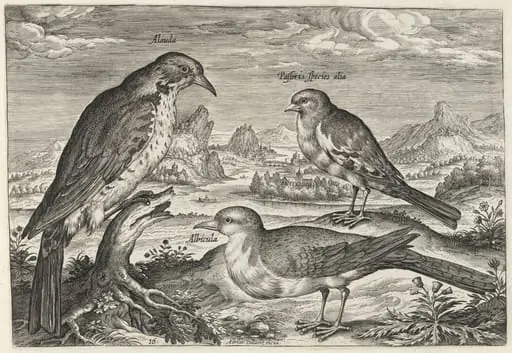
Adriaen Collaert's engraving, Kestrel and Great Spotted Woodpecker, dates to circa 1600. Executed on laid paper, it features two birds on a branch, set against a landscape backdrop.
Subject & Meaning
The composition centers on a kestrel and a Great Spotted Woodpecker. The kestrel, prominently facing left with discerning gaze and intricately detailed feathers, dominates the foreground. The inclusion of a serene village, river, and distant mountains in the background may symbolize the harmony between wildlife and human habitat.
Technique & Style
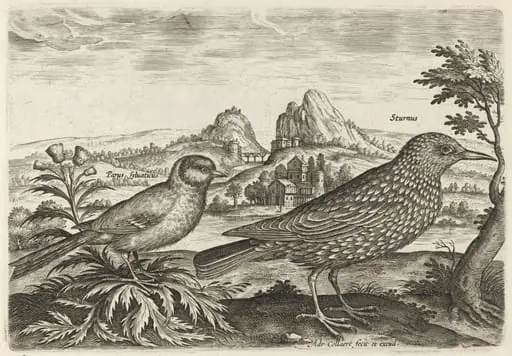
Collaert utilized fine-line engraving to achieve remarkable texture, notably in the birds' feathers and the tree bark, which exhibit a near three-dimensional quality. This level of detail was technically challenging for the period, showcasing the artist's skill.
History & Provenance
Created around 1600, specific details regarding the engraving's commission, original audience, or early ownership are not provided in the available information.
Context
This work reflects the Flemish interest in detailed natural history illustrations during the late 16th and early 17th centuries. Collaert's piece aligns with the era's emphasis on precise rendering of the natural world.
Legacy
While the broader impact or direct influence of Kestrel and Great Spotted Woodpecker on subsequent art is not detailed here, it remains a characteristic example of early 17th-century Flemish engraving techniques and naturalist themes.
Artist & collection