Artwork
Partridge and Eagle
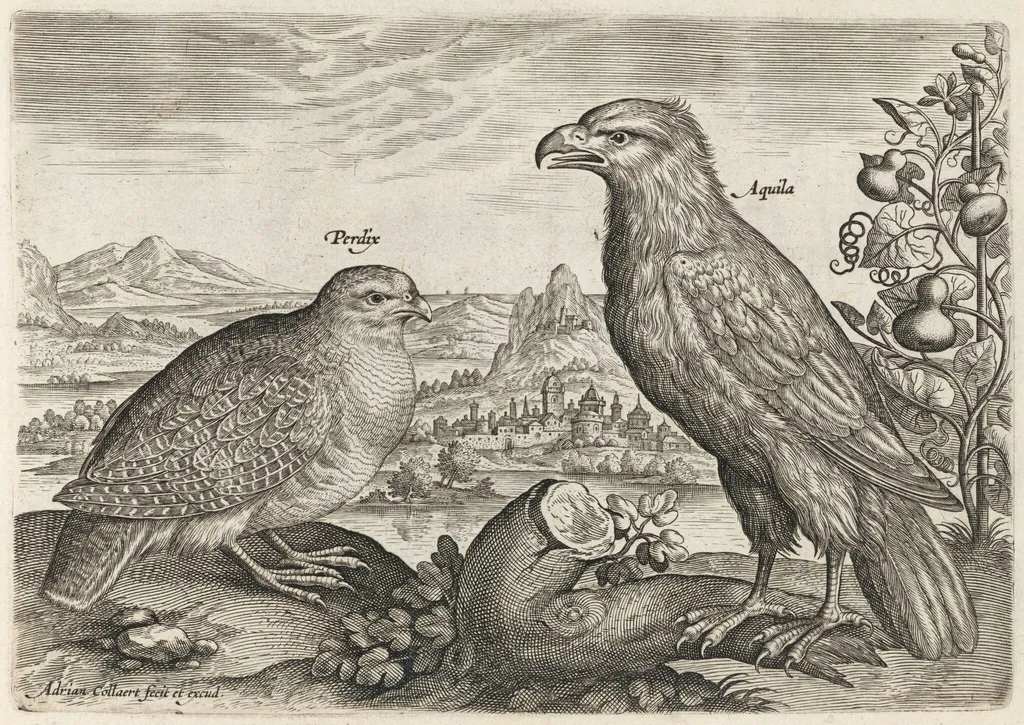
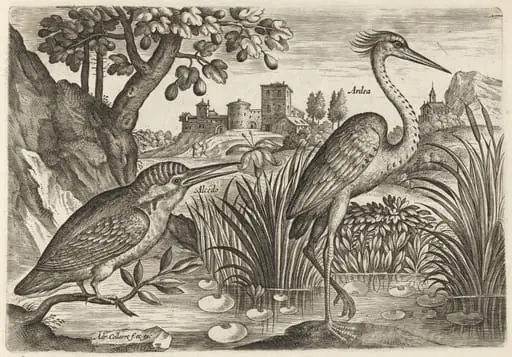
Partridge and Eagle is an ink print by the Renaissance artist Adriaen Collaert. It dates from 1600 and is held in the collection of the National Gallery of Art.
About this work
Overview
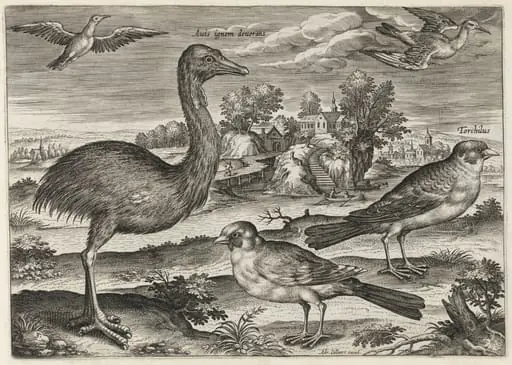
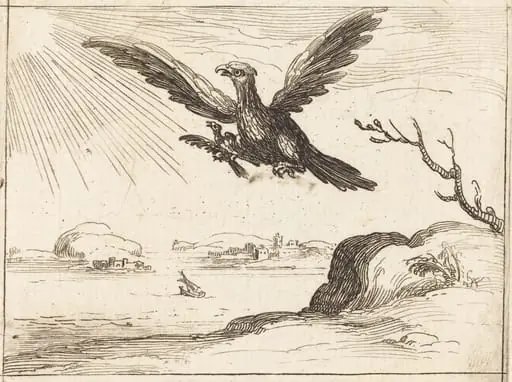
Created around 1600 by Adriaen Collaert, this engraving on laid paper depicts a confrontation between two birds: a partridge and an eagle.
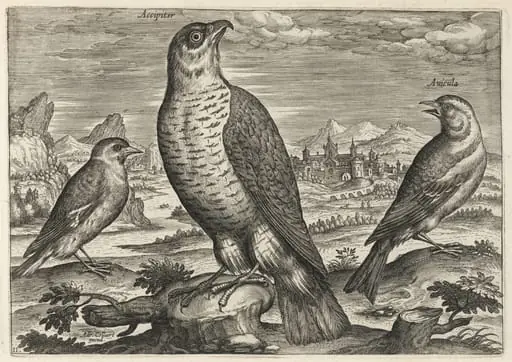
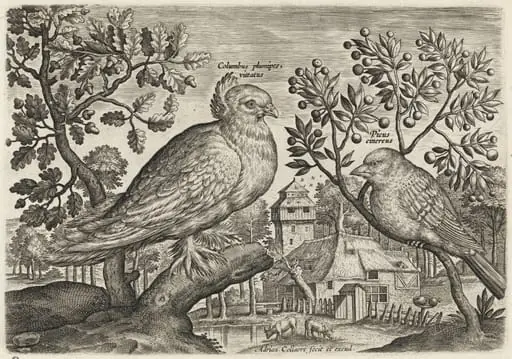
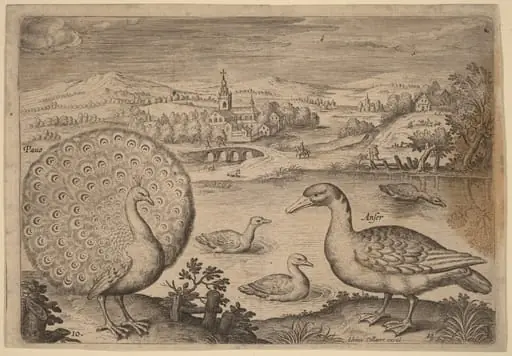
Created around 1600 by Adriaen Collaert, this engraving on laid paper depicts a confrontation between two birds: a partridge and an eagle. Rendered in fine black-and-white lines, the composition balances naturalistic detail with symbolic intent. The scene is framed by a distant valley town and a curved branch bearing fruit, anchoring the birds within a broader landscape. The work exemplifies Northern European printmaking traditions of the late Renaissance.
Subject & Meaning
The partridge, labeled *Perdix*, and the eagle, marked *Aquila*, represent contrasting forces—perhaps humility versus dominance, or earthly survival versus imperial power. The eagle clutches a small bird, suggesting predation or authority, while the partridge stands alert on a rocky outcrop, possibly symbolizing resilience. These avian figures were common in emblematic literature of the period, where animals conveyed moral or political allegories.
Technique & Style
Collaert employed precise engraving techniques, using a burin to incise fine lines into a metal plate, which were then inked and printed on laid paper. Feather textures, rock surfaces, and distant mountains are rendered with delicate cross-hatching and parallel strokes. The absence of color emphasizes tonal gradation and linear control, characteristic of Flemish printmakers who prioritized clarity and detail over painterly effects.
History & Provenance
The print was produced during Collaert’s active years in Antwerp, a center for commercial print production. It likely circulated as part of a series of emblematic or naturalistic prints intended for collectors and scholars. While its early ownership is undocumented, similar works by Collaert appear in major European print rooms, suggesting it was widely distributed and preserved within academic and aristocratic collections.
Context
In early 17th-century Europe, natural imagery was frequently employed to convey philosophical or moral ideas. Collaert’s work aligns with emblem books popular among educated audiences, where animals symbolized virtues or vices. The inclusion of a cultivated landscape and fruiting branch reflects Renaissance interests in the harmony between nature and human order, blending observation with allegorical tradition.
Legacy
Though not widely known today, Collaert’s engraving contributes to a broader tradition of symbolic animal imagery in Northern prints. Its technical precision influenced later engravers, and its emblematic structure resonates with natural history illustrations emerging in the 17th century. The work remains a quiet example of how printmaking served as a vehicle for intellectual and visual culture beyond mere decoration.
Artist & collection