Artwork
The Plucking of Ears of Corn on Sabbath Day
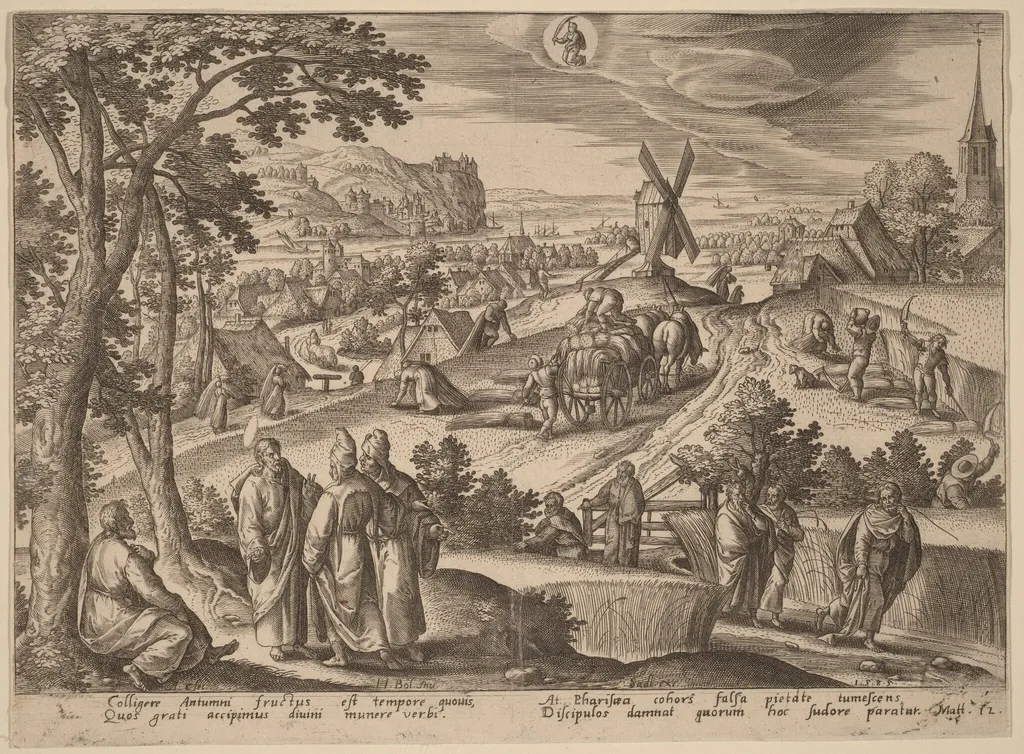
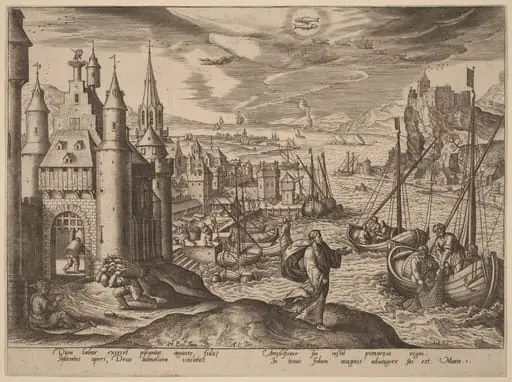
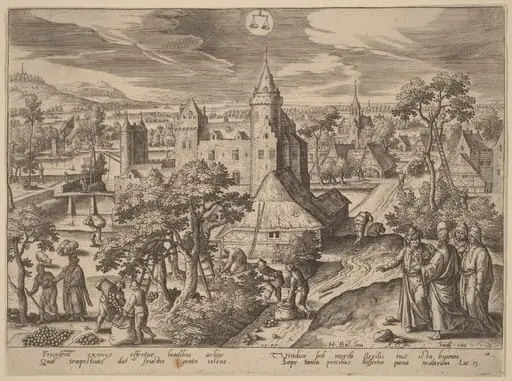
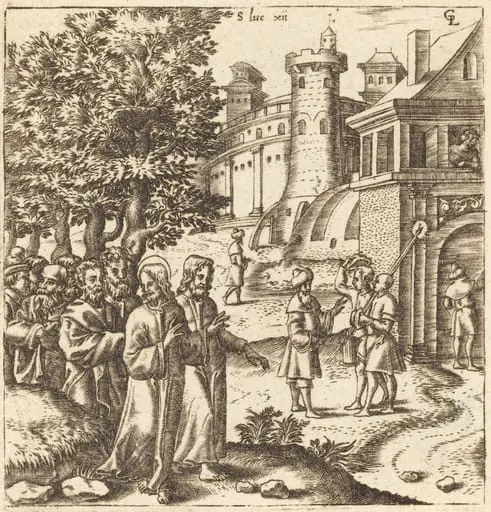
The Plucking of Ears of Corn on Sabbath Day is an ink print by the Renaissance artist Adriaen Collaert. It dates from 1585 and is held in the collection of the National Gallery of Art.
About this work
Overview
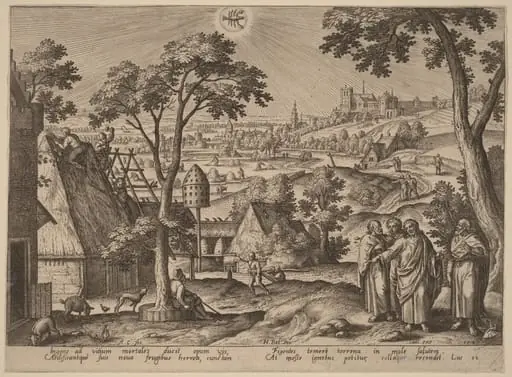
An engraving by Adriaen Collaert dated 1585, this print depicts a rural scene on the Sabbath, where laborers gather ears of corn in a field.
An engraving by Adriaen Collaert dated 1585, this print depicts a rural scene on the Sabbath, where laborers gather ears of corn in a field. Rendered on laid paper, the work uses fine linear techniques to convey movement and texture. A church steeple rises in the distance, anchoring the scene within a religious and agricultural context. The composition balances human activity with the quiet expanse of the landscape.
Subject & Meaning
The scene portrays villagers harvesting grain on a day traditionally reserved for rest, suggesting a tension between necessity and religious observance. Figures are shown in varied postures—bending, carrying, resting—hinting at the quiet persistence of daily labor. The presence of the church implies moral or communal judgment, though the work avoids overt condemnation, instead presenting the act as an unremarkable part of rural life.
Technique & Style
Collaert employed engraving with meticulous cross-hatching to model forms and suggest depth. The figures are rendered with delicate, precise lines, while the landscape is built through graduated tonal layers. The use of laid paper enhances the texture of the print, complementing the fine detail in clothing, foliage, and soil. Light is implied through contrast rather than chiaroscuro, giving the scene a quiet, even illumination.
History & Provenance
Created in 1585 during Collaert’s active years in Antwerp, the print likely circulated as part of a series illustrating biblical or moral themes. It was produced for a market interested in religious narratives grounded in everyday life. No early ownership records are widely documented, but similar engravings from this period were collected by both civic and private patrons in the Low Countries.
Context
In late 16th-century Flanders, religious observance was strictly regulated, yet agricultural labor often continued out of necessity. Collaert’s image reflects this social reality, aligning with a broader trend in Northern Renaissance art that depicted biblical stories through contemporary rural settings. The engraving format allowed wide dissemination, making such scenes accessible beyond elite audiences.
Legacy
Though not among Collaert’s most celebrated works, the engraving exemplifies his skill in translating narrative into intimate, detailed scenes. It contributes to a body of prints that documented the intersection of faith, labor, and landscape in early modern Europe. Its quiet realism influenced later genre scenes in Dutch and Flemish printmaking, particularly in the treatment of ordinary life under moral frameworks.
Artist & collection