Artwork
Three Cats and Two Monkeys
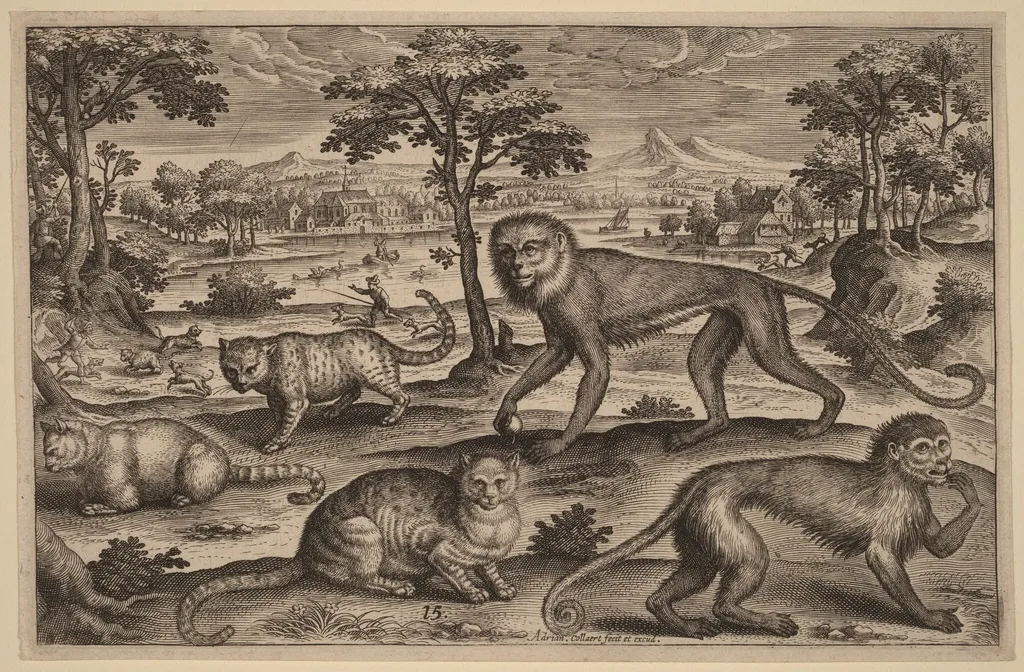
Three Cats and Two Monkeys is an ink print by the Renaissance artist Adriaen Collaert. It dates from 1597 and is held in the collection of the National Gallery of Art.
About this work
Overview
Adriaen Collaert’s print, titled Three Cats and Two Monkeys, is an engraving on laid paper dated to around 1597. The composition clusters three domestic cats with two monkeys, creating a compact, lively tableau that captures a moment of animal interaction.
Subject & Meaning
The work juxtaposes familiar European pets—cats—with exotic primates, a pairing that would have appealed to contemporary curiosity about foreign fauna. The cats’ alert postures and the monkeys’ playful grip on a nut suggest a scene of animated curiosity rather than a narrative episode.
Technique & Style
Collaert employs fine cross‑hatching to render the texture of fur and the subtle play of light across the figures. The engraving’s line work creates depth and volume, while the contrast between the smoothness of the monkeys’ skin and the cats’ shaggy coats emphasizes their differing natures.
History & Provenance
The print belongs to a larger series of animal studies that Collaert produced for the burgeoning market of collectors in the late sixteenth century. These prints were circulated as individual sheets, often bound in albums that catered to the taste for naturalistic yet decorative subjects.
Context
During the late Renaissance, European artists increasingly incorporated exotic animals into their work, reflecting expanding trade routes and a fascination with the natural world. Collaert’s inclusion of monkeys alongside cats mirrors this trend, offering viewers a blend of the familiar and the foreign.
Artist & collection


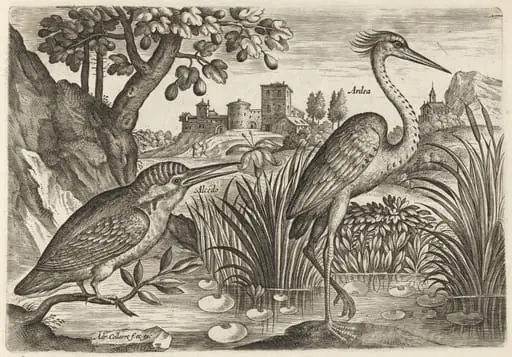
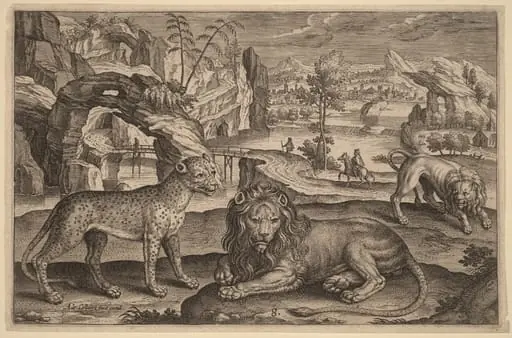 A Leopard and Two Lions
![Animals from an Ancient Wall Painting [Table I], by Italian 16th Century](https://artifactworldgallery.com/img/italian-16th-century--animals-from-an-ancient-wall-painting-table-i--b1419d1b558cc34c-w320.webp) Animals from an Ancient Wall Painting [Table I]
Animals from an Ancient Wall Painting [Table I]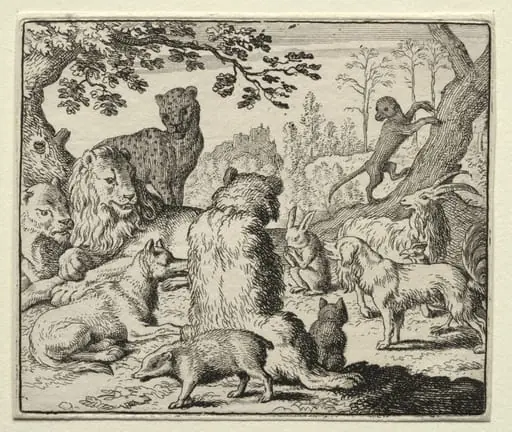 Reynard the Fox: Lion Orders Search for Reynard
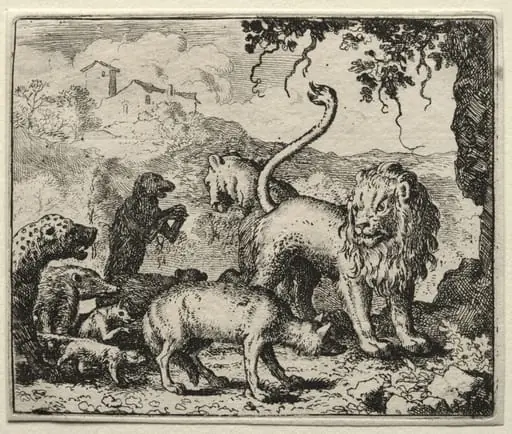 Reynard the Fox: First Complaint of the Wolf
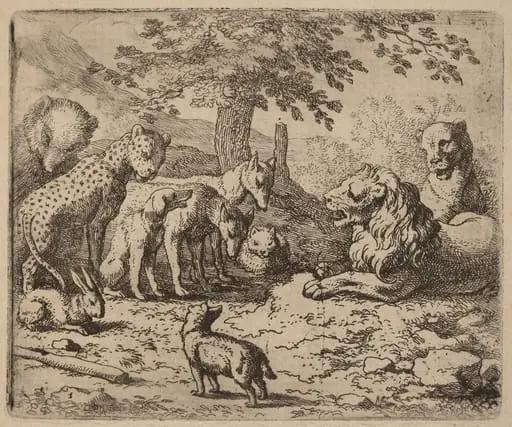 The Lion Seeks Advice
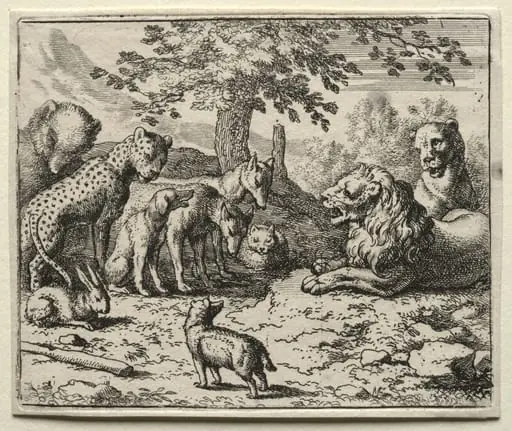 Reynard the Fox: The Lion's Council
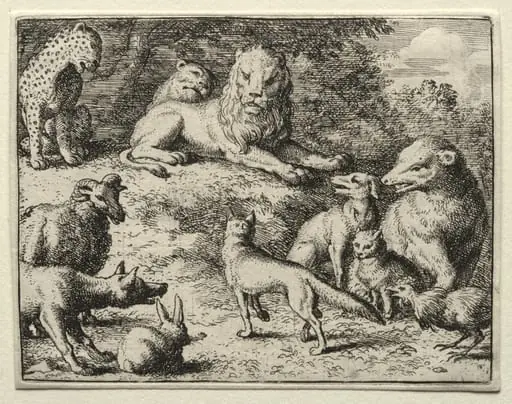 Reynard the Fox: Reynard Appears at Court
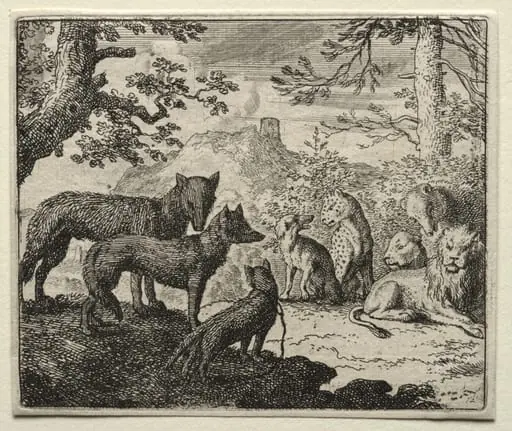 Reynard the Fox: The Relatives of Reynard Leave Court
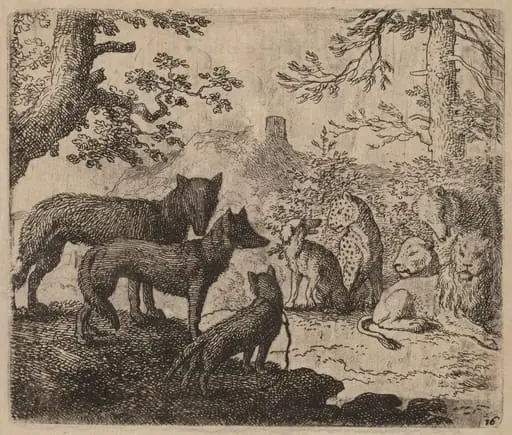 Reynard's Relatives Plead for Him
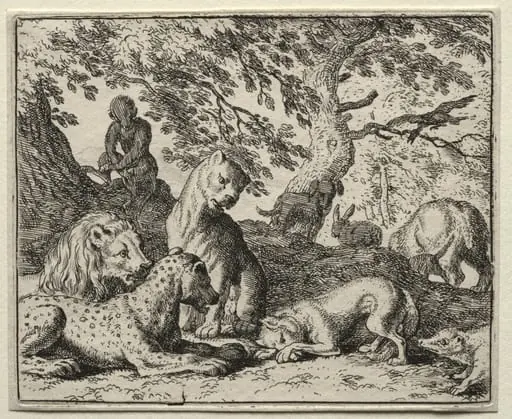 Reynard the Fox: Reynard Describes a False Plot Against the Lion