Artwork
Cartouche
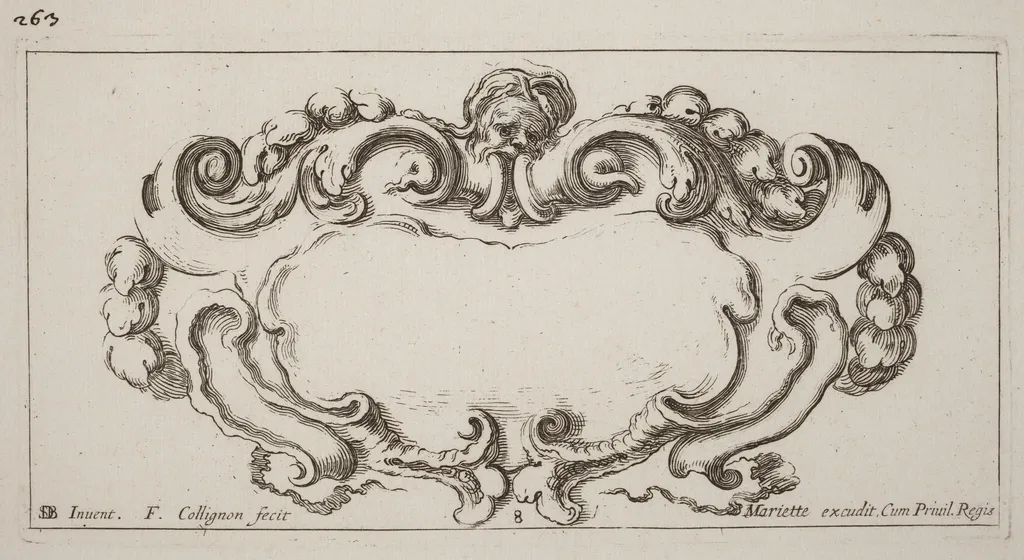
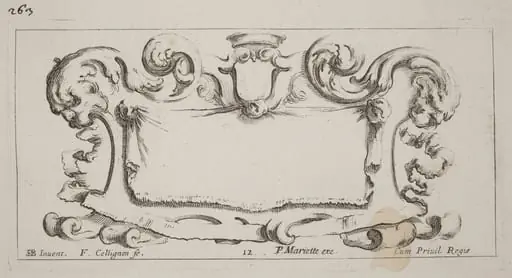
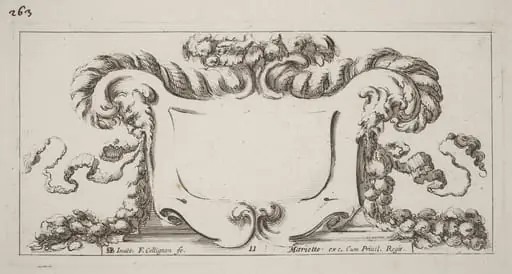
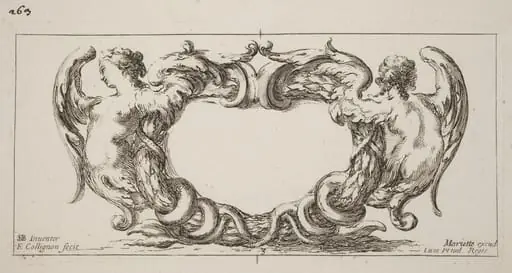
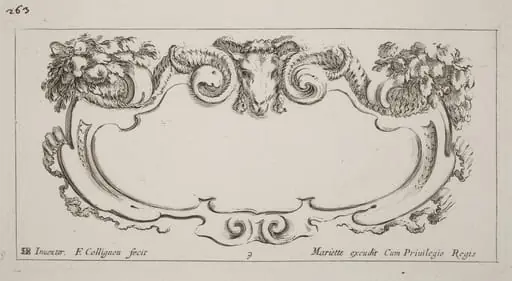
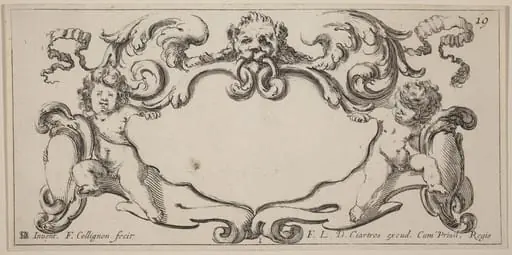
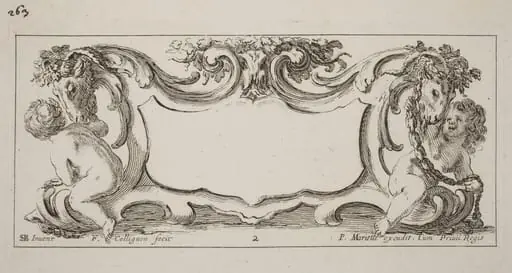
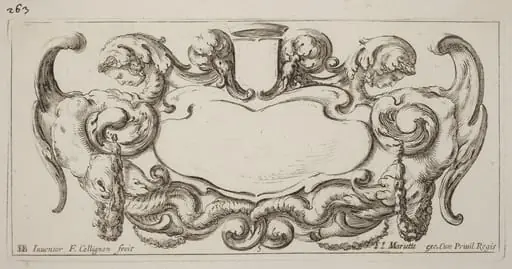
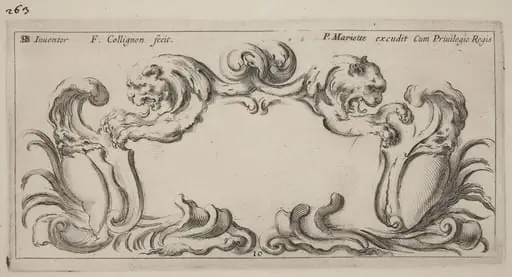
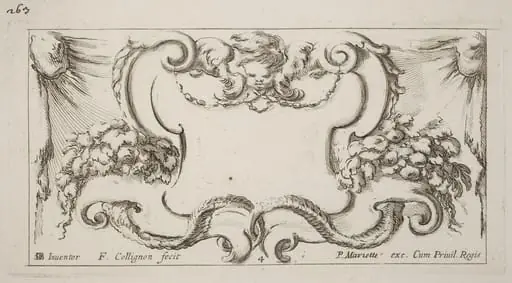
Cartouche is an ink print by the Baroque artist François Collignon. It dates from 1646 and is held in the collection of the National Gallery of Art.
About this work
Overview
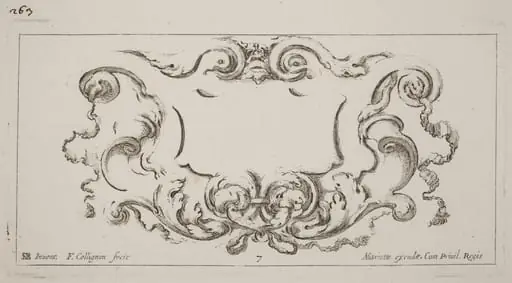
François Collignon’s print titled Cartouche, executed around 1646, presents a decorative border rendered in black ink on a pale paper. The composition consists of an elaborate frame filled with interlacing curves and straight lines, leaving a central void that suggests a space for inscription or illustration.
Technique & Style
The work is an etching, a process in which Collignon incised the design onto a metal plate, then transferred the inked image onto paper. The varying line weight—from bold strokes to delicate filigree—creates a rhythmic, ornamental quality typical of mid‑17th‑century Baroque decorative arts.
Subject & Meaning
The image functions as a cartouche, a stylized ornamental device historically used to surround text or heraldic symbols. By presenting an empty interior, the print emphasizes the decorative potential of the frame itself, inviting viewers to imagine its use as a textual or emblematic enclosure.
Context
Produced during the height of the Baroque period, the piece reflects the era’s fascination with elaborate, dynamic ornamentation. Such cartouches were common in architectural moldings, book frontispieces, and printed ephemera, serving both aesthetic and practical purposes in visual communication.
Artist & collection