Artwork
Rocaille Cartouche
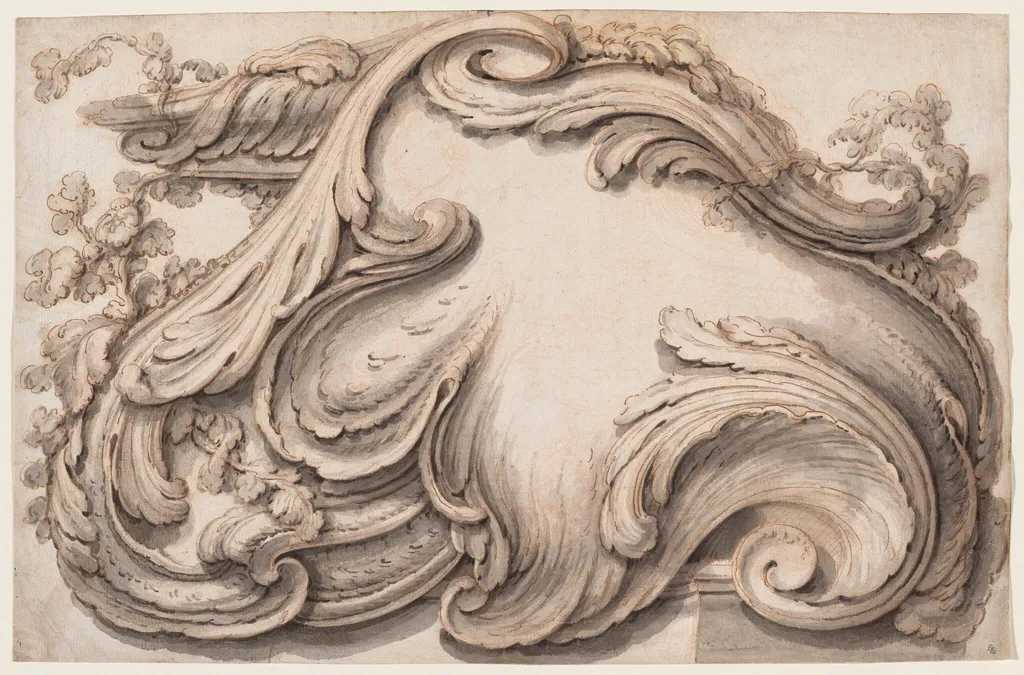
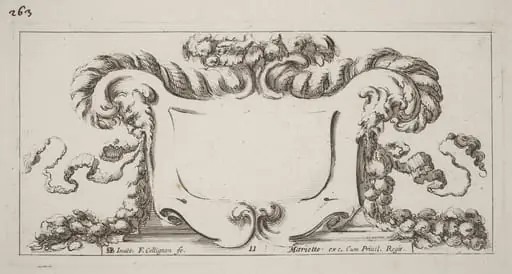
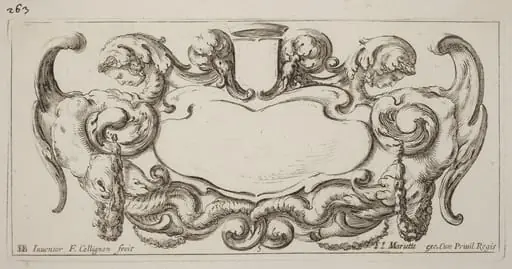
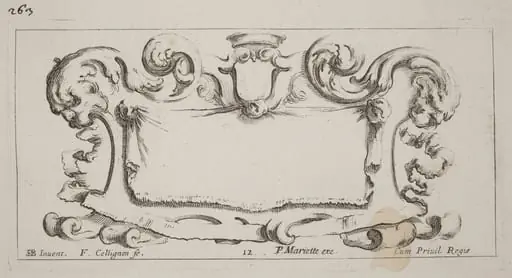
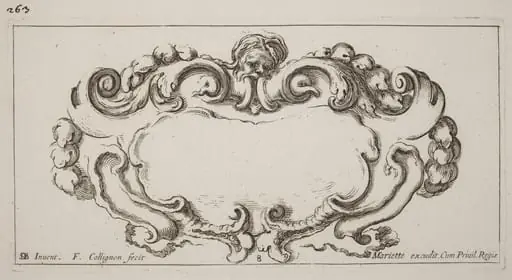
Rocaille Cartouche is an ink drawing by the Baroque artist Pierre-Edme Babel. It dates from 1748 and is held in the collection of the National Gallery of Art.
About this work
Overview
It belongs to a category of decorative studies common in 18th-century France, where artists explored ornamental forms for architectural application.
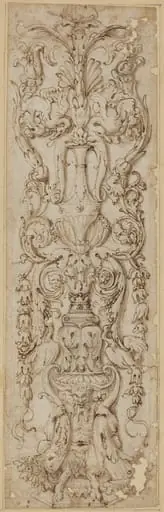
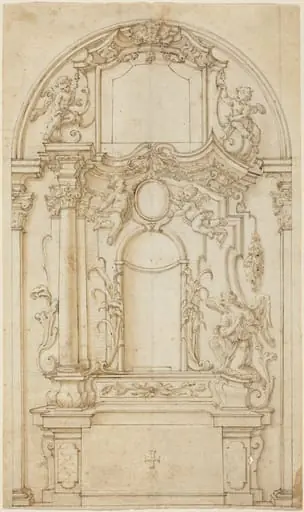
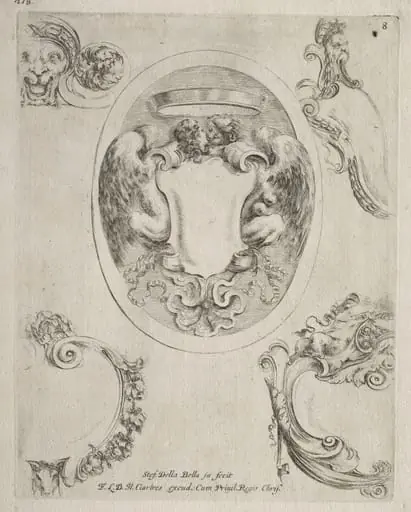
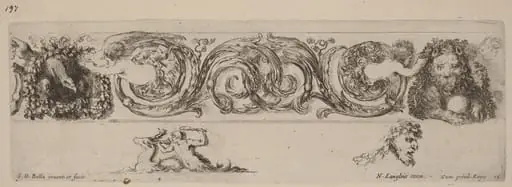
Created in 1748 by Pierre-Edme Babel, this drawing is executed in gray wash and pen with brown ink on laid paper. It belongs to a category of decorative studies common in 18th-century France, where artists explored ornamental forms for architectural application. The work is part of the National Gallery of Art’s collection in Washington, D.C., preserved as an example of Rococo draftsmanship rather than a finished composition.
Subject & Meaning
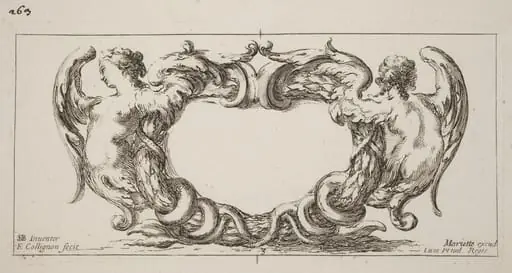
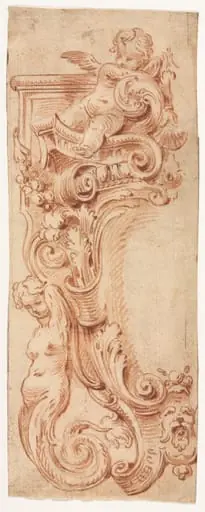
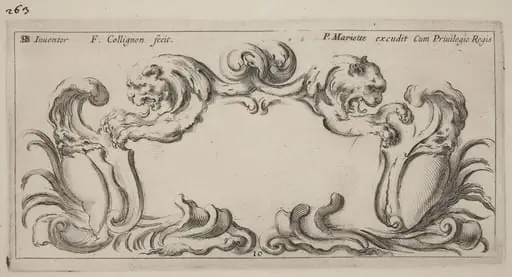
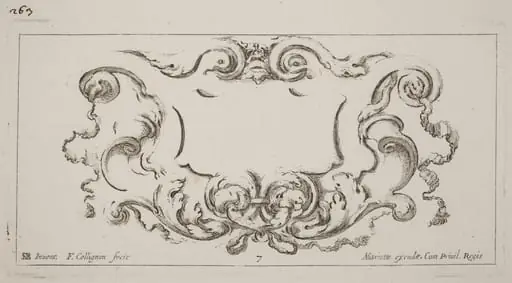
The drawing presents an abstracted cartouche formed by undulating, organic shapes resembling foliage and cloud-like swellings. It does not depict a literal scene but functions as a design prototype, likely intended for interior ornamentation. The absence of figural elements emphasizes the decorative potential of form itself, reflecting Rococo’s preference for fluid, nature-inspired motifs over rigid symmetry.
Technique & Style
Babel employed subtle gradations of gray wash to model volume, while fine pen lines define contours and texture. Soft, continuous strokes create a sense of movement, with delicate puffs and curls suggesting depth without perspective. Faint red accents, possibly added later or as underdrawing, introduce a muted warmth. The technique balances precision with spontaneity, characteristic of preparatory drawings for decorative arts.
History & Provenance
The drawing entered the National Gallery of Art’s collection through the A.W. Mellon Educational and Charitable Trust, a major source of early European works for the museum. Its origin in Babel’s studio suggests it was used as a reference for craftsmen in Parisian ateliers. No record of its original commission survives, but its condition and style align with other documented Rococo design studies from the mid-18th century.
Context
In the 1740s, French decorative arts favored intricate, asymmetrical ornamentation known as rocaille. Architects and designers relied on such drawings to communicate complex patterns to stucco workers and carvers. Babel’s work reflects a broader trend where artists transitioned from architectural drafting to more expressive, fluid compositions, bridging the gap between fine art and applied design in the Rococo era.
Legacy
Though Babel is not widely known today, this drawing exemplifies the quiet craftsmanship behind Rococo interiors. It preserves the process by which ornamental ideas were refined before execution in wood, plaster, or metal. As such, it contributes to the understanding of how decorative aesthetics were developed collaboratively, rather than through the vision of a single artist alone.
Artist & collection