Artwork
Cartouche
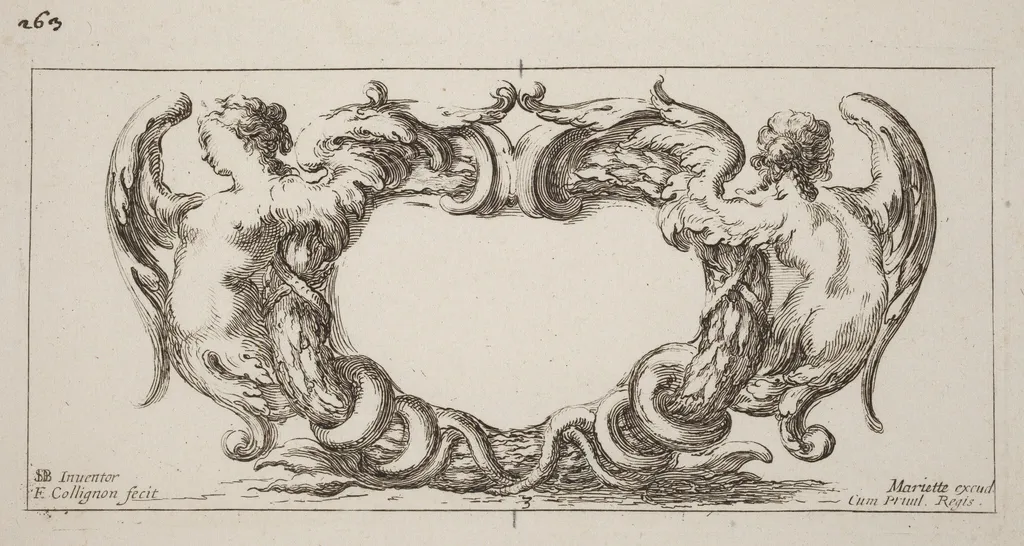
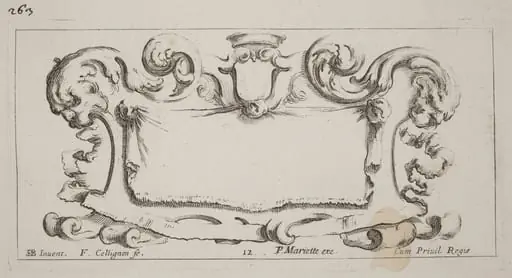
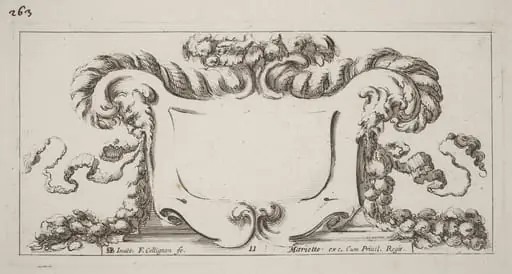
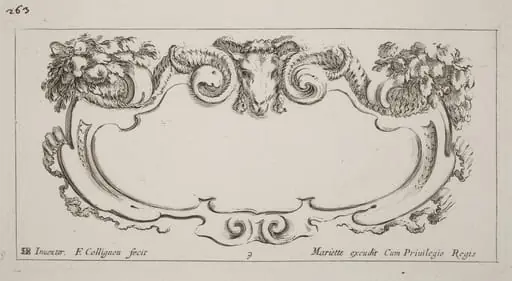
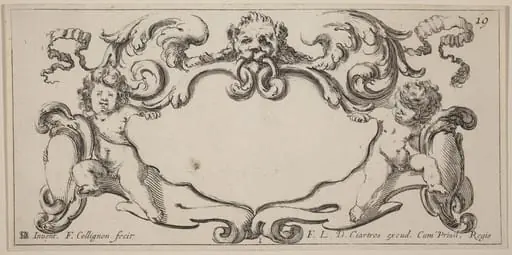
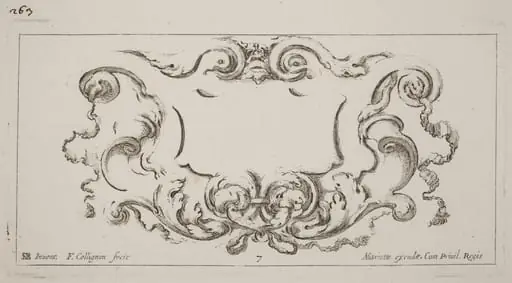
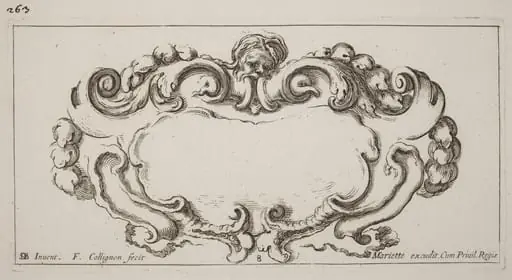
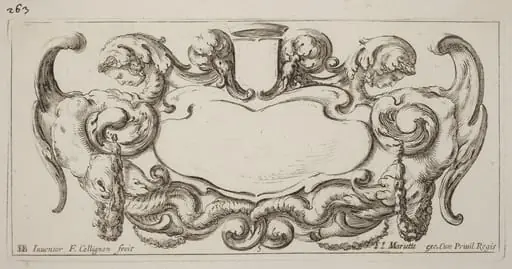
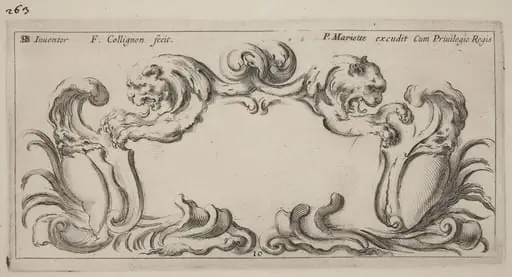
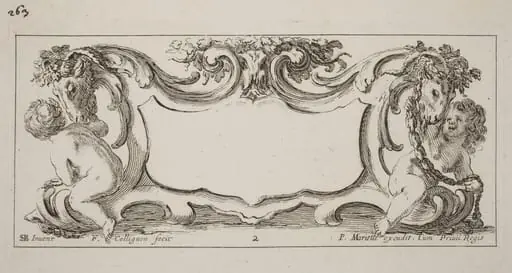
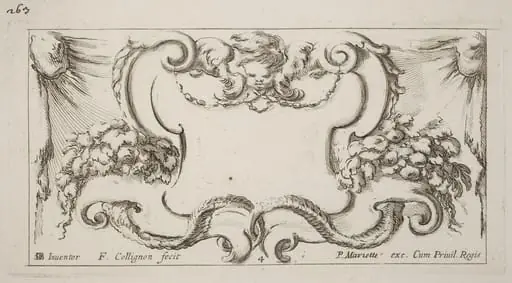
Cartouche is an ink print by the Baroque artist François Collignon. It dates from 1646 and is held in the collection of the National Gallery of Art.
About this work
Overview
Cartouche is an etching produced by François Collignon around 1646. The work belongs to the printmaking tradition of the mid-seventeenth century and exemplifies the expressive potential of etched lines. Unlike painted compositions, this piece relies on incised marks on a metal plate to generate its visual impact, emphasizing texture and motion over color or tone.
Subject & Meaning
Two ambiguous, winged forms entwine in a dense tangle of drapery and atmospheric swirls. Their features are deliberately softened, obscuring identity and reducing them to dynamic gestures. The composition suggests a moment of struggle or transformation, though no narrative is fixed. The lack of clear symbolism invites interpretation as an allegory of chaos, desire, or the instability of the soul.
Technique & Style
Collignon employed etching, a process in which acid bites lines into a metal plate coated with wax. The artist scratched through the ground to expose the metal, then etched intricate, jagged contours that convey urgency and turbulence. The resulting lines are sharp, uneven, and densely layered, creating a sense of restless energy that animates the entire surface.
History & Provenance
The work dates to Collignon’s active period in Paris during the 1640s, when he produced a small body of prints influenced by Mannerist and early Baroque aesthetics. While few of his etchings survive, Cartouche is among the better-documented examples. Its early ownership remains unclear, but it entered institutional collections in the nineteenth century as interest in Old Master prints revived.
Context
Collignon’s work aligns with a trend toward expressive, loosely rendered prints that prioritized emotional resonance over precision.
In mid-seventeenth-century France, etching was gaining favor among artists seeking alternatives to engraving’s rigidity. Collignon’s work aligns with a trend toward expressive, loosely rendered prints that prioritized emotional resonance over precision. His approach reflects broader European experimentation with the medium, particularly in the Netherlands and Italy, where artists explored the emotional potential of line.
Legacy
Cartouche stands as a rare example of Collignon’s graphic work, preserving his distinctive handling of line and movement. Though not widely known today, it contributes to the understanding of how etching evolved beyond reproductive purposes into a vehicle for personal expression. Its raw, gestural quality anticipates later developments in printmaking that valued spontaneity over polish.
Artist & collection