Artwork
Arundel Park, Sussex
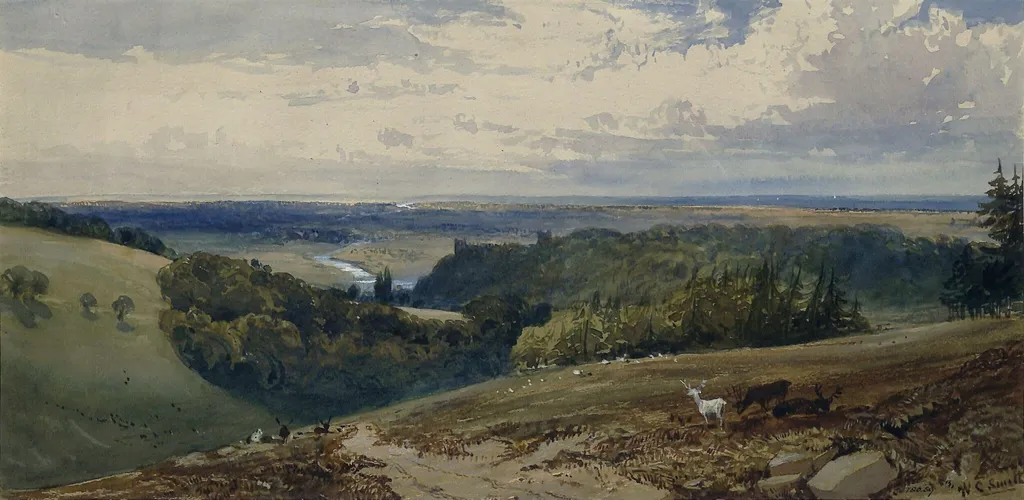
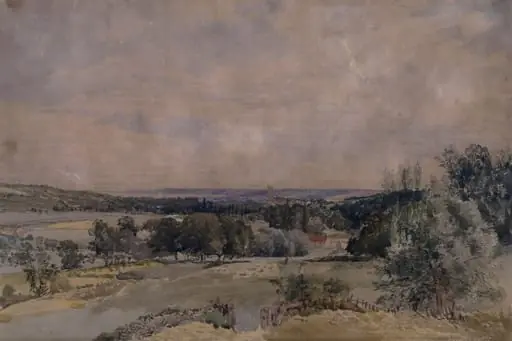
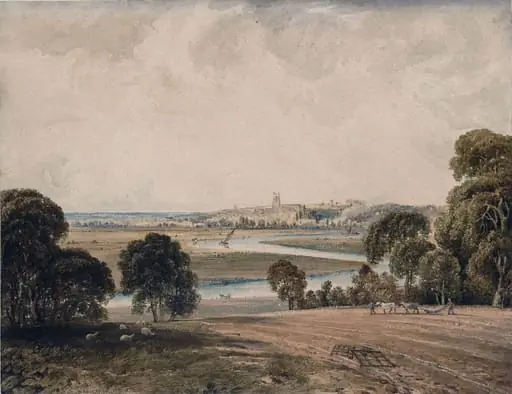
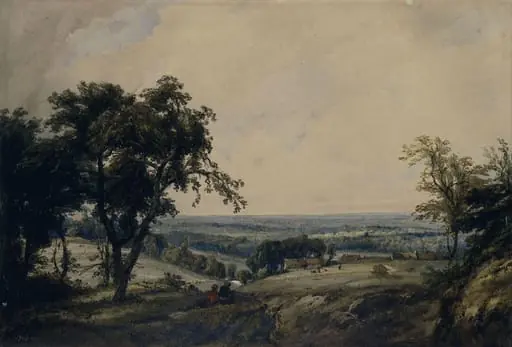
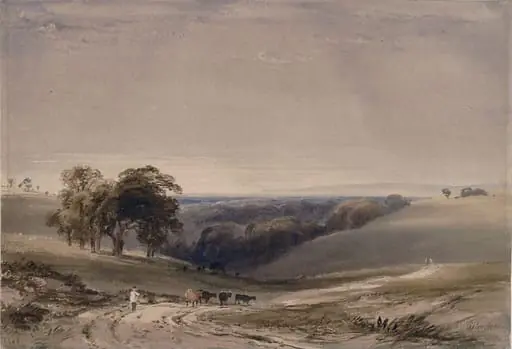
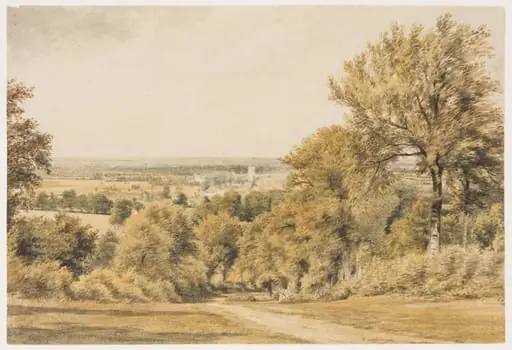
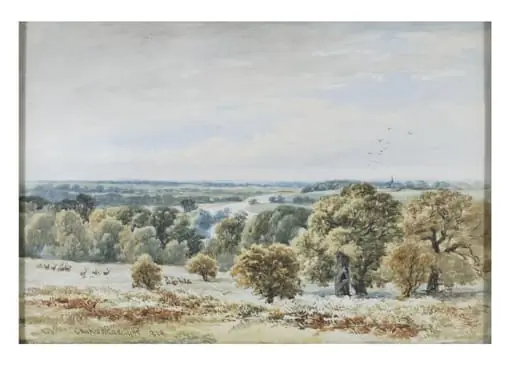
Arundel Park, Sussex is a watercolor work on paper by the British Romanticist artist Collingwood Smith. It dates from 1835 and is held in the collection of the Victoria and Albert Museum.
About this work
Overview
The work is signed by the artist and belongs to a tradition of topographical landscape painting popular among British artists of the early nineteenth century.
Created in 1835, this watercolour by Collingwood Smith depicts Arundel Park in Sussex, a private estate known for its expansive grounds and historic architecture. The work is signed by the artist and belongs to a tradition of topographical landscape painting popular among British artists of the early nineteenth century. Its quiet composition reflects a deliberate focus on natural harmony rather than dramatic spectacle.
Subject & Meaning
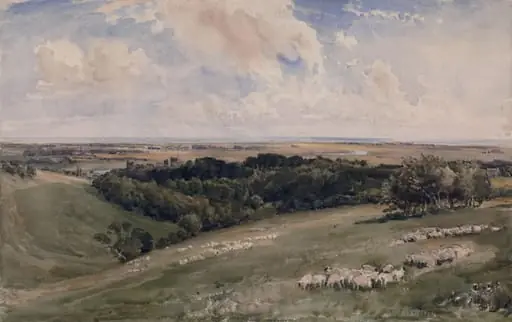
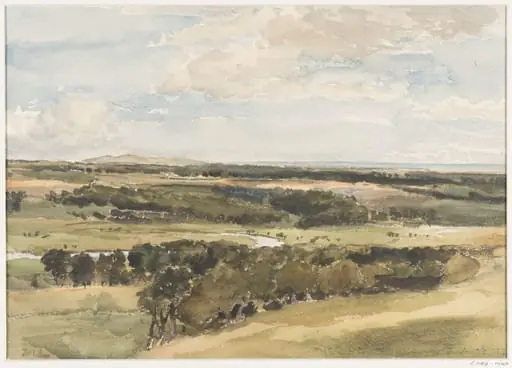
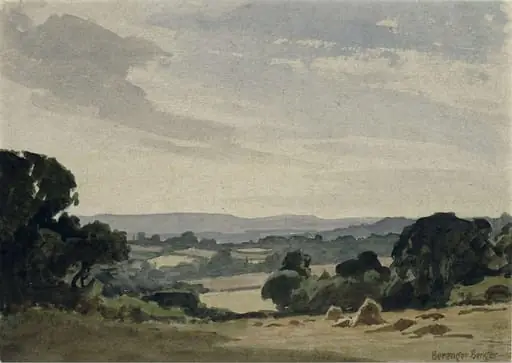
The scene presents a tranquil pastoral setting: grazing deer, undulating hills, and a canopy of trees under a diffused sky. The presence of wildlife suggests an untouched, managed landscape, typical of aristocratic estates. The soft light filtering through clouds evokes a moment of stillness, reinforcing themes of quiet endurance and the cultivated beauty of the English countryside.
Technique & Style
Smith employed transparent watercolour washes to achieve a luminous, atmospheric effect. Delicate brushwork defines distant trees and rolling terrain, while the foreground grasses are rendered with subtle tonal shifts rather than sharp detail. The absence of harsh lines and the blending of hues contribute to a hazy, contemplative mood, characteristic of Romantic-era landscape sensibilities.
History & Provenance
The painting was completed during a period when watercolour was gaining recognition as a serious medium in Britain. Though little is documented about Smith’s personal life, his association with Arundel Park suggests ties to local gentry or patrons interested in recording estate landscapes. The work’s survival and signature indicate it was valued as a finished piece, not merely a sketch.
Context
In the 1830s, British artists increasingly turned to domestic landscapes as national identity took root beyond urban centers. Arundel Park, with its medieval castle and preserved woodlands, represented an idealized vision of heritage and nature. Smith’s work aligns with contemporaries like Turner and Cotman, who used watercolour to explore mood and light in rural settings.
Legacy
While not widely exhibited today, the painting remains a representative example of early Victorian landscape watercolours. It contributes to the historical record of how private estates were visually documented and idealized. Its preservation offers insight into the aesthetic values of a time when landscape art served both personal reflection and cultural memory.
Artist & collection
Artist
Collingwood Smith painted quiet, detailed watercolors of English country houses and parks in the 1800s.