Artwork
View of Streatley-on-Thames
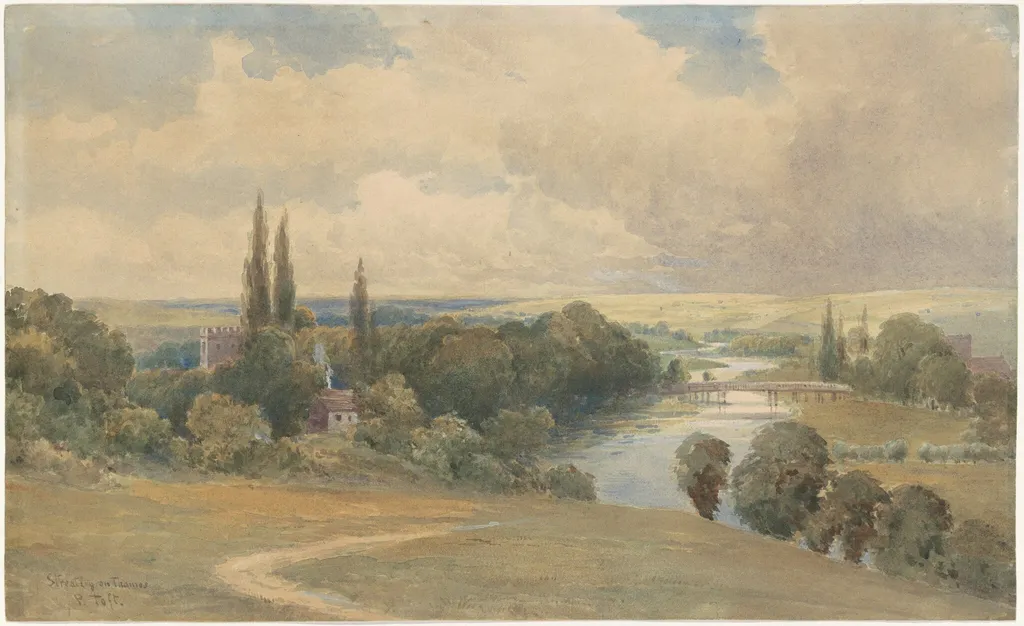
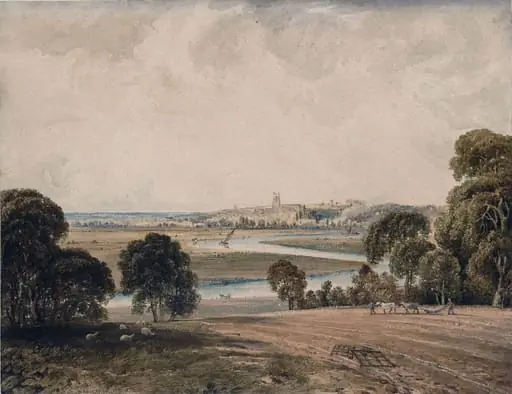
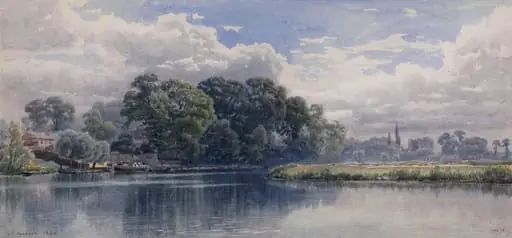
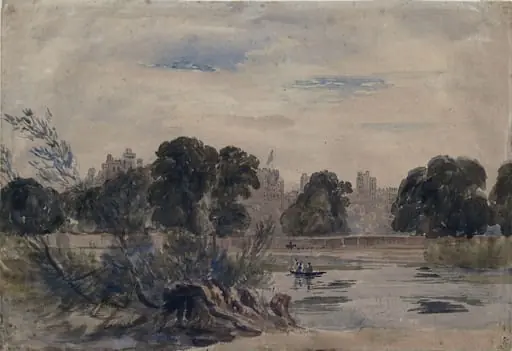
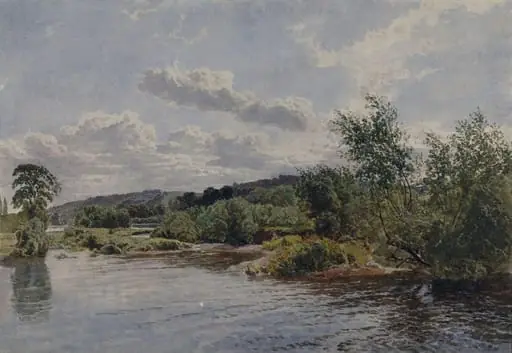
View of Streatley-on-Thames is a watercolor drawing by the Impressionist artist Peter Petersen Toft. It dates from 1884 and is held in the collection of the National Gallery of Art. Created in 1884, this watercolor on wove paper depicts a tranquil stretch of the River Thames near Streatley.
About this work
Overview
Created in 1884, this watercolor on wove paper depicts a tranquil stretch of the River Thames near Streatley.
Created in 1884, this watercolor on wove paper depicts a tranquil stretch of the River Thames near Streatley. The work is attributed to Peter Petersen Toft, a Danish-born artist active in England. It resides in the collection of the National Gallery of Art in Washington, D.C., where it is cataloged as a drawing due to its medium and scale. The piece reflects the 19th-century British watercolor tradition, emphasizing atmosphere over detail.
Subject & Meaning
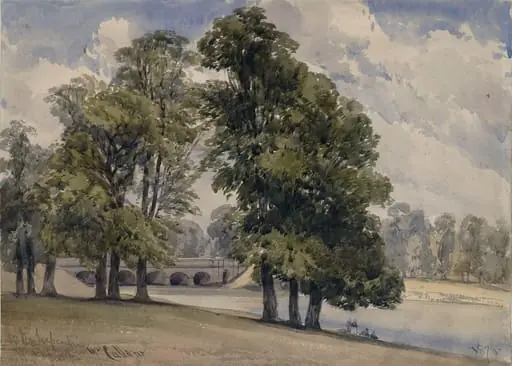
The scene captures a quiet riverside village with tall trees framing the banks and a distant arched bridge crossing the water. No figures or structures suggest human activity, reinforcing a sense of stillness. The composition invites contemplation of nature’s rhythm, aligning with Victorian-era ideals of pastoral serenity. The soft light and muted tones evoke a fleeting moment, perhaps early morning or late afternoon, enhancing the mood of quietude.
Technique & Style
Toft employed loose, fluid brushwork typical of watercolorists of the period, allowing pigment to bloom and blend on the paper’s surface. The light, airy sky and reflective water were achieved through wet-on-wet techniques, while the trees and bridge were suggested with minimal, rapid strokes. The use of wove paper, smooth and absorbent, enhanced the transparency of the washes, contributing to the luminous quality of the scene without heavy outlines or opaque layers.
History & Provenance
The work entered the National Gallery of Art’s collection through its broader acquisition of 19th-century British watercolors. Its provenance prior to institutional acquisition is not publicly documented, but its style and date align with Toft’s known output during his time in England. The piece was likely created during a period when British artists were increasingly drawn to plein air watercolor studies of rural landscapes.
Context
In the 1880s, watercolor was widely embraced by amateur and professional artists alike as a medium for capturing transient effects of light and weather. Toft’s work fits within a broader movement that valued spontaneity and naturalism over academic precision. Similar scenes by contemporaries like J.M.W. Turner and John Singer Sargent reflect a shared interest in the Thames Valley as a subject of quiet, observational study.
Legacy
Though not widely exhibited or reproduced, the painting remains a representative example of late 19th-century British watercolor practice. It contributes to the National Gallery’s collection as a modest yet evocative record of regional landscape aesthetics. Its preservation underscores the historical value placed on everyday scenes rendered with sensitivity to light and atmosphere, rather than grand narrative or dramatic composition.
Own this work as a print
Artist & collection