Artwork
Fallen
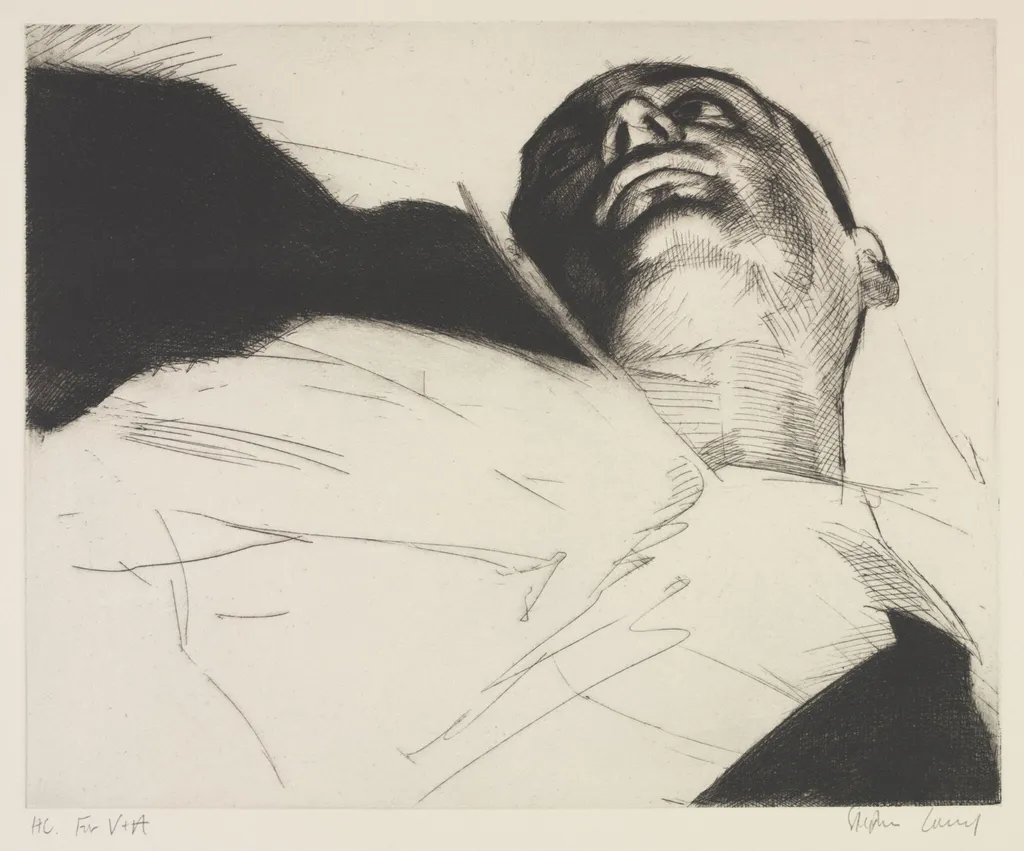
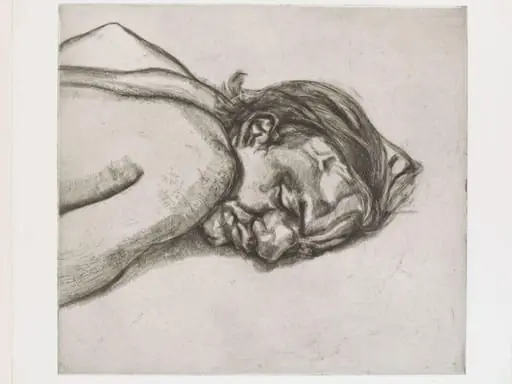
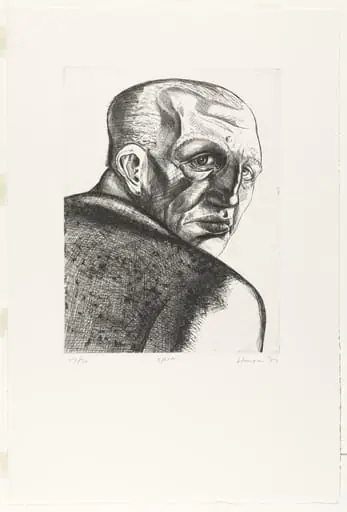
Fallen is an ink print by Stephen Conroy. It dates from 2002 and is held in the collection of the Victoria and Albert Museum.
About this work
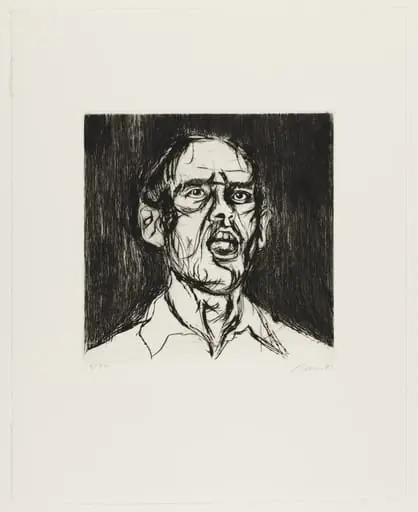
This is a 2002 etching plate by Stephen Conroy. It shows a man’s head and shoulders from an unusual angle—looking up.
The plate is part of a group donated by the printer Marc Balakjian. Conroy often works with Balakjian at Studio Prints.
His prints use Old Master ideas but feel fresh. The awkward pose makes you pause.
Look up the technique called drypoint next.
Overview
This 2002 etching plate was created by Scottish artist Stephen Conroy, known for his figurative work rooted in classical traditions.
This 2002 etching plate was created by Scottish artist Stephen Conroy, known for his figurative work rooted in classical traditions. Executed in collaboration with master printer Marc Balakjian at Studio Prints, the plate is one of several donated to the V&A through Balakjian and Dorothea Wight. It serves as the matrix for an impression held in the museum’s collection (E.19-2009), reflecting Conroy’s sustained engagement with printmaking as a medium for introspective portraiture.
Subject & Meaning
The image presents a low-angle view of a man’s head and shoulders, suggesting a self-portrait through its intimate, unflinching perspective. The pose is deliberately disorienting—neither heroic nor conventional—inviting contemplation rather than recognition. Conroy avoids narrative clarity, instead emphasizing psychological presence. The subject’s gaze is withheld, enhancing the sense of ambiguity and internal tension that characterizes much of his figurative work.
Technique & Style
The plate was made using etching, likely with drypoint accents, to achieve rich, velvety lines and subtle tonal shifts. Conroy’s draftsmanship draws from the chiaroscuro and psychological depth of Caravaggio and Rembrandt, yet the composition resists historical replication. His handling of form is precise yet raw, merging Old Master influences with a contemporary sensibility that embraces discomfort and spatial dislocation.
History & Provenance
The plate was produced during Conroy’s long-standing collaboration with Marc Balakjian at Studio Prints, a hub for contemporary printmaking in London. It was among a group of plates donated to the V&A through Balakjian and his partner Dorothea Wight, who facilitated the transfer of works by multiple artists. This donation reflects a broader effort to preserve the material legacy of artist-printer partnerships in late 20th-century British art.
Context
Conroy emerged in the 1980s alongside a generation that reasserted figuration against prevailing abstraction. His work engages with the psychological intensity of Francis Bacon and the compositional gravity of 17th-century painters, yet avoids pastiche. The etching plate exemplifies how traditional techniques were reactivated to explore modern subjectivity—not as revival, but as reinvention through personal observation.
Legacy
This plate endures as a testament to the collaborative nature of printmaking and the quiet persistence of figurative inquiry in contemporary art. Conroy’s work, though not widely exhibited in major retrospectives, maintains influence through its disciplined engagement with historical models and its refusal of easy interpretation. The V&A’s holding ensures its place within the ongoing dialogue between technique, identity, and visual tradition.
Artist & collection
Artist
Scottish artist Stephen Conroy made stark, etched portraits and figure studies in the 1990s.