Artwork
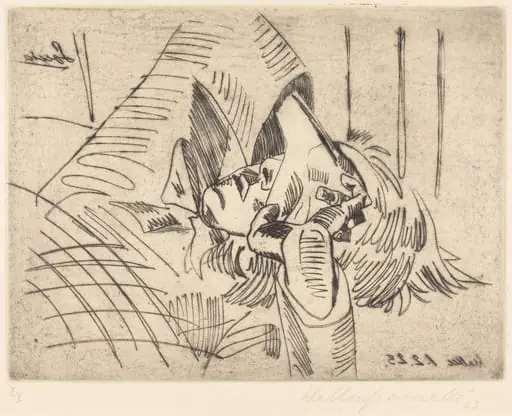
Reclined Woman Sleeping (Femme couchee sommeillant)
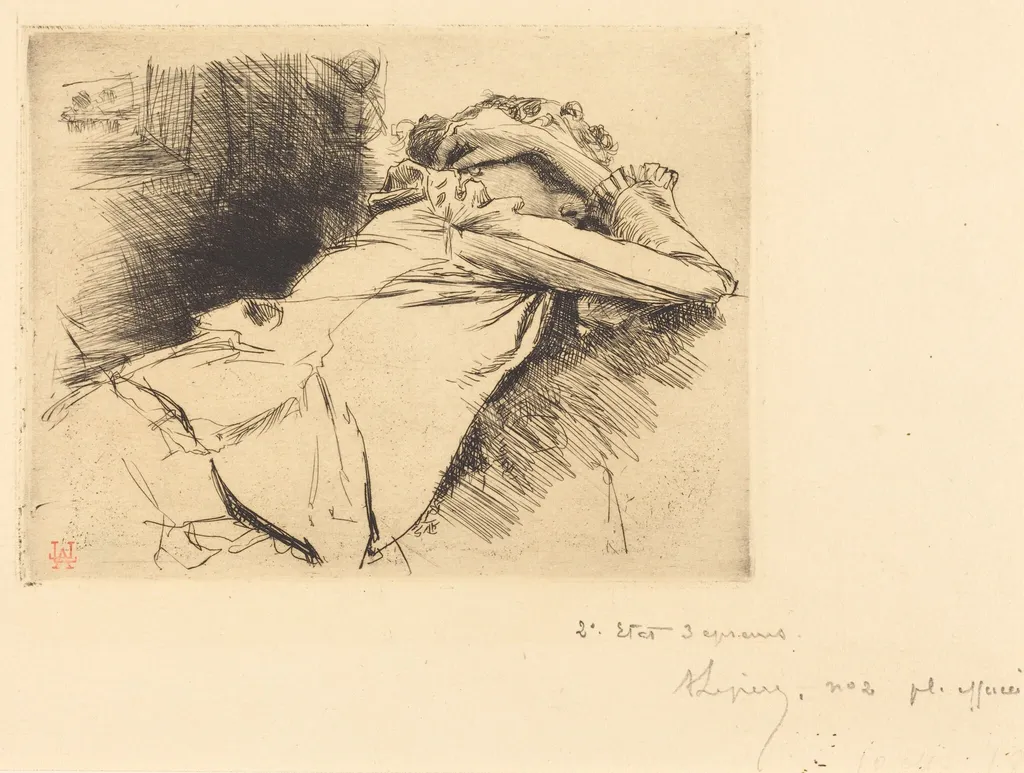
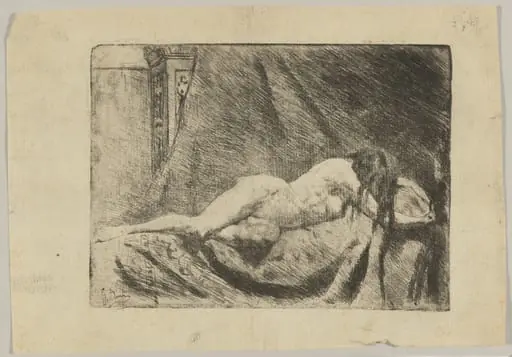
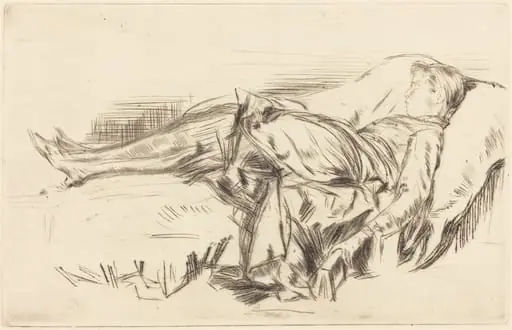
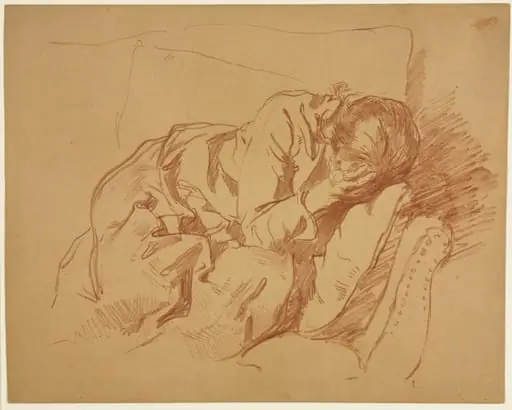
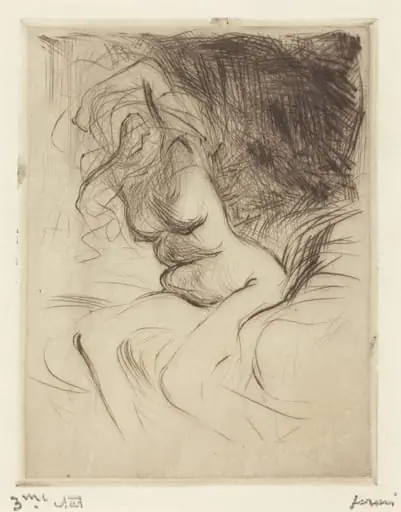
Reclined Woman Sleeping (Femme couchee sommeillant) is an ink print by the Impressionist artist Auguste Lepère. It dates from 1892 and is held in the collection of the National Gallery of Art.
About this work
Overview
Created in 1892, *Reclined Woman Sleeping* is an etching with drypoint by French artist Auguste Lepère.
Created in 1892, *Reclined Woman Sleeping* is an etching with drypoint by French artist Auguste Lepère. The work belongs to a broader revival of printmaking in late 19th-century Europe, where Lepère played a central role in renewing interest in handcrafted techniques. His approach combined the precision of etching with the spontaneity of drypoint, resulting in a tactile, intimate image that feels both deliberate and immediate.
Subject & Meaning
The figure is a woman in repose, reclining with her head supported by one arm, her face obscured by the shadow of a wide-brimmed hat. A draped cloth partially covers her body, suggesting privacy and quietude. The pose conveys stillness rather than narrative, emphasizing the ordinary moment of rest. The anonymity of the face invites contemplation of solitude rather than identification, aligning with the era’s interest in private, unguarded human states.
Technique & Style
Lepère employed drypoint to create rich, scratchy lines that vary in thickness and density, giving the image a sketchlike immediacy. The etched grounds provide subtle tonal areas, while the paper’s texture enhances the sense of handwork. The loose, uneven strokes suggest rapid execution, as if the artist captured the pose in a single sitting. This technique prioritizes expressive line over polished finish, reflecting a preference for authenticity over idealization.
History & Provenance
The print emerged during a period when Lepère was actively promoting traditional print methods in opposition to industrial reproduction. Though specific early ownership records are sparse, the work aligns with his broader efforts to elevate etching as a fine art form. It was likely circulated among collectors and artists interested in the revival of manual printmaking, particularly in France and neighboring countries where wood engraving was being reimagined.
Context
In the 1890s, European artists sought to reclaim printmaking from mechanical reproduction, valuing the artist’s hand. Lepère’s work resonated within this movement, alongside contemporaries like Whistler and Degas. The intimate scale and informal subject of *Reclined Woman Sleeping* reflect a broader cultural turn toward domestic quietude and psychological nuance, moving away from grand historical or mythological themes.
Legacy
Lepère’s prints, including this one, contributed to the reestablishment of etching and drypoint as legitimate artistic media in the modern era. His emphasis on direct, expressive mark-making influenced later generations of printmakers who valued process over perfection. While not widely exhibited today, his technical innovations remain referenced in studies of 19th-century print revival and the aesthetics of the sketch in finished works.
Artist & collection
Artist
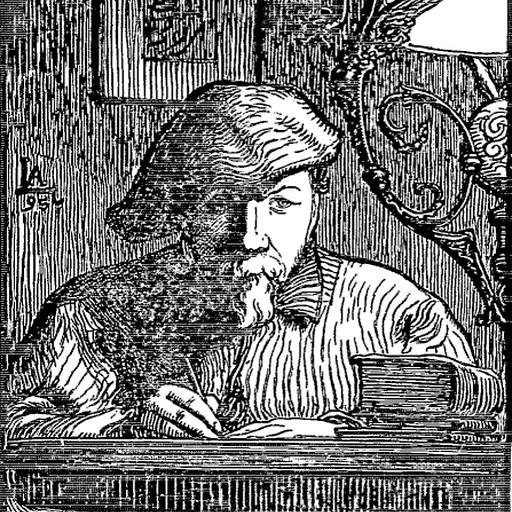
Louis-Auguste Lepère (30 November 1849 – 20 November 1918) was a French painter and etcher. Lepère is also considered a leader in the creative revival of wood engraving in Europe.