Artwork
Cottages on a high bank
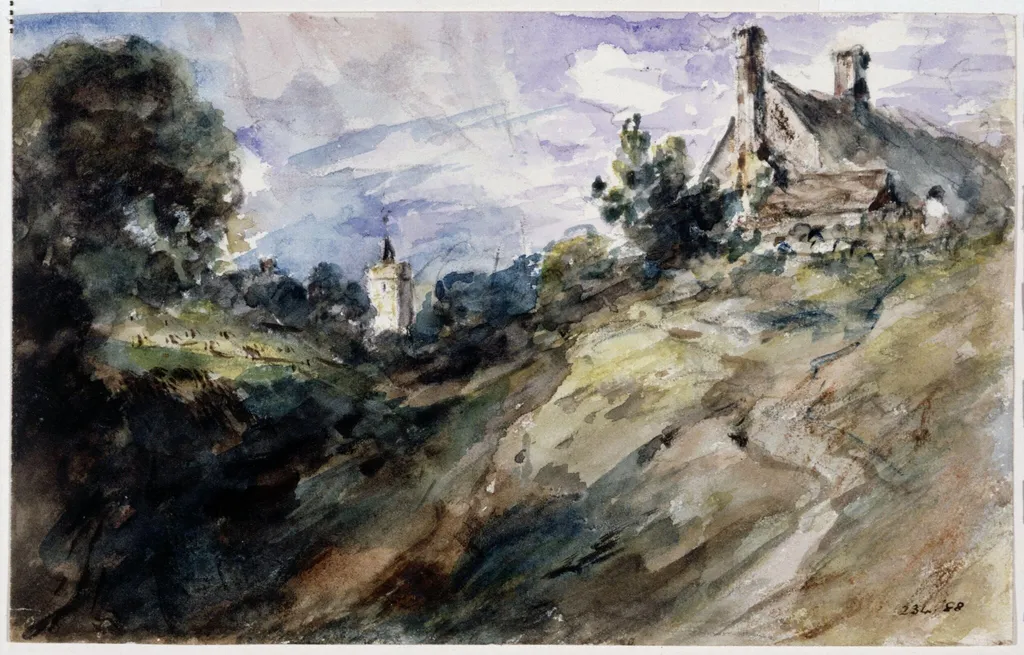
Cottages on a high bank is a watercolor work on paper by the Romanticist artist John Constable. It dates from 1834 and is held in the collection of the Victoria and Albert Museum. This watercolour, dated 1834, captures a quiet rural scene on a sloping bank, where modest cottages cling to the hillside.
About this work
Overview
Its delicate washes and unembellished subject matter align with his broader practice of observing nature with quiet precision rather than dramatic flourish.
This watercolour, dated 1834, captures a quiet rural scene on a sloping bank, where modest cottages cling to the hillside. Executed during a period of active travel and lecture tours, the work reflects John Constable’s sustained interest in the English countryside. Its delicate washes and unembellished subject matter align with his broader practice of observing nature with quiet precision rather than dramatic flourish.
Subject & Meaning
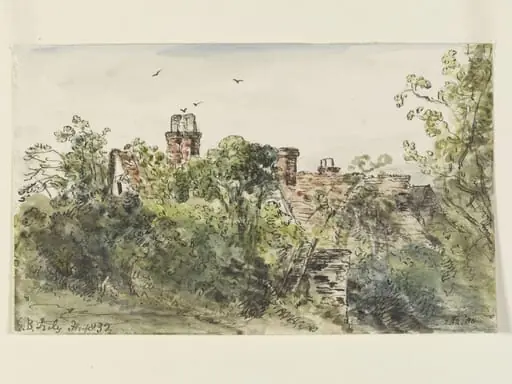
The composition centers on humble dwellings nestled along a winding path, with a distant church steeple anchoring the horizon. Trees and rolling fields frame the view, suggesting a lived-in, unidealized landscape. There is no narrative or human activity—only the quiet persistence of rural life. The scene conveys a sense of stillness and continuity, characteristic of Constable’s reverence for ordinary places.
Technique & Style
Constable employed loose, fluid watercolour washes to suggest atmosphere and light. Soft greens and browns define the land, while pale blues in the sky are applied with minimal detail, evoking movement rather than definition. The paint bleeds subtly at the edges, mimicking natural transitions between terrain and sky. His brushwork is economical, prioritizing mood over finish, a hallmark of his mature watercolour style.
History & Provenance
Created in 1834, the work coincides with Constable’s visits to Arundel and his lectures in Worcester, periods when he frequently sketched outdoors. Though not exhibited publicly at the time, it belongs to a body of private studies he produced for personal reflection. Its survival suggests it was retained within his circle, possibly as a reference or quiet record of place.
Context
In the 1830s, Constable increasingly turned to watercolour for its immediacy, using it to capture fleeting effects of light and weather. While oil paintings dominated public exhibitions, these smaller works offered him freedom from academic expectations. This piece reflects his alignment with a tradition of topographical drawing, yet elevates it through emotional resonance and observational depth.
Legacy
Though less known than his large-scale oils, this watercolour exemplifies Constable’s influence on later landscape artists who valued direct observation and expressive brushwork. His watercolours, once considered preparatory, are now recognized as complete expressions of his vision—quiet, honest, and deeply attuned to the rhythms of the natural world.
Own this work as a print
Artist & collection
Artist
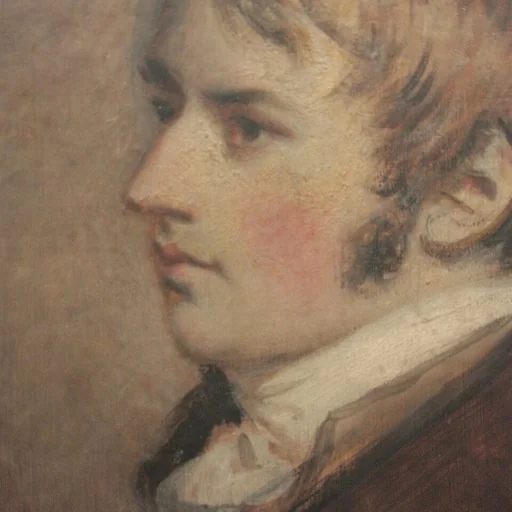
John Constable (; 11 June 1776 – 31 March 1837) was an English landscape painter in the Romantic tradition.

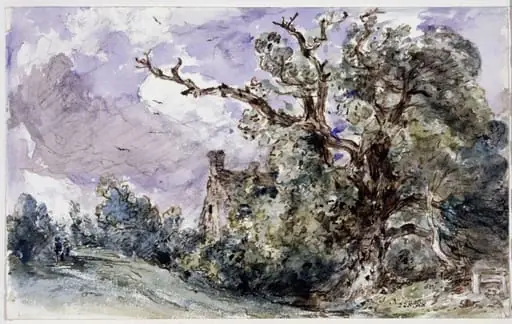 A cottage by a wood at Findon, Sussex
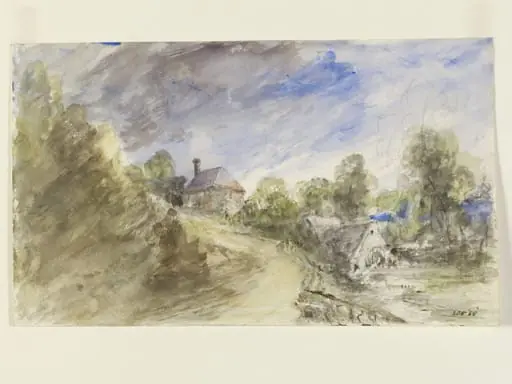 A cottage and water-mill at Bignor
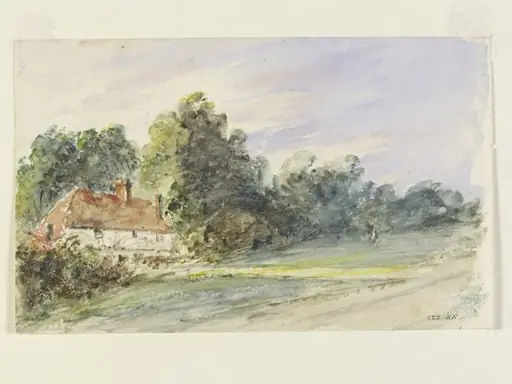 A cottage with a red-tiled roof, by a wood
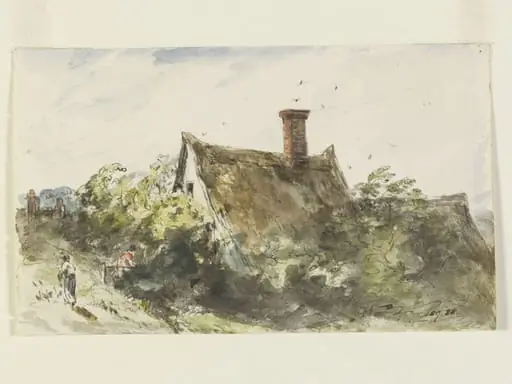 A thatched cottage and two figures
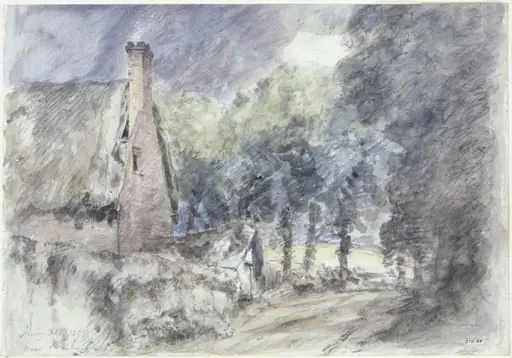 A cottage and Trees near Salisbury
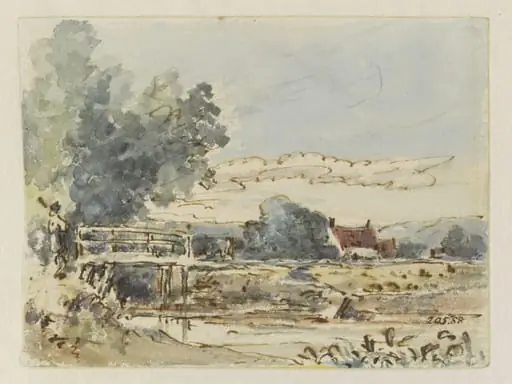 A bridge over a stream, with a cottage behind
 Pengwern Old Hall, Festiniog, Merionethshire
 Cottages at East Bergholt
 Landscape with road in flat country
 Vejen gennem Côte-Saint-André ved Grenoble