Artwork
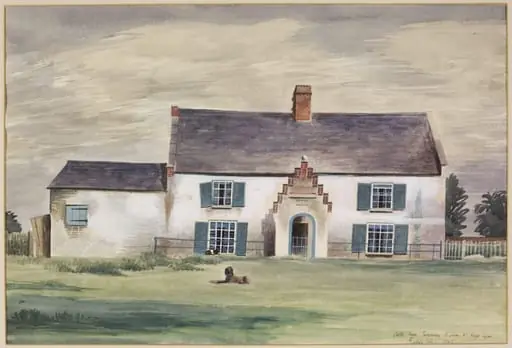
Pengwern Old Hall, Festiniog, Merionethshire
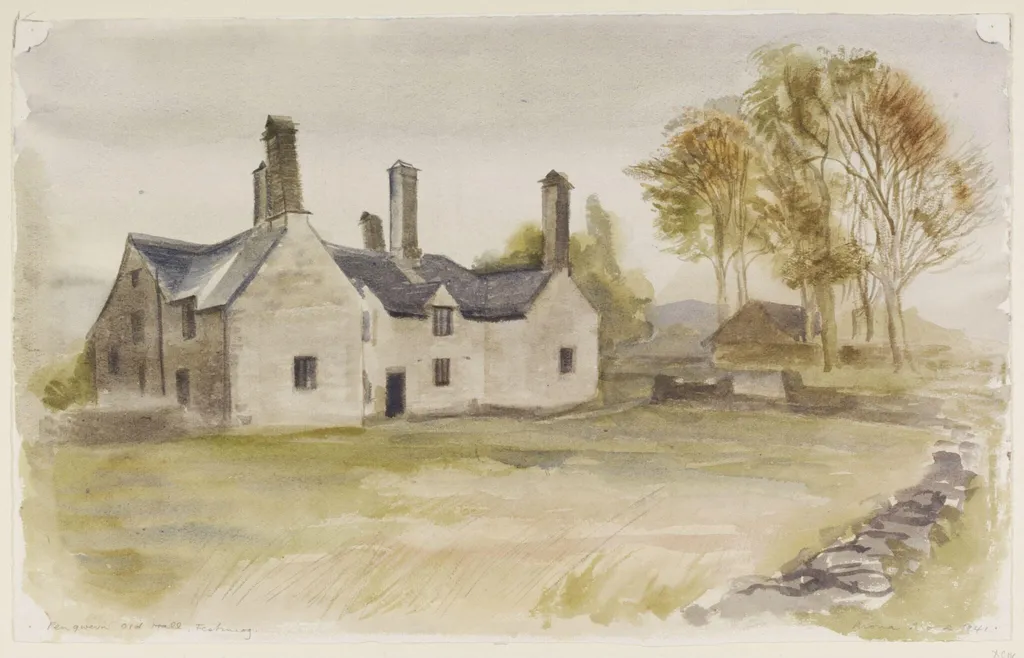
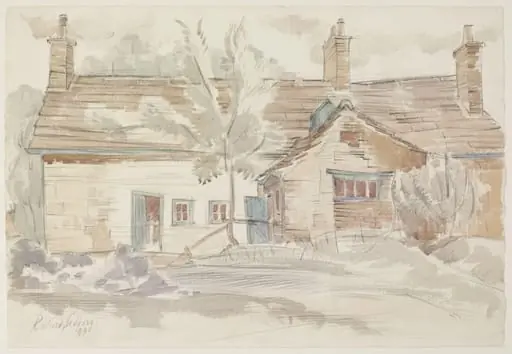
Pengwern Old Hall, Festiniog, Merionethshire is a watercolor work on paper by Mona Moore. It dates from 1941 and is held in the collection of the Victoria and Albert Museum.
About this work
Overview
Mona Moore’s 1941 watercolor presents Pengwern Old Hall, a modest stone country house in Merionethshire. The composition balances the building’s pale walls and tall chimneys with a low stone wall, a grassy foreground and a sky mottled with clouds, conveying a quiet rural atmosphere.
Subject & Meaning
The work records a typical Welsh farmhouse, emphasizing its integration with the surrounding landscape. By focusing on the plain architecture and the gentle sweep of the field, the image underscores the enduring simplicity of rural life amid the broader upheavals of the early 1940s.
Technique & Style
Executed in muted pigments, Moore employs soft washes and delicate brushwork to render stone, foliage and sky with subtle tonal variation. The restrained palette and loose handling create a sense of atmospheric calm, while the precise delineation of architectural details maintains a documentary clarity.
History & Provenance
Created for the Recording Britain project, the painting belongs to a wartime effort that mobilised artists to capture Britain’s built heritage. The scheme, funded by the Pilgrim Trust and directed by Sir Kenneth Clark, commissioned 97 artists to produce more than 1,500 works between 1940 and 1943, of which this piece is a surviving example.
Context
Recorded during World War II, the image reflects a national desire to preserve visual memory of historic and rural sites threatened by change. Pengwern Old Hall, situated in the Welsh countryside, exemplifies the type of modest yet culturally resonant architecture the project aimed to document.
Artist & collection
Artist
Mona Moore painted quiet watercolours of Welsh villages and coastline in the 1940s.

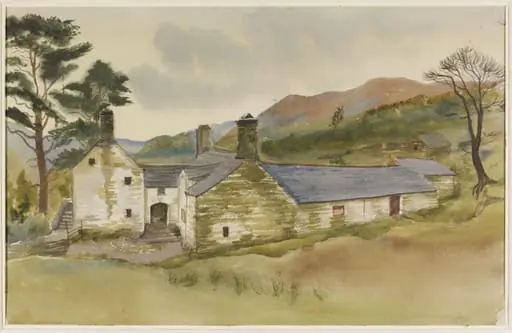 Ddu-Allt, Tan-y-Bwlch, Merionethshire
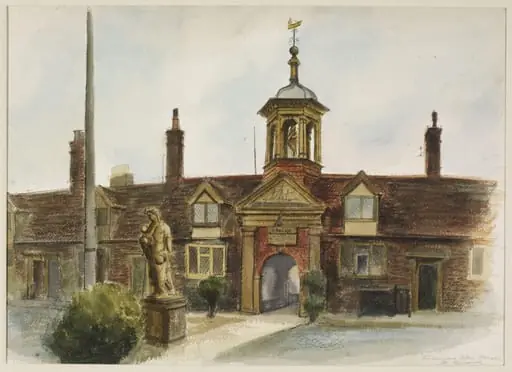 Fishermen's Almshouses, Great Yarmouth
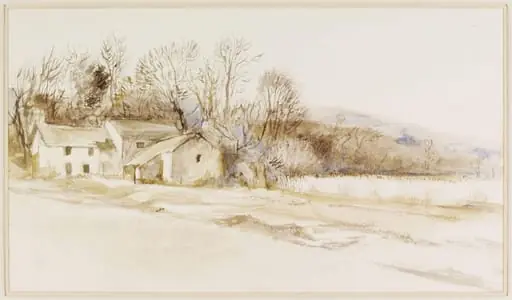 Old Mill, Clynne Valley, Gower, Glamorganshire
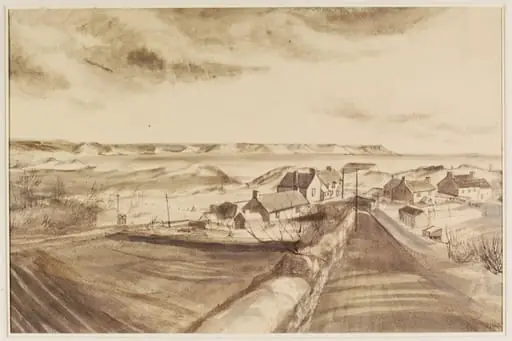 Oxwich Bay and Village, Gower, Glamorganshire
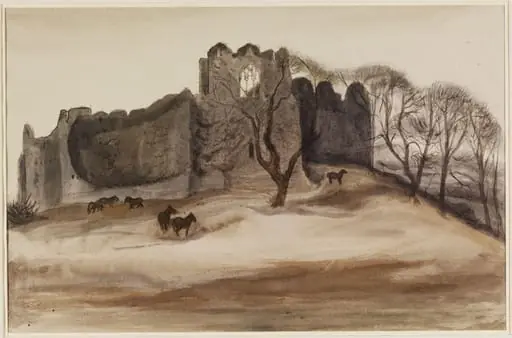 Oystermouth Castle, Gower, Glamorganshire
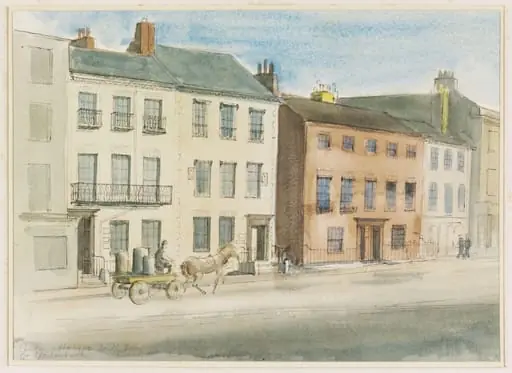 18th Century Houses, South Quay, Great Yarmouth
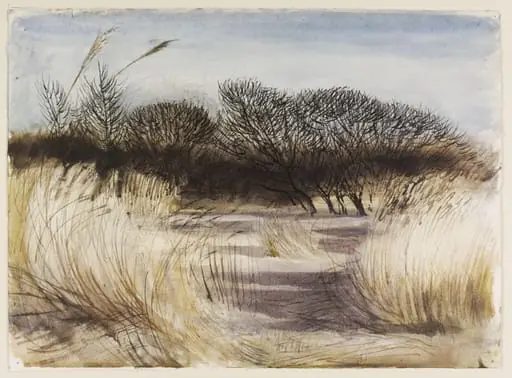 Oxwich, Gower, Glamorganshire
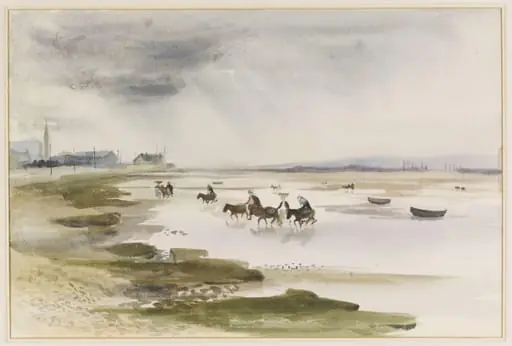 Penclawdd, Gower, Glamorganshire