Artwork
OLD SARUM
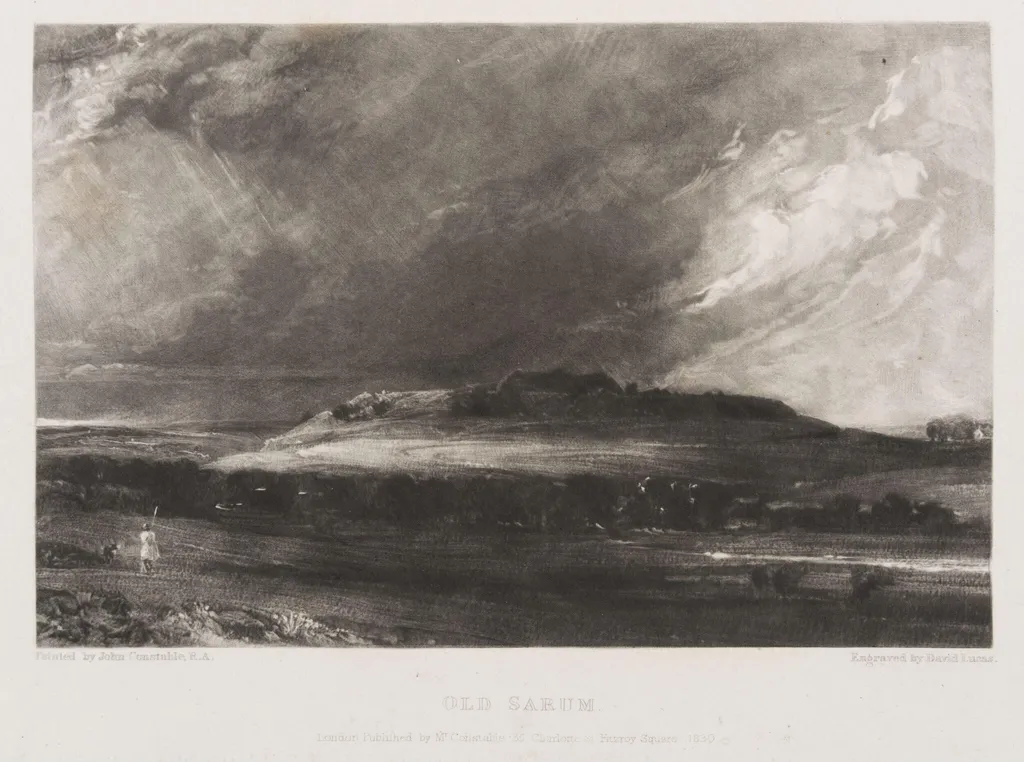
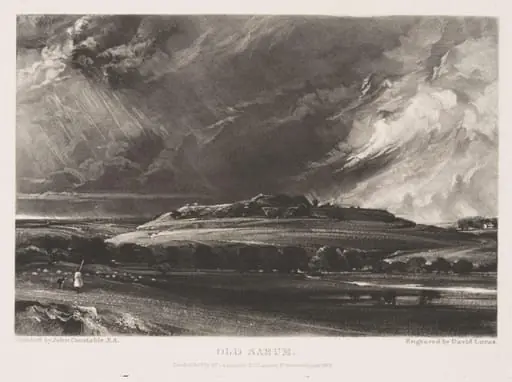
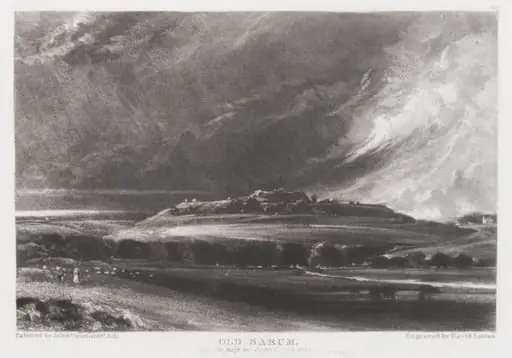
OLD SARUM is a print by the Romanticist artist John Constable. It dates from 1830 and is held in the collection of the Victoria and Albert Museum.
About this work
Overview
The series was issued in six installments and later revised by Constable in 1833, reflecting his evolving intentions for how his work should be seen.
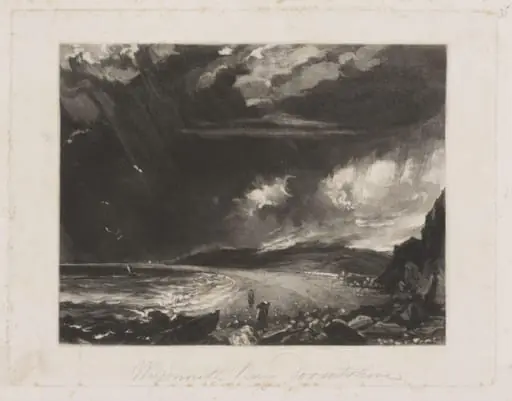
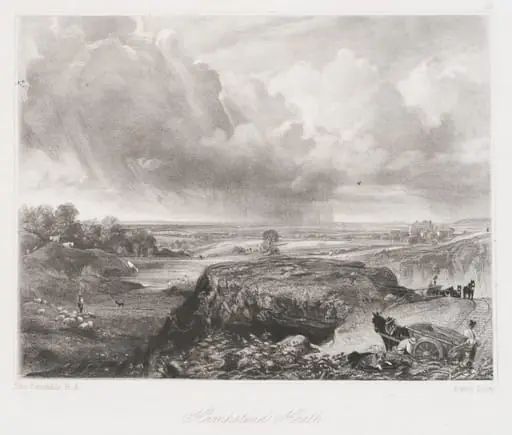
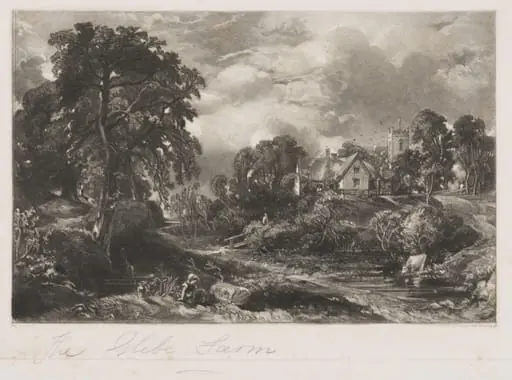
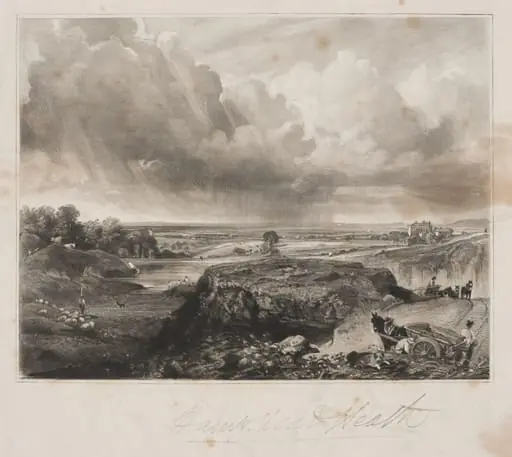
Old Sarum is one of twenty-two mezzotints in John Constable’s series English Landscape, published between 1830 and 1832. Supervised by Constable himself, the project was a deliberate effort to translate his landscape vision into print form. Each plate was engraved by David Lucas, who worked closely with the artist to capture tonal nuances absent in traditional line engraving. The series was issued in six installments and later revised by Constable in 1833, reflecting his evolving intentions for how his work should be seen.
Subject & Meaning
Old Sarum depicts the ancient hilltop settlement near Salisbury, a site of historical resonance and personal significance to Constable. He chose it not merely as a picturesque ruin but as a symbol of enduring English landscape identity. The composition emphasizes the interplay of light and shadow across the earth, reflecting his belief that nature’s emotional power lay in its atmospheric rhythms. Through this image, Constable sought to elevate landscape beyond mere topography into a meditation on time, memory, and the sublime order of the natural world.
Technique & Style
The print was produced using mezzotint, a labor-intensive process that allows for rich gradations of tone. David Lucas, working under Constable’s close direction, used rockers and scrapers to build deep blacks and delicate mid-tones, mimicking the soft transitions in Constable’s oil sketches. Unlike conventional prints, these plates avoided sharp outlines, favoring atmospheric haze and diffuse light. The result is a tonal harmony that echoes the painterly qualities of his canvases, bridging the gap between drawing and painting in print.
History & Provenance
Constable initiated the series late in life, seeking to secure his artistic legacy amid ongoing critical neglect. The plates were printed in limited numbers during his lifetime, with the second edition issued in 1833 after revisions. After his death in 1837, Lucas continued to print from the original plates and added new ones, expanding the series beyond Constable’s original plan. Many early impressions were hand-colored, though most surviving copies are in monochrome, reflecting the artist’s preference for tonal purity.
Context
Constable drew inspiration from the luminous landscapes of Claude Lorrain and the dramatic skies of J.M.W. Turner, yet his approach remained rooted in direct observation of the English countryside. At a time when landscape was often dismissed as inferior to history painting, he used English Landscape to assert its intellectual and emotional weight. The series was a quiet rebuttal to prevailing artistic hierarchies, positioning nature not as backdrop but as subject worthy of serious contemplation.
Legacy
Though initially met with limited public interest, the English Landscape series later became foundational to the appreciation of British printmaking. Lucas’s collaboration with Constable set a new standard for artist-printmaker partnerships, demonstrating how mezzotint could convey the subtleties of light and mood. The series influenced later generations of landscape artists and printmakers, cementing Constable’s role not only as a painter but as a theorist of natural vision.
Artist & collection
Artist
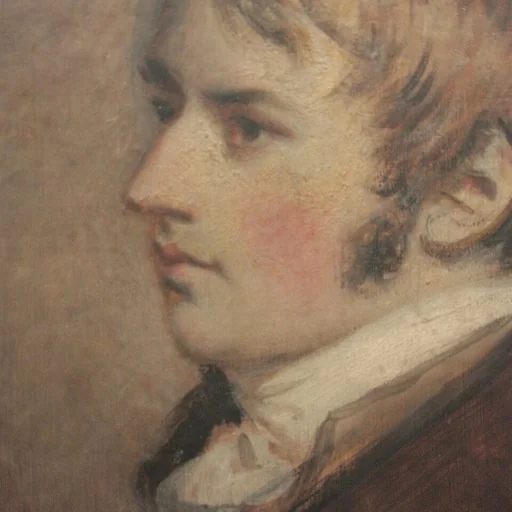
John Constable (; 11 June 1776 – 31 March 1837) was an English landscape painter in the Romantic tradition.