Artwork
OLD SARUM. "HERE WE HAVE NO CONTINUING CITY." ST. PAUL
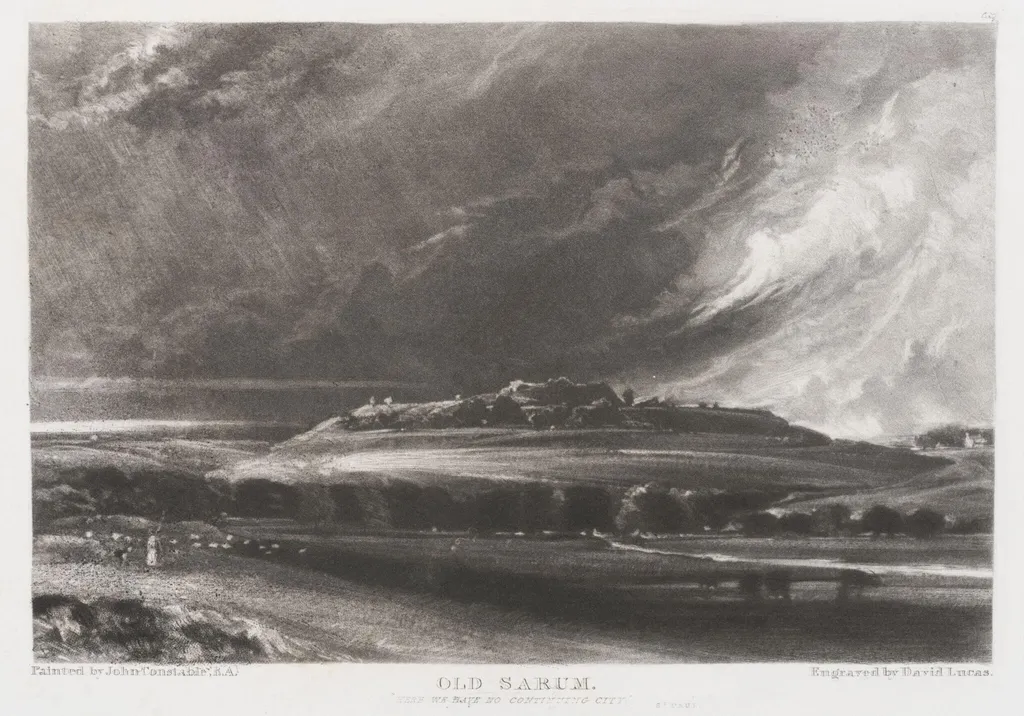
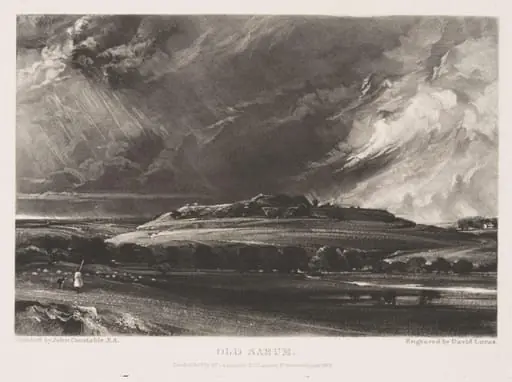
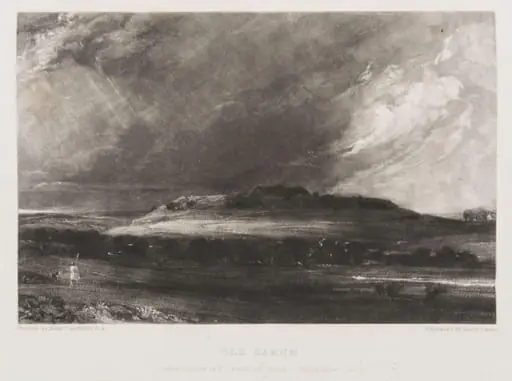
OLD SARUM. "HERE WE HAVE NO CONTINUING CITY." ST. PAUL is a print by the Impressionist artist John Constable. It is held in the collection of the Victoria and Albert Museum. Old Sarum.
About this work
Overview
Though Constable did not engrave the plates himself, he closely directed David Lucas, a skilled printmaker, to translate his oil sketches into tonal prints.
Old Sarum. Here We Have No Continuing City. St. Paul is one of twenty-two mezzotints in John Constable’s series English Landscape, published between 1830 and 1832. Though Constable did not engrave the plates himself, he closely directed David Lucas, a skilled printmaker, to translate his oil sketches into tonal prints. The project represented Constable’s final major effort to define his artistic vision, emphasizing the emotional and structural power of natural light in the English countryside.
Subject & Meaning
The print depicts the ruined hilltop settlement of Old Sarum under a brooding sky, its ancient earthworks barely visible amid turbulent weather. The title, drawn from St. Paul’s Epistle to the Hebrews, evokes transience and spiritual reflection. Constable selected this site not merely for its topography but for its layered history, using the landscape as a metaphor for impermanence and the enduring presence of nature over human endeavor.
Technique & Style
Executed in mezzotint, the print achieves deep blacks and subtle gradations of gray through a labor-intensive process of rocking and scraping a copper plate. Lucas, under Constable’s supervision, adapted the artist’s oil sketches to capture the atmospheric weight of storm-lit skies and the quiet resilience of earth. The technique allowed for a tonal richness unmatched by line-based methods, aligning with Constable’s focus on light’s emotional impact.
History & Provenance
The English Landscape series was published in six installments between 1830 and 1832, with a revised edition appearing in 1833. Constable oversaw every stage, from selection of subjects to proof corrections. After his death in 1837, Lucas continued to print from the original plates and added new ones. The series remained in circulation through later reissues, preserving Constable’s late vision for future generations.
Context
Constable turned to printmaking late in life, partly to counter the limited recognition his work received in Britain. Influenced by the luminous compositions of Claude Lorrain and the dramatic skies of Turner, he sought to elevate landscape beyond topography into a vehicle for philosophical contemplation. English Landscape was his attempt to assert the moral and aesthetic value of English scenery against prevailing academic tastes.
Legacy
Though initially met with modest sales, the English Landscape series gained stature over time as a landmark in British printmaking. It demonstrated how mezzotint could convey the subtleties of natural light and mood, influencing later printmakers and reinforcing Constable’s role as a pioneer in landscape expression. The series remains a key reference for understanding his artistic philosophy and technical ambition.
Artist & collection
Artist
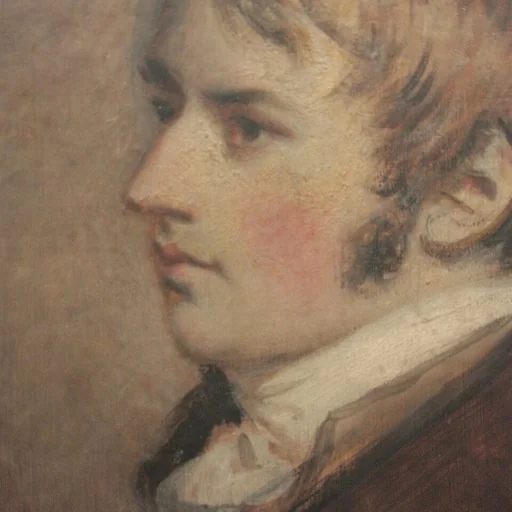
John Constable (; 11 June 1776 – 31 March 1837) was an English landscape painter in the Romantic tradition.