Artwork
The valley of the Stour, looking towards East Bergholt
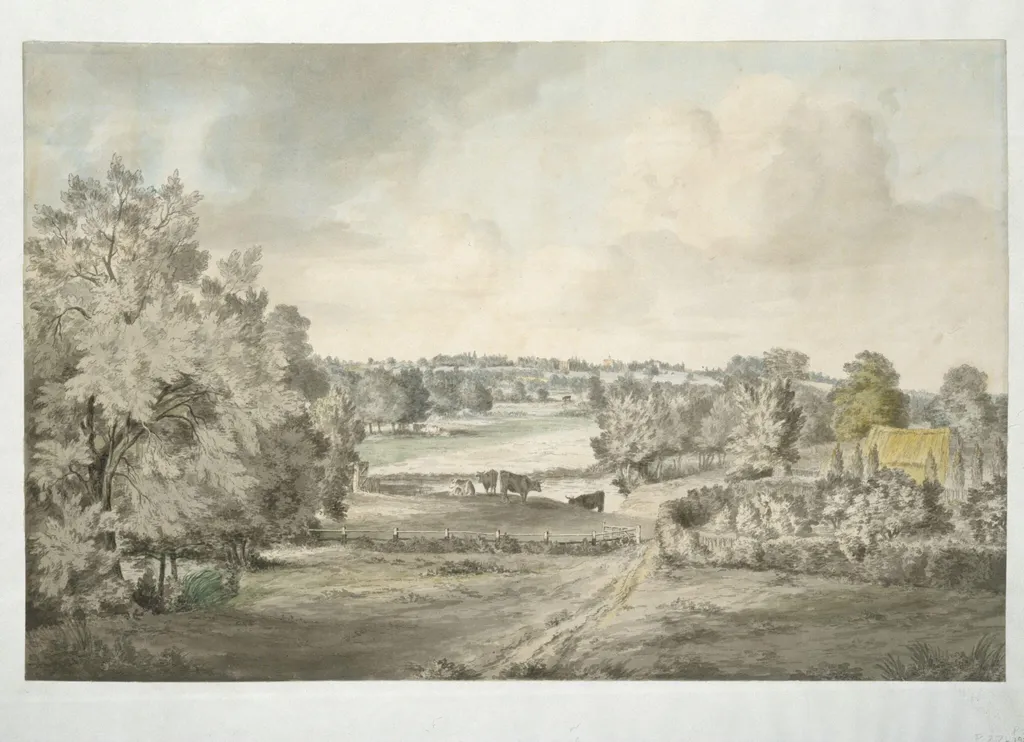
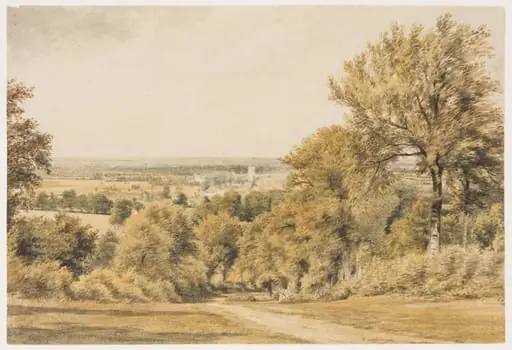
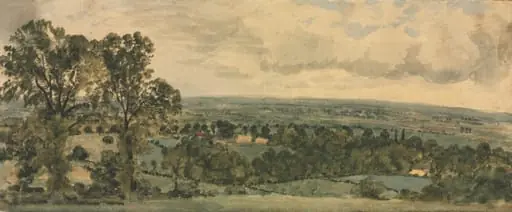
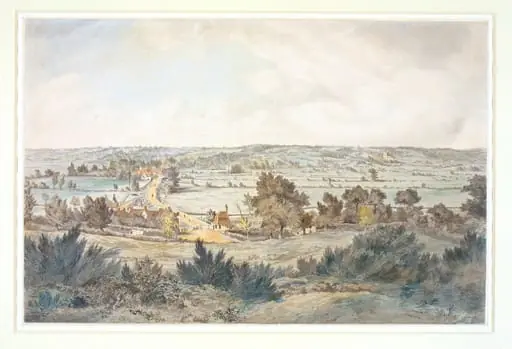
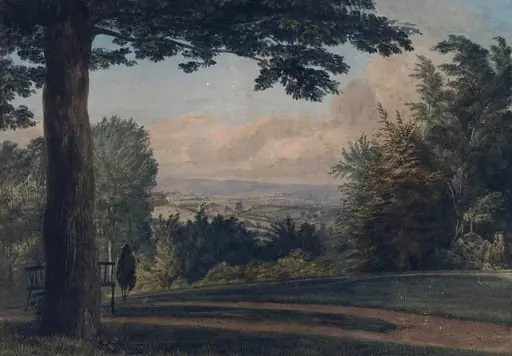
The valley of the Stour, looking towards East Bergholt is a watercolor work on paper by the Romanticist artist John Constable. It dates from 1800 and is held in the collection of the Victoria and Albert Museum.
About this work
Overview
The composition emphasizes natural topography—gently rolling land, scattered trees, and a distant horizon—rendered with restrained tones and delicate brushwork.
This watercolour by John Constable captures a quiet stretch of the Stour valley near East Bergholt, executed during his early years as a student at the Royal Academy Schools. The composition emphasizes natural topography—gently rolling land, scattered trees, and a distant horizon—rendered with restrained tones and delicate brushwork. It reflects Constable’s commitment to direct observation of the English countryside, a practice he began shortly after arriving in London in 1799.
Subject & Meaning
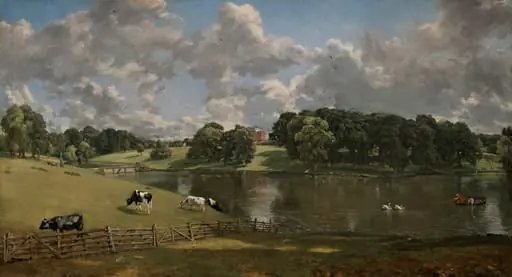
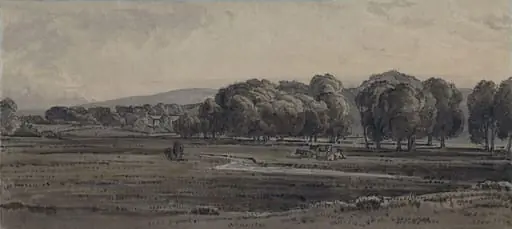
The scene portrays a pastoral landscape with a fenced pasture where cows graze, a modest cottage partially hidden by foliage, and a winding path leading toward a gate. These elements suggest a harmonious, unidealized rural life. The absence of human figures and the quiet atmosphere convey a sense of solitude and continuity, aligning with Constable’s personal connection to the Suffolk landscape of his childhood.
Technique & Style
Constable employed transparent watercolour over pen outlines to build subtle layers of tone, using muted greens, browns, and greys to evoke atmospheric depth. The brushwork is loose yet deliberate, capturing the texture of foliage and the soft diffusion of light beneath a cloudy sky. His technique here shows the influence of topographical drawing, refined through direct sketching outdoors rather than studio idealization.
History & Provenance
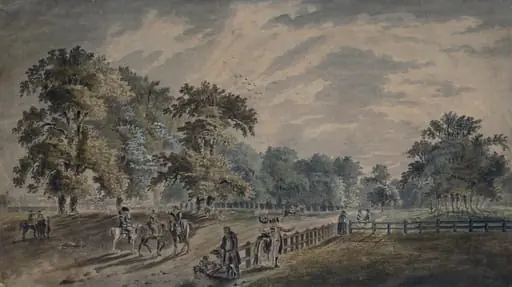
Created around 1800–1802, the work likely stems from Constable’s sketching trips to Helmingham Park, the estate of the Earl of Dysart, located near his native village. These excursions were part of his early training, allowing him to study landscape forms beyond academic conventions. The piece remained in private hands until entering a public collection, where it now serves as evidence of his formative years before his mature oil paintings.
Context
At the time, the Royal Academy emphasized classical and historical subjects, but Constable pursued landscape as a legitimate genre. His focus on local, everyday scenery contrasted with the grandeur favored by contemporaries. This watercolour reflects a growing interest in naturalism and personal experience, foreshadowing the Romantic movement’s emphasis on emotion and the individual’s relationship with nature.
Legacy
Though modest in scale, this early work illustrates Constable’s foundational approach: painting the land as he saw it, without embellishment. It laid the groundwork for his later, larger compositions and influenced subsequent generations of British landscape artists who valued authenticity over idealization. The piece remains a quiet testament to his lifelong dedication to the Suffolk countryside.
Artist & collection
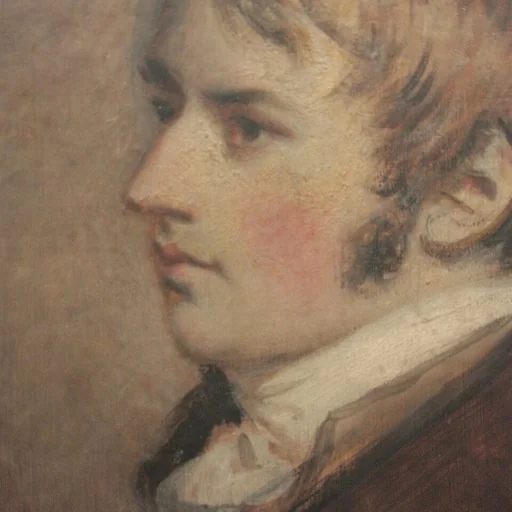
Artist
John Constable (; 11 June 1776 – 31 March 1837) was an English landscape painter in the Romantic tradition.