Artwork
St. James's Park
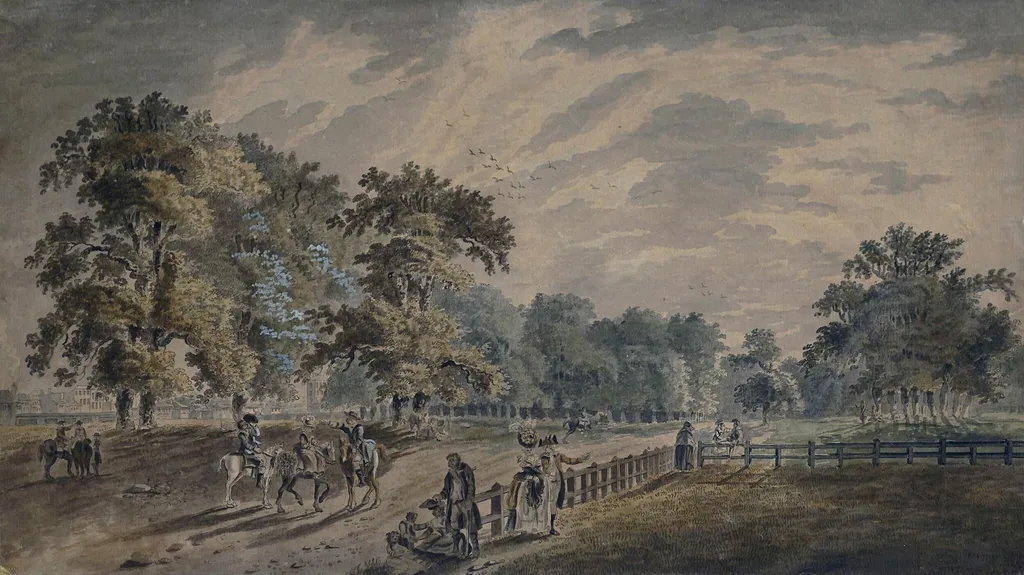
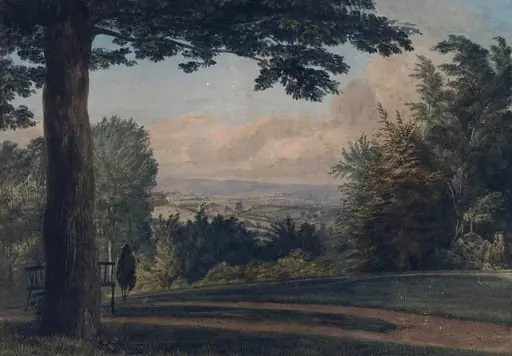
St. James's Park is a watercolor work on paper by Unknown. It dates from 1850 and is held in the collection of the Victoria and Albert Museum. Created in 1850, this watercolour depicts a broad expanse of St.
About this work
Overview
A low fence outlines the right-hand edge, while distant structures emerge faintly through the canopy, under a sky populated by soft clouds.
Created in 1850, this watercolour depicts a broad expanse of St. James's Park in London. A winding dirt track bisects the scene, flanked by mature trees whose foliage creates dappled shade. Figures are dispersed throughout: riders on horses, pedestrians strolling, and individuals seated on the grass. A low fence outlines the right-hand edge, while distant structures emerge faintly through the canopy, under a sky populated by soft clouds.
Subject & Meaning
The work captures a leisurely moment in an urban green space, emphasizing the coexistence of nature and social activity. The varied groupings of people—riders, walkers, and picnickers—suggest a snapshot of everyday Victorian recreation, reflecting the park’s role as a communal refuge within the city’s bustle.
Technique & Style
Executed in delicate watercolour washes, the artist employs a muted palette of light blues, greens, and earth tones to convey atmosphere. Transparent layers render the foliage with a sense of depth, while the figures emerge subtly from the surrounding shade. The handling of clouds and distant architecture demonstrates a focus on aerial perspective and a tranquil, airy mood.
Context
Mid‑nineteenth‑century London saw the expansion of public parks as part of urban reform. St. James's Park, adjacent to royal grounds, was a popular venue for promenading and equestrian pursuits. This painting aligns with contemporary interests in documenting public leisure spaces and the naturalistic landscape tradition prevalent in British watercolour practice.
Artist & collection

 Domestic Scene
 Giacomo and Cardinal Marco, investing Andrea, Abbot of San Zeno, with his Benefice
 The Nymph of Fontainebleau
 Portrait of a Woman
 Madonna and Child with Saints in the Enclosed Garden
 Venus and Minerva
 Family Group of Four on Sofa
 Wall painting from Room H of the Villa of P. Fannius Synistor at Boscoreale
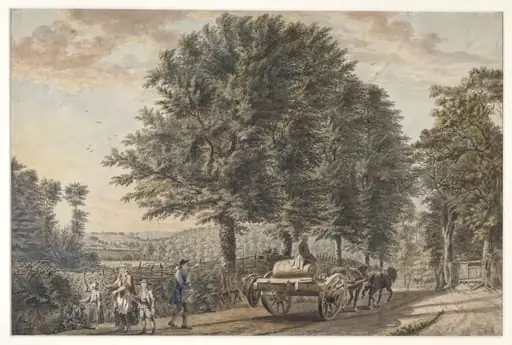 Landscape with Dray and Figures
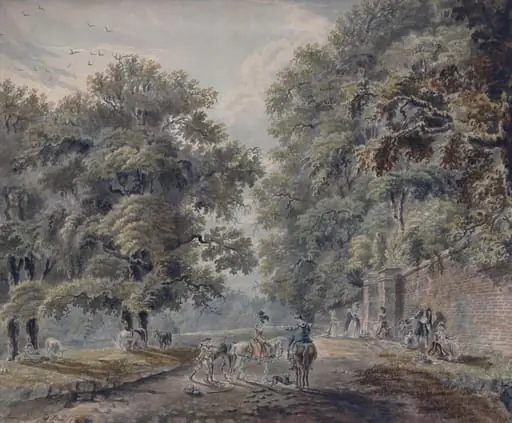 Entrance to Greenwich Park from Blackheath
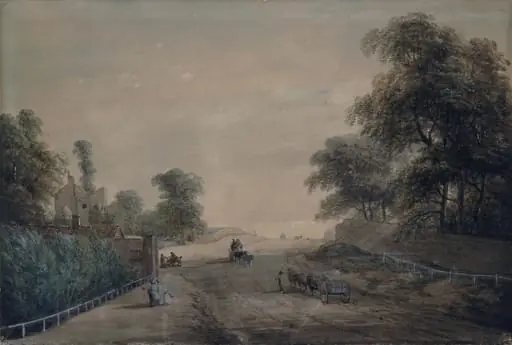 Bayswater Hill
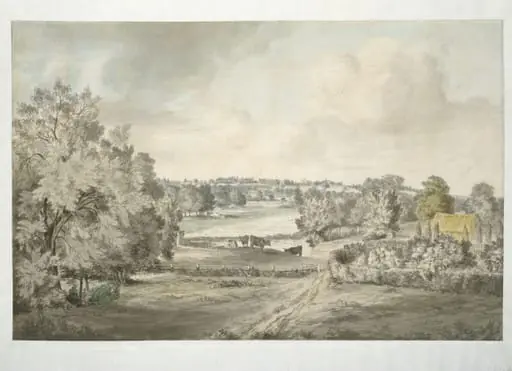 The valley of the Stour, looking towards East Bergholt
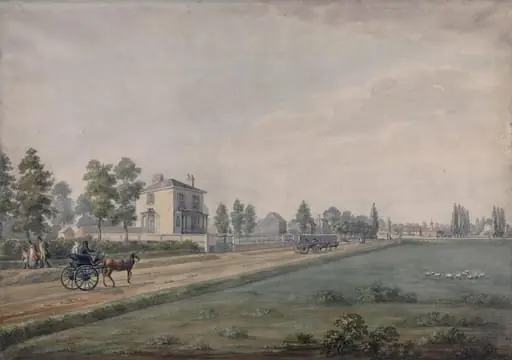 Mitcham Common, Surrey, shewing the road running along the west side
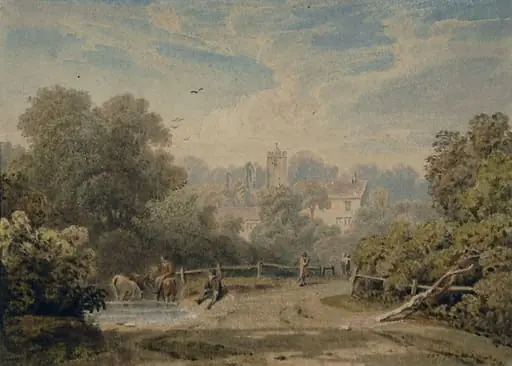 Crowhurst near Hastings
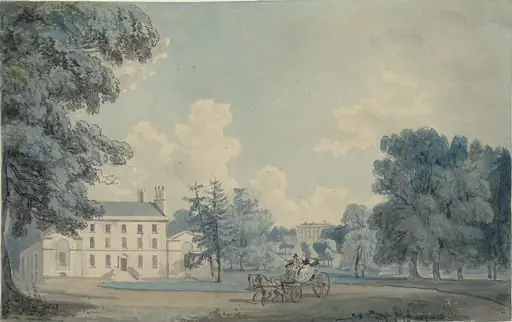 St. Wolstan's near Celbridge, Co. Kildare
 Landscape
 Cottage near Norwood
 Landscape with horsemen fording a stream
 Lake House, Epping
 Park Landscape