Artwork
Landscape, with meadow and stream
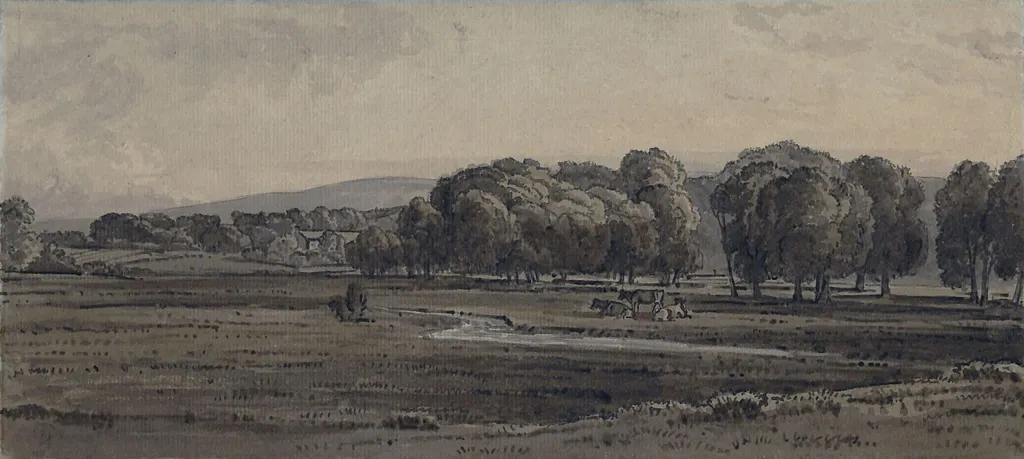
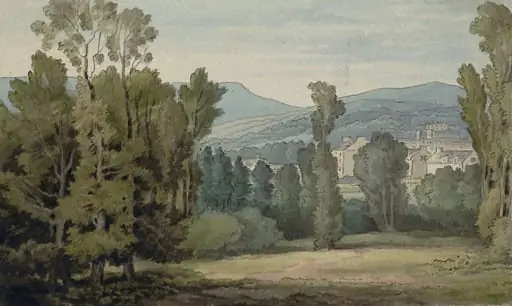
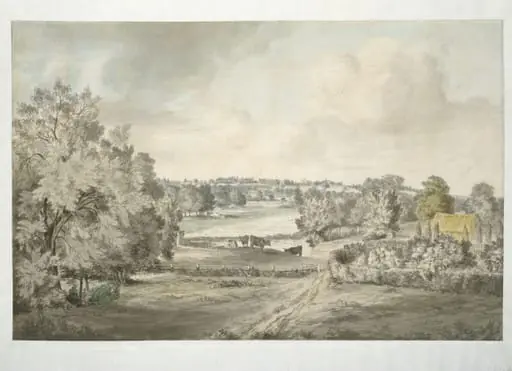
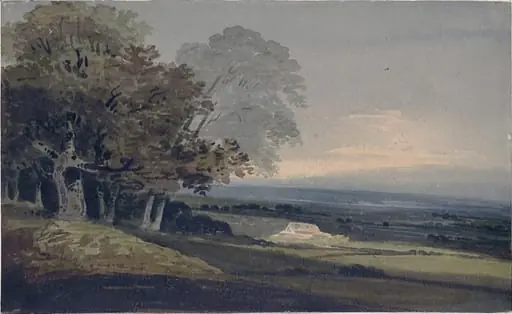
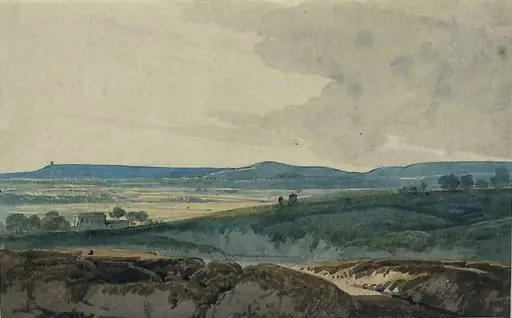
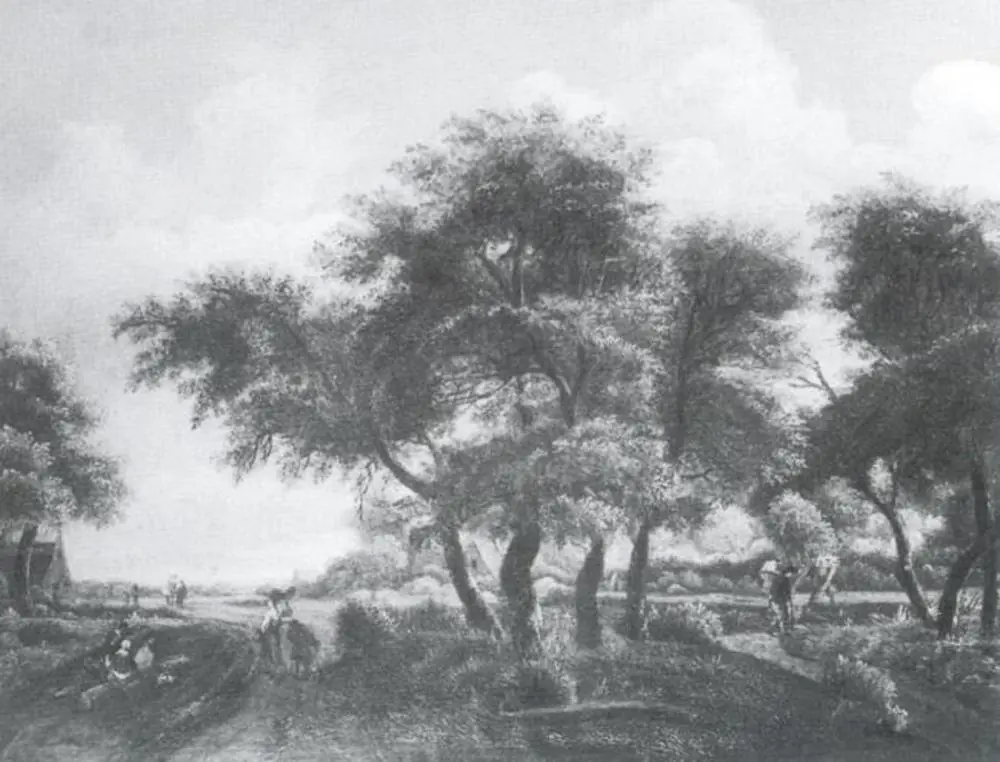
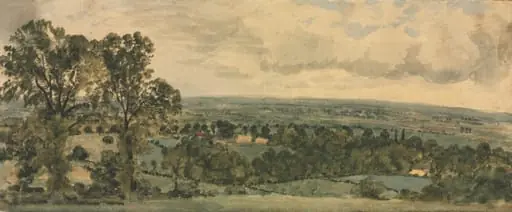
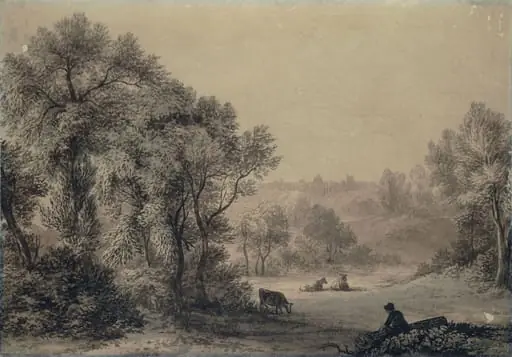
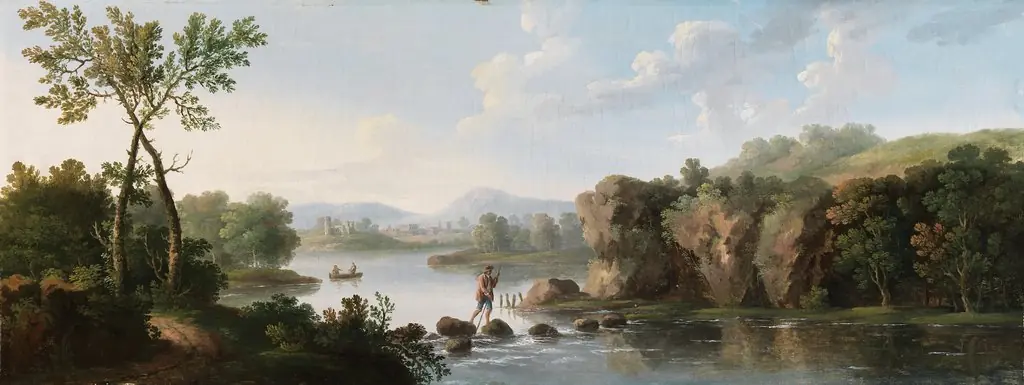
Landscape, with meadow and stream is a watercolor work on paper by the Rococo painting artist George Barret, Sr.. It dates from 1767 and is held in the collection of the Victoria and Albert Museum. Painted in 1767, this watercolour by George Barret captures a tranquil rural scene with minimal detail and gentle tonal shifts.
About this work
Overview
Painted in 1767, this watercolour by George Barret captures a tranquil rural scene with minimal detail and gentle tonal shifts. The work is executed in transparent washes, emphasizing atmosphere over precision. Its modest scale and unassuming subject reflect the 18th-century British tradition of landscape observation, where nature was recorded with quiet reverence rather than dramatic flourish.
Subject & Meaning
The composition centers on a meadow traversed by a meandering stream, dotted with grazing sheep and framed by distant trees.
The composition centers on a meadow traversed by a meandering stream, dotted with grazing sheep and framed by distant trees. A solitary building on the horizon suggests human presence without intrusion. The scene conveys stillness and harmony, not as an idealized pastoral fantasy, but as an unembellished record of everyday countryside life, reflecting contemporary values of natural order and quiet contemplation.
Technique & Style
Barret employed loose, fluid watercolour techniques, building form through layered washes rather than defined lines. The sky fades softly into the hills, and the grasses are suggested with quick, dry brushstrokes. The absence of sharp contours and the transparency of the medium lend the work an ephemeral quality, as if capturing a fleeting moment of light and air rather than a fixed view.
History & Provenance
Created in 1767, the work belongs to Barret’s early period, when he was developing his reputation as a landscape artist in England. While its exact provenance before entering the Victoria and Albert Museum is not fully documented, it aligns with the growing 18th-century market for amateur and professional watercolours of the British countryside, often collected for their personal, observational charm.
Context
In the mid-18th century, watercolour was gaining legitimacy as a medium for serious landscape study, moving beyond preparatory sketches. Barret’s work reflects this shift, influenced by topographical traditions and the rising interest in naturalism. Unlike grand European landscapes, his scenes focus on the English countryside, aligning with a national aesthetic that valued local scenery and understated beauty.
Legacy
Barret’s watercolours contributed to the evolution of British landscape art, helping establish watercolour as a medium capable of expressive subtlety. This piece exemplifies the quiet, observational approach that later influenced the Romantic watercolourists. Though not widely known today, his works remain important for understanding the transition from topographical recording to poetic landscape representation in British art.
Artist & collection

Artist
George Barret Sr. (c. 1730 – 29 May 1784) was an Irish landscape artist known for his oil paintings and watercolours. He left Ireland in 1762 to establish himself as an artist in London and quickly gained recognition to…

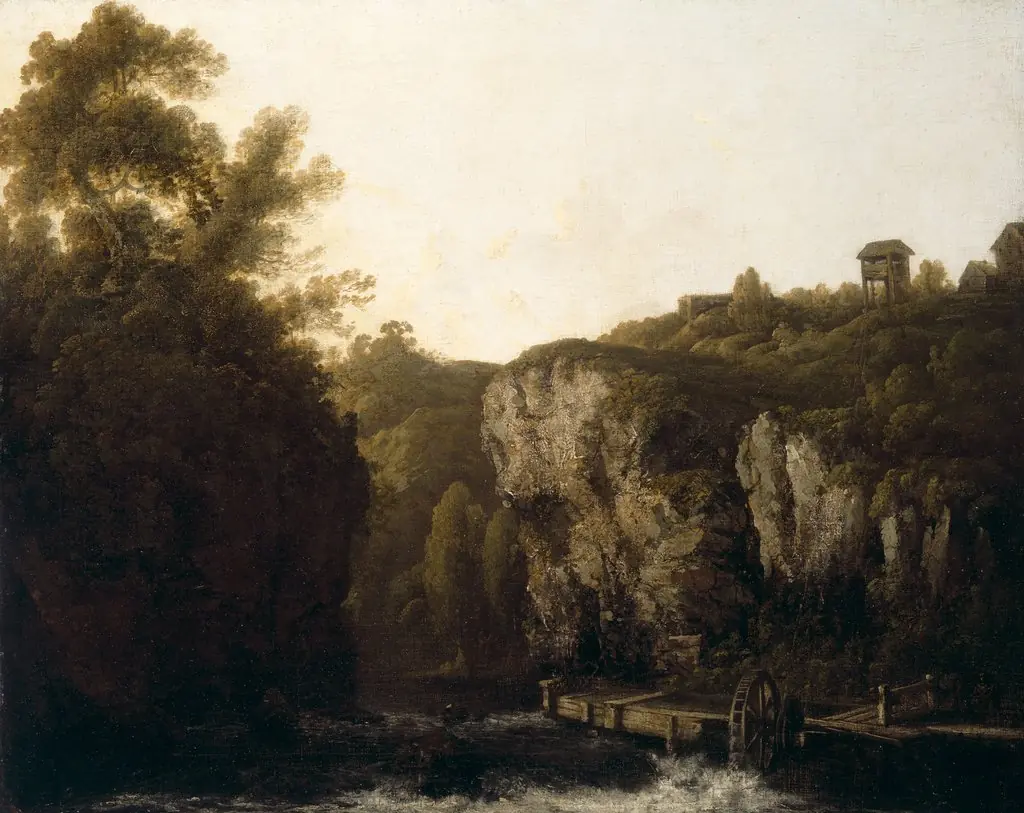 A View near Avoca
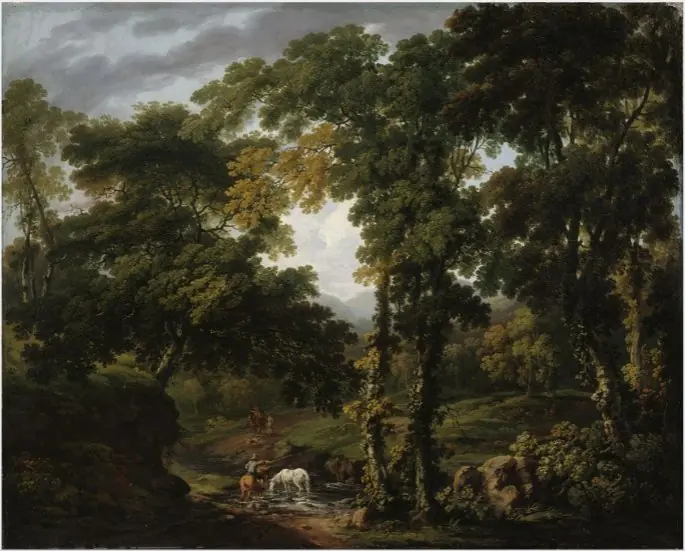 A Wooded River Landscape with Figures and Horses at a Ford and Fallow Deer in a Clearing
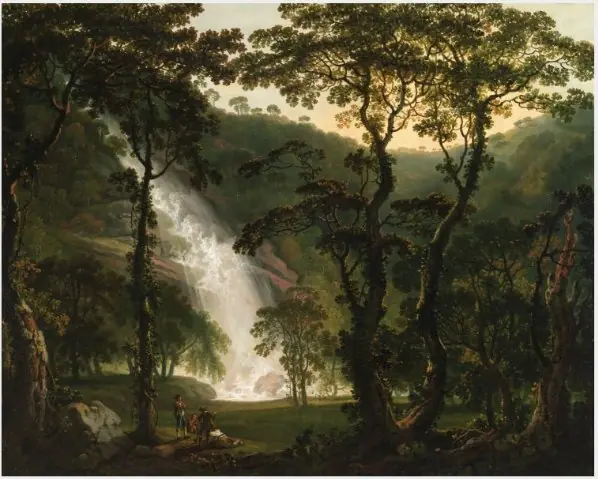 View of Powerscourt Waterfall
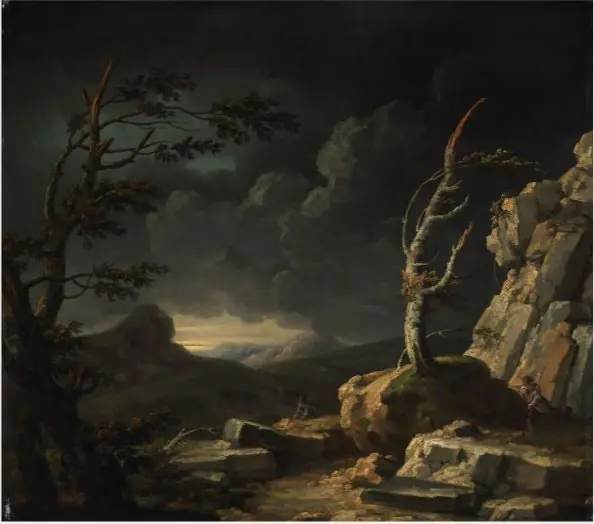 A Stormy Landscape
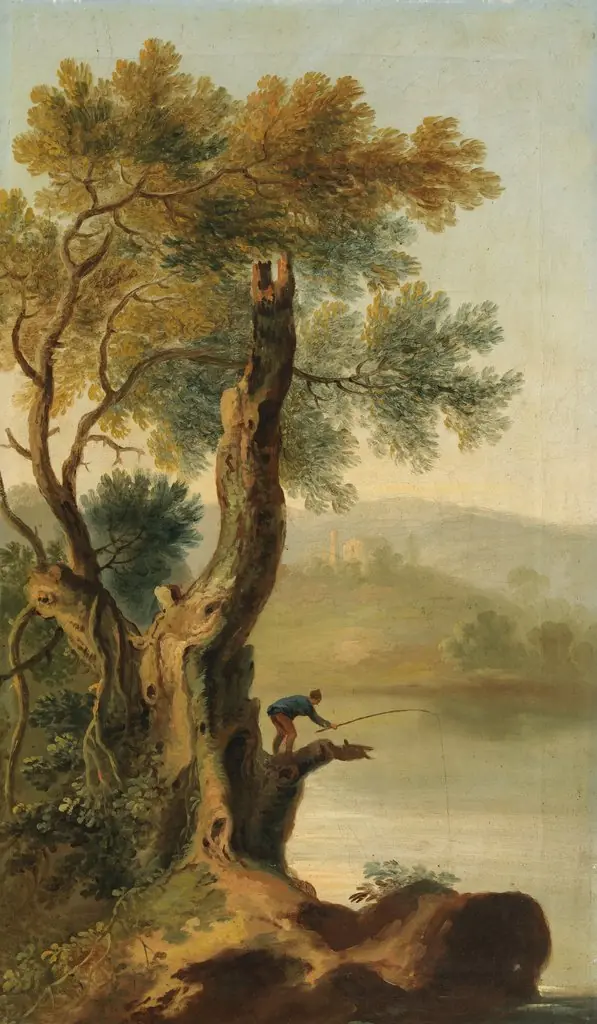 A Landscape with a Man Fishing
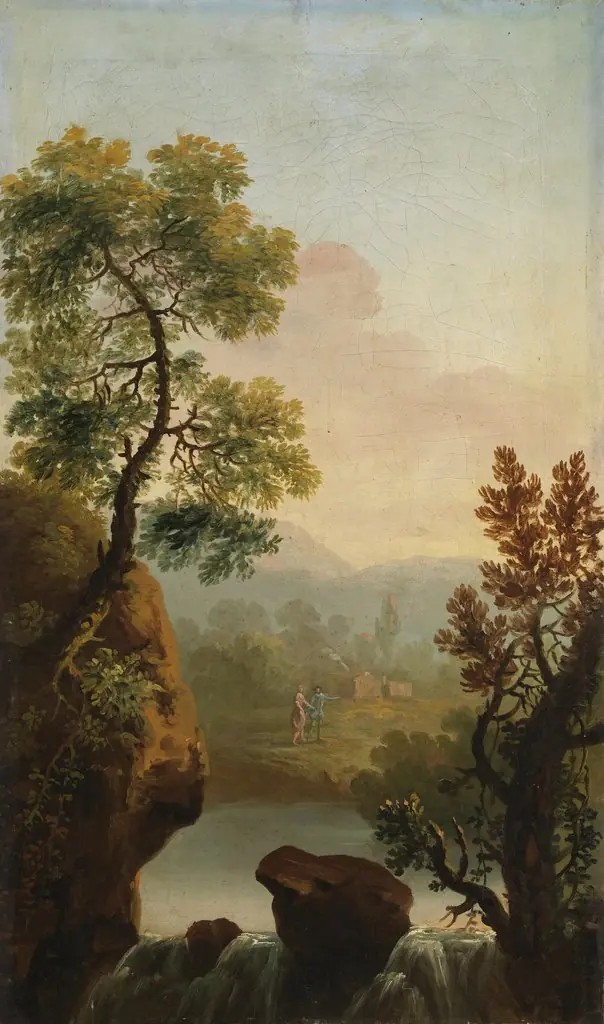 Landscape with Figures in the Background
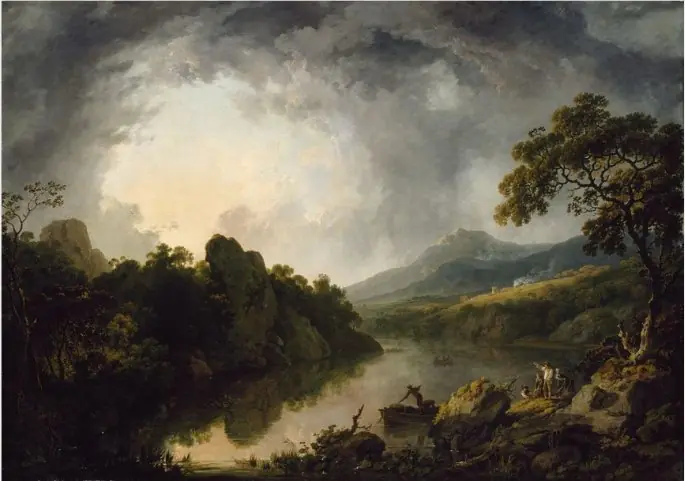 An Extensive Wooded Landscape with Fishermen Hauling in their Nets
 A Landscape with a Man Fording a Stream