Artwork
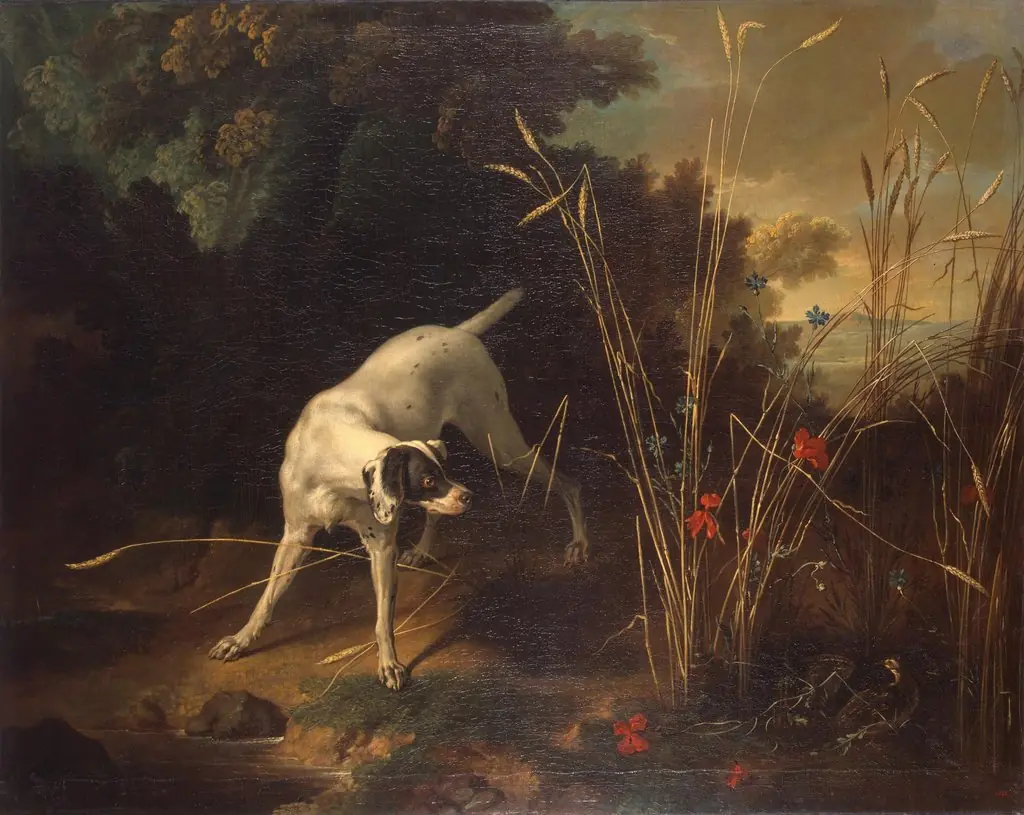
Hound Pointing
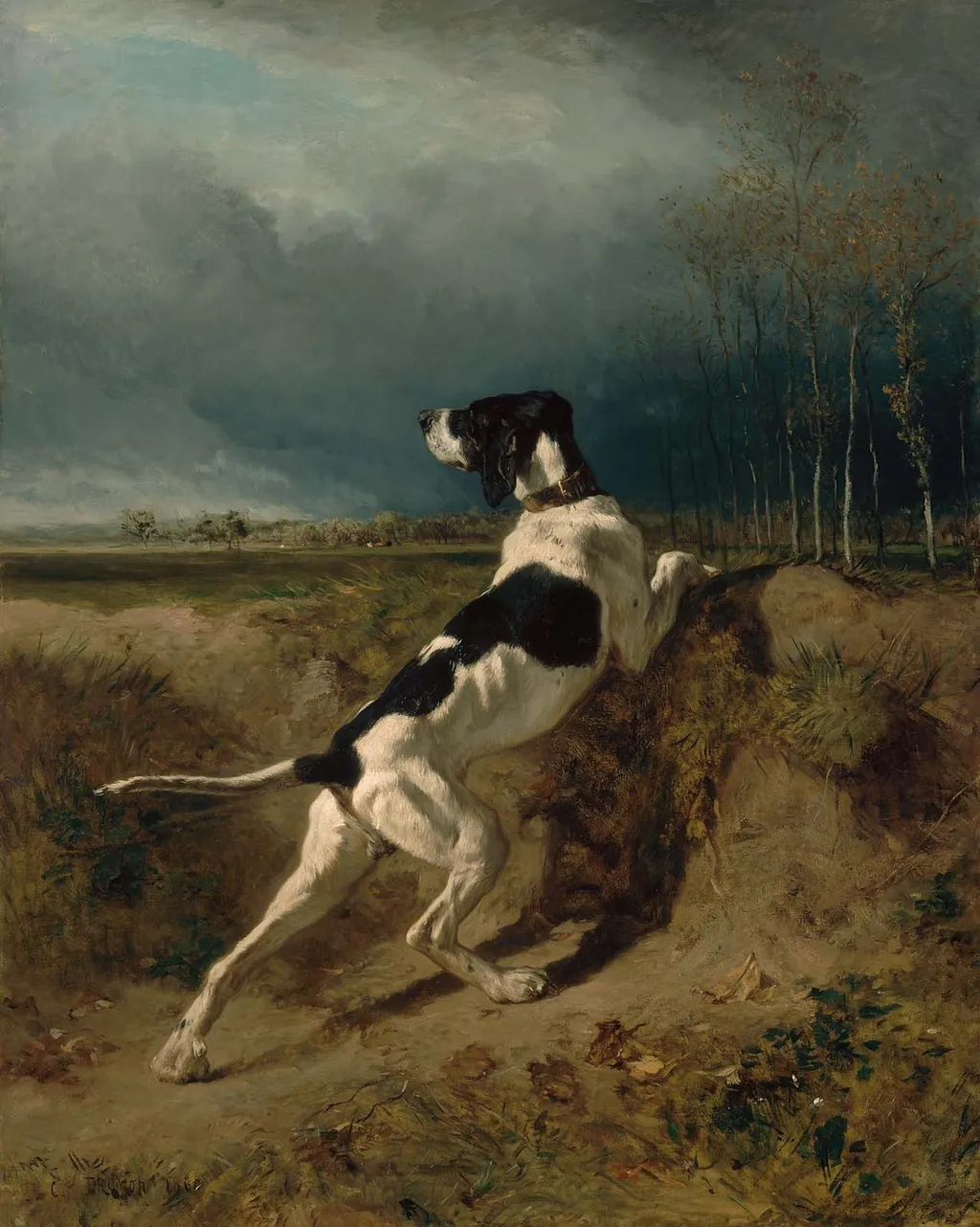
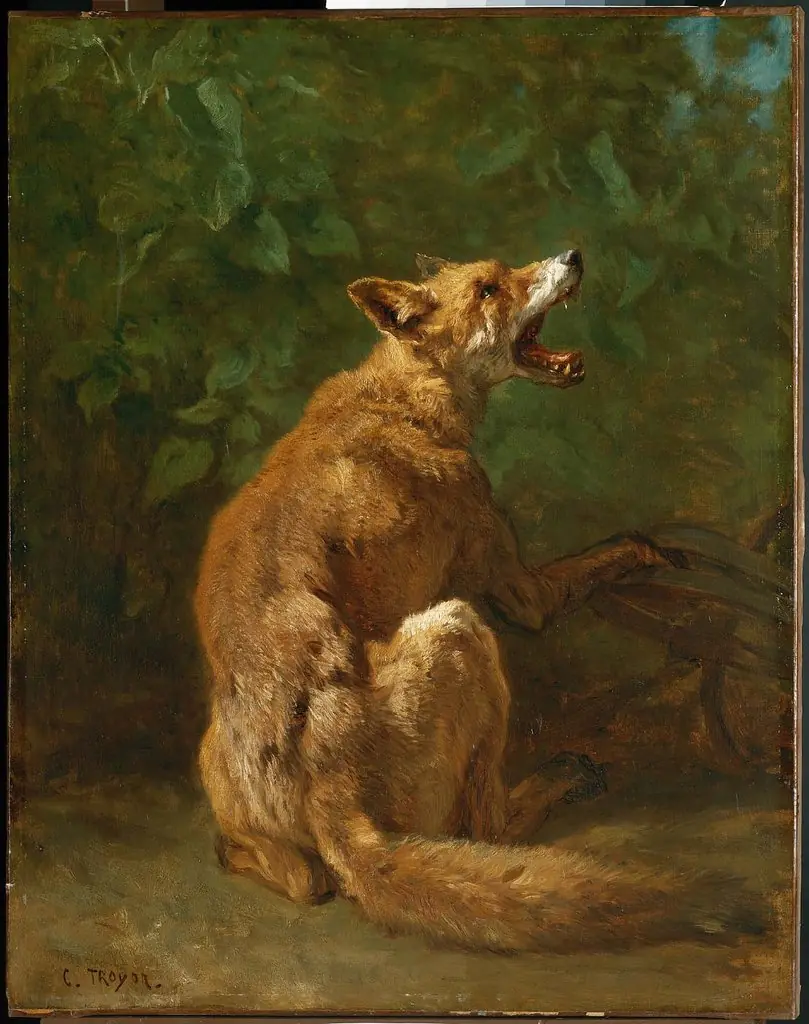
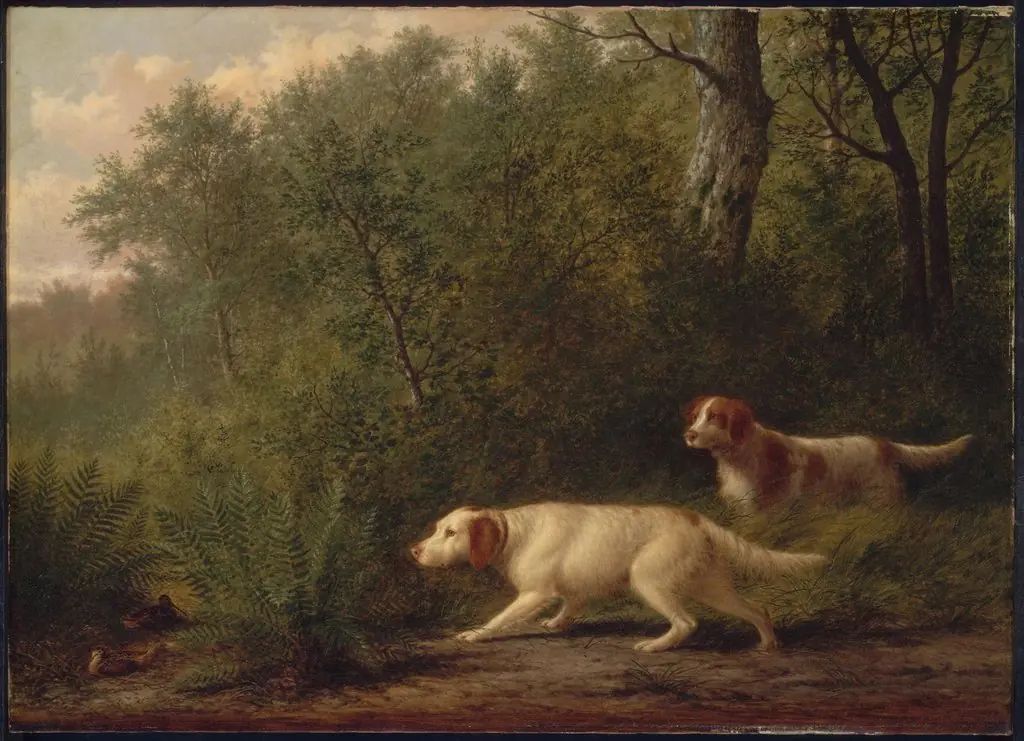
Hound Pointing is an oil painting by the Realist artist Constant Troyon. It dates from 1860 and is held in the collection of the Museum of Fine Arts Boston.
About this work
Overview
Its quiet composition and restrained palette reflect Troyon’s interest in rural life and animal subjects, common themes in mid-19th-century French realism.
Painted in 1860 by French artist Constant Troyon, Hound Pointing is an oil on canvas work currently in the collection of the Museum of Fine Arts, Boston. The painting presents a single dog in a rural landscape, rendered with attention to naturalism and atmospheric tone. Its quiet composition and restrained palette reflect Troyon’s interest in rural life and animal subjects, common themes in mid-19th-century French realism.
Subject & Meaning
The painting portrays a black-and-white hound standing on its hind legs, forepaws resting on the ground, gazing toward the horizon. Its posture suggests alertness or anticipation, evoking the instinctual behavior of hunting dogs. The absence of human figures or overt action invites a contemplative reading, emphasizing the animal’s presence as a silent witness to the landscape rather than as a tool of human activity.
Technique & Style
Troyon employed thick, textured brushwork—particularly in the dog’s fur—to convey volume and tactile softness. The impasto technique adds physical depth to the animal’s coat, contrasting with the smoother, blended tones of the sky and field. A muted palette of grays, browns, and earth tones unifies the scene, reinforcing the painting’s subdued mood and aligning with the Barbizon School’s emphasis on natural light and tone over dramatic contrast.
History & Provenance
Created in 1860, the painting entered the Museum of Fine Arts, Boston’s collection in the late 19th century, likely through a private acquisition or donation. Its presence in the museum reflects the institution’s early interest in European realist painting. No significant alterations or documented restorations are recorded, and the work has remained in stable condition since its acquisition.
Context
Troyon was associated with the Barbizon School, a group of artists who rejected idealized historical subjects in favor of depicting rural life and nature with sincerity. Hound Pointing aligns with this movement’s ethos, focusing on the dignity of animals and the quiet rhythms of the countryside. It emerged during a period when French artists increasingly turned to the natural world as a subject worthy of serious artistic attention.
Legacy
Though not among Troyon’s most widely reproduced works, Hound Pointing exemplifies his skill in capturing animal anatomy and emotional stillness. It contributes to a broader 19th-century shift in art that elevated everyday rural scenes and non-human subjects to the level of serious pictorial study, influencing later generations of naturalist painters and animaliers.
Own this work as a print
Artist & collection

Artist
Constant Troyon (French pronunciation: ; August 28, 1810 – February 21, 1865) was a French painter of the Barbizon school.