Artwork
Wolf-Hound
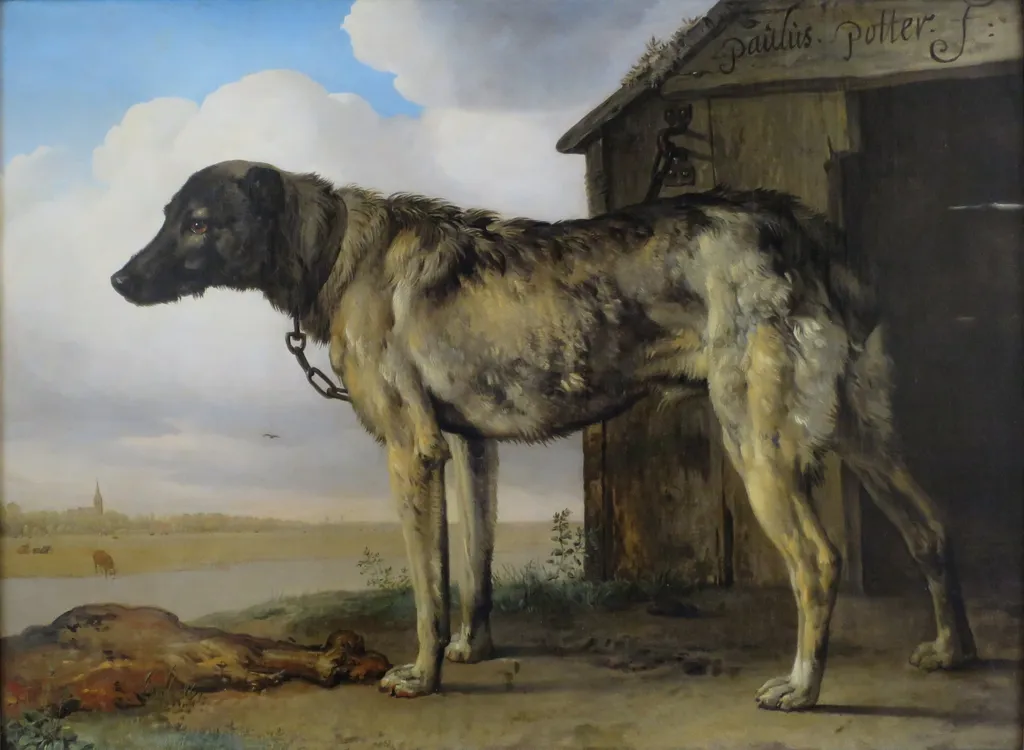
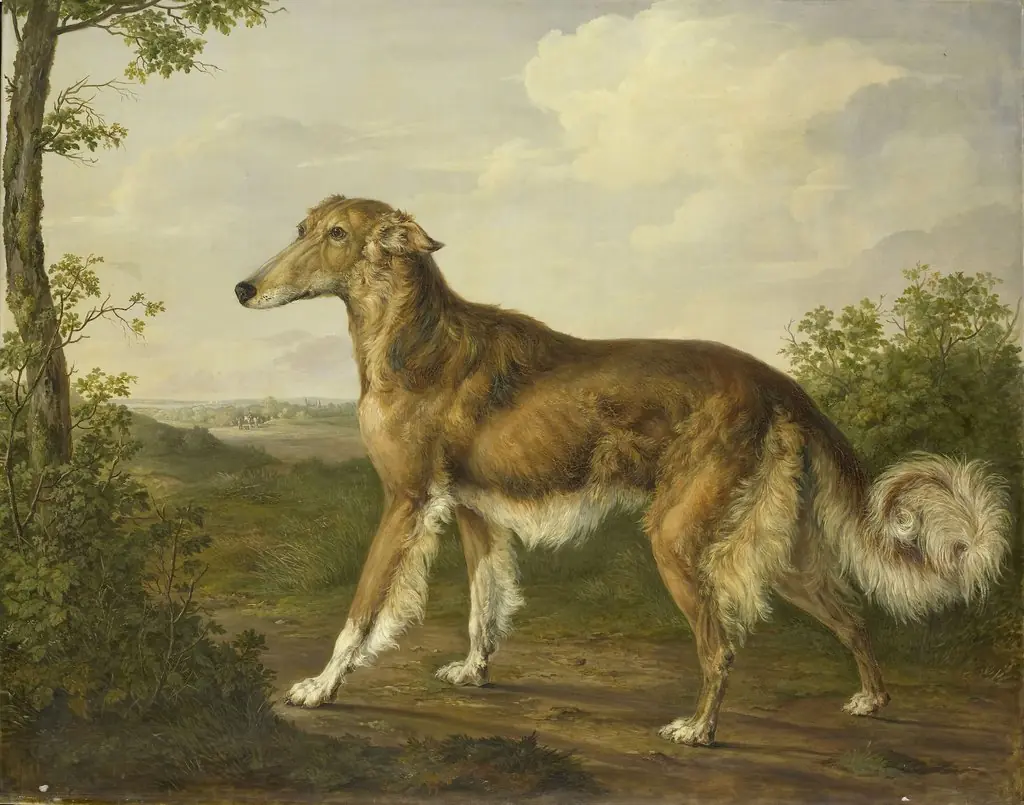
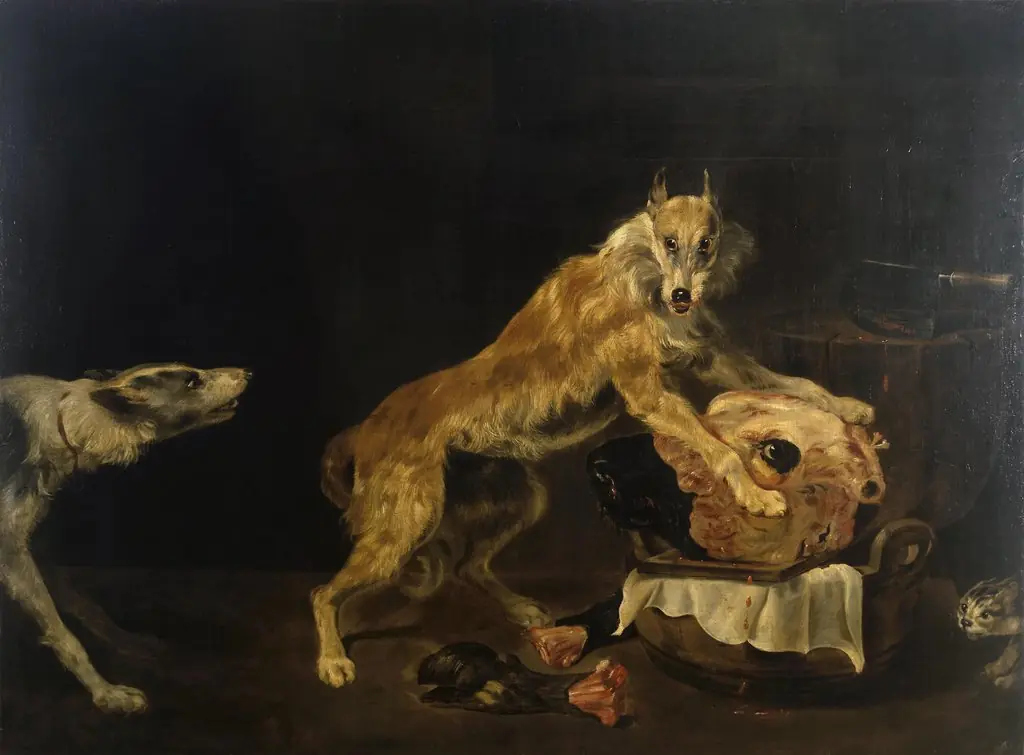
Wolf-Hound is an oil painting by the Dutch Golden Age artist Paulus Potter. It dates from 1650 and is held in the collection of the Hermitage Museum.
About this work
Overview
The scene is rendered with quiet precision, emphasizing the animal’s physical presence and its isolation within a calm landscape.
Painted around 1650 by Paulus Potter, this oil on canvas depicts a large, shaggy hound chained beside a rural hut. The scene is rendered with quiet precision, emphasizing the animal’s physical presence and its isolation within a calm landscape. Potter, active during the Dutch Golden Age, focused on animals as central subjects rather than mere background elements, distinguishing his work within contemporary genre painting.
Subject & Meaning
The hound, bound to a post, stands beside a dead deer, suggesting its role as a hunting companion. The presence of the carcass and the chain imply utility and restraint, contrasting with the serene natural setting. The hut bears the artist’s name, subtly inserting his identity into the scene, perhaps as a quiet assertion of authorship or a symbolic link between creator and creation.
Technique & Style
Potter employed fine, meticulous brushwork to render the dog’s thick, uneven fur, creating a tactile sense of texture through layered strokes of light and dark pigment. The landscape behind is rendered with softer edges and muted tones, drawing focus to the animal. The low vantage point enhances the dog’s imposing stature, a signature approach in Potter’s work that elevates ordinary subjects through intimate observation.
History & Provenance
The painting entered the collection of the State Hermitage Museum in Saint Petersburg, where it remains today. Potter, who died of tuberculosis at age 28, produced roughly a hundred known works in his short career. Few of his paintings include his name visibly within the scene, making this one an unusual and personal artifact of his brief but influential output.
Context
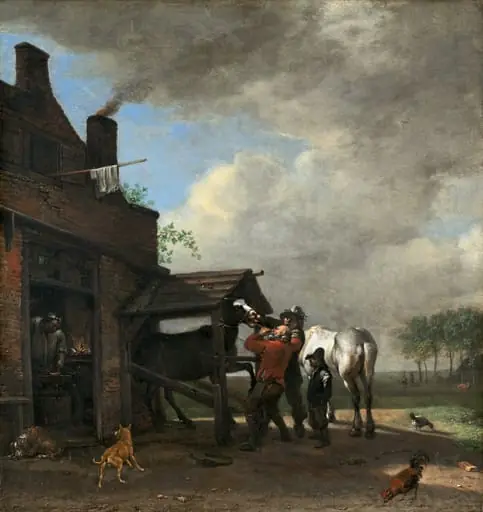
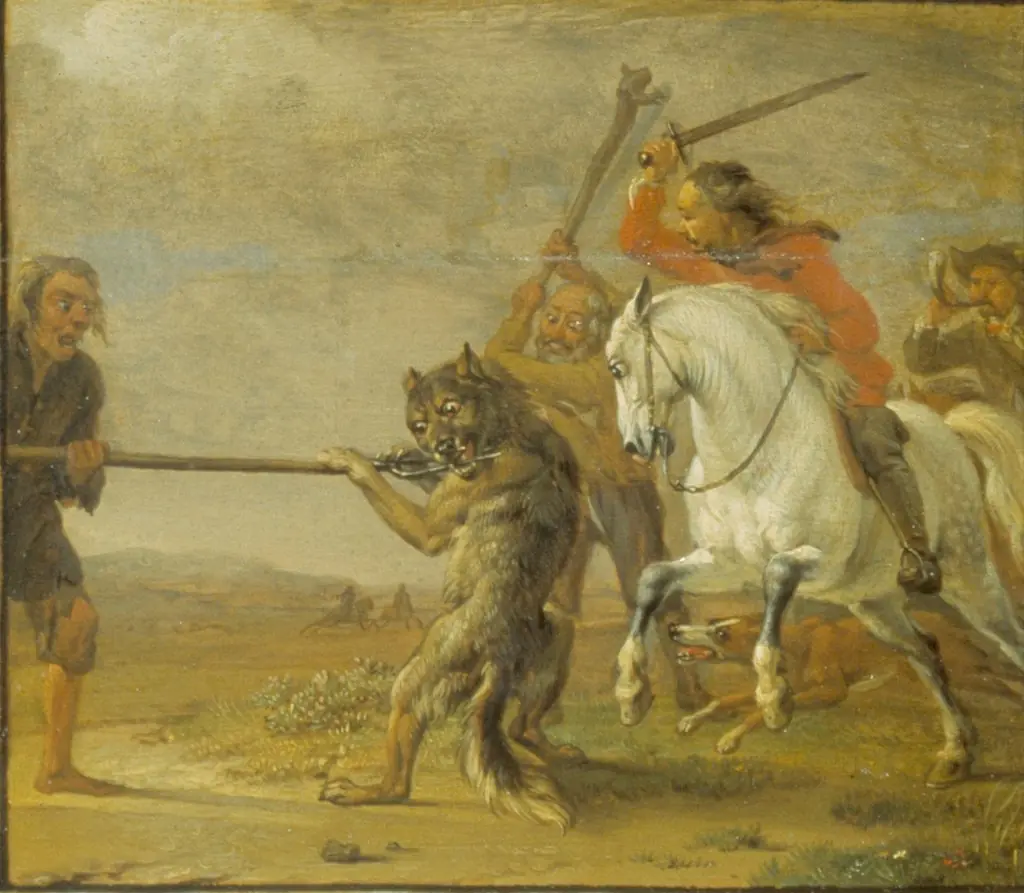
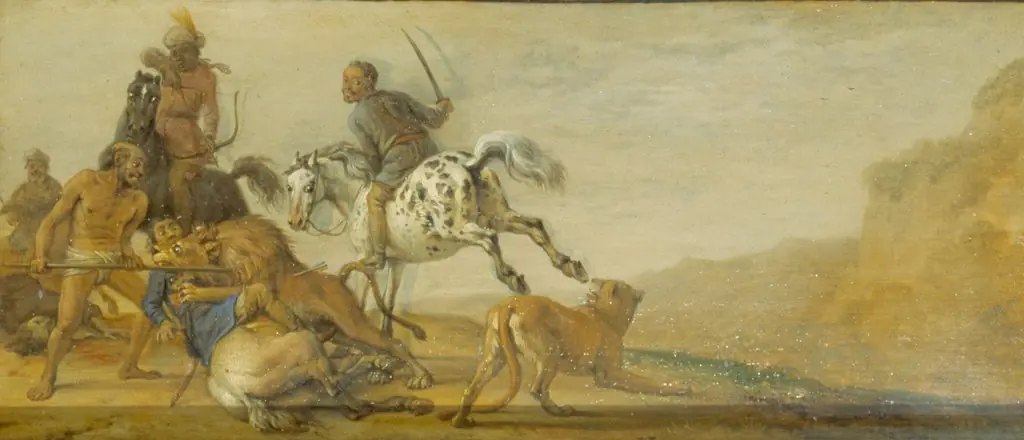
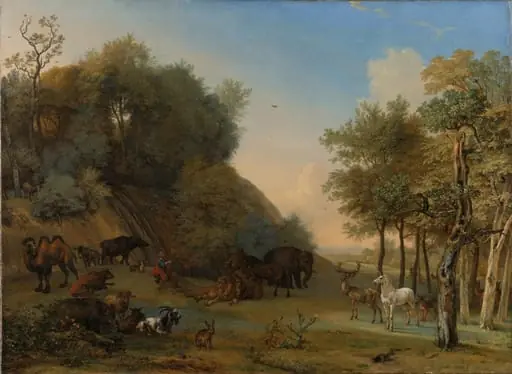
During the Dutch Golden Age, domestic and rural animals became subjects of serious artistic attention, reflecting broader cultural interest in nature and observation. Potter’s focus on livestock and working dogs aligned with this trend, diverging from mythological or aristocratic themes common elsewhere in Europe. His work resonated with a rising middle-class audience that valued realism and everyday life.
Legacy
Though Potter’s career was cut short, his detailed depictions of animals influenced later naturalist painters and contributed to the Dutch tradition of animal portraiture. His ability to convey character and physicality without anthropomorphism set a standard for observing animals on their own terms. The persistence of his works in major collections underscores their enduring role in the study of 17th-century Dutch visual culture.
Artist & collection
Artist
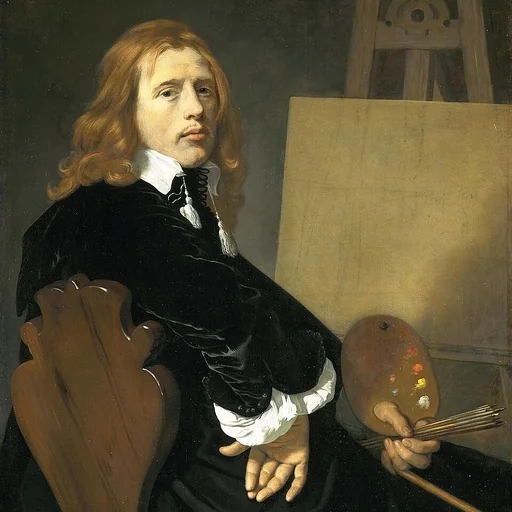
Paulus Potter (Dutch pronunciation: ; 20 November 1625 (baptised) – 17 January 1654 (buried)) was a Dutch painter who specialized in landscapes featuring animals, often from a low vantage point.