Artwork
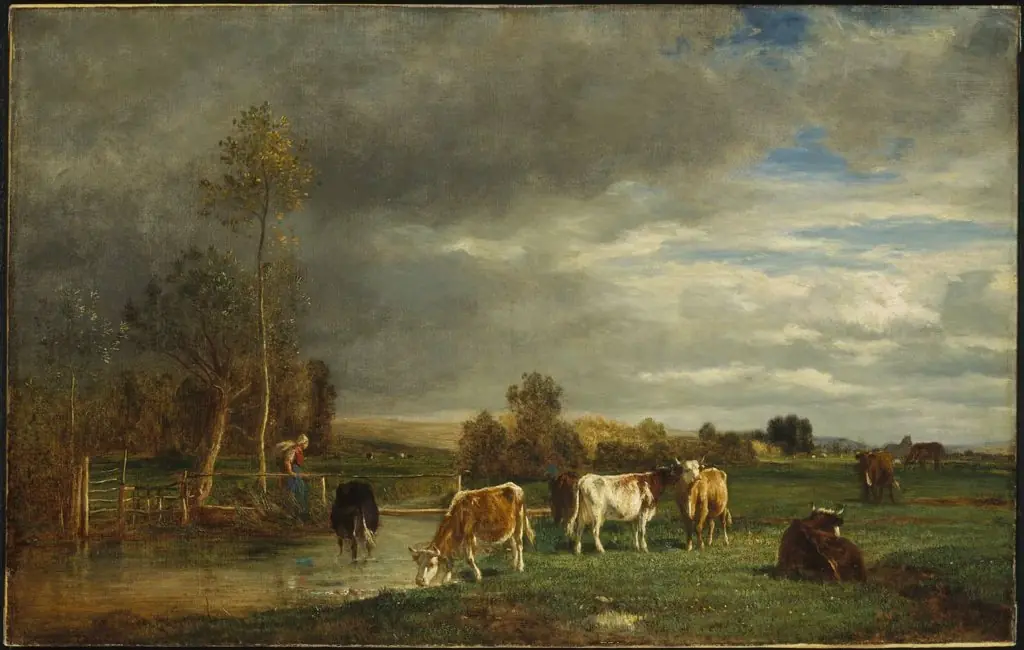
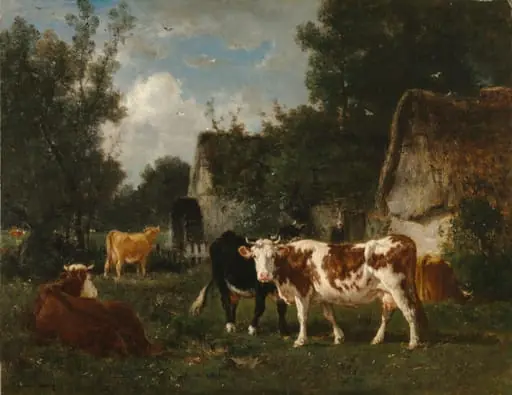
Pasture in Normandy
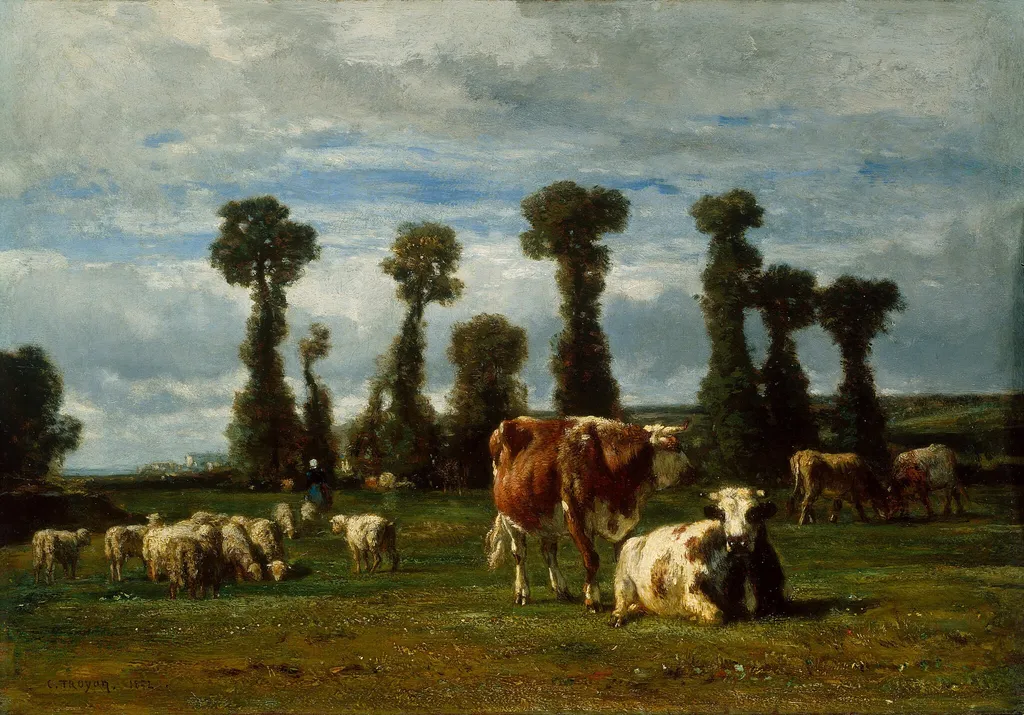
Pasture in Normandy is an oil painting by the Impressionist artist Constant Troyon. It dates from 1852 and is held in the collection of the Art Institute of Chicago.
About this work
Overview
Painted in 1852, Pasture in Normandy is a landscape by French artist Constant Troyon, executed in oil on a wooden panel. The work captures a quiet rural scene in northern France, reflecting Troyon’s focus on pastoral life. It is part of the collection at the Art Institute of Chicago, where it remains a representative example of mid-19th-century French naturalism.
Subject & Meaning
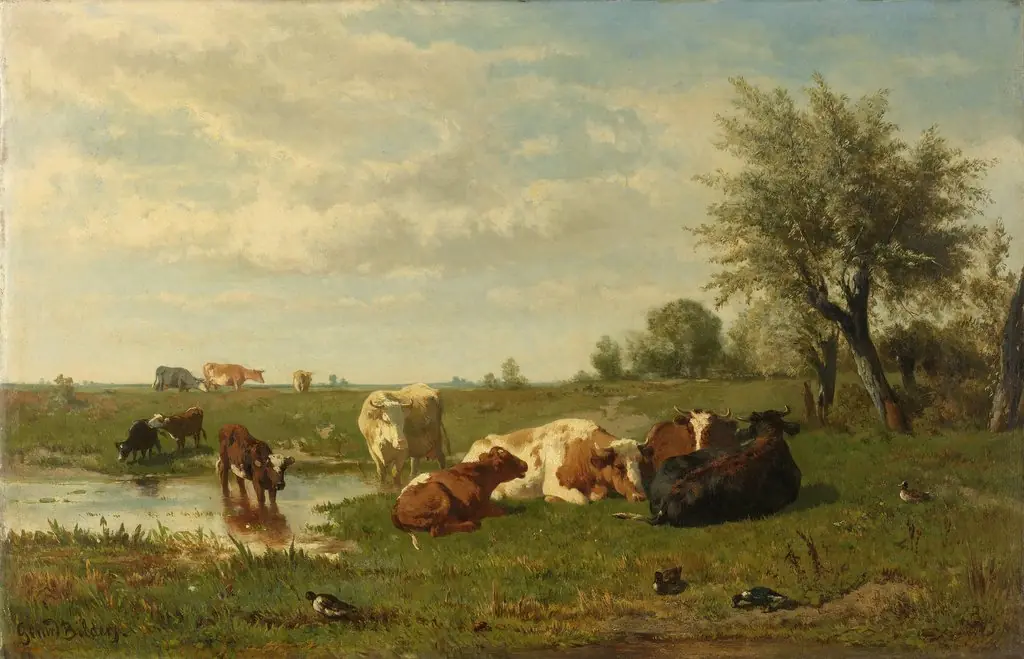
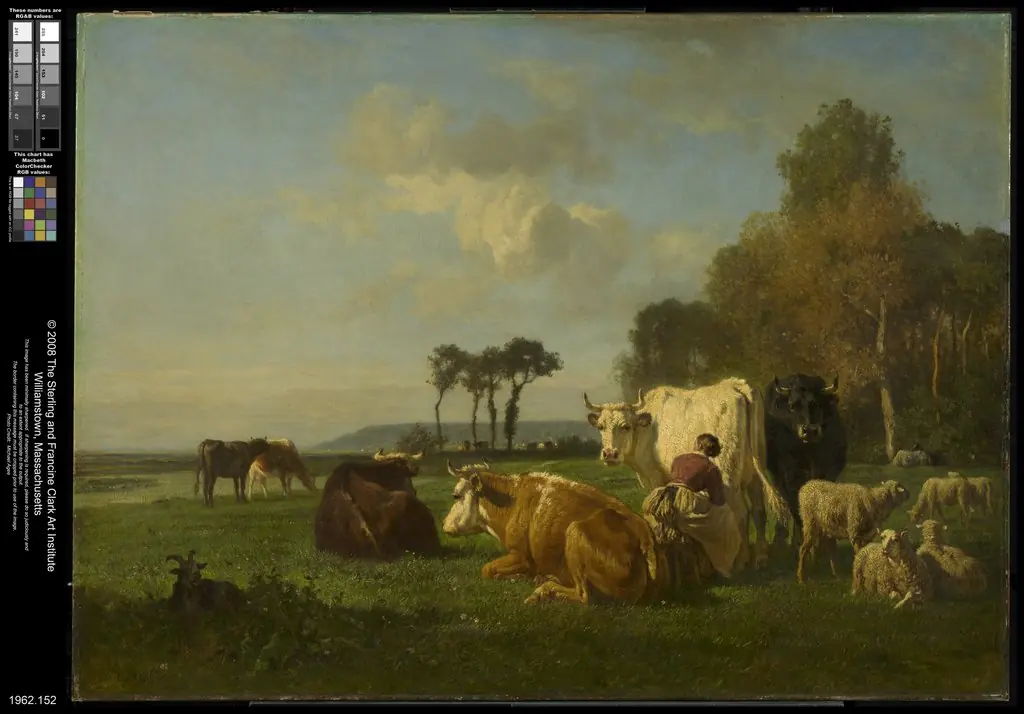
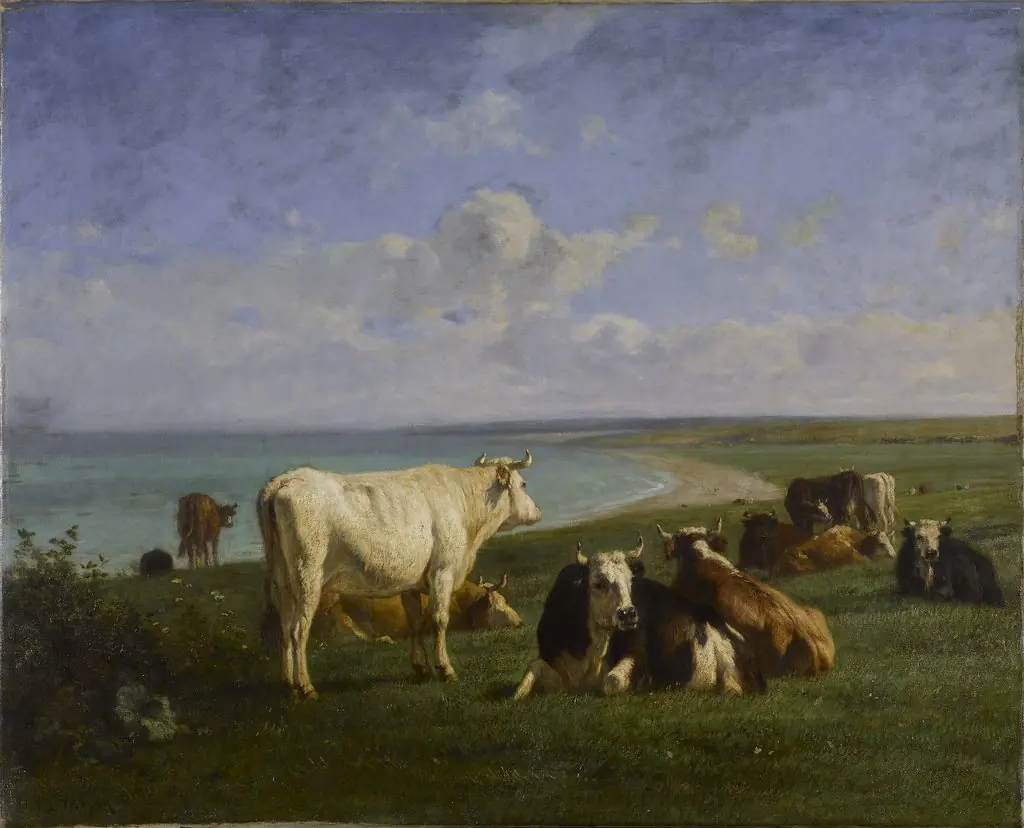
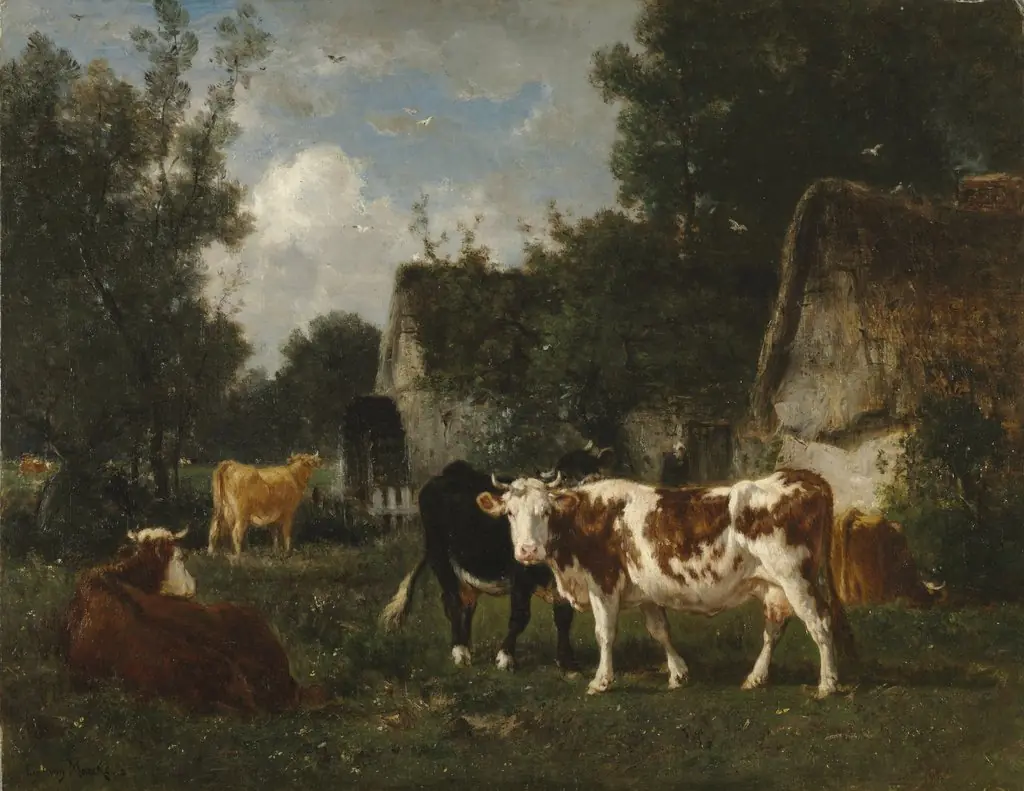
The painting depicts a tranquil pasture dotted with grazing cattle and scattered trees under a soft sky. There is no human presence, emphasizing the harmony between animals and their environment. Troyon’s choice of subject reflects a broader interest in the dignity of rural labor and the quiet rhythms of agricultural life, avoiding idealization in favor of observed reality.
Technique & Style
Troyon applied oil paint in thin, layered glazes over a wooden panel, allowing subtle shifts in tone and light to emerge. The brushwork is deliberate but unobtrusive, with textures built through careful modulation rather than bold strokes. This method enhances the atmospheric depth and the muted, earthy palette characteristic of the Barbizon school’s approach to landscape.
History & Provenance
Created during Troyon’s mature period, the painting was likely made in or near Normandy, a region he frequently visited for its pastoral scenery. It entered the Art Institute of Chicago’s collection in the early 20th century, acquired as part of a growing interest in European naturalist painting. Its provenance before that remains undocumented in public records.
Context
Troyon worked alongside artists of the Barbizon school, who rejected academic idealism in favor of painting directly from nature. In the 1850s, such works responded to industrialization by celebrating the enduring presence of rural life. Pasture in Normandy aligns with this movement, offering a quiet counterpoint to urban progress through its focus on land and livestock.
Legacy
Though less widely known than some of his contemporaries, Troyon’s landscapes influenced later generations of French and American painters interested in naturalistic rural scenes. His use of oil on panel and emphasis on light and texture contributed to evolving techniques in landscape painting, particularly in the transition from Romanticism to Realism.
Own this work as a print
Artist & collection

Artist
Constant Troyon (French pronunciation: ; August 28, 1810 – February 21, 1865) was a French painter of the Barbizon school.