Artwork
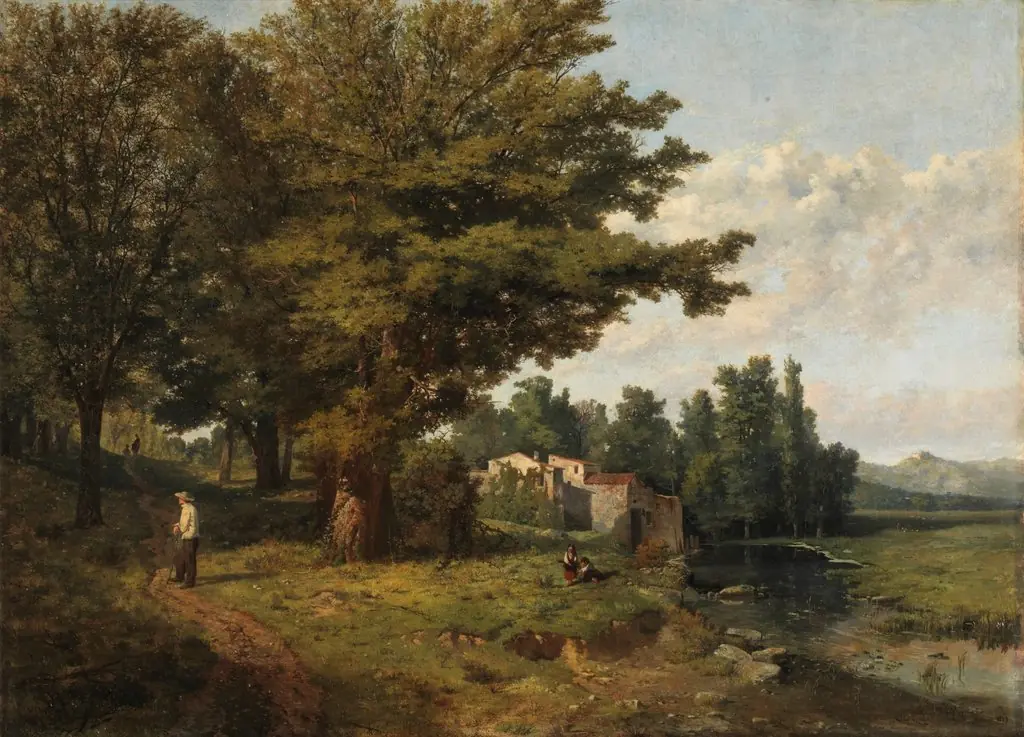
The Angler
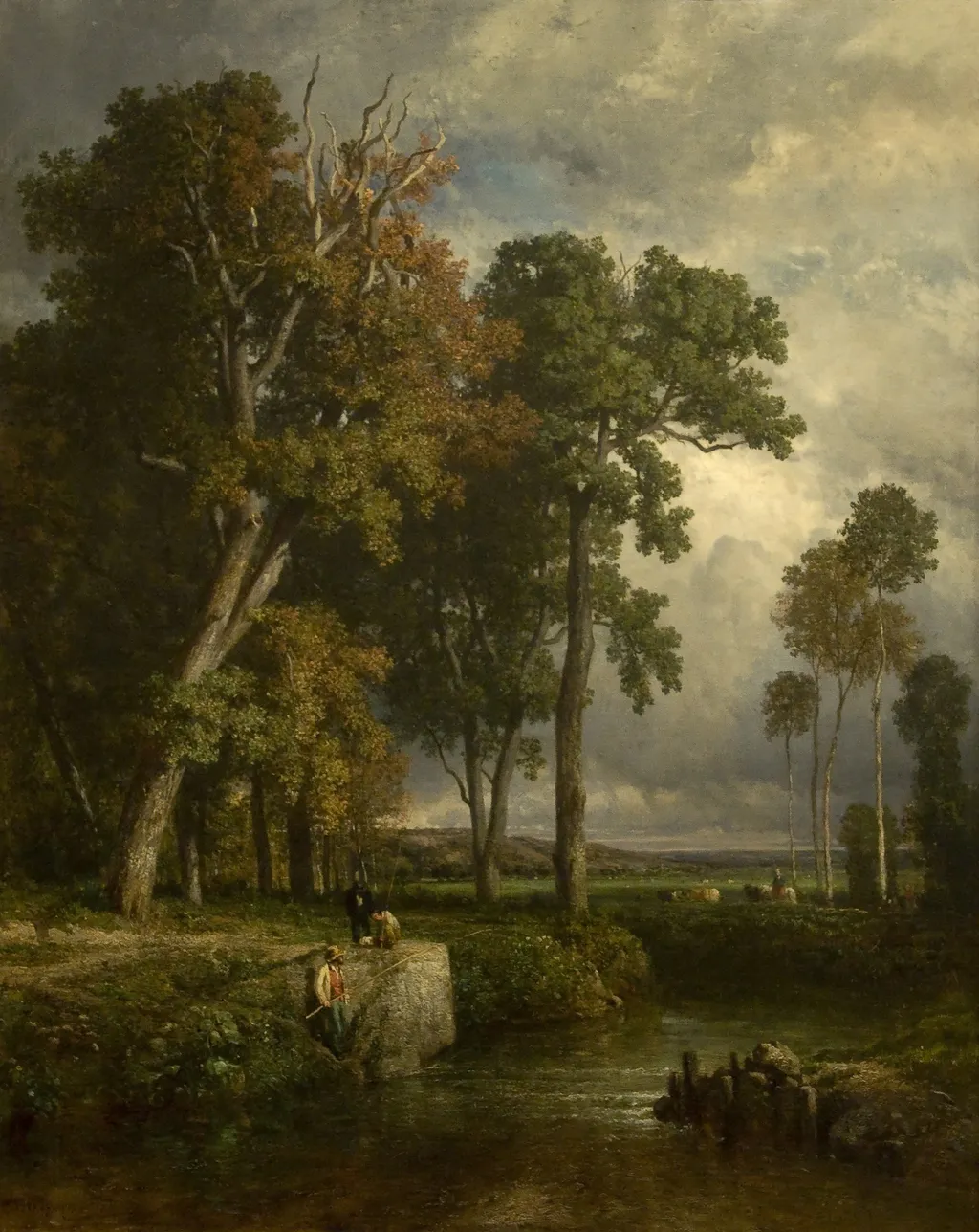
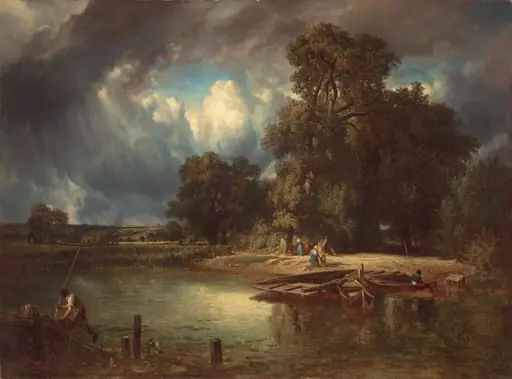
The Angler is an oil painting by the Realist artist Constant Troyon. It dates from 1850 and is held in the collection of the Calouste Gulbenkian Museum.
About this work
Overview
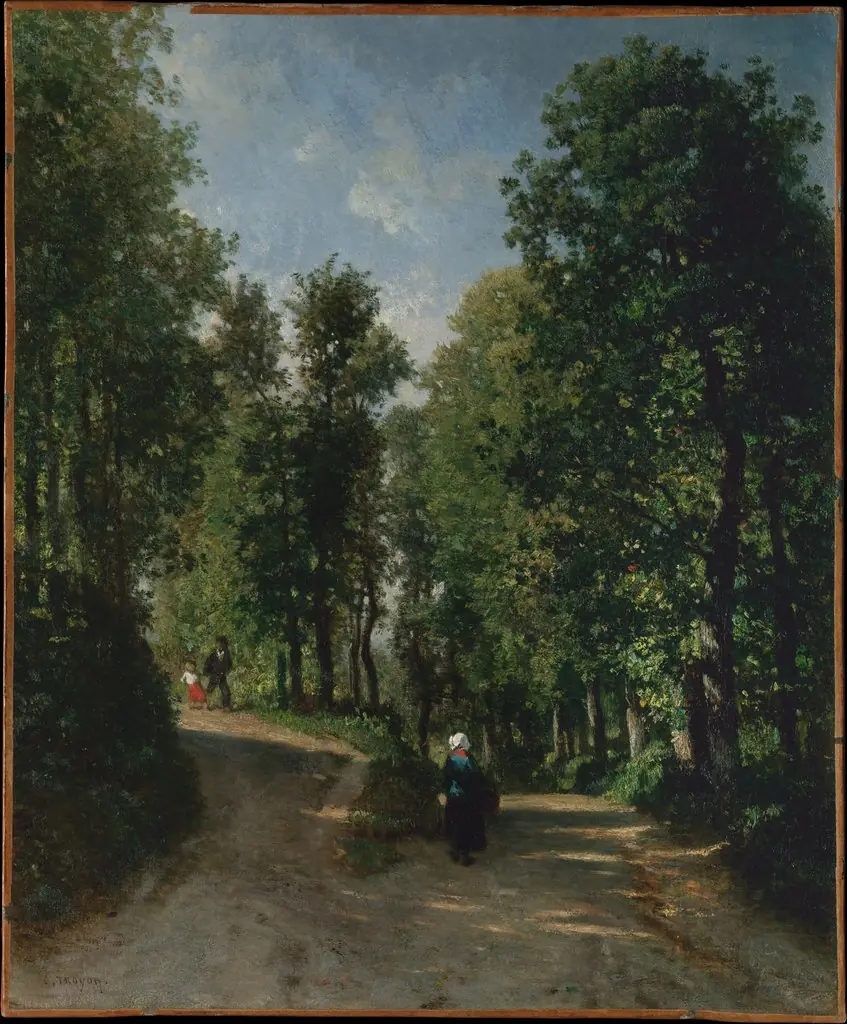
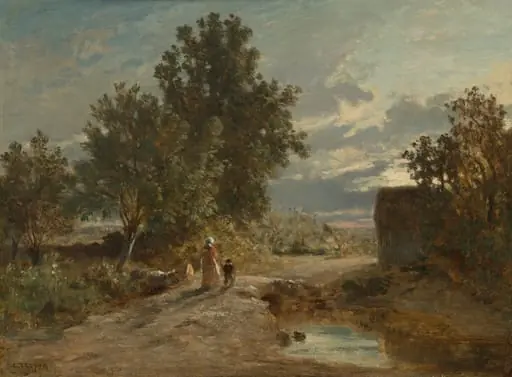
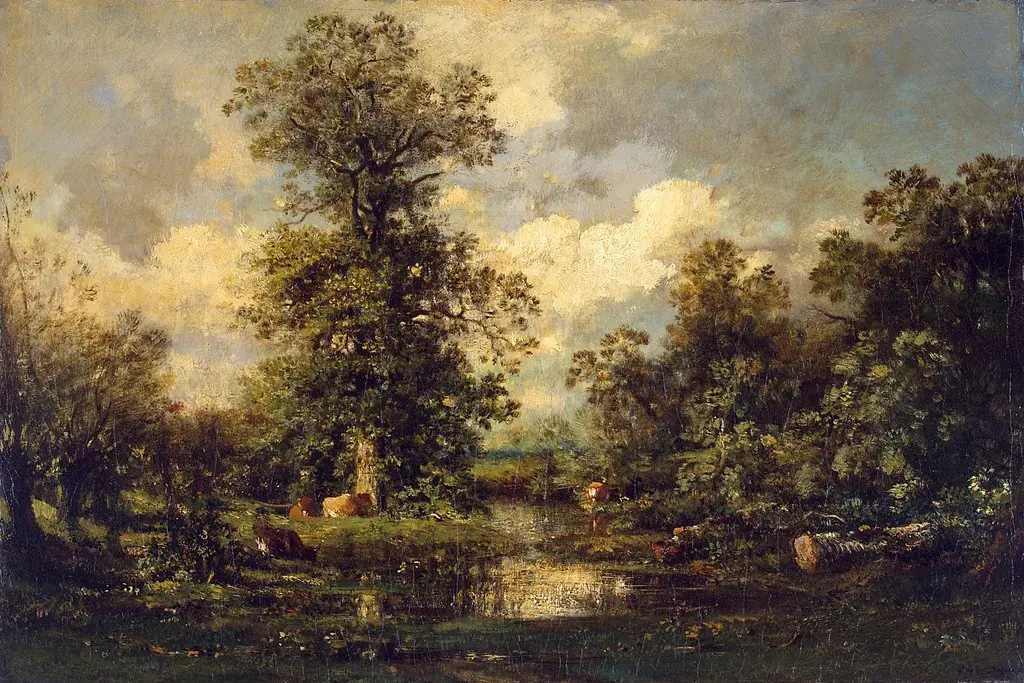
It depicts a quiet rural scene along a wooded stream, capturing a moment of stillness in the natural world.
Painted around 1850, The Angler is an oil on canvas work by French artist Constant Troyon. It depicts a quiet rural scene along a wooded stream, capturing a moment of stillness in the natural world. The painting is part of the collection at the Calouste Gulbenkian Museum in Lisbon, where it is displayed as an example of 19th-century French landscape painting rooted in observation rather than idealization.
Subject & Meaning
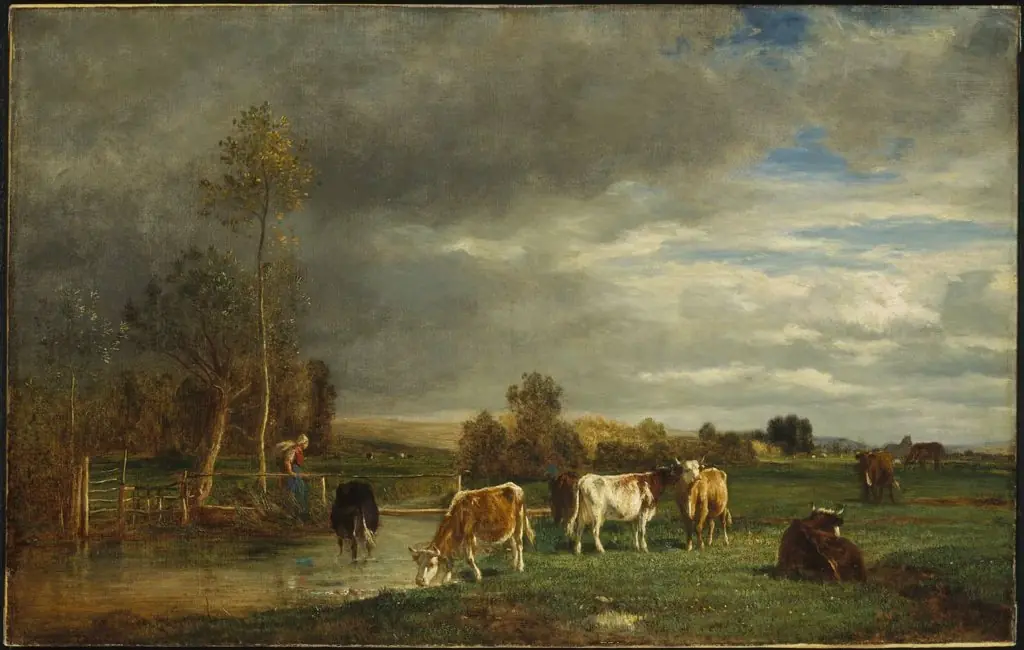
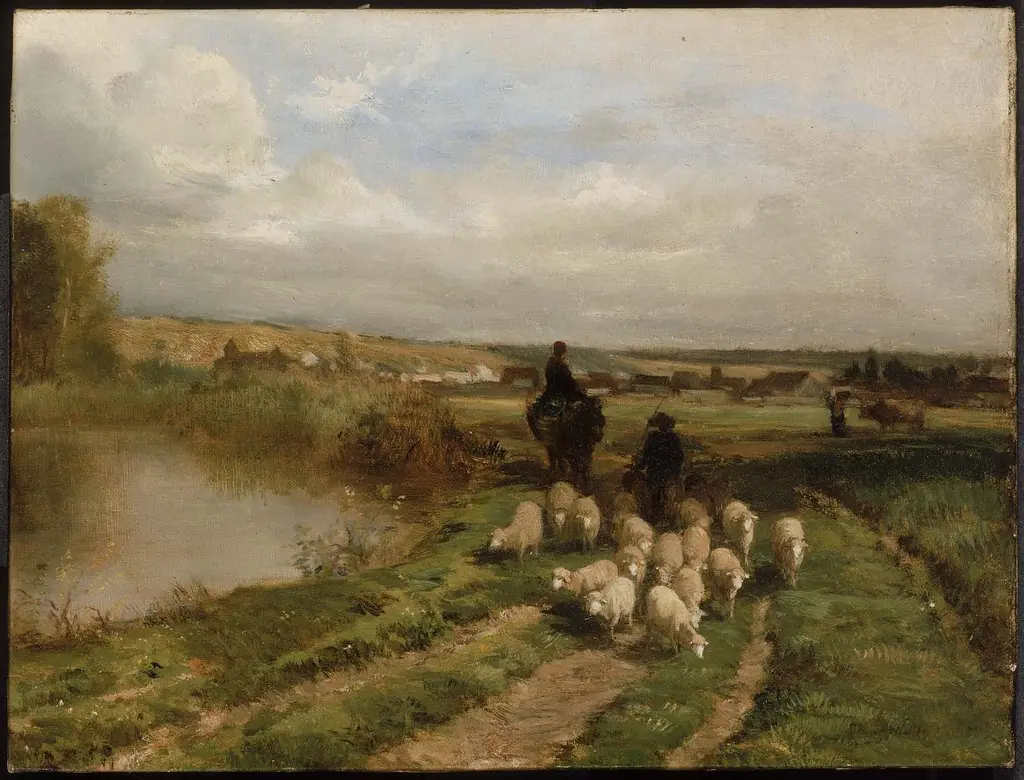
The scene centers on a solitary fisherman seated on a stone beside a gentle stream, his posture relaxed and unassuming. Nearby, a small group of sheep grazes on the bank, their presence reinforcing the harmony between human activity and the natural environment. There is no narrative drama or symbolic intent; the painting’s quietude suggests an appreciation for ordinary rural life and the rhythms of nature.
Technique & Style
Troyon employs soft, blended brushwork to render the textures of foliage, water, and earth. His palette favors muted greens, browns, and grays, with subtle variations in tone to suggest depth and atmosphere. Light filters diffusely through the canopy, casting gentle shadows without sharp contrasts. The composition avoids dramatic focal points, instead guiding the eye through a layered, horizontal expanse of land and sky.
History & Provenance
Created during Troyon’s mature period, the painting reflects his association with the Barbizon School, though he was not a formal member. It entered the Calouste Gulbenkian collection in the 20th century, acquired as part of the Portuguese industrialist’s broader assembly of European art. Its provenance prior to Gulbenkian’s ownership remains undocumented in public records.
Context
In mid-19th century France, artists increasingly turned to rural subjects as industrialization reshaped society. Troyon, like his contemporaries, sought to portray nature with sincerity, rejecting academic conventions in favor of direct observation. The Angler aligns with this movement, emphasizing atmosphere and quiet dignity over theatricality or moral allegory.
Legacy
Though less widely known than some of his peers, Troyon’s work contributed to the legitimacy of landscape painting as a serious genre in France. The Angler exemplifies his commitment to capturing the subtleties of light and terrain, influencing later generations of naturalist painters who valued emotional restraint and fidelity to observed reality.
Own this work as a print
Artist & collection

Artist
Constant Troyon (French pronunciation: ; August 28, 1810 – February 21, 1865) was a French painter of the Barbizon school.