Artwork
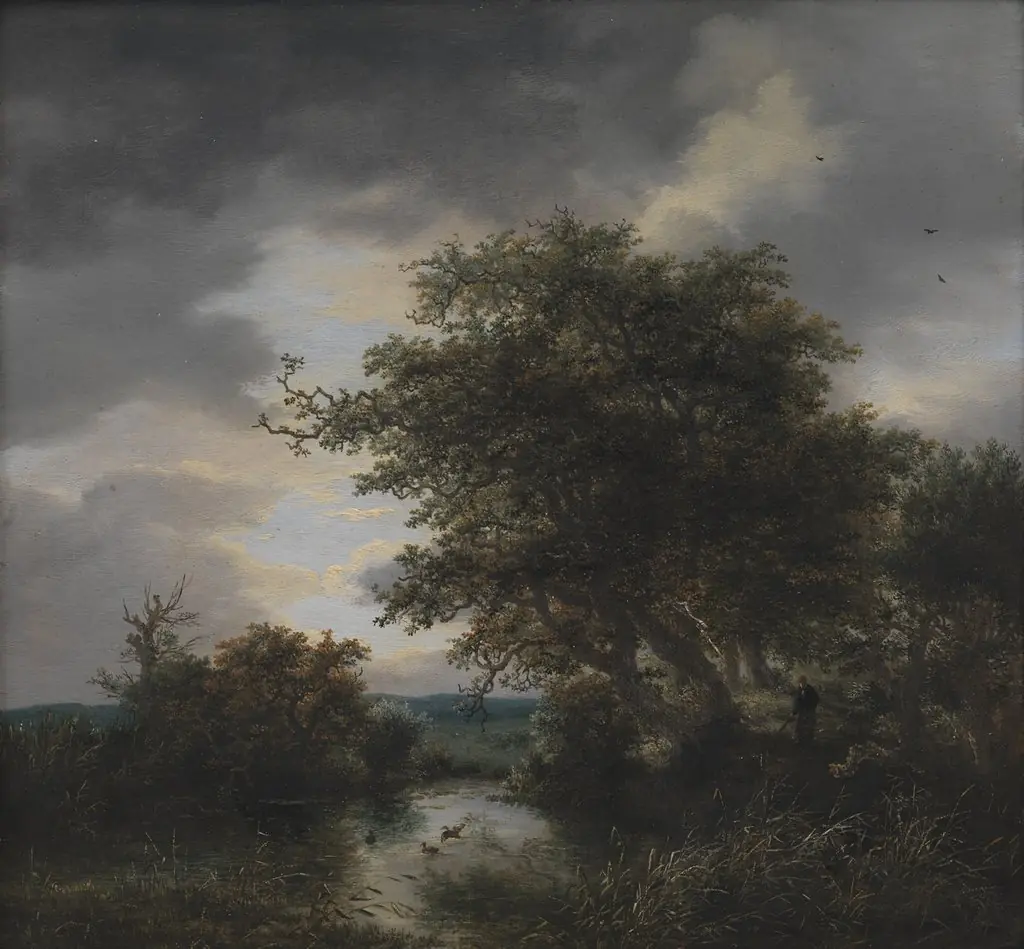
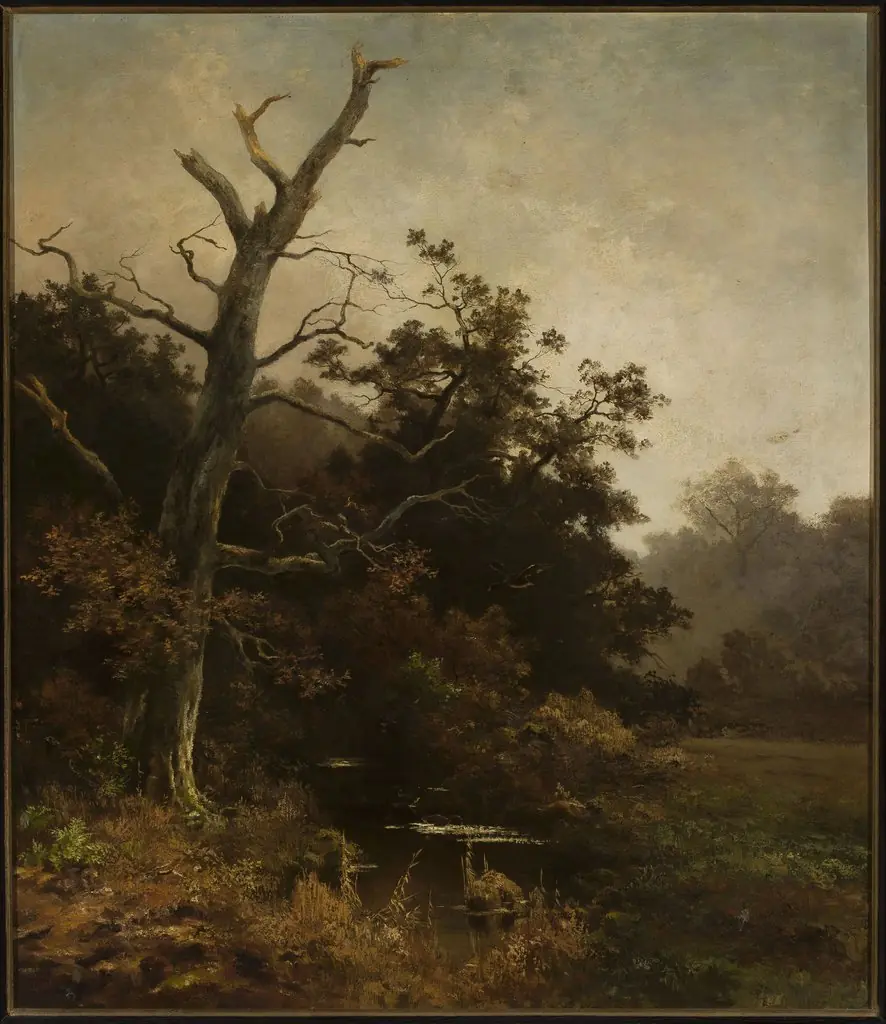
Landscape in Cloudy Weather. Late Afternoon
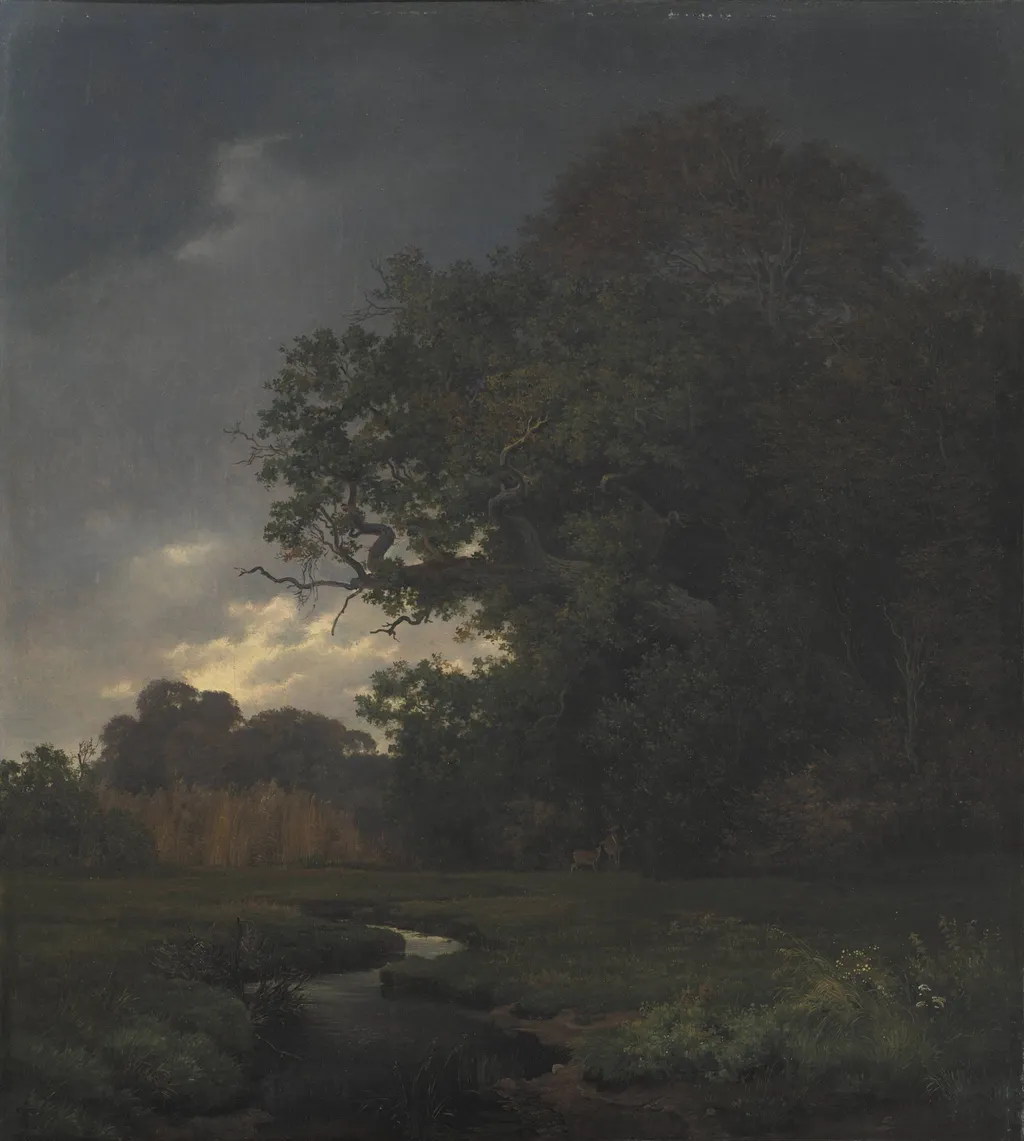
Landscape in Cloudy Weather. Late Afternoon is an unspecified painting by the Romanticist artist Unknown. It dates from 1840 and is held in the collection of the Statens Museum for Kunst. Painted in 1840, Landscape in Cloudy Weather.
About this work
Overview
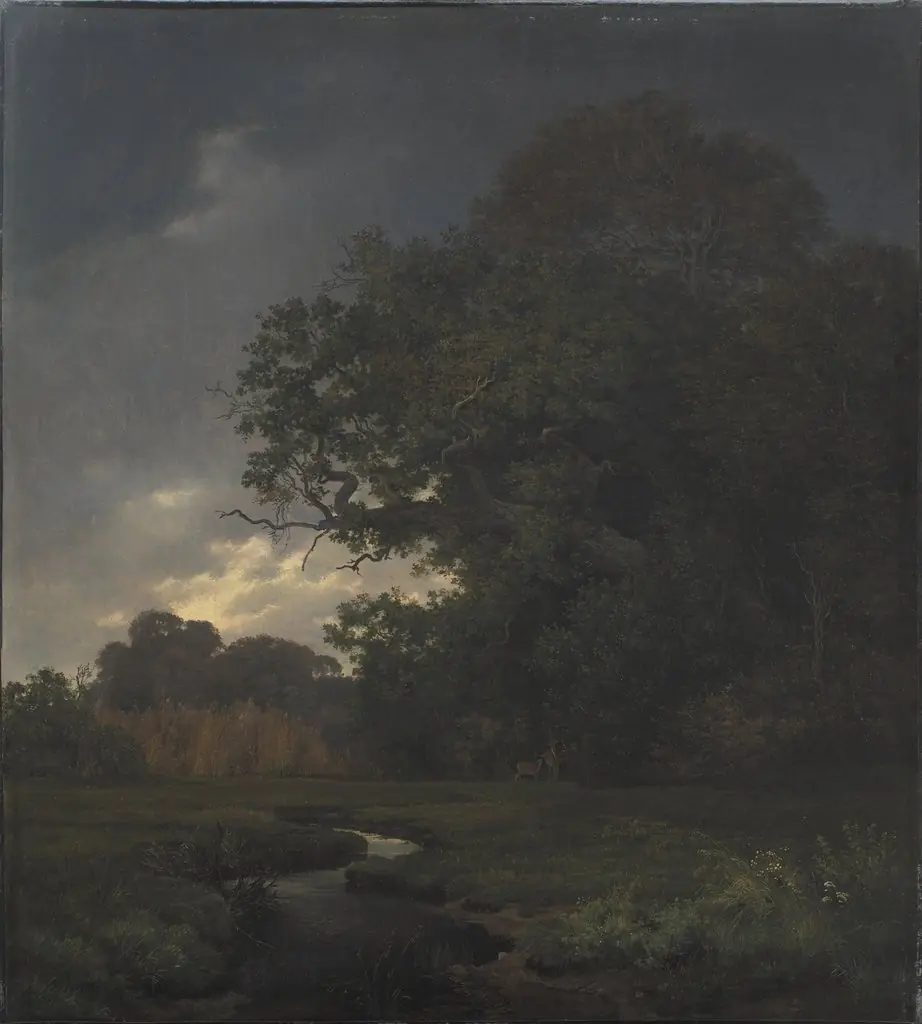
The atmosphere is subdued, with light filtering through scattered clouds, suggesting a moment between storm and calm.
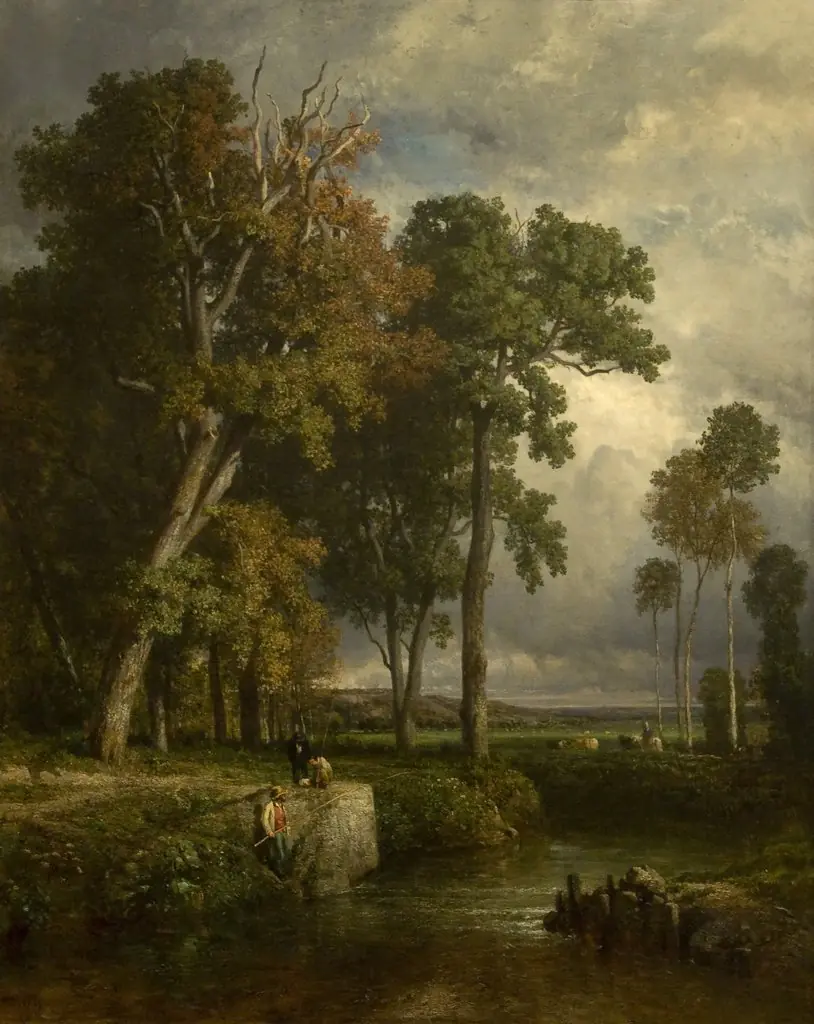
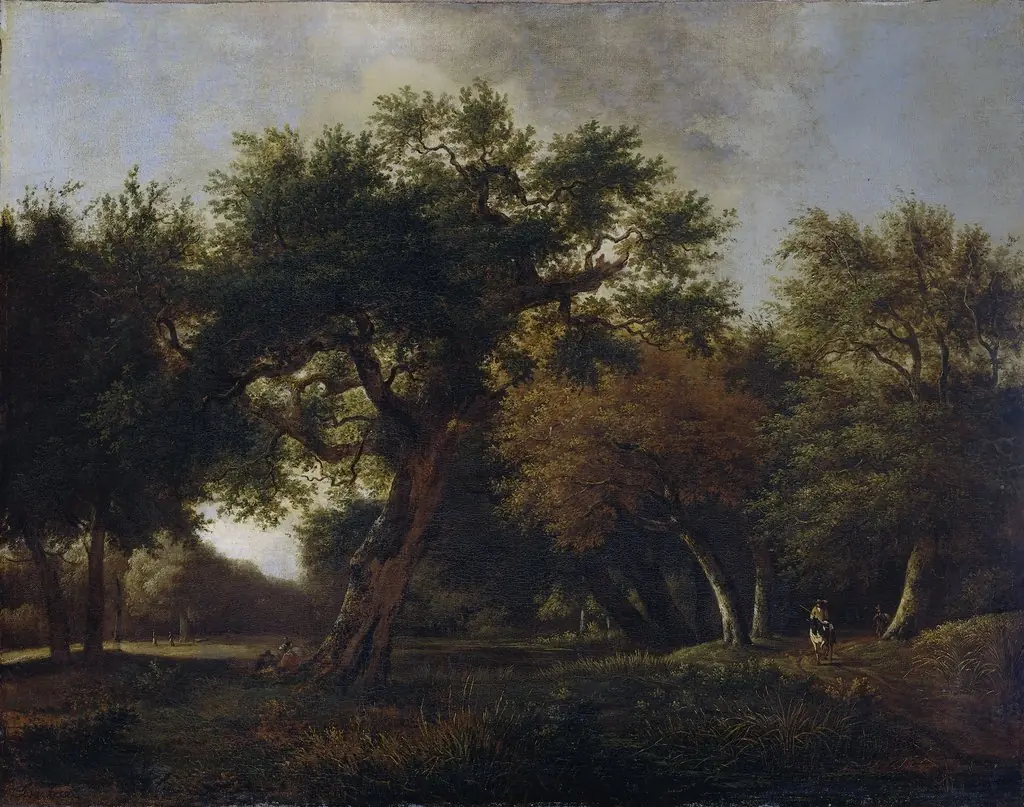
Painted in 1840, Landscape in Cloudy Weather. Late Afternoon captures a quiet forest at dusk under a shifting sky. The work is attributed to 1131_person and resides in the Museum of Ethnography. Its composition centers on a solitary, gnarled tree, framed by dense foliage and a dimming horizon. The atmosphere is subdued, with light filtering through scattered clouds, suggesting a moment between storm and calm.
Subject & Meaning
The painting presents nature in transition—late afternoon light struggles through heavy clouds, casting uneven illumination across the terrain. The central tree, twisted and resilient, anchors the scene as a silent witness to the weather’s passage. The faint path and shallow stream imply quiet human presence, but the focus remains on natural forces: wind, light, and time, rendered without narrative or symbolism.
Technique & Style
The artist employs subtle contrasts between shadow and filtered light to model form and depth. Brushwork is restrained yet precise, especially in rendering the texture of leaves and the soft diffusion of cloud edges. The palette leans toward muted grays, blues, and earth tones, with occasional highlights on grass and bark. These choices evoke a sense of atmospheric realism, emphasizing the transient quality of light.
History & Provenance
The painting entered the Museum of Ethnography’s collection in the late 19th century, likely through a private acquisition or donation. Its origins prior to that are undocumented. Unlike many contemporary landscapes, it was not exhibited widely during the artist’s lifetime, and little correspondence or critical response from the period survives to contextualize its reception.
Context
Created during a period when European artists increasingly turned to nature for emotional and aesthetic resonance, this work aligns with regional trends favoring quiet, observational landscapes over grand narratives. Though not part of a known movement, its attention to transient light and weather reflects broader shifts toward realism and the study of natural phenomena in mid-19th-century art.
Legacy
The painting remains a quiet example of 19th-century landscape study, valued for its restrained mood and technical sensitivity to light. It has not influenced major artistic developments but continues to be referenced in museum educational materials as an example of atmospheric rendering. Its preservation in an ethnographic institution underscores its role as a cultural artifact of natural observation.
Artist & collection

 Domestic Scene
 Giacomo and Cardinal Marco, investing Andrea, Abbot of San Zeno, with his Benefice
 The Nymph of Fontainebleau
 Portrait of a Woman
 Madonna and Child with Saints in the Enclosed Garden
 Venus and Minerva
 Family Group of Four on Sofa
 Wall painting from Room H of the Villa of P. Fannius Synistor at Boscoreale