Artwork
Țărancă
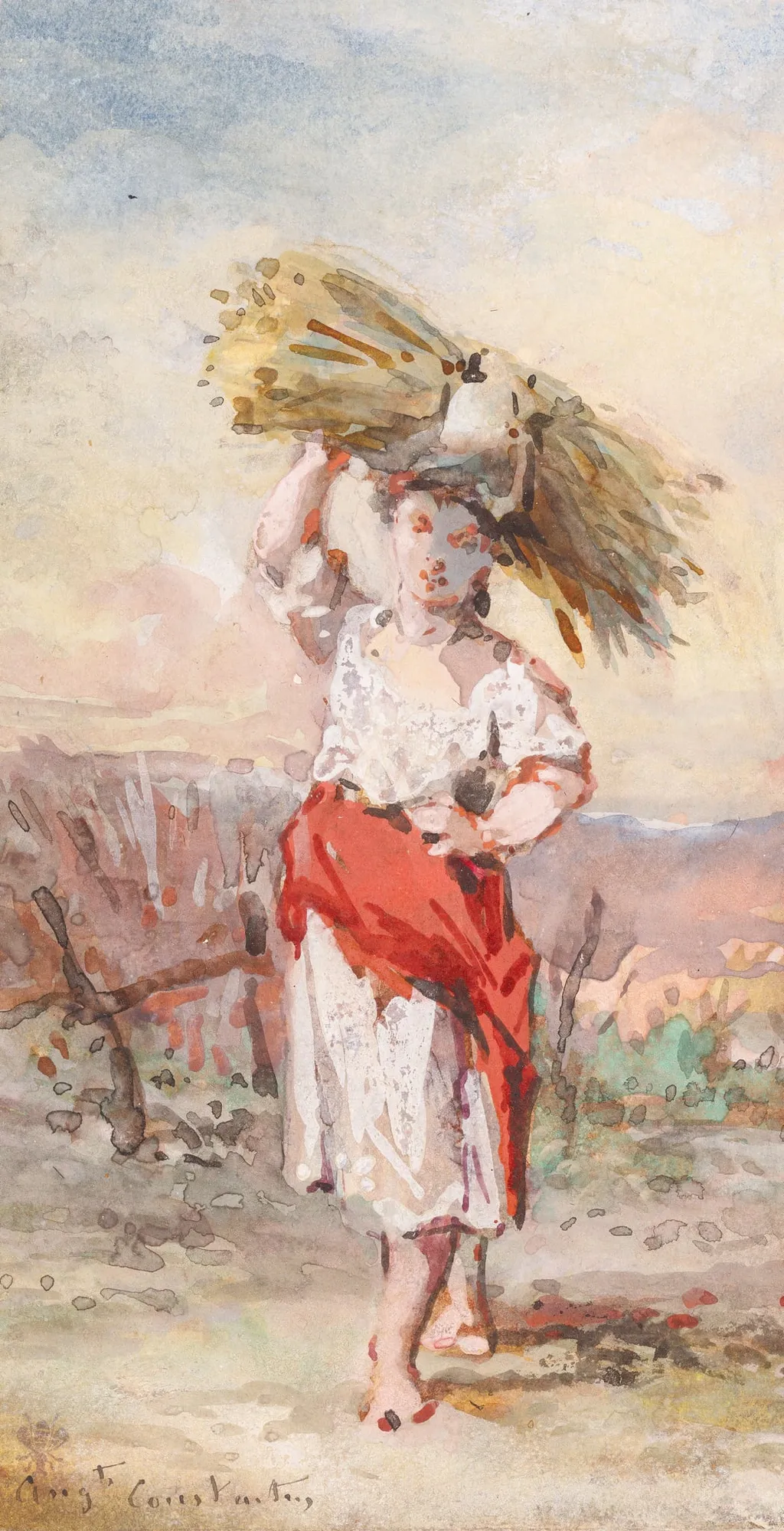
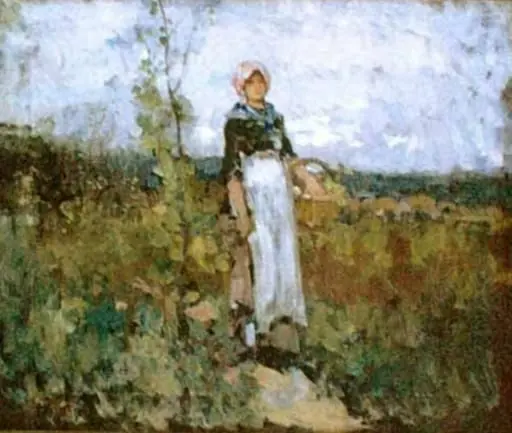
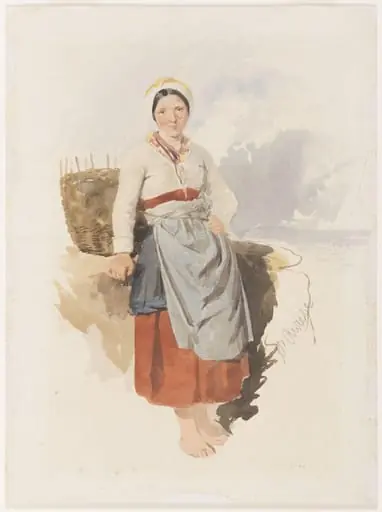
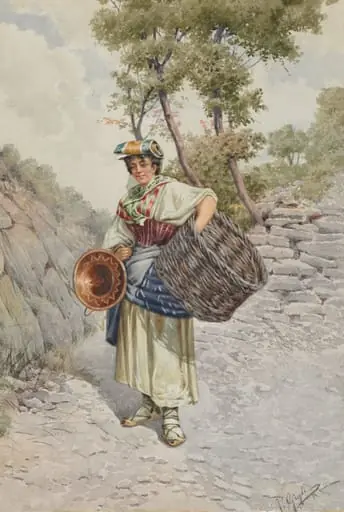
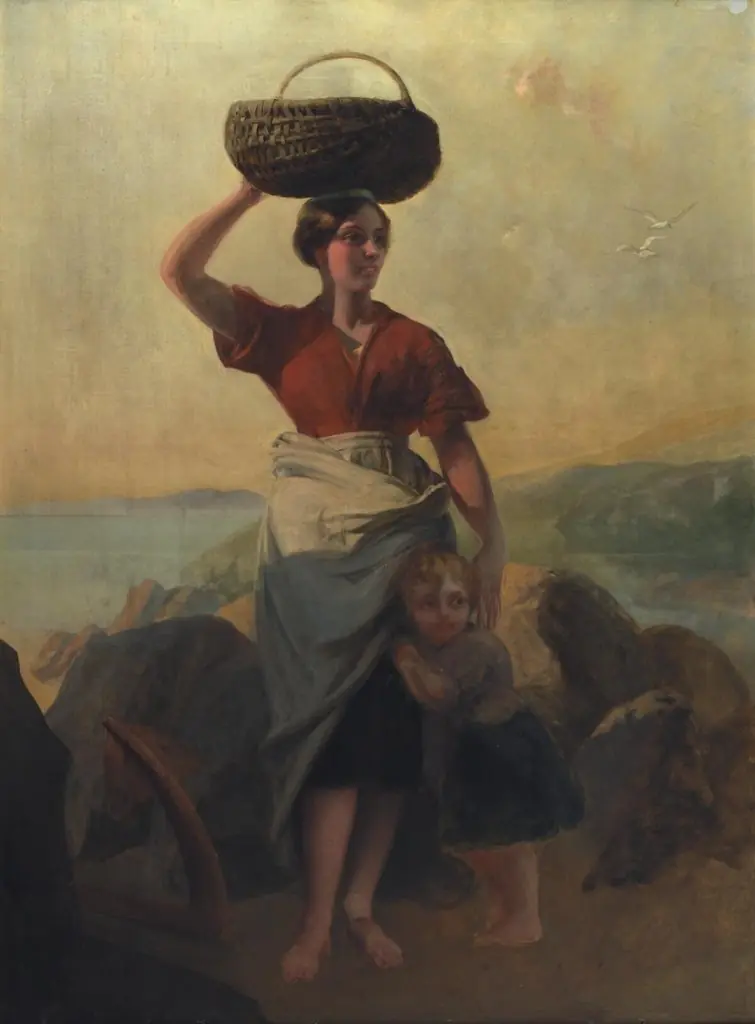
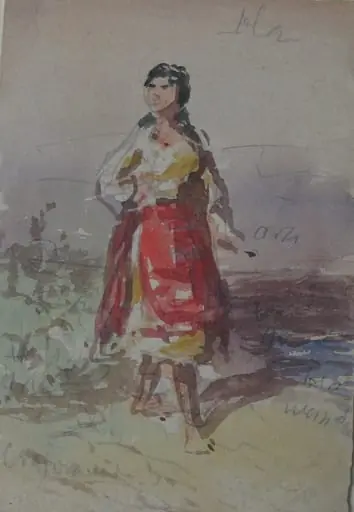
Țărancă is a print by Auguste Aristide Fernand Constantin. It dates from 1850 and is held in the collection of the National Museum of Art of Romania.
About this work
Overview
Rendered with restrained detail, the figure moves along a simple path, her posture and attire suggesting labor and routine.
Created around 1850 by Auguste Aristide Fernand Constantin, this image portrays a rural woman in quiet motion. Rendered with restrained detail, the figure moves along a simple path, her posture and attire suggesting labor and routine. The composition avoids theatricality, instead emphasizing stillness and presence. The work belongs to a broader 19th-century interest in depicting ordinary life beyond idealized or aristocratic subjects.
Subject & Meaning
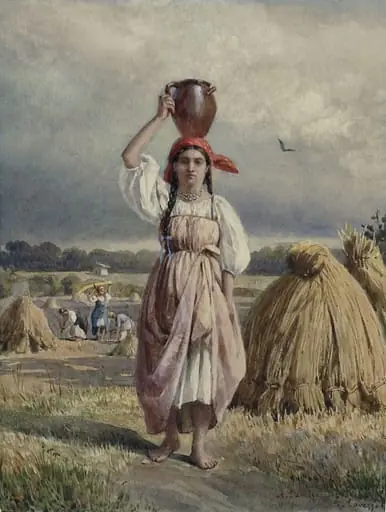
The woman, dressed in a white blouse and red skirt, carries straw on her head while walking barefoot. Her turned gaze and unadorned expression convey neither hardship nor heroism, but a grounded continuity. The absence of narrative context invites contemplation of daily endurance. Her bare feet and simple load anchor her to the land, suggesting a relationship with nature defined by necessity rather than symbolism.
Technique & Style
The painting employs soft tonal transitions and muted colors to evoke a hazy, atmospheric landscape. Light falls gently across the figure, modeling form without harsh contrast. Brushwork is subdued, favoring smooth blending over texture or detail. The background dissolves into pale hills and sky, directing focus to the woman’s silhouette and the quiet rhythm of her movement.
History & Provenance
The work’s early provenance is undocumented, and it remains outside major public collections. Created during Constantin’s formative years, it reflects his engagement with rural subjects before his later shift toward portraiture. Its survival as a standalone image suggests it was likely a private study or small commission, not intended for public exhibition at the time.
Context
In mid-19th-century Europe, artists increasingly turned to peasant life as a subject worthy of serious attention. Constantin’s depiction aligns with this trend, though it lacks the social commentary found in works by Millet or Courbet. Here, the focus is on presence rather than critique, reflecting a quieter, more observational approach to rural realism.
Legacy
Though not widely reproduced or studied, the work contributes to a lesser-known strand of 19th-century realism that valued quiet observation over dramatic narrative. Its preservation offers insight into how regional artists engaged with everyday life, separate from dominant academic or revolutionary currents. It remains a modest but deliberate record of rural existence.
Artist & collection
Artist
Auguste Aristide Fernand Constantin
Fernand Constantin spent his afternoons hunched over a printing press in the back of a Iași bookshop, inking peasant portraits while the shopkeeper complained about the smell.