Artwork
A Stop in the Park
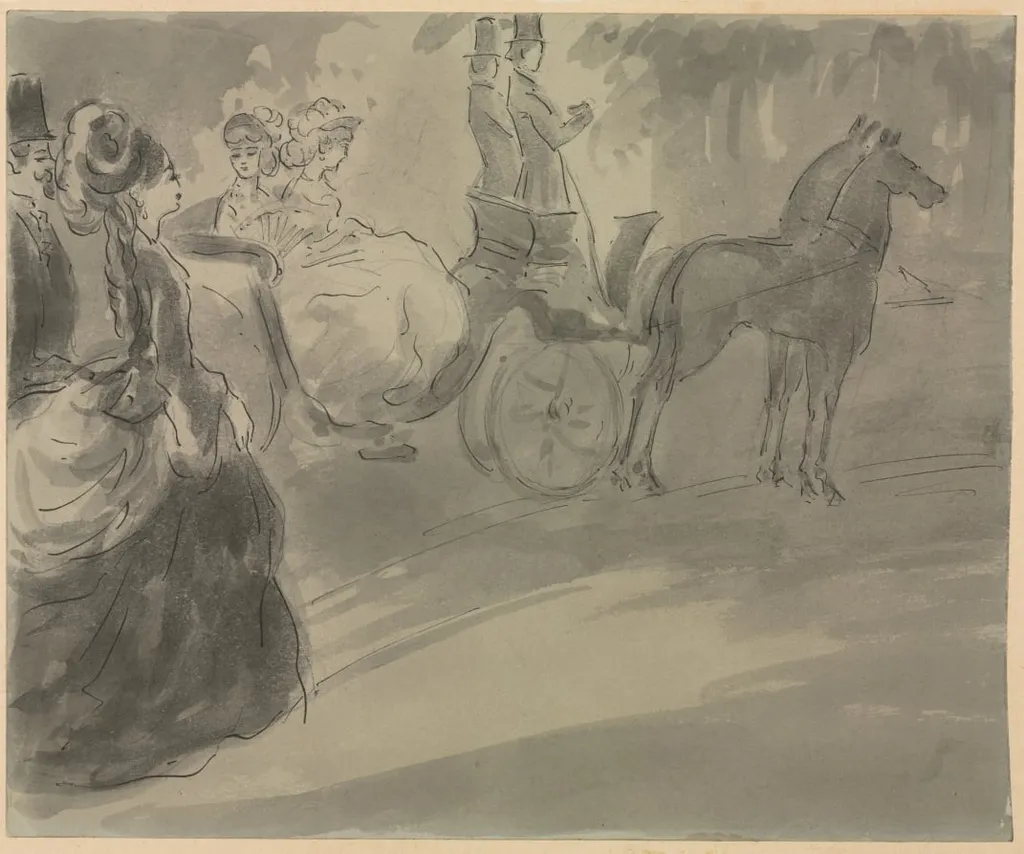
A Stop in the Park is a drawing by the Romanticist artist Constantin Guys. It dates from 1804 and is held in the collection of the Cleveland Museum of Art.
About this work
Overview
Executed in watercolor with loose, agile lines, it reflects Guys’ focus on urban life and transient social interactions.
Created around 1804 by French illustrator Constantin Guys, this drawing captures a fleeting moment in a public park. Executed in watercolor with loose, agile lines, it reflects Guys’ focus on urban life and transient social interactions. Though often associated with later journalistic work, this early piece already reveals his interest in observing ordinary people amid the rhythms of city leisure.
Subject & Meaning
The scene depicts a paused horse-drawn carriage on a tree-lined path, with a woman walking beside it and two others seated inside. A man stands nearby, his posture suggesting a brief exchange. The quiet intimacy of the moment—neither dramatic nor staged—emphasizes the subtle social rituals of public space, aligning with early 19th-century interests in the dignity of everyday life.
Technique & Style
Guys employed rapid, fluid brushwork and diluted watercolor to suggest motion and atmosphere. The background is softly blurred, directing attention to the figures and carriage. The horse, rendered with calm solidity, contrasts with the sketchy outlines of the pedestrians. This approach prioritizes immediacy over detail, capturing the energy of a passing encounter rather than a posed composition.
History & Provenance
The drawing originates from Guys’ early career, before his documented work as a war correspondent. It likely stems from his habit of sketching Parisian promenades and gardens, a practice shared by contemporaries documenting urban transformation. Its survival suggests it was kept as a personal study, possibly later acquired by collectors interested in observational drawing of the period.
Context
In the early 1800s, public parks became sites of social observation as urban middle classes expanded. Artists like Guys turned away from grand historical narratives to record the nuances of daily life. This work aligns with emerging genre traditions in France and England, where the mundane was treated with quiet attention, reflecting broader cultural shifts toward realism and individual experience.
Legacy
Guys’ sketches, including this one, influenced later generations of artists who sought to capture modern life with spontaneity. His emphasis on transient moments and unposed figures prefigured the Impressionists’ approach to urban scenes. Though not widely exhibited in his time, his drawings are now recognized as vital records of 19th-century social texture.
Artist & collection
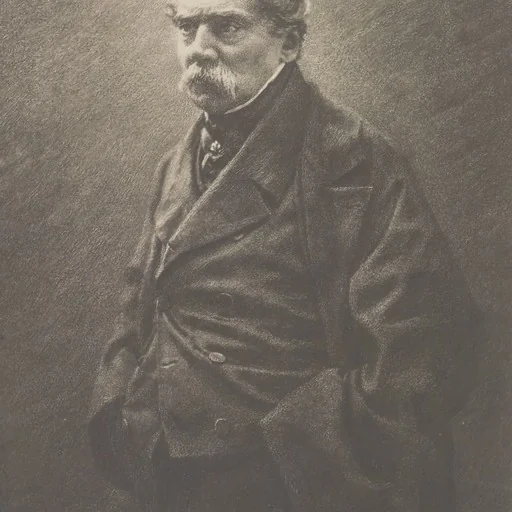
Artist
Constantin Guys (born Ernest-Adolphe Guys de Saint-Hélène, December 3, 1802 – December 13, 1892) was a French Crimean War correspondent, water color painter and illustrator for British and French newspapers.

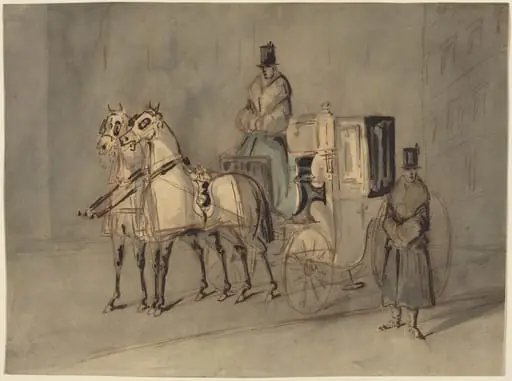 Carriage with Driver and Groom: Autumn
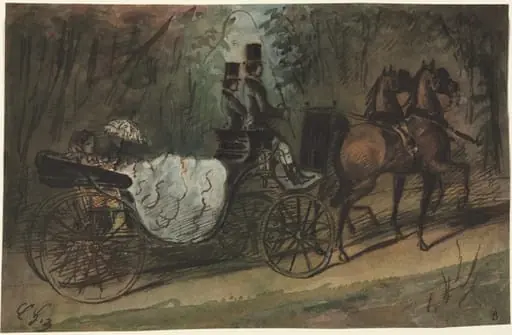 Carriage in the Bois de Boulogne
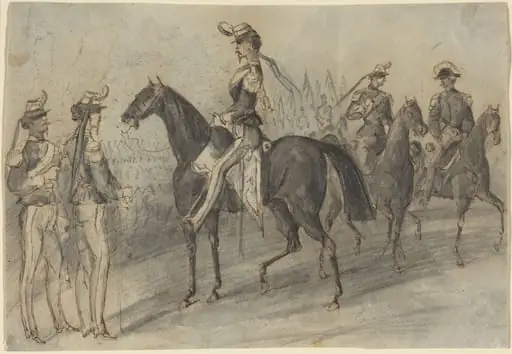
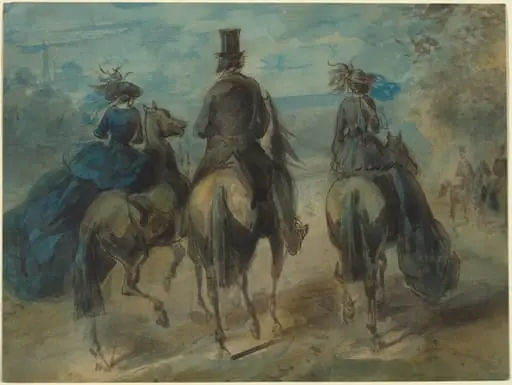
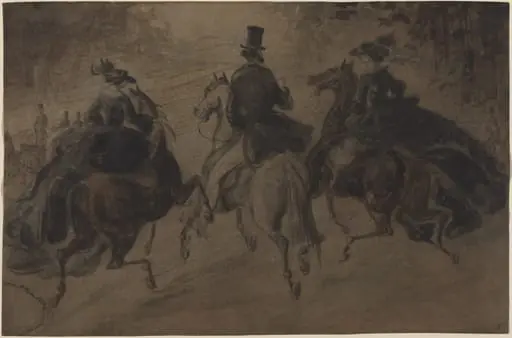 Cavalier and Two Ladies on Horseback
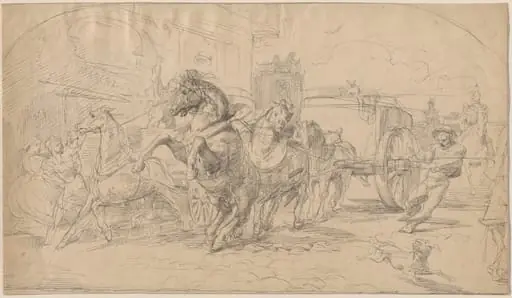 The Runaway Carriage
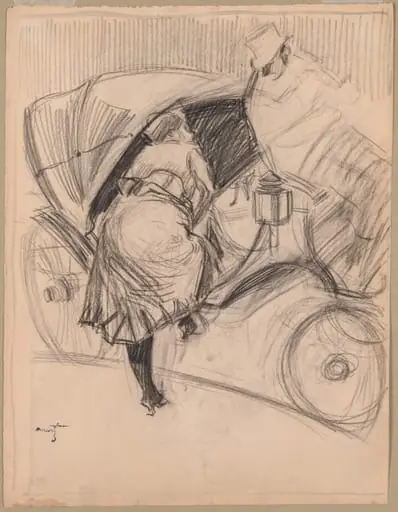 Woman Entering a Fiacre (recto)
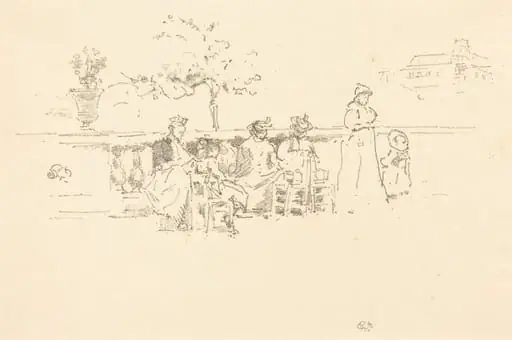 The Terrace, Luxembourg
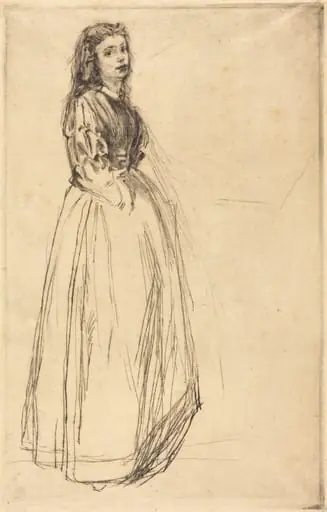 Fumette, Standing
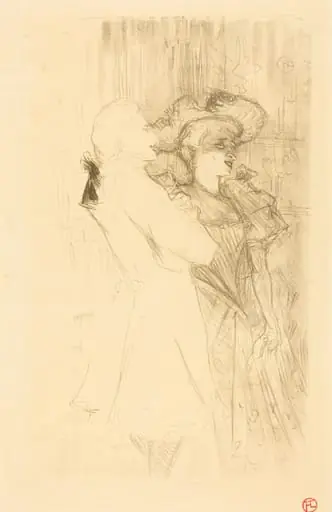 Lender and Auguez in "La chanson de fortunio" (Lender et Auguez dans "La chanson de fortunio")
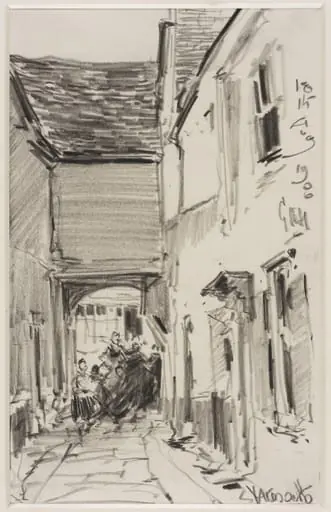 A Row, Great Yarmouth.
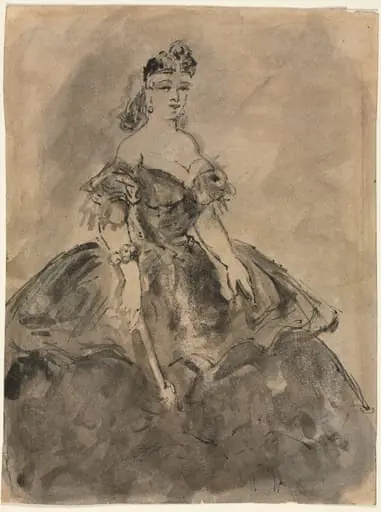 At the Ball (recto)
 The Fitting