Artwork
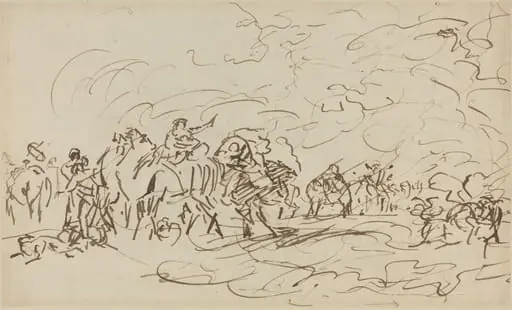
The Runaway Carriage
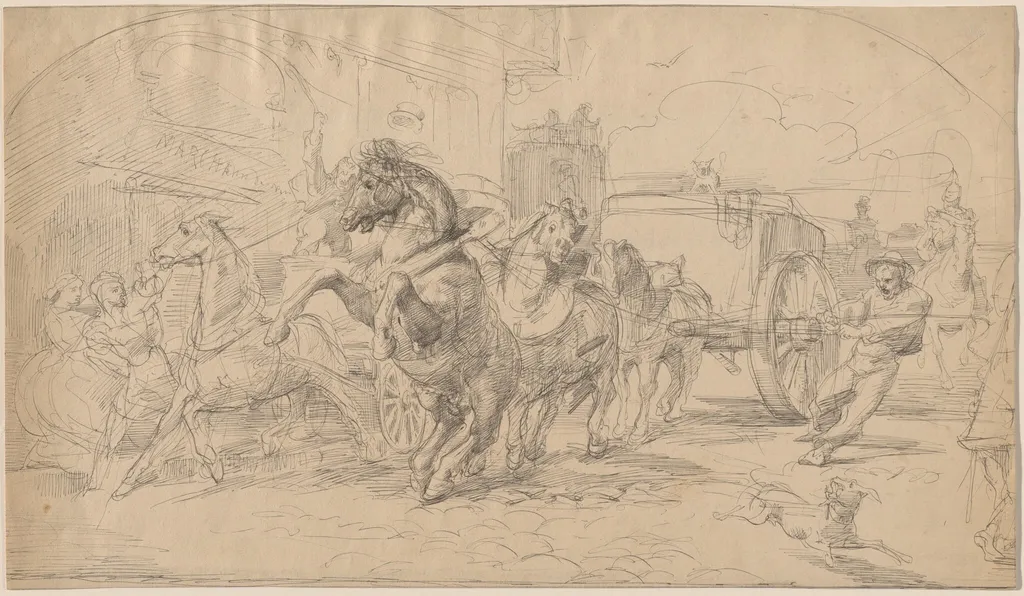
The Runaway Carriage is an ink drawing by the Romanticist artist Eugène Delacroix. It dates from 1834 and is held in the collection of the National Gallery of Art.
About this work
Overview
The Runaway Carriage is a drawing by Eugène Delacroix, created circa 1834. Executed in pen and black ink on heavy laid paper, it exemplifies the artist's expressive and spontaneous style.
Subject & Meaning
The drawing depicts a carriage hurtling down a hill, conveying a sense of dynamic movement and energy. The scene is rendered with simple, expressive lines that capture the drama of the moment.
Technique & Style
Delacroix employed a range of techniques, including cross-hatching, to create shading and texture in the drawing. The use of bold, gestural lines and economical mark-making contributes to the overall sense of speed and energy.
Context
The Runaway Carriage reflects Delacroix's mature style, characterized by dramatic and romantic themes. His work was influenced by artists such as Rubens and those of the Venetian Renaissance, who emphasized color and movement.
Artist & collection
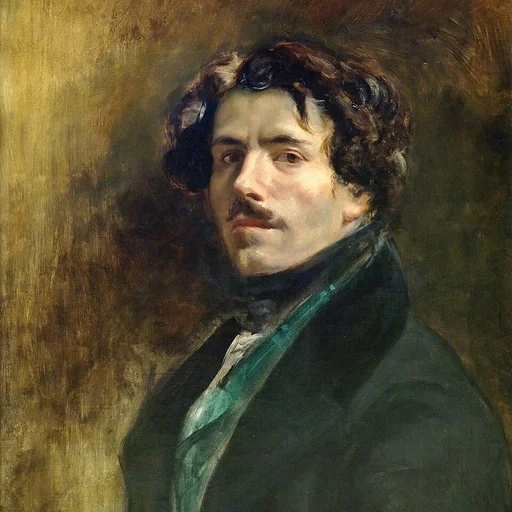
Artist
Ferdinand Victor Eugène Delacroix ( DEL-ə-krwah, -KRWAH; French: ; 26 April 1798 – 13 August 1863) was a French Romantic artist who was regarded as the leader of the French Romantic school.