Artwork
The Arch of Titus in Rome
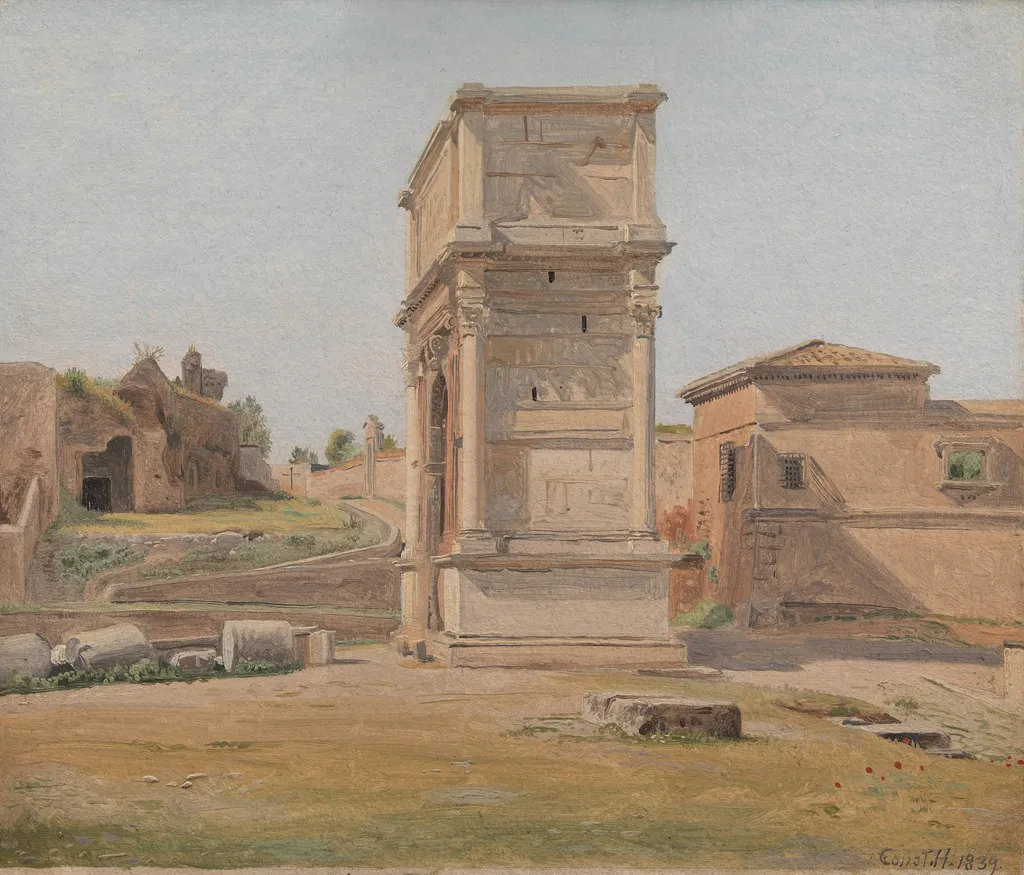
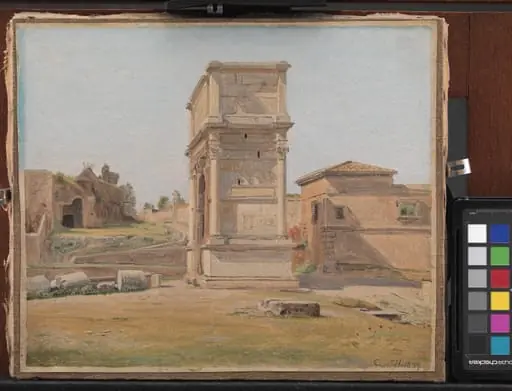
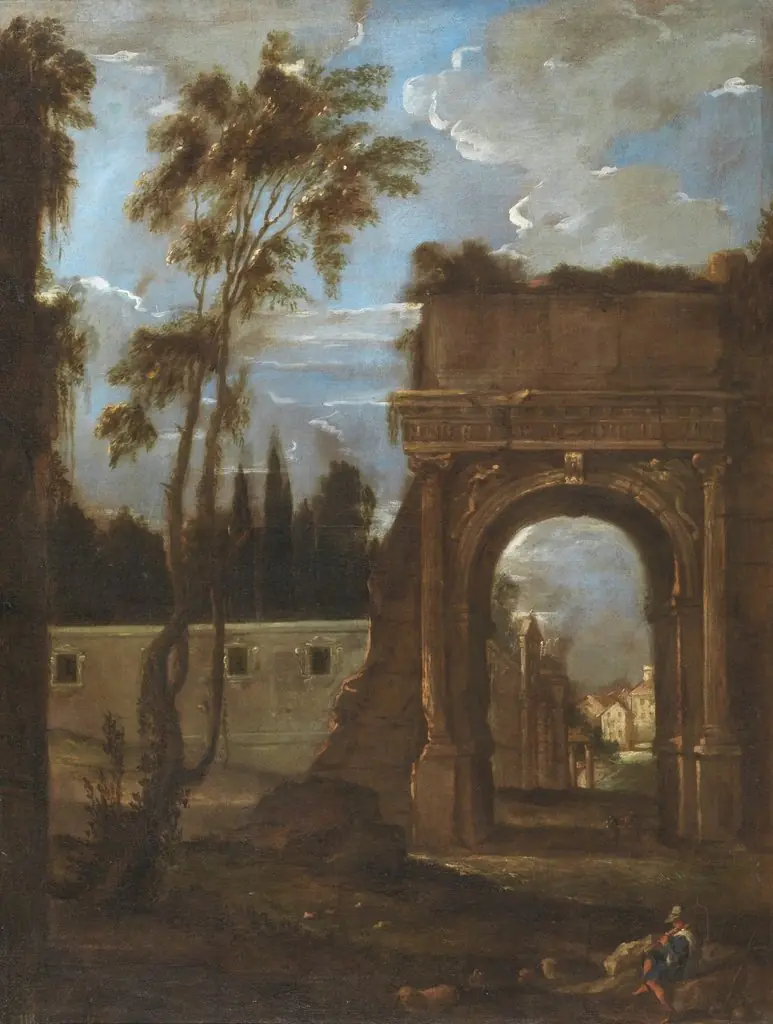
The Arch of Titus in Rome is an unspecified painting by the German Romanticist artist Constantin Hansen. It dates from 1839 and is held in the collection of the Statens Museum for Kunst.
About this work
Overview
Hansen, central to Denmark’s Golden Age of Painting, approached the subject with restrained observation rather than dramatic flourish.
Painted in 1839 by Danish artist Constantin Hansen, this work captures the Arch of Titus in Rome as a quiet, sunlit ruin. Hansen, central to Denmark’s Golden Age of Painting, approached the subject with restrained observation rather than dramatic flourish. The scene avoids grandeur, focusing instead on the monument’s presence amid an undisturbed urban landscape, reflecting a broader 19th-century interest in historical sites as vessels of time.
Subject & Meaning
The Arch of Titus, a first-century Roman triumphal structure, is depicted not as a symbol of imperial power but as a weathered relic. Its quiet isolation, framed by crumbling buildings and sparse vegetation, suggests reflection on the passage of centuries. The absence of figures or activity invites contemplation of memory and decay, aligning with Romantic-era sensibilities that valued solitude and the emotional weight of ruins.
Technique & Style
Hansen employed soft, muted coloration and delicate tonal transitions to render the arch’s stone surfaces and the hazy Roman sky. Brushwork is precise yet unobtrusive, emphasizing texture over detail. The foreground’s grass and scattered flowers are rendered with subtle economy, grounding the composition in quiet realism. The atmosphere is achieved through pale washes of blue and gray, avoiding sharp contrasts to sustain a mood of stillness.
History & Provenance
Created during Hansen’s travels in Italy, the painting entered the collection of Statens Museum for Kunst in Copenhagen shortly after its completion. It reflects the artist’s engagement with classical antiquity, a common pursuit among Nordic painters of the period. The work remained largely within institutional hands, never widely exhibited abroad, preserving its role as a quiet testament to Danish artistic inquiry into Roman heritage.
Context
In the 1830s, Northern European artists increasingly traveled to Italy to study ancient monuments, often returning with works that emphasized mood over narrative. Hansen’s painting aligns with this trend, contrasting with the more theatrical depictions favored by Italian contemporaries. His approach mirrored broader intellectual currents—archaeological interest, Romantic melancholy, and a growing appreciation for historical authenticity in art.
Legacy
Though not widely reproduced, the painting remains a significant example of Danish Romanticism’s restrained engagement with classical antiquity. It exemplifies how Northern artists interpreted Roman ruins not as symbols of glory, but as quiet witnesses to time. Its presence in Denmark’s national collection underscores its role in shaping a national artistic identity rooted in thoughtful observation rather than spectacle.
Own this work as a print
Artist & collection
Artist
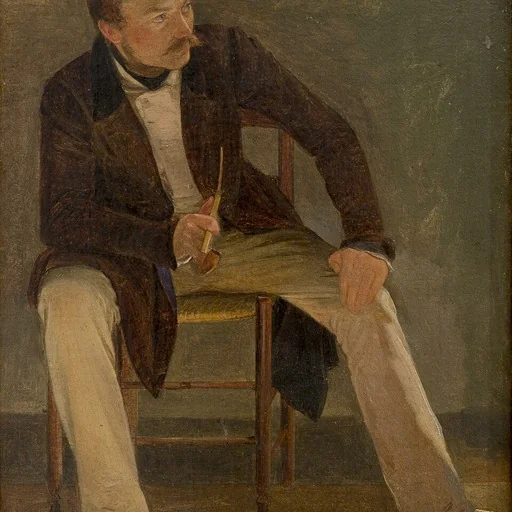
Carl Christian Constantin Hansen (Constantin Hansen) (3 November 1804 – 29 March 1880) was one of the painters associated with the Golden Age of Danish Painting.