Artwork
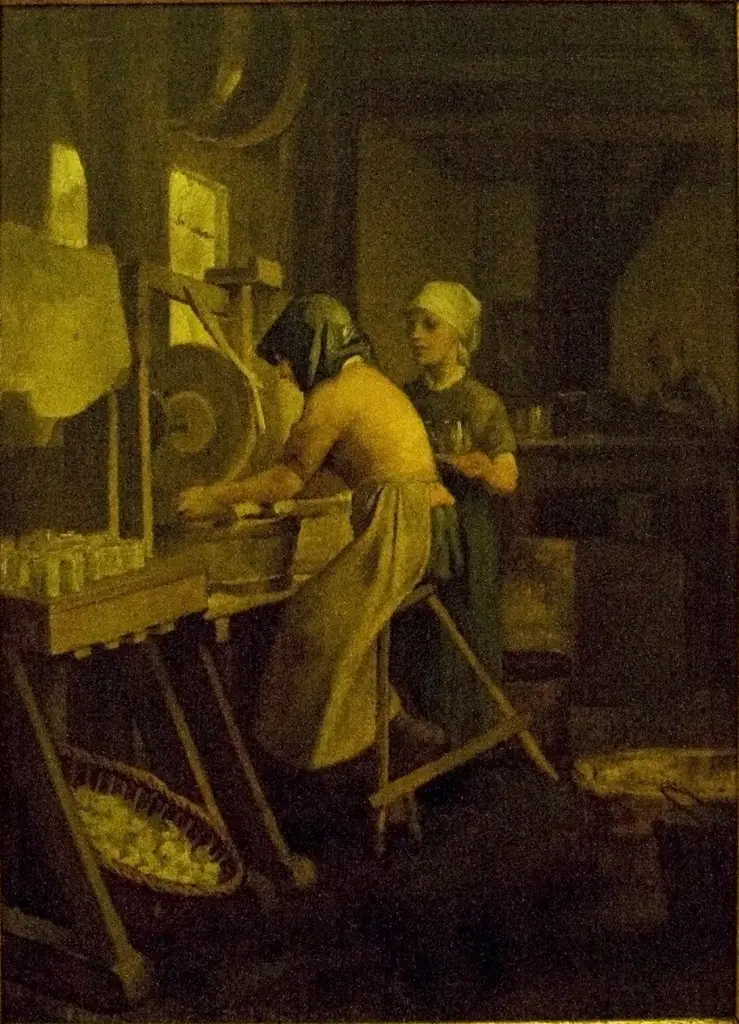
Tobacco Factory, Seville
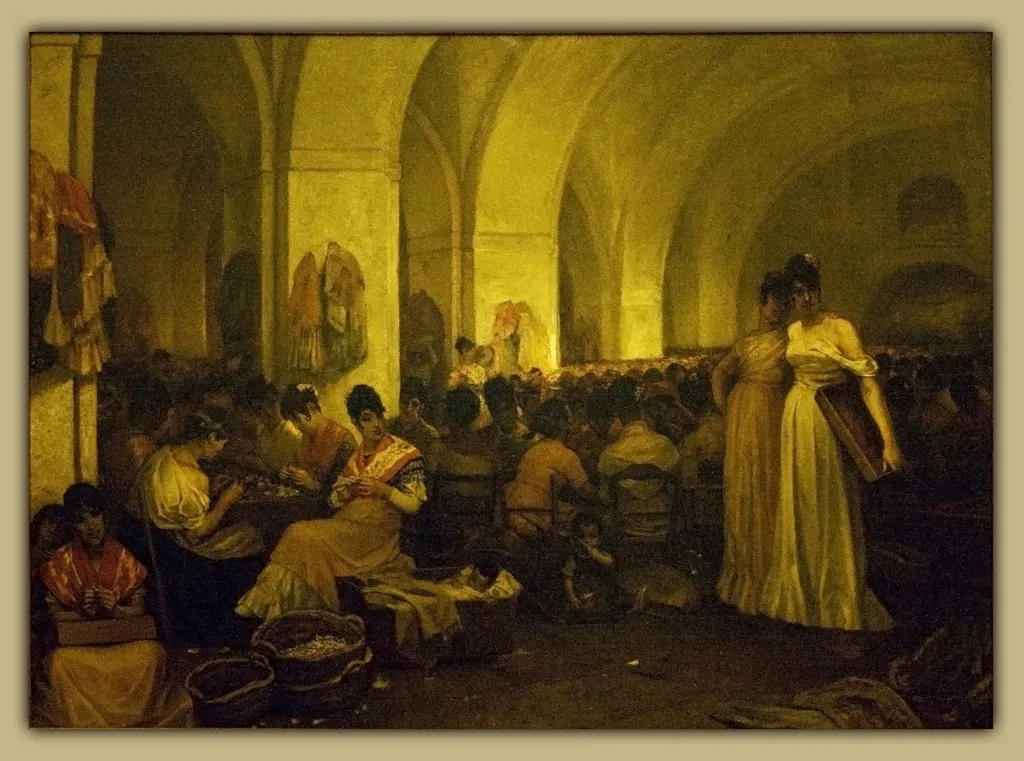
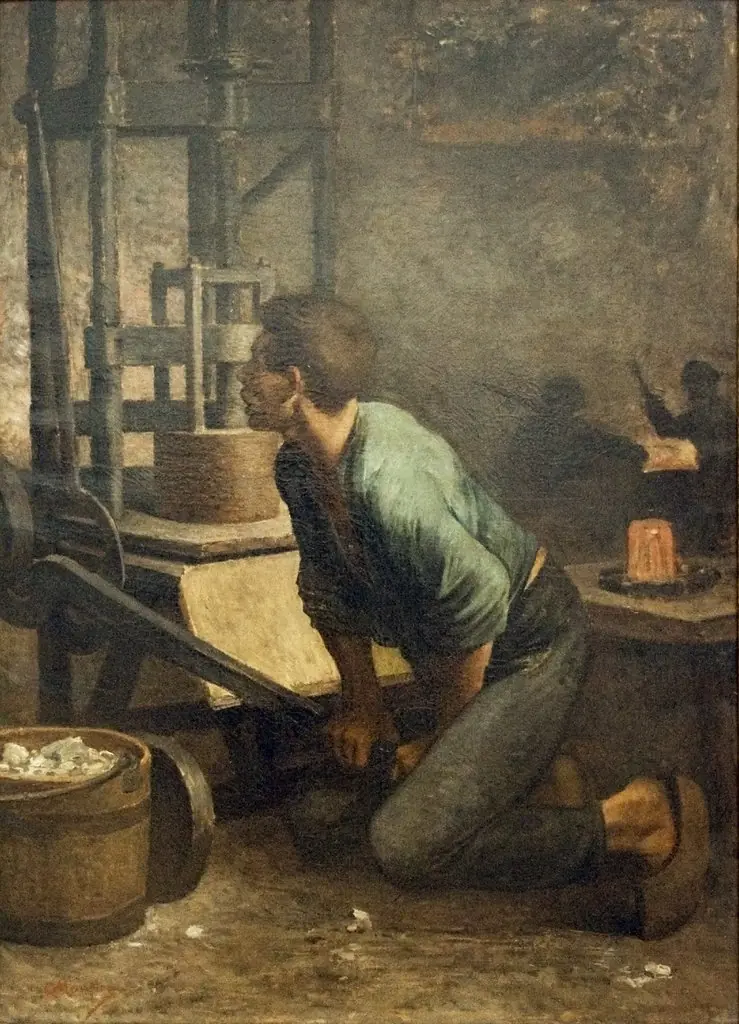
Tobacco Factory, Seville is an oil painting by the Realist artist Constantin Meunier. It dates from 1892 and is held in the collection of the Royal Museums of Fine Arts of Belgium.
About this work
Overview
The painting reflects his broader interest in documenting the lives of workers during a period of rapid economic change in Europe.
Painted in 1892 by Belgian artist Constantin Meunier, *Tobacco Factory, Seville* is an oil-on-canvas work that captures the interior of a Spanish tobacco production facility. Meunier, known for his focus on laboring classes, rendered this scene with quiet attention to the rhythms of industrial work. The painting reflects his broader interest in documenting the lives of workers during a period of rapid economic change in Europe.
Subject & Meaning
The painting portrays a group of women engaged in the manual processing of tobacco within a vast, shadowed interior. Their postures and focused expressions suggest routine labor rather than dramatic hardship. The central figure in white, holding a box, introduces a subtle point of contrast, possibly indicating a supervisor or a momentary pause in the workflow. The scene avoids sentimentality, instead presenting work as an unremarkable, yet essential, part of daily life.
Technique & Style
Meunier employed chiaroscuro to model the deep, vaulted space and the figures within it, using strong contrasts between light and shadow to define form and depth. The palette is muted, dominated by earth tones and grayed hues, reinforcing the dim, enclosed atmosphere. Brushwork is restrained and precise, favoring clarity over texture, allowing the composition’s structure and the workers’ presence to dominate without embellishment.
History & Provenance
Completed during Meunier’s later career, the painting was acquired by the Royal Museums of Fine Arts of Belgium, where it remains in the national collection. It was likely influenced by Meunier’s travels in Spain and his ongoing engagement with labor themes. Unlike many contemporaries who idealized rural life, Meunier turned his attention to urban and industrial settings, making this work part of a deliberate artistic shift toward modern subject matter.
Context
In late 19th-century Spain, tobacco factories were among the few employers of women in industrial roles, offering relative stability but under strict conditions. Meunier’s depiction aligns with broader European realist trends that sought to represent working-class life without romanticization. His choice to focus on female laborers reflects a growing awareness of gendered labor patterns, even as he avoided overt political commentary.
Legacy
Meunier’s *Tobacco Factory, Seville* contributes to a body of work that redefined the dignity of labor in visual art. While not widely exhibited outside Belgium, it stands as a quiet testament to the visibility of industrial women in art. His approach—attentive, unembellished, and grounded in observation—paved the way for later realist and social documentary traditions in painting.
Artist & collection

Artist
Constantin Meunier (French pronunciation: ; 12 April 1831 – 4 April 1905) was a Belgian painter and sculptor.

Museum
Royal Museums of Fine Arts of Belgium
Continue through works from the same source collection.