Artwork
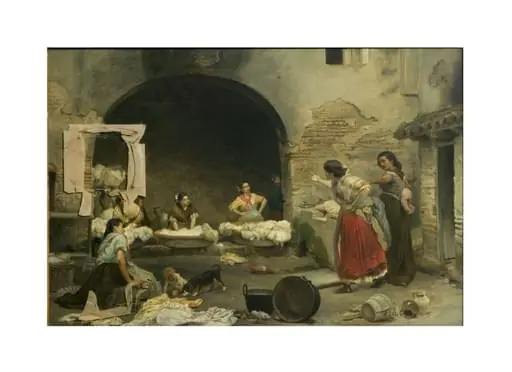
Washerwomen Disputing
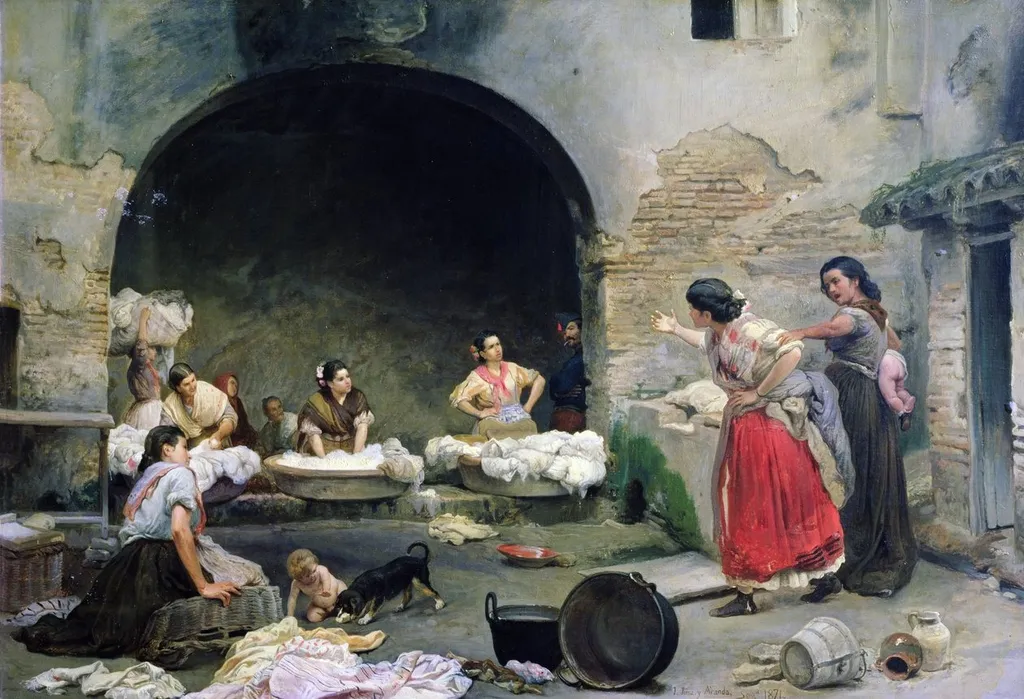
Washerwomen Disputing is an oil painting by the Post-Impressionist artist José Jiménez Aranda. It dates from 1871 and is held in the collection of the Victoria and Albert Museum.
About this work
Overview
The work reflects a shift toward observational realism, emphasizing social dynamics over idealized narratives.
Painted in 1871 by Spanish artist José Jiménez Aranda, *Washerwomen Disputing* is an oil-on-canvas genre scene capturing a moment of tension among working women. Aranda, part of a family of painters, focused on ordinary life in 19th-century Spain. The work reflects a shift toward observational realism, emphasizing social dynamics over idealized narratives. It remains part of the Victoria and Albert Museum’s permanent collection.
Subject & Meaning
The painting portrays a group of washerwomen engaged in a heated exchange, likely over labor, payment, or personal grievances. Their postures and expressions convey friction without melodrama, grounding the scene in daily reality. Aranda avoids romanticizing poverty, instead presenting the women as individuals with agency and emotional depth, reflecting broader societal attention to working-class life during the period.
Technique & Style
Aranda employed oil paint with restrained brushwork, favoring naturalistic tones and careful modeling of light to define form. The composition is tightly framed, drawing focus to the women’s gestures and facial expressions. While influenced by emerging realist trends, the work avoids the loose brushwork of Impressionism, instead maintaining a structured, almost sculptural clarity in its figures and setting.
History & Provenance
Created in 1871, the painting entered the Victoria and Albert Museum’s collection in the late 19th or early 20th century, likely through acquisition or donation. Its presence in a major British institution reflects growing European interest in Spanish genre painting during the post-Romantic era. No significant changes to its condition or ownership are documented in public records.
Context
In the decades following the 1868 Glorious Revolution, Spain saw increased cultural interest in depicting the lives of common people. Aranda’s work aligns with this trend, paralleling similar scenes by French and Spanish realists. Unlike academic history painting, *Washerwomen Disputing* elevates domestic labor as worthy of artistic attention, mirroring broader shifts in artistic values across Europe.
Legacy
Though not widely exhibited outside institutional collections, the painting contributes to the understanding of 19th-century Spanish realism. Aranda’s focus on unidealized laborers influenced later regional artists who sought to document social conditions. The work remains a quiet but persistent example of how genre painting documented the dignity and friction of everyday life.
Artist & collection
Artist
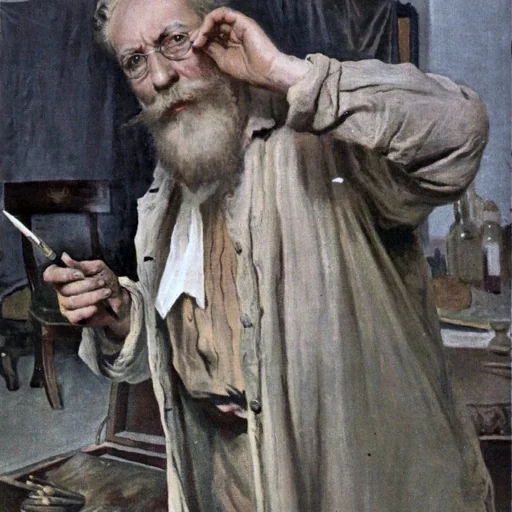
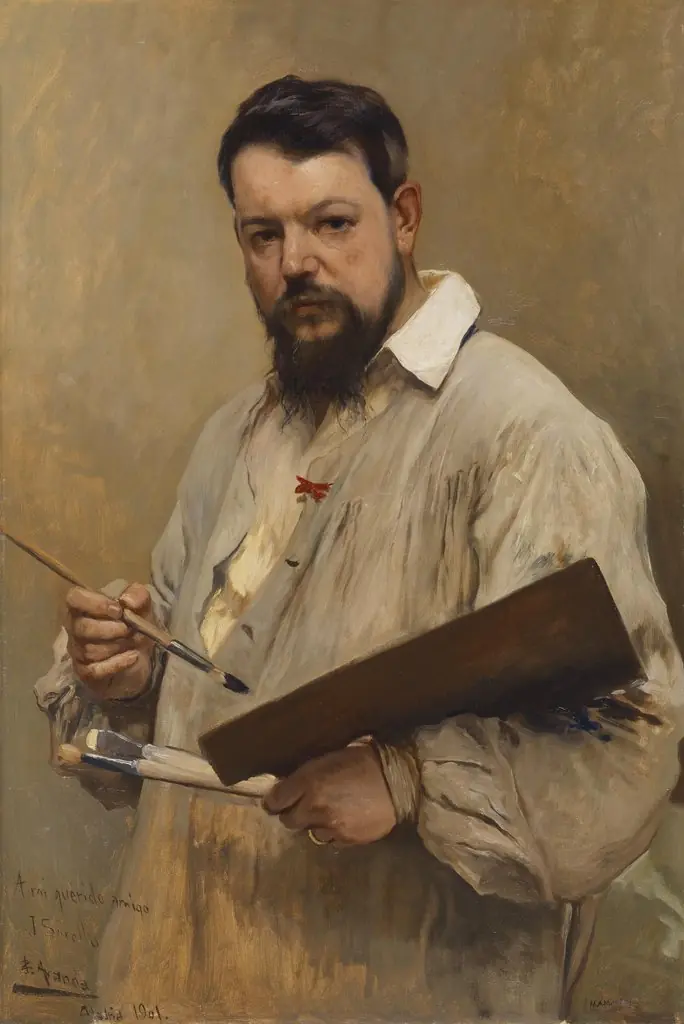
José Jiménez Aranda (7 February 1837 – 6 May 1903) was a Spanish painter and brother of the painters Luis Jiménez Aranda and Manuel Jiménez Aranda.

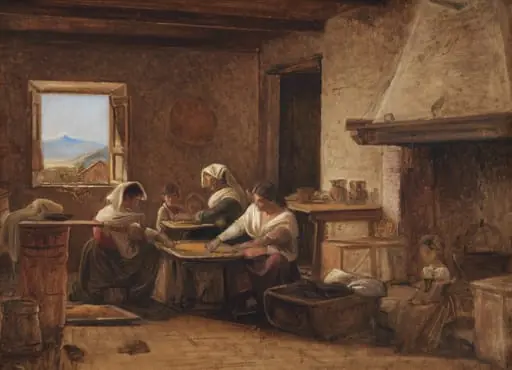 Women Working in the Kitchen of a Farmhouse near Olevano, Italy
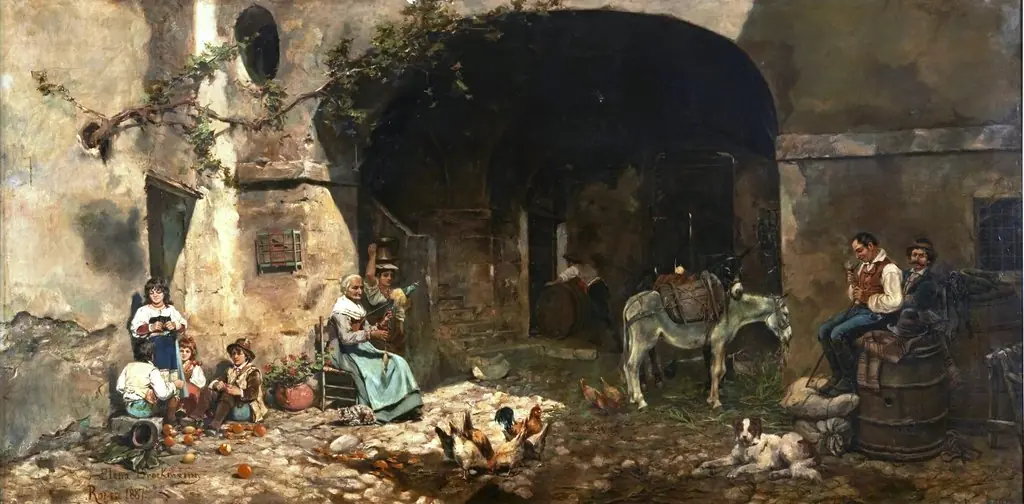 El patio de un parador
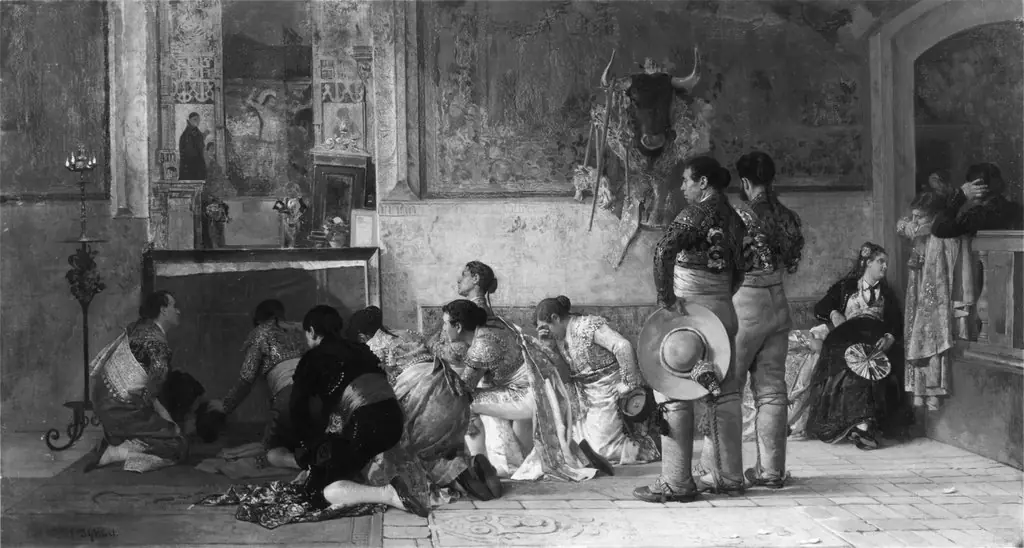 Toreros at Prayer before entering the Arena
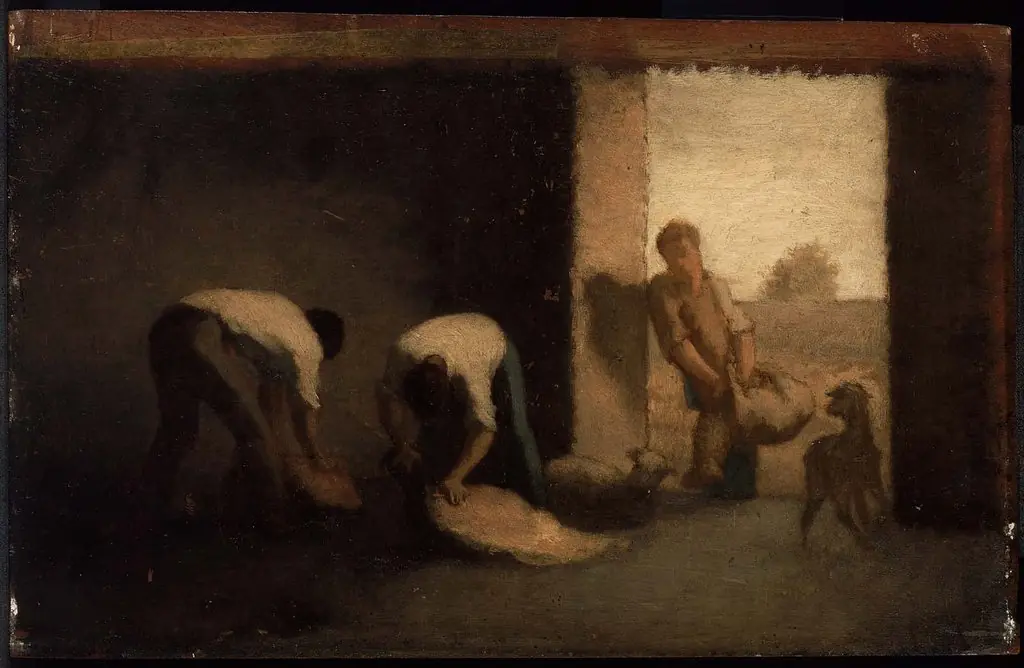 Sheep Shearing at Barbizon
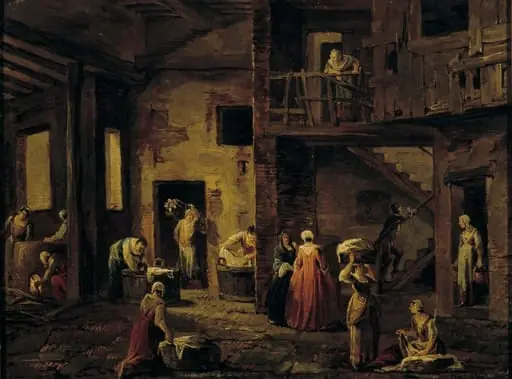 Pesula
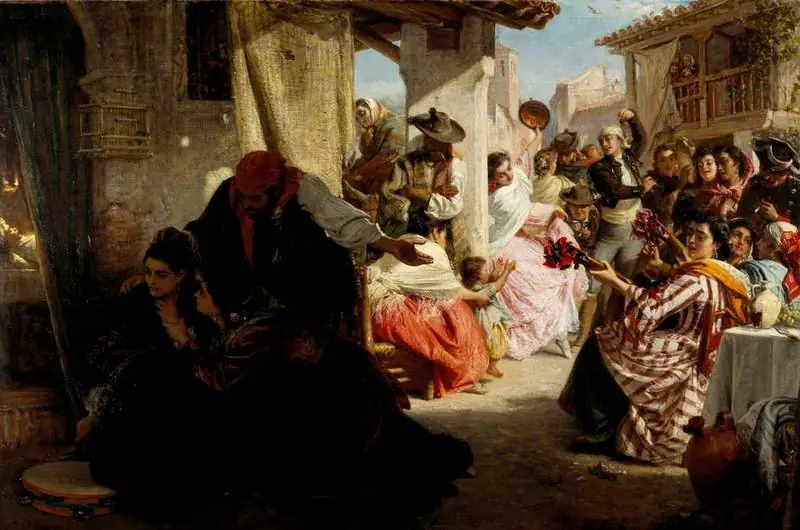 'La Gloria': A Spanish Wake
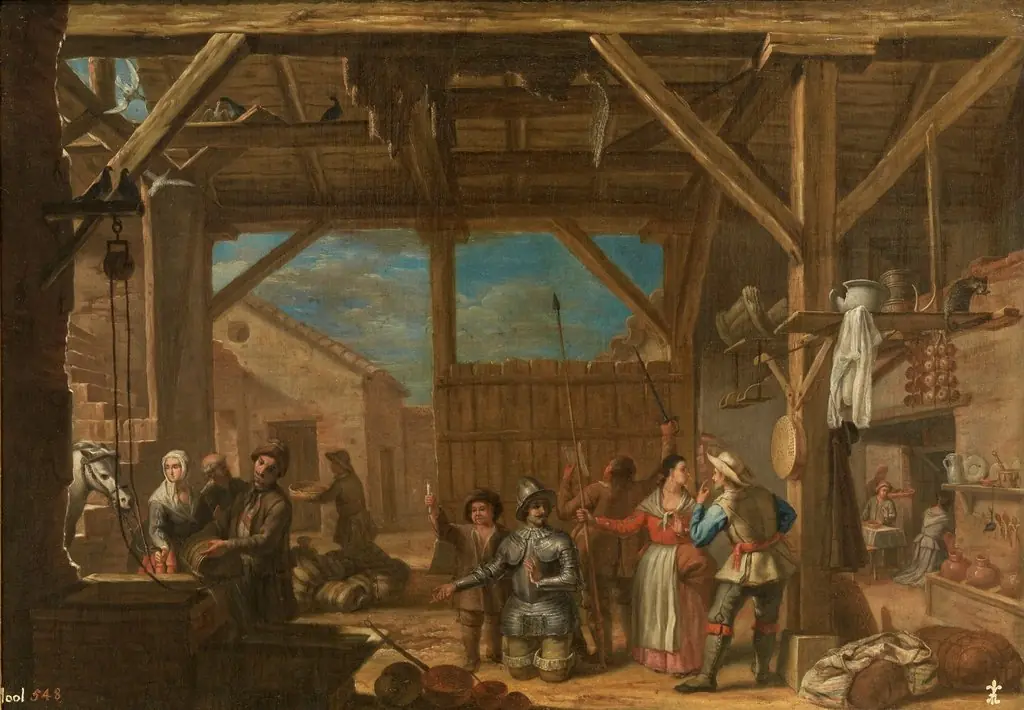 Don Quixote Dubbed a Knight
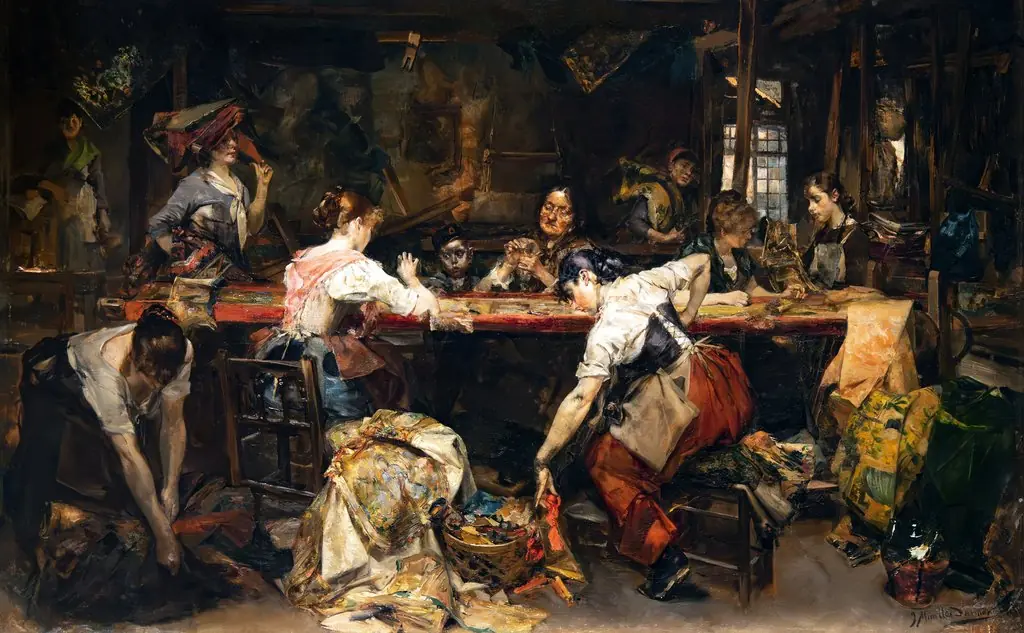 Tapestry Workshop
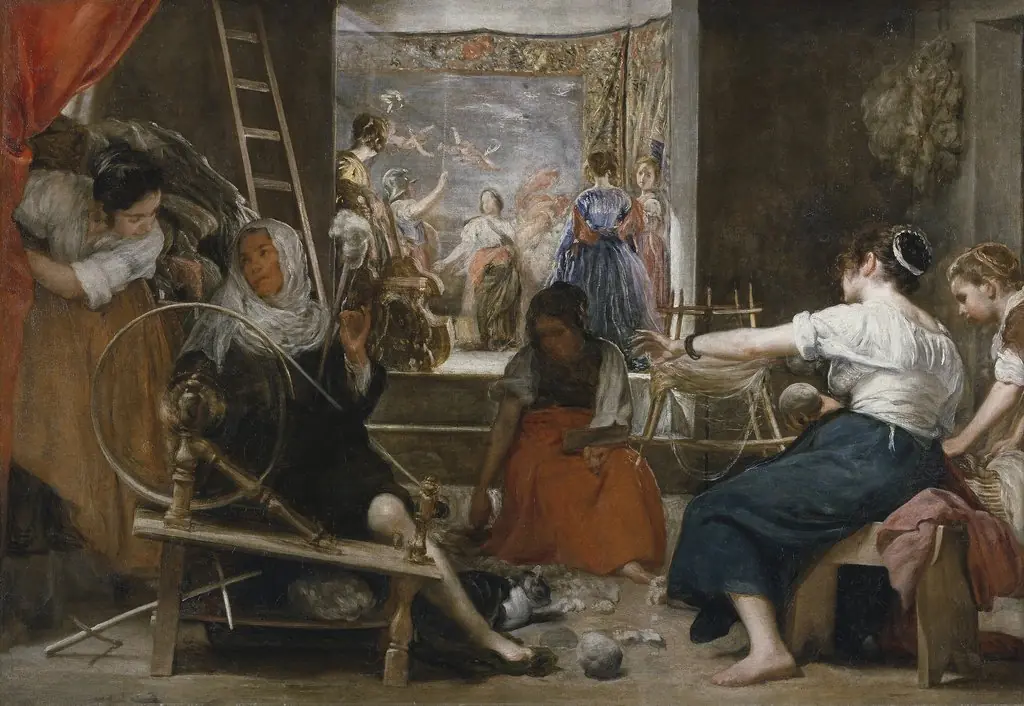 Las Hilanderas
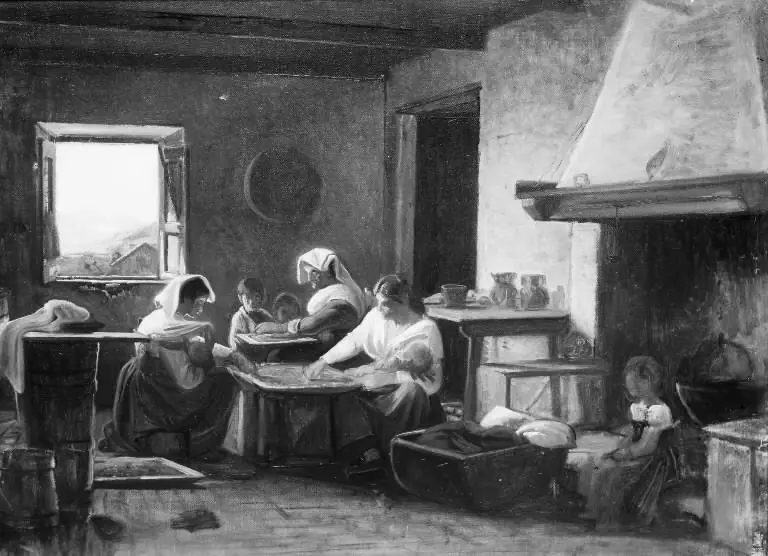 Women Working in the Kitchen of a Farmhouse near Olevano, Italy
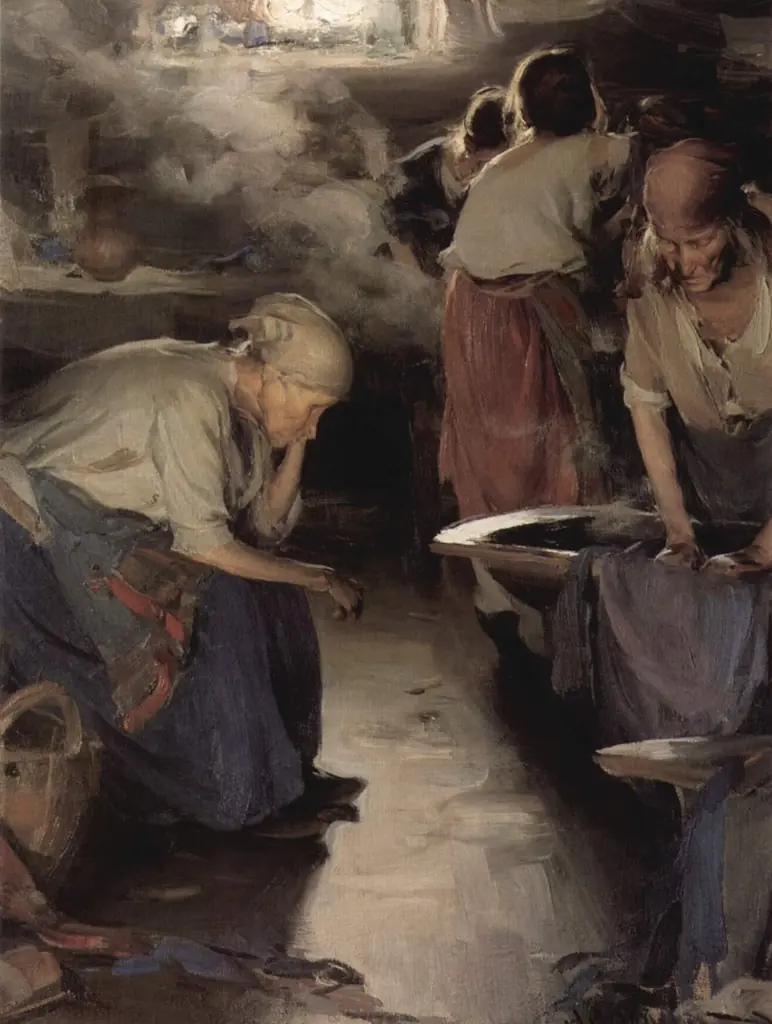 Washer Women