Artwork
Deisis
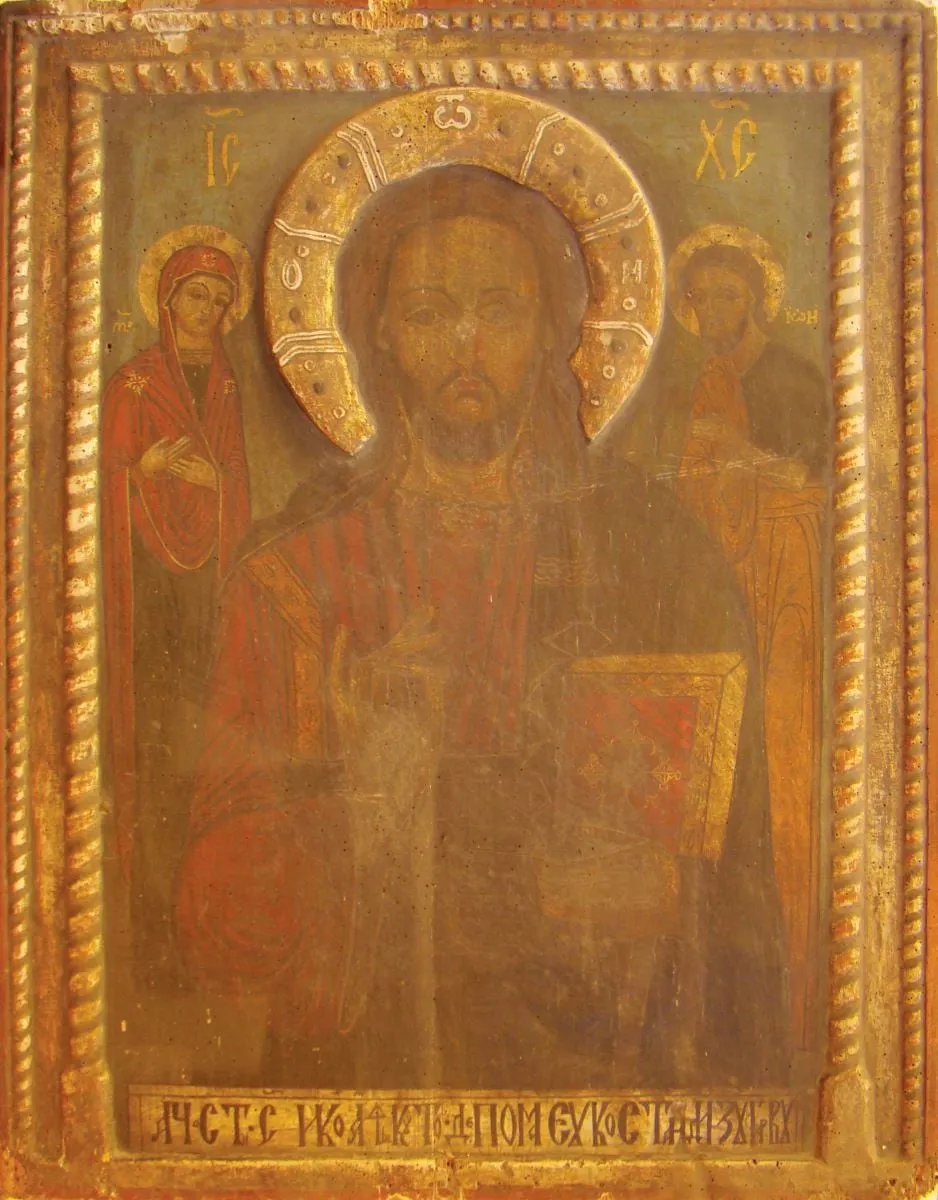
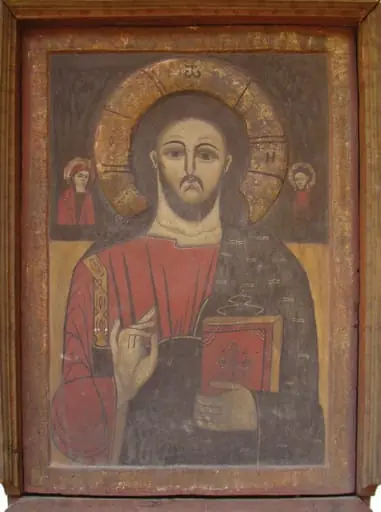
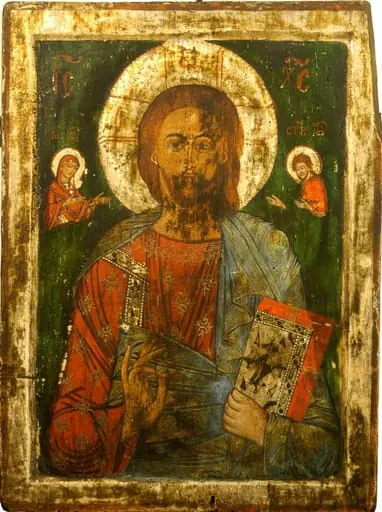
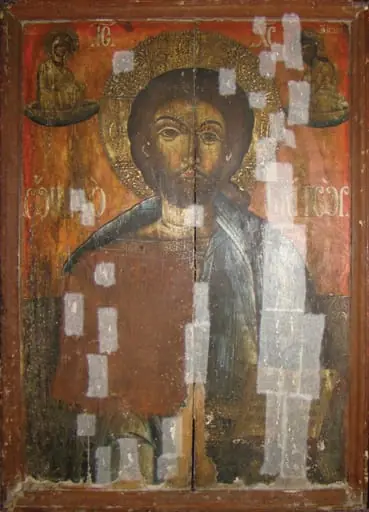
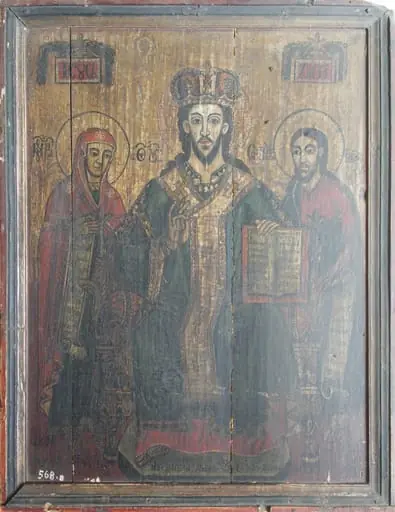
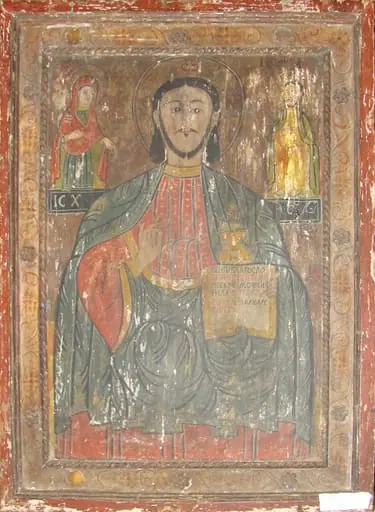
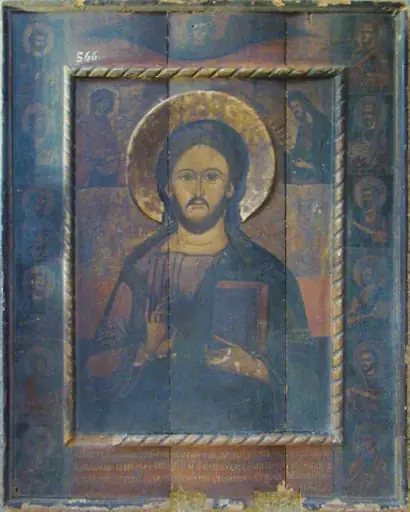
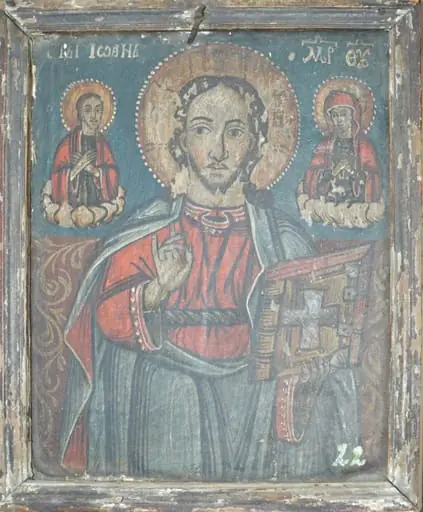
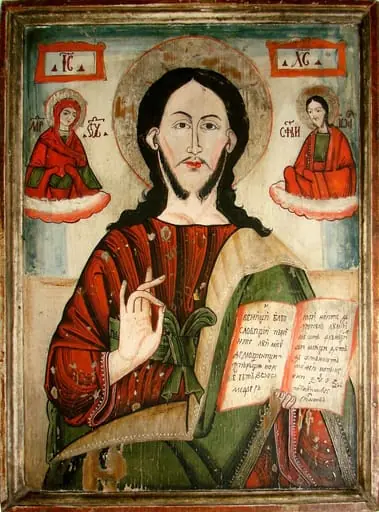
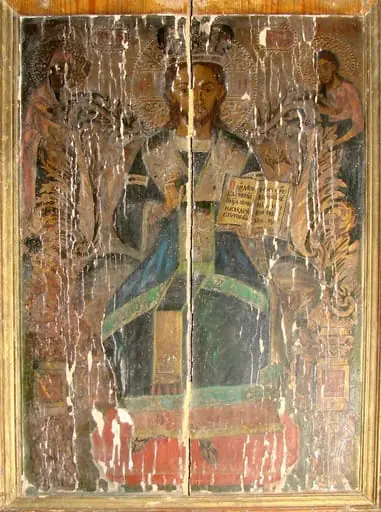
Deisis is a drawing by Constantin Zugravul. It is held in the collection of the Alba Iulia Orthodox Archdiocese. This panel depicts three solemn figures arranged symmetrically against a gold ground, typical of Byzantine religious iconography.
About this work
Overview
The central figure, larger and crowned with a halo bearing a cross, holds a closed book, suggesting authority or divine revelation.
This panel depicts three solemn figures arranged symmetrically against a gold ground, typical of Byzantine religious iconography. The central figure, larger and crowned with a halo bearing a cross, holds a closed book, suggesting authority or divine revelation. Flanking figures, one in vivid robes and the other in darker tones, face inward, their postures conveying reverence. A decorative border of small geometric motifs frames the composition, reinforcing its sacred function.
Subject & Meaning
The central figure is likely Christ Pantocrator, identified by the cross in his halo and the book symbolizing divine law or scripture. The figure to the left, dressed in red and blue, may represent the Virgin Mary, a common intercessor in Deisis compositions. The smaller figure on the right, in somber robes, is likely John the Baptist, often depicted in supplication. Together, they form a traditional appeal to Christ for mercy, a standard theme in Eastern Christian devotion.
Technique & Style
The painting employs flat, stylized forms with minimal modeling, characteristic of medieval icon painting. Gold leaf backgrounds signify divine space, while the figures’ elongated proportions and frontal gazes emphasize spiritual presence over naturalism. The halos are rendered with precision, their circular forms and cross motifs indicating holiness. The border’s repetitive pattern serves both decorative and symbolic purposes, framing the sacred scene without distraction.
History & Provenance
Though specific origins are unrecorded, the style and iconography align with Byzantine or post-Byzantine traditions, likely produced between the 12th and 15th centuries. Such panels were often created for private devotion or church altars. The script at the base, written in an archaic form of Greek or Slavonic, may contain an inscription identifying the figures or invoking prayer. Its preservation suggests the work was valued and maintained over centuries.
Context
This image belongs to a widespread devotional type known as the Deisis, common in Orthodox Christian communities. It reflects liturgical practices where saints intercede on behalf of the faithful. The gold background and hierarchical scale reflect theological priorities: divine order over earthly realism. Similar compositions appear in mosaics and icons across the Eastern Mediterranean, indicating shared visual language and spiritual intent.
Legacy
The Deisis format endured for centuries in Eastern Christian art, influencing iconography well into the modern era. This panel exemplifies the continuity of symbolic language—halos, gestures, and spatial arrangement—used to convey theological concepts without narrative detail. Its preservation offers insight into how medieval communities visualized divine hierarchy and the role of intercessors in spiritual life.
Artist & collection
Artist
Constantin Zugravul painted sacred scenes in the Byzantine tradition. His brush traced gold-leaved icons like Maica Domnului cu Pruncul and Sf. Teodor Tiron, both revered in Romanian Orthodox churches. His drawing of…