Artwork
Sf. Teodor Tiron
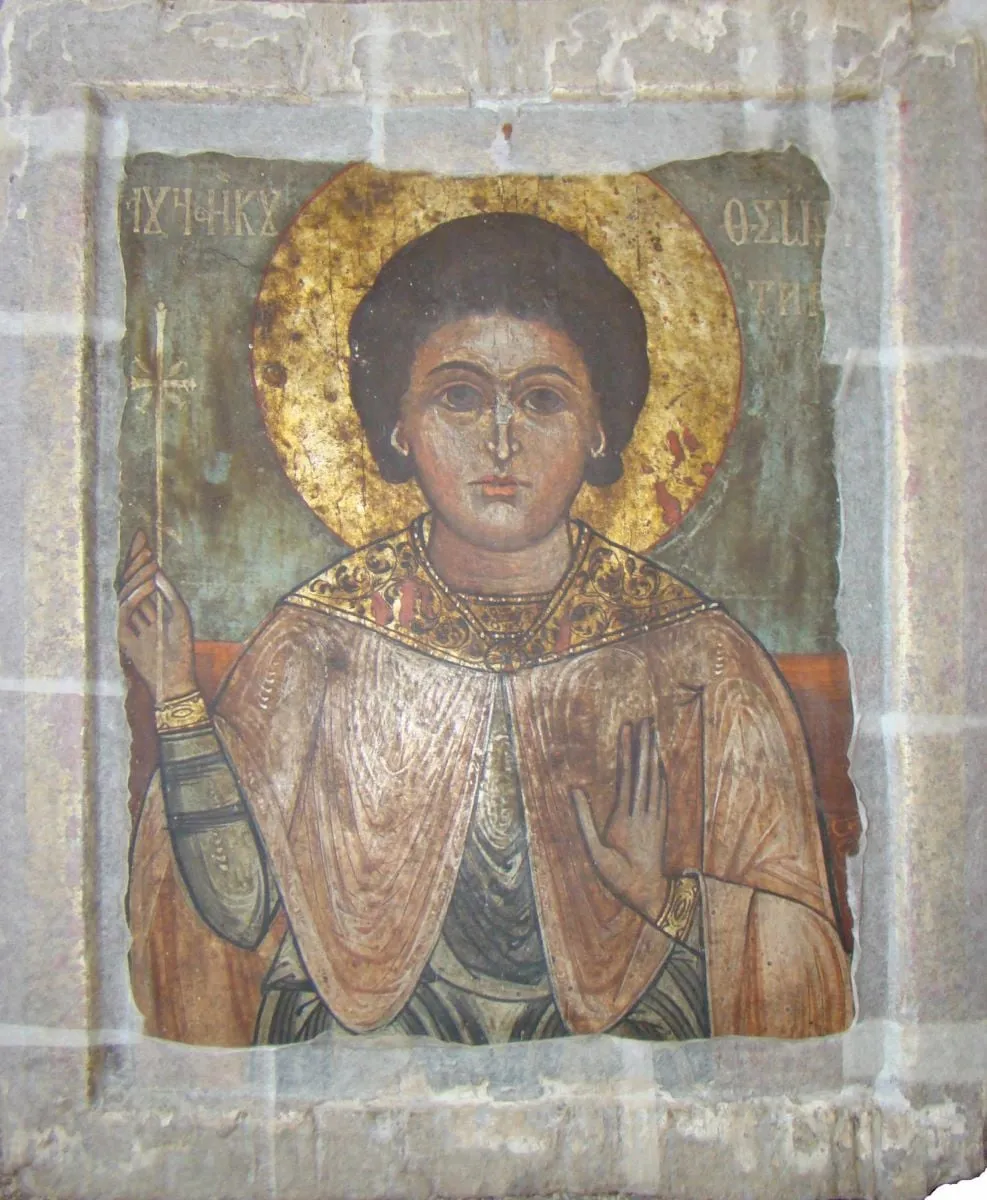
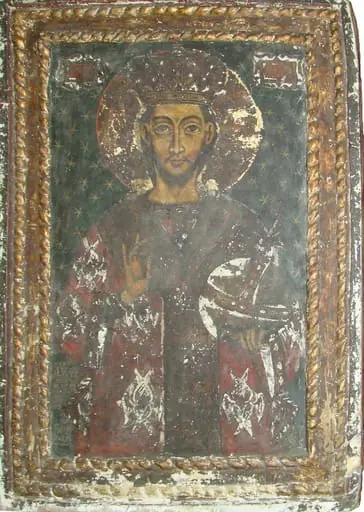
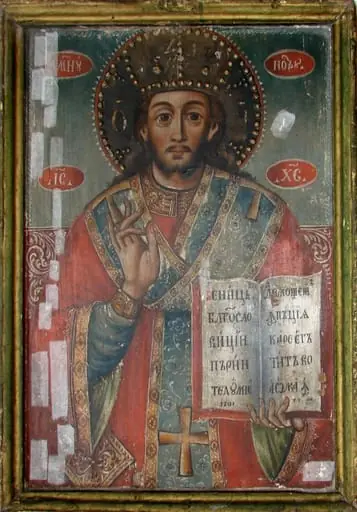
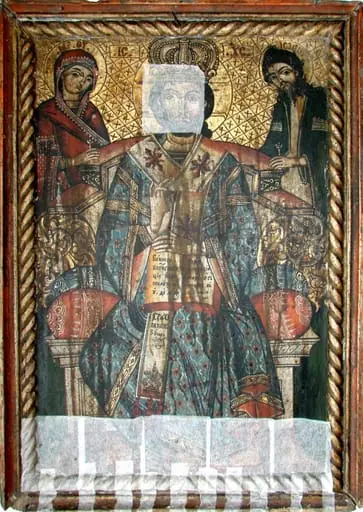
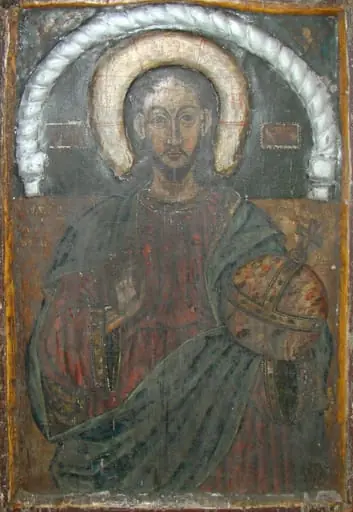
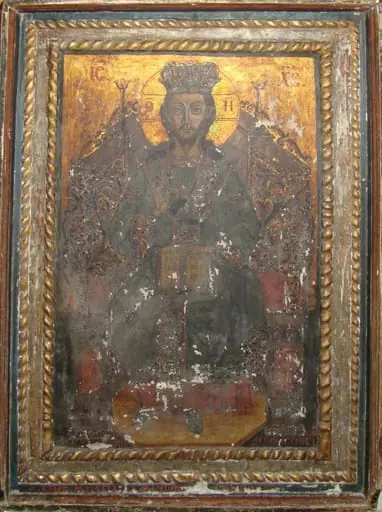
Sf. Teodor Tiron is an unspecified painting by the Byzantine icon painting artist Constantin Zugravul. It is held in the collection of the Alba Iulia Orthodox Archdiocese. This panel painting portrays Saint Theodore Tiron, a military saint venerated in Eastern Christian traditions.
About this work
Overview
Identified by Greek inscriptions near his head, the figure is rendered in a style consistent with Byzantine iconography.
This panel painting portrays Saint Theodore Tiron, a military saint venerated in Eastern Christian traditions. Identified by Greek inscriptions near his head, the figure is rendered in a style consistent with Byzantine iconography. The composition emphasizes spiritual presence over naturalism, with formalized drapery and symbolic color use. The muted green background and gold highlights reflect liturgical conventions of the period.
Subject & Meaning
Saint Theodore Tiron, a Roman soldier turned Christian martyr, is depicted as a warrior-saint holding a cross, symbolizing spiritual victory over earthly conflict. The Greek abbreviations 'ΘΣ' and 'ΘΣΙ' denote 'Theodoros' or 'Theos,' affirming his identity. His attire—brown robe over blue tunic—signals both humility and divine favor, while the gold halo marks his sanctity. The cross in his hand reinforces his role as a defender of the faith.
Technique & Style
The painting employs tempera on wood, typical of Byzantine icons, with thin layers of pigment applied to create flat, luminous surfaces. Gold leaf accents on the halo and garment details add luminosity without modeling depth. The figure’s frontal pose, elongated proportions, and stylized facial features align with Orthodox iconographic norms. The limited palette and lack of perspective prioritize theological clarity over spatial realism.
History & Provenance
The work is attributed to Constantin Zugravul, a 17th-century Romanian icon painter active in Moldavia and Wallachia. His style blended Byzantine traditions with local artistic practices. While the exact origin of this panel is undocumented, its iconography and technique suggest it was produced for private devotion or a small parish church in the Danubian Principalities during the late Ottoman period.
Context
During the 17th century, Orthodox communities in Eastern Europe maintained strong icon-painting traditions despite Ottoman rule. Saints like Theodore Tiron were especially venerated as protectors against invasion and spiritual corruption. This image would have served as a focal point for prayer, reinforcing communal identity and religious continuity amid political instability.
Legacy
Works by Constantin Zugravul and his contemporaries helped preserve Byzantine iconographic language in Romanian lands. Though later artistic movements introduced Western influences, this painting remains an example of enduring local devotion to traditional forms. Its survival offers insight into the resilience of Orthodox visual culture in the early modern period.
Artist & collection
Artist
Constantin Zugravul painted sacred scenes in the Byzantine tradition. His brush traced gold-leaved icons like Maica Domnului cu Pruncul and Sf. Teodor Tiron, both revered in Romanian Orthodox churches. His drawing of…