Artwork
River Scene, with Cattle
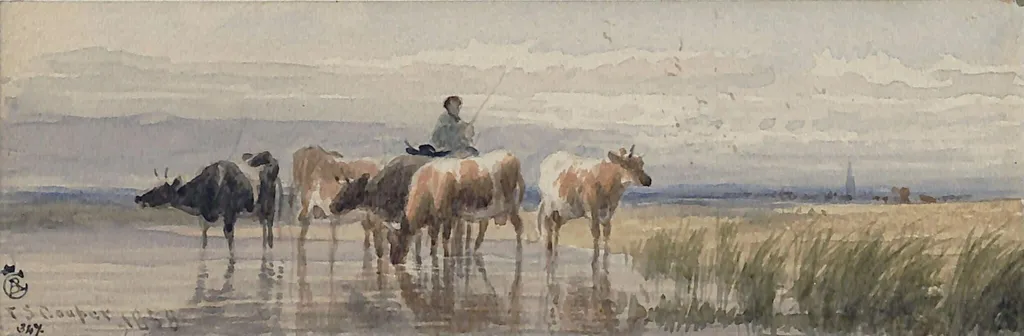
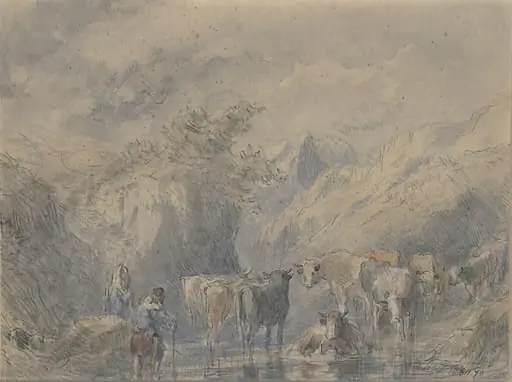
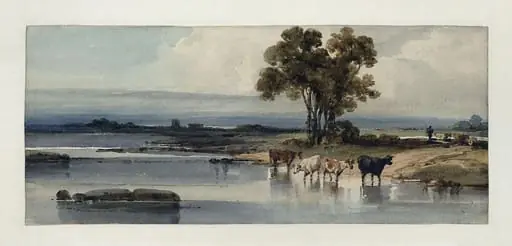
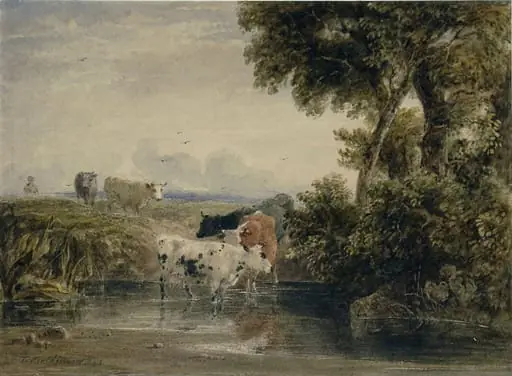
River Scene, with Cattle is a drawing by the Impressionist artist Cooper. It dates from 1858 and is held in the collection of the Victoria and Albert Museum.
About this work
Overview
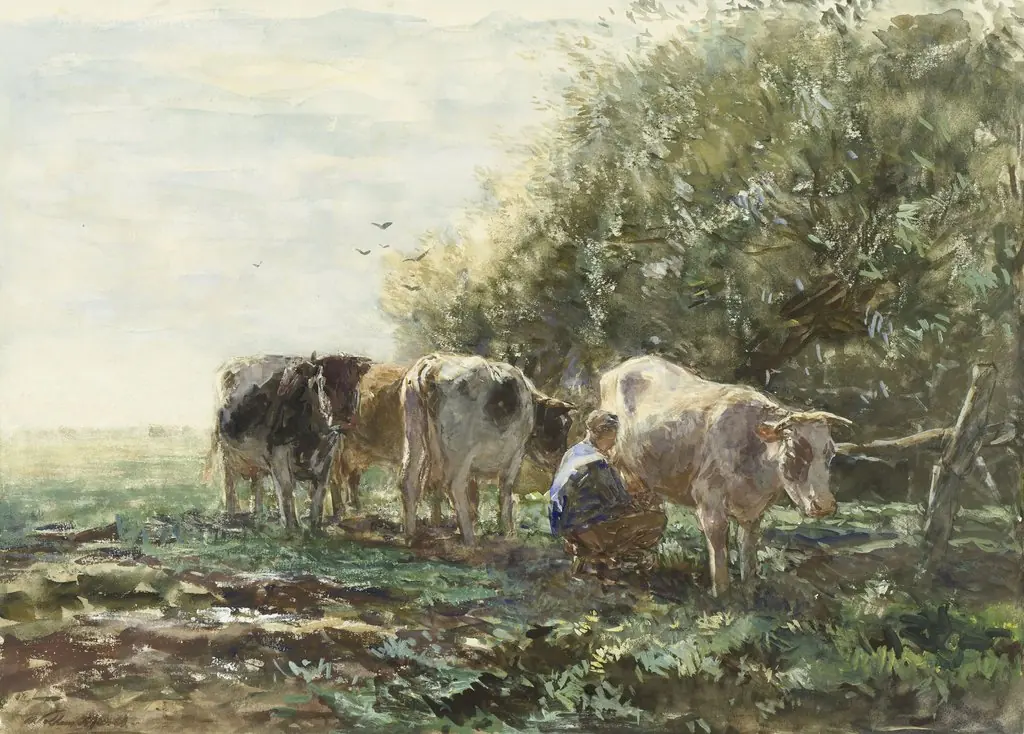
Created in 1858, this ink and wash drawing by Cooper captures a quiet moment along a rural riverbank. The scene features four cattle wading through shallow water, guided by a figure seated atop one of them, holding a staff. The composition is spare, emphasizing movement and atmosphere over detail, reflecting a direct observational approach common in mid-nineteenth-century sketching.
Subject & Meaning
The drawing portrays a routine agricultural activity—herding livestock across water—with no overt narrative or symbolism. The focus on labor and natural conditions suggests an interest in everyday rural life, aligning with broader cultural attention to the rhythms of working-class existence during the period.
Technique & Style
Loose, fluid brushwork and minimal tonal variation convey immediacy. Wet washes suggest damp earth and reflective water, while sparse ink lines define forms without heavy outlining. The technique mirrors the spontaneity of field sketches, prioritizing sensory impression over polished finish, characteristic of preparatory work in the Realist tradition.
History & Provenance
The drawing is dated 1858 and attributed to Cooper, though little is documented about its early ownership. It likely originated as part of a personal sketchbook, used to record observations during travels or local excursions. Its survival suggests it was retained by the artist or a close associate, rather than intended for public display.
Context
In the mid-1800s, artists across Europe and America increasingly turned to direct observation of ordinary life, rejecting idealized subjects. Cooper’s sketch aligns with this shift, echoing the quiet realism of contemporaries who valued unembellished depictions of nature and labor, often as studies for larger works or personal practice.
Legacy
Though not widely exhibited, the drawing contributes to a broader archive of 19th-century observational art. Its modest scale and unadorned style reflect a practice that underpinned more formal Realist paintings, preserving the unvarnished texture of rural life through the artist’s hand.
Artist & collection
Artist
Samuel Palmer’s neighbor once called him a “little old man with a beard,” though he spent nights sneaking out to sketch under a moon he swore was green.