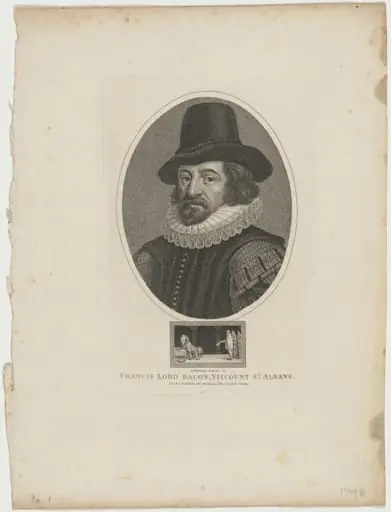
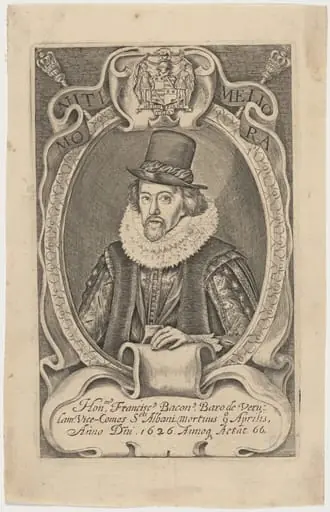
Artwork
Francis Bacon, Viscount St. Alban
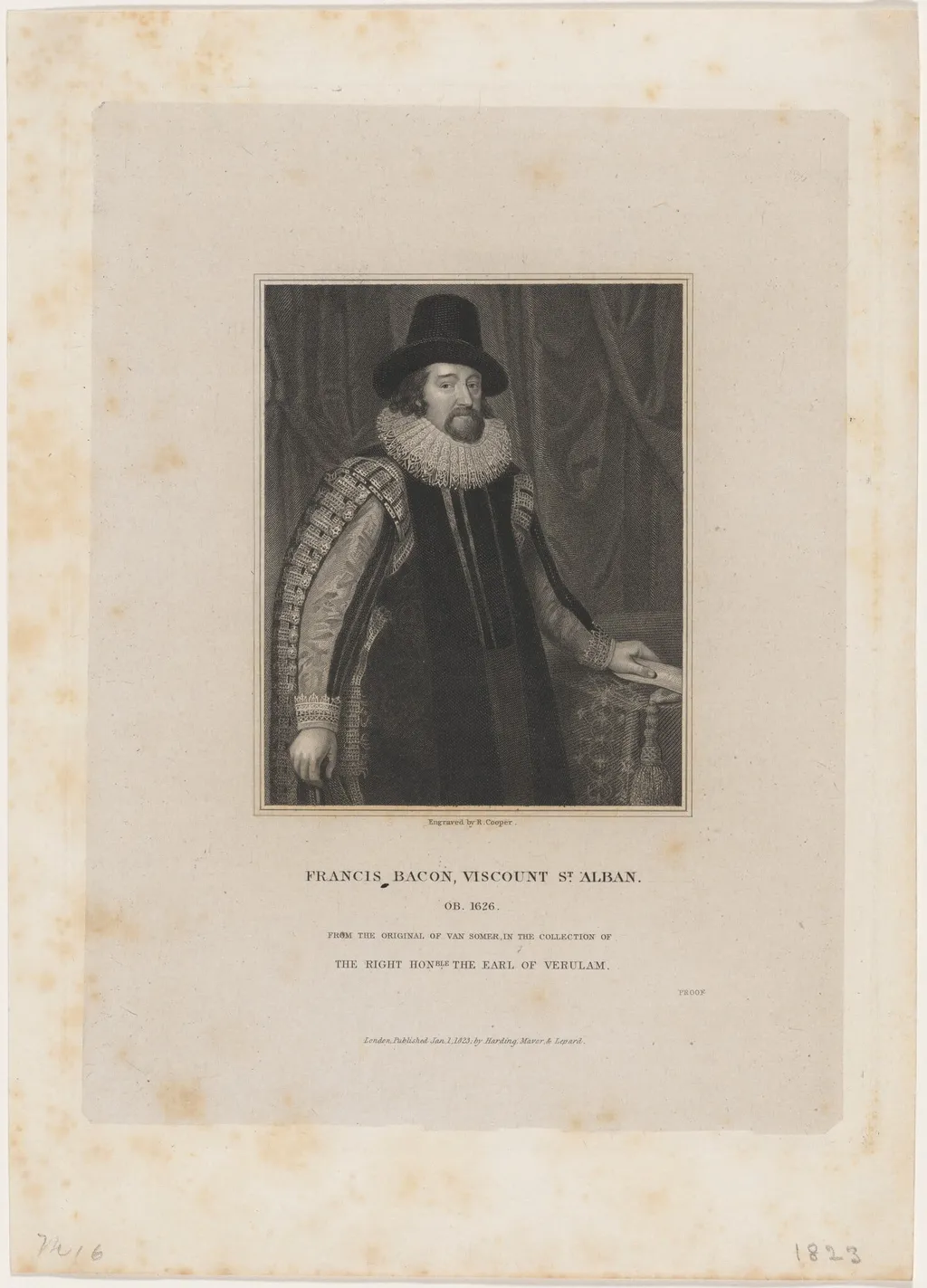
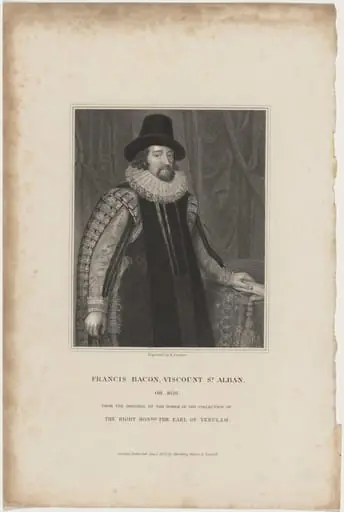
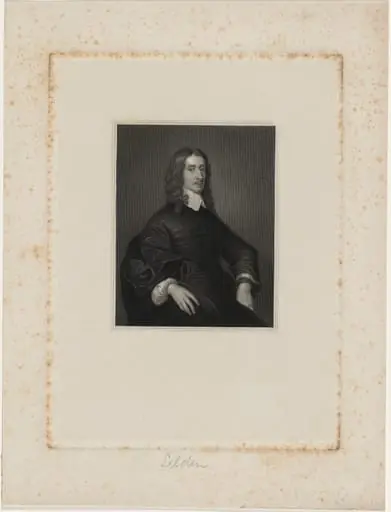
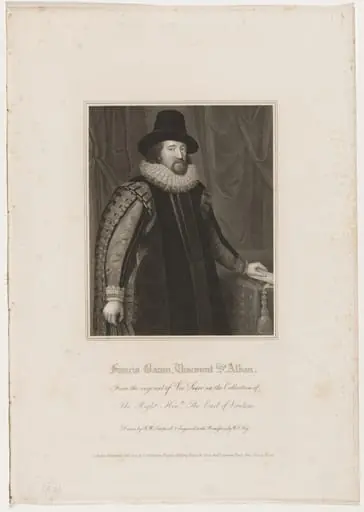
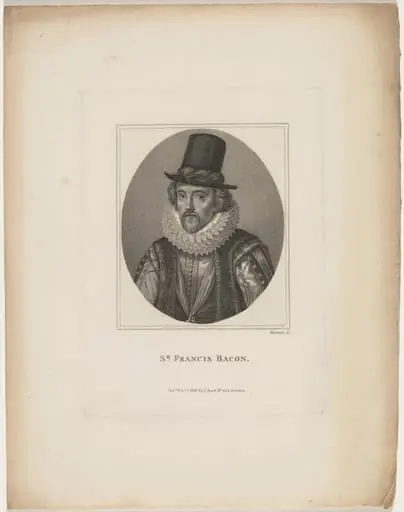
Francis Bacon, Viscount St. Alban is an ink print by the Romanticist artist Robert Cooper. It dates from 1806 and is held in the collection of the National Gallery of Art. Francis Bacon, Viscount St.
About this work
This is a black-and-white engraving of a serious-looking man in old-fashioned clothes.
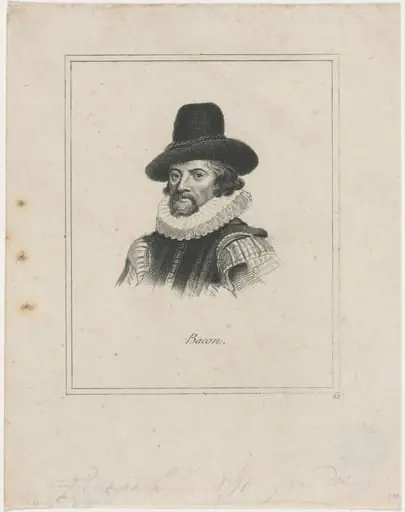
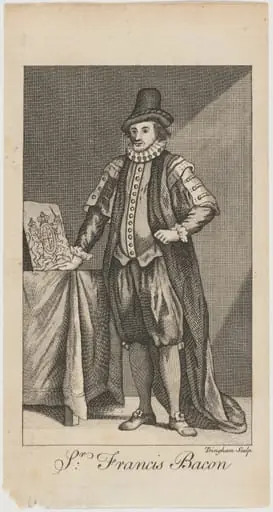
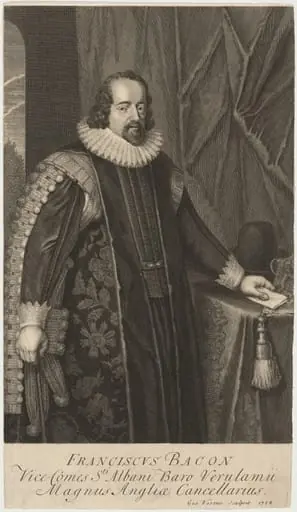
This is a black-and-white engraving of a serious-looking man in old-fashioned clothes. He wears a wide-brimmed hat, a ruffled collar, and a dark coat with lace cuffs. His right hand rests on a chair or table, and the background is plain. The image is framed by a thin border, and the paper around it looks aged.
The print was made from an original painting by someone named Van Somer. The text below says this man was called Francis Bacon, Viscount St. Alban, and died in 1626.
Next, look up engraving to see how artists create detailed prints like this one.
Overview
Francis Bacon, Viscount St. Alban is an 1806 engraving by Robert Cooper, depicting the 17th-century philosopher in formal attire, set against a plain background within a thin border.
Subject & Meaning
The engraving portrays Francis Bacon, Viscount St. Alban (d. 1626), conveying a sense of solemnity through his serious expression and traditional clothing, including a wide-brimmed hat, ruffled collar, and lace-cuffed dark coat.
Technique & Style
Cooper's engraving technique achieves detailed rendering, as evident in the intricate textures of Bacon's attire and the subtle suggestion of his right hand resting on a chair or table, based on an original painting by Van Somer.
History & Provenance
Created in 1806 from Van Somer's original painting, the engraving's history reflects 19th-century interest in 17th-century intellectual figures, with the aged paper and plain background underscoring its vintage and artistic lineage.
Context
This work exemplifies the early 19th-century practice of engraving portraits of historical luminaries, making their images accessible for commemoration or study, highlighting Bacon's enduring legacy across centuries.
Legacy
As a reproduction of a notable portrait, Cooper's engraving contributes to the visual canon of Francis Bacon's representation, ensuring his image remained recognizable and revered in the collective historical consciousness.
Artist & collection