Artwork
Lake scene with mountains
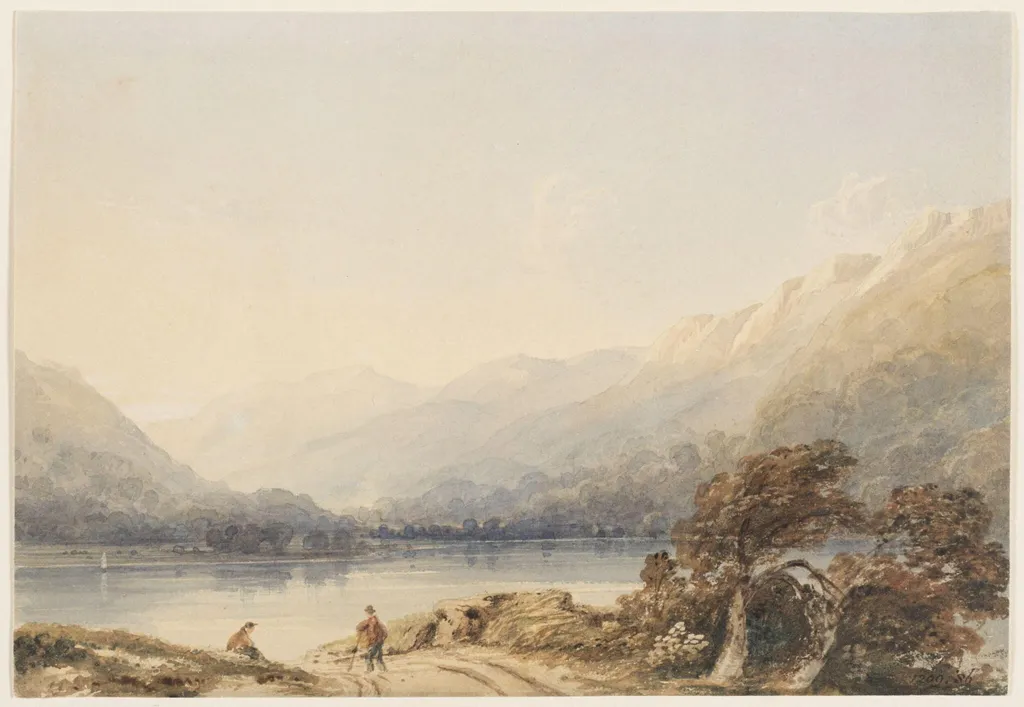
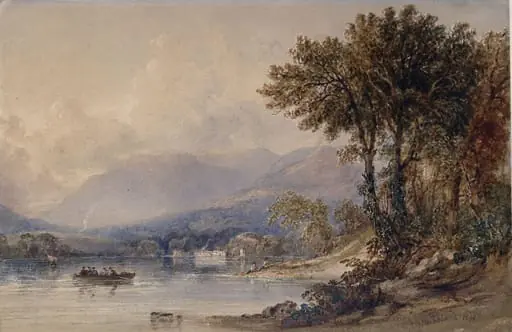
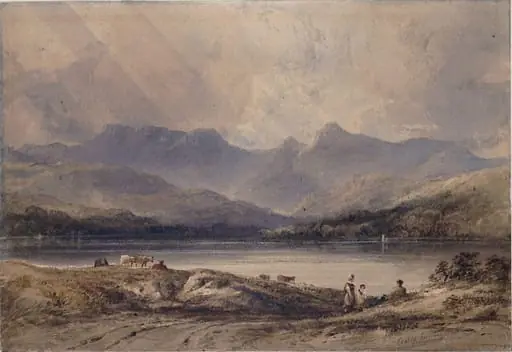
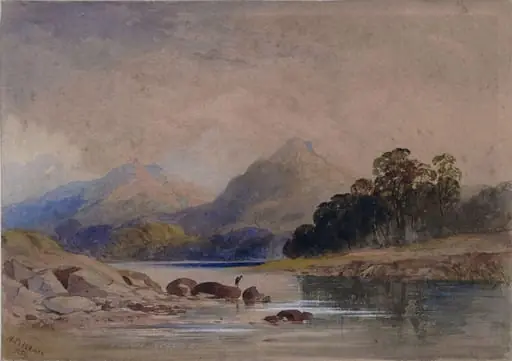
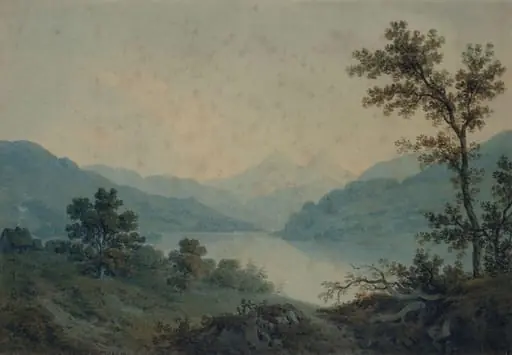
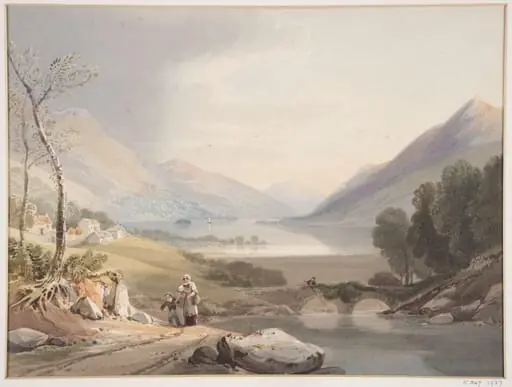
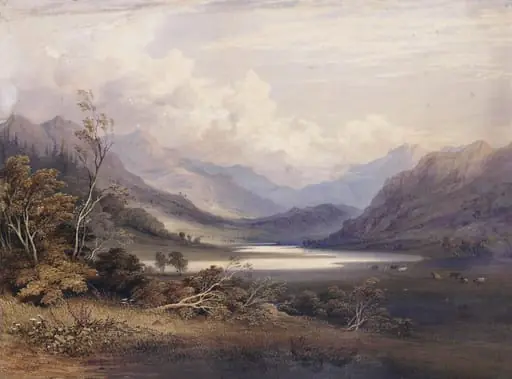
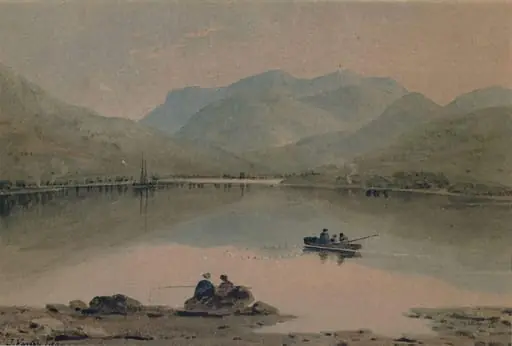
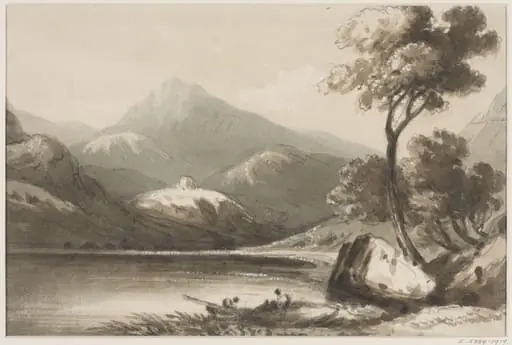
Lake scene with mountains is a watercolor work on paper by the Romanticist artist John Singleton Copley. It dates from 1805 and is held in the collection of the Victoria and Albert Museum.
About this work
Overview
Though he gained fame for formal likenesses, his later work turned toward landscape, reflecting a broader interest in natural scenery.
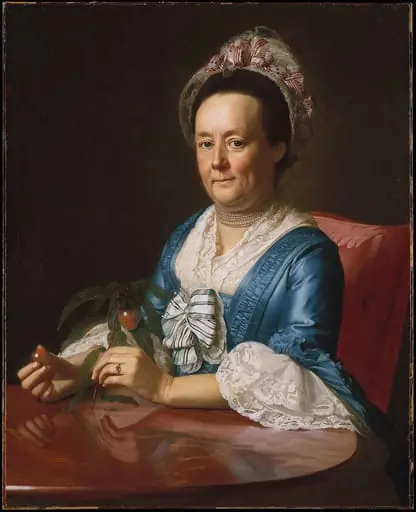
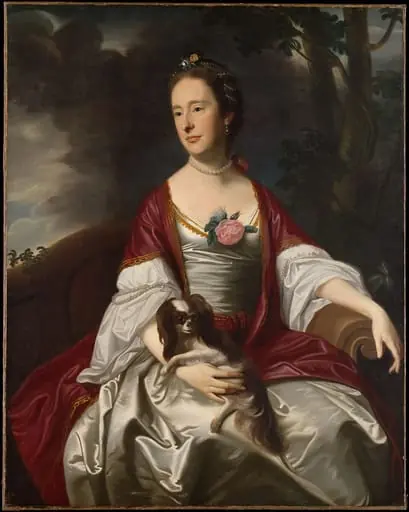
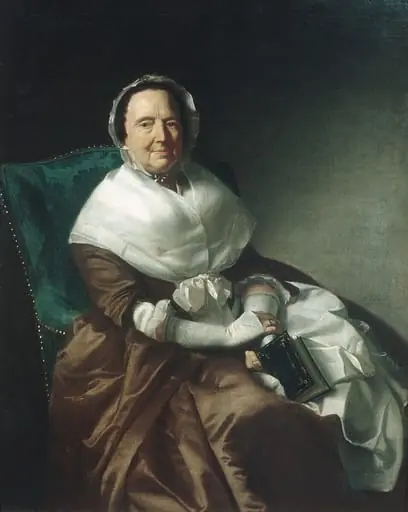
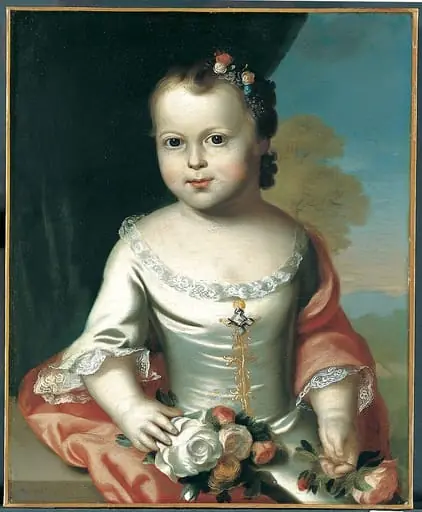
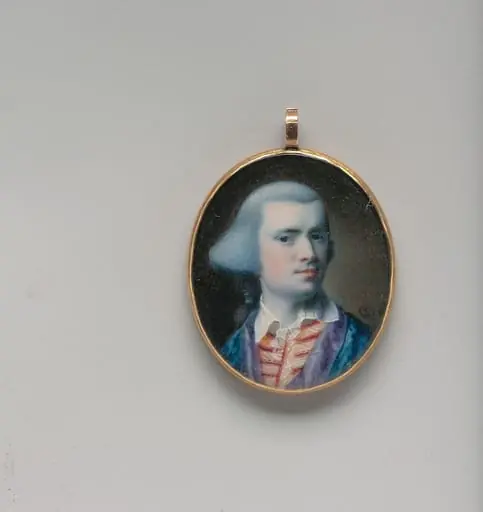
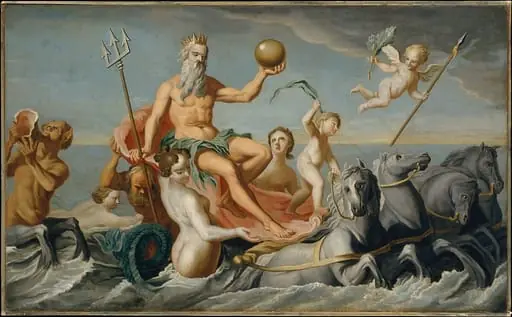
Painted in 1805, *Lake scene with mountains* is a watercolour by John Singleton Copley, an artist best known for his portraiture in colonial America and later in England. Though he gained fame for formal likenesses, his later work turned toward landscape, reflecting a broader interest in natural scenery. This piece exemplifies his shift from commissioned portraiture to personal, contemplative studies of the environment, executed with the transparency and subtlety characteristic of watercolour.
Subject & Meaning
The painting presents a tranquil lakeside with distant mountains, soft tree lines, and two figures—a walker and a seated figure—engaged in quiet solitude. The absence of narrative or dramatic action emphasizes stillness and reflection. The figures are small within the vast landscape, suggesting human modesty before nature. The scene evokes a mood of calm observation rather than grandeur, aligning with early 19th-century sensibilities that valued quiet communion with the natural world.
Technique & Style
Copley employed light, layered washes to create a hazy, atmospheric effect, blurring boundaries between land, water, and sky. The delicate handling of watercolour allowed for subtle transitions in tone and texture, enhancing the sense of mist and distance. Edges are softened, forms are suggested rather than sharply defined, and the palette remains restrained—predominantly pale blues, greens, and greys. This approach reflects the aesthetic priorities of topographical watercolour traditions, where clarity of mood outweighed detailed realism.
History & Provenance
Created during Copley’s later years in London, the work was likely painted for personal enjoyment rather than public display. It entered the Victoria and Albert Museum’s collection as part of its broader acquisition of British watercolours from the 18th and 19th centuries. Unlike his portraits, which were widely documented and commissioned, this landscape survives without a clear provenance prior to its museum acquisition, suggesting it was kept privately until donated or purchased by the institution.
Context
In the early 1800s, British artists increasingly turned to landscape as a subject worthy of serious artistic attention, moving beyond mere topographical record. Watercolour became a favored medium for its portability and ability to capture fleeting effects of light and weather. Copley’s work reflects this trend, influenced by contemporary English watercolourists and the growing cultural appreciation for nature as a source of emotional and aesthetic experience, even as he remained distinct from the more overtly emotional Romantic painters of the period.
Legacy
While Copley’s portraits secured his historical reputation, his later landscapes like this one reveal a quieter, more introspective side of his practice. *Lake scene with mountains* stands as an example of how established portraitists of the era expanded their repertoire to engage with natural themes. It contributes to the broader understanding of watercolour’s rise as a legitimate artistic medium in Britain, valued for its intimacy and expressive potential beyond commercial or academic conventions.
Own this work as a print
Artist & collection

Artist
John Singleton Copley (July 3, 1738 – September 9, 1815) was an American-born British painter active in both the Thirteen Colonies and England.