Artwork
Lake or river scene in the Scottish Highlands
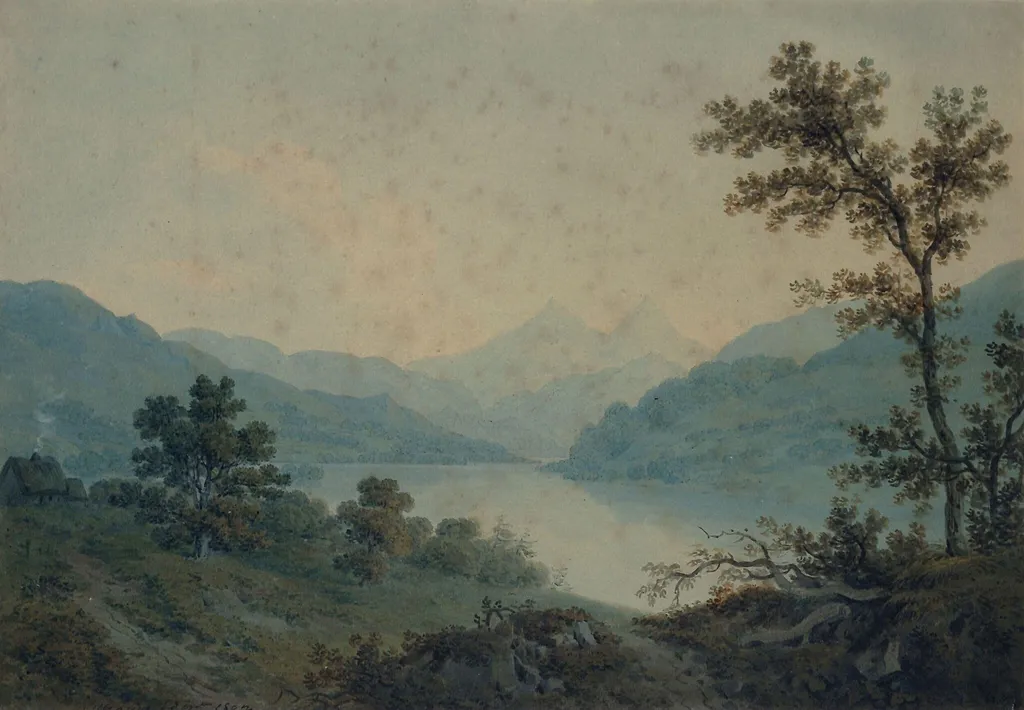
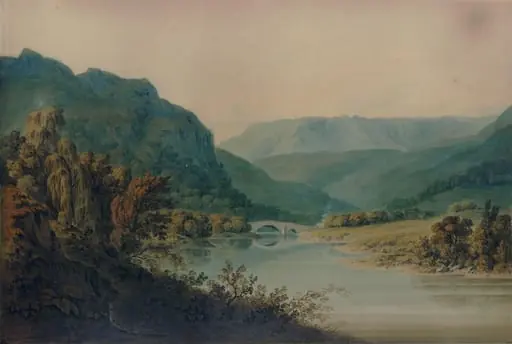
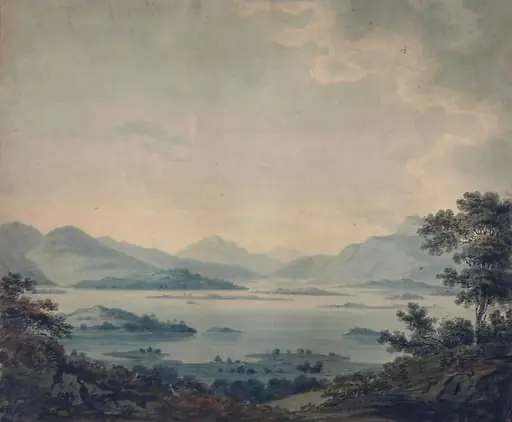
Lake or river scene in the Scottish Highlands is a watercolor work on paper by the Romanticist artist Hugh William Williams. It dates from 1802 and is held in the collection of the Victoria and Albert Museum.
About this work
Overview
Signed and dated by the artist, the work exemplifies early 19th-century British watercolour practice, emphasizing quiet naturalism over dramatic spectacle.
Created in 1802, this watercolour by Hugh William Williams captures a tranquil landscape in the Scottish Highlands. Signed and dated by the artist, the work exemplifies early 19th-century British watercolour practice, emphasizing quiet naturalism over dramatic spectacle. Its delicate tonal range and restrained composition reflect a preference for subdued, atmospheric effects characteristic of the period.
Subject & Meaning
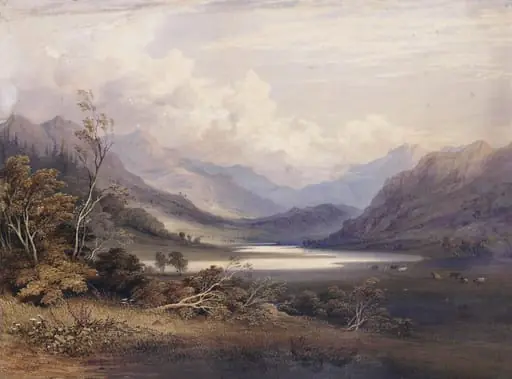
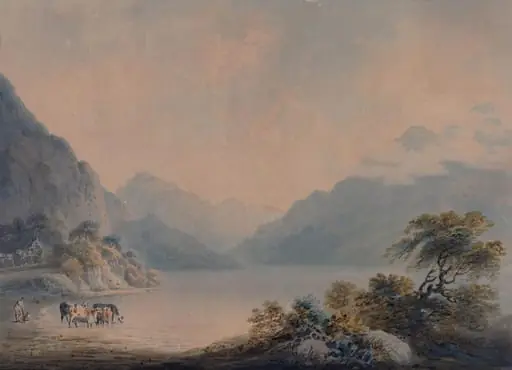
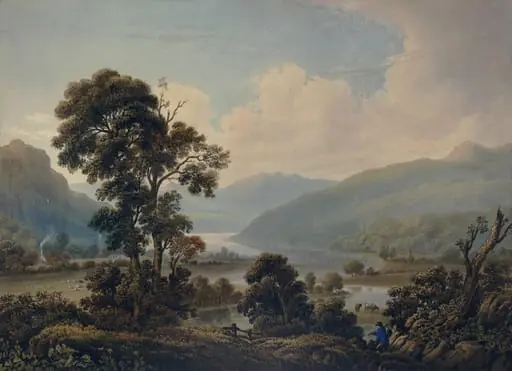
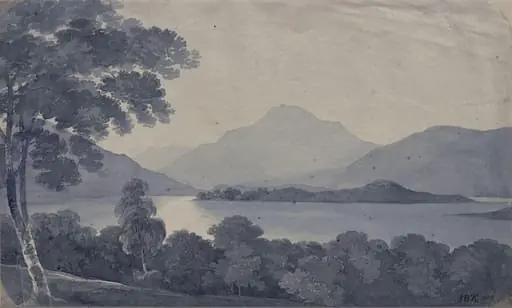
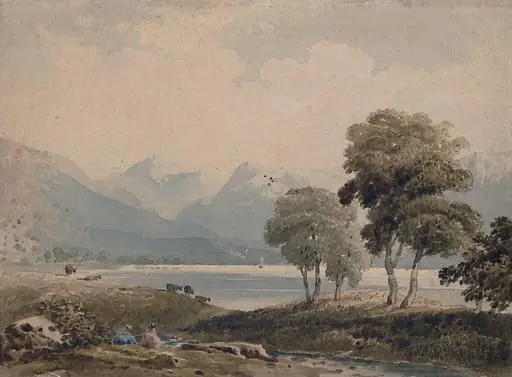
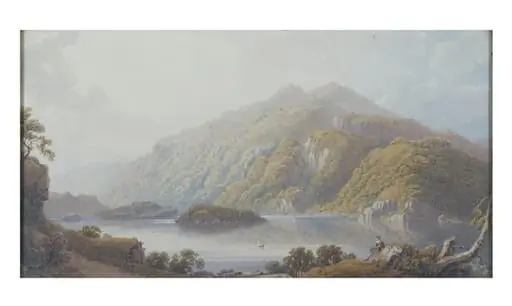
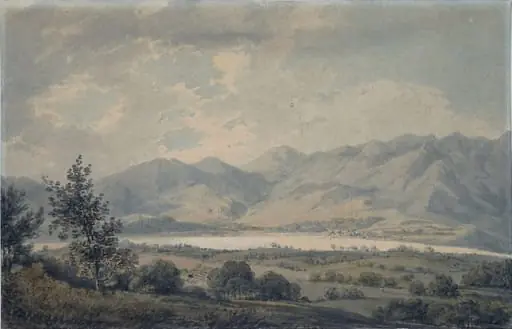
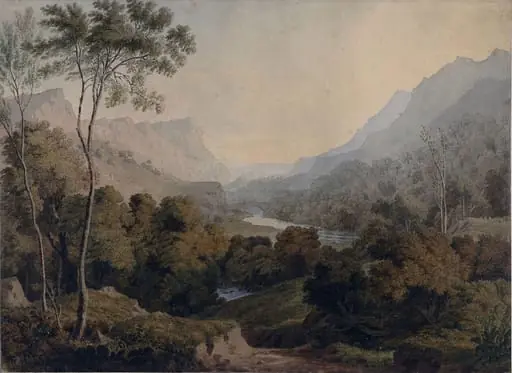
The scene depicts a still body of water nestled between gentle hills, framed by sparse vegetation. A solitary tree in the foreground draws the eye, its limbs stretching upward as if reaching into the mist. The absence of human figures or architectural elements reinforces a sense of solitude, suggesting contemplation of nature’s quiet endurance rather than its utility or grandeur.
Technique & Style
Williams employed light, translucent washes to build subtle gradations of green, blue, and pale yellow. The soft edges and minimal detail evoke a hazy, ethereal quality, as if the landscape is seen through a veil of morning mist. This technique, common among watercolourists of the era, prioritized mood over precision, aligning with contemporary ideals of poetic landscape.
History & Provenance
The work is documented as part of Williams’s travels through Scotland in the early 1800s, during which he produced numerous sketches and watercolours of the Highlands. Its survival in good condition suggests it was likely kept in private collections rather than exhibited publicly. No major institutional records trace its early ownership, but its signature and date confirm its origin.
Context
Painted during the rise of Romanticism, the work aligns with a cultural shift toward valuing nature as a source of emotional and spiritual reflection. While not overtly dramatic like Alpine scenes by contemporaries, its quietude reflects a quieter strand of Romantic sensibility—focused on intimacy, solitude, and the subtle beauty of the everyday landscape.
Legacy
Williams’s watercolours contributed to the growing appreciation of Scottish scenery among British audiences. Though less celebrated than later artists, his restrained approach helped establish watercolour as a legitimate medium for serious landscape study. This piece remains a quiet example of how early 19th-century artists found depth in stillness.
Own this work as a print
Artist & collection

Artist
Hugh William Williams, known as "Grecian Williams," was a Scottish landscape painter.