Artwork
Welsh landscape
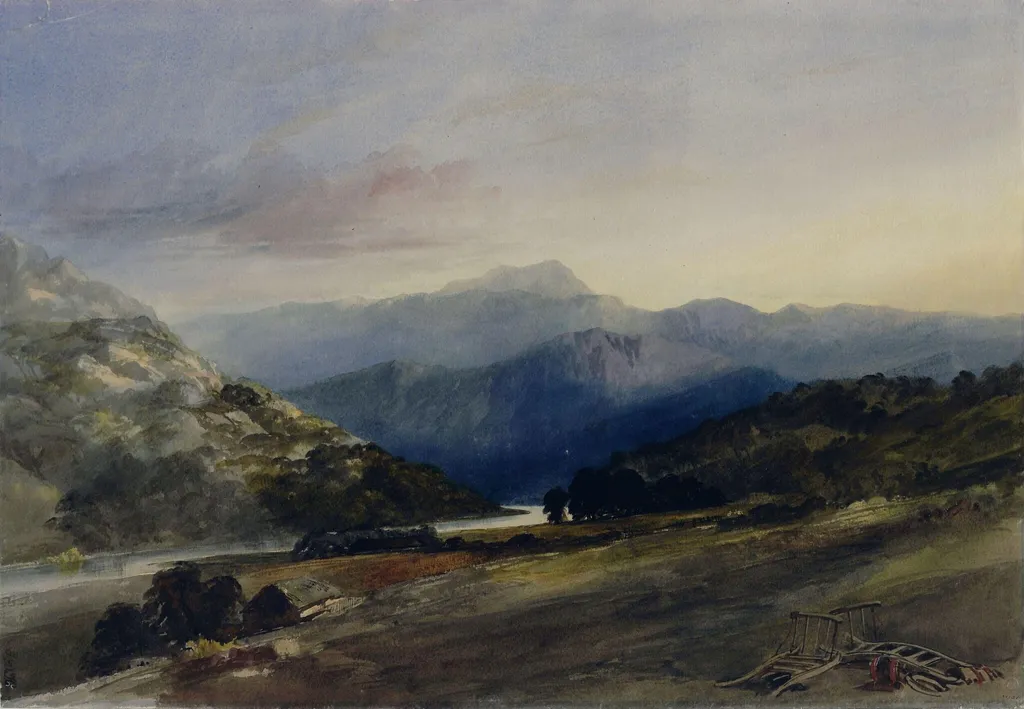
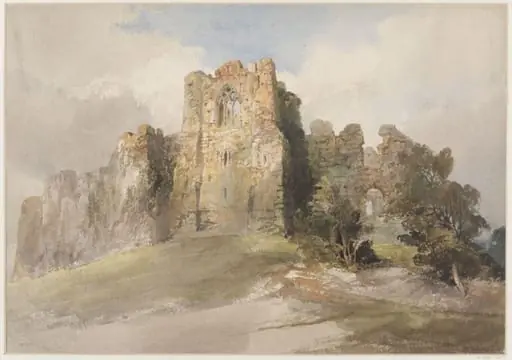
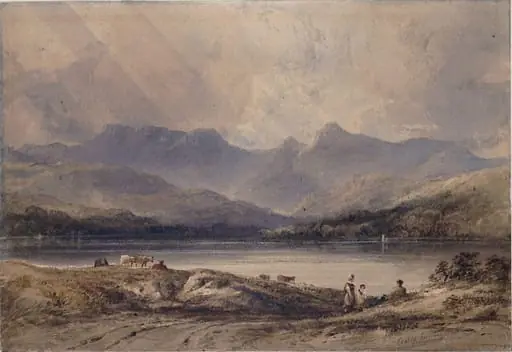
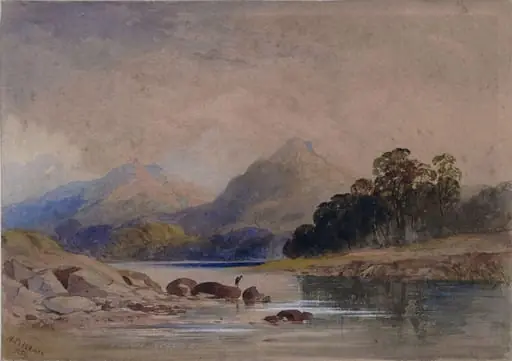
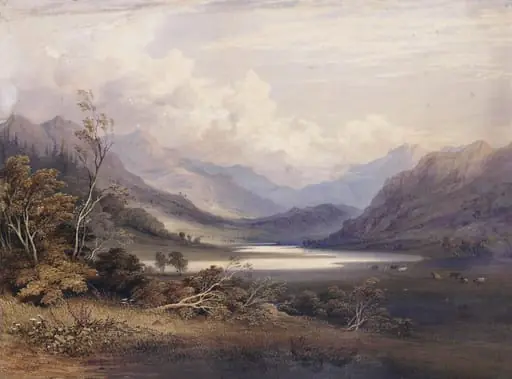
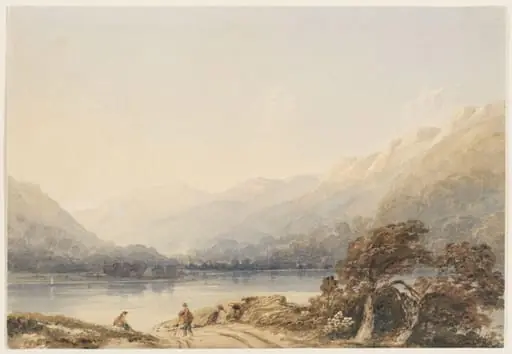
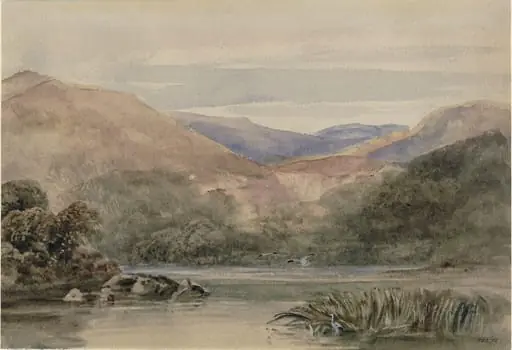
Welsh landscape is a drawing by the Romanticist artist William Noble Hardwick. It dates from 1825 and is held in the collection of the Victoria and Albert Museum.
About this work
Overview
Created in 1825 by William Noble Hardwick, this pencil and wash drawing captures a quiet corner of the Welsh countryside. It is part of the Victoria and Albert Museum’s collection, where it is preserved as an example of early 19th-century topographical sketching. The work’s modest scale and intimate focus distinguish it from grander landscape traditions of the period.
Subject & Meaning
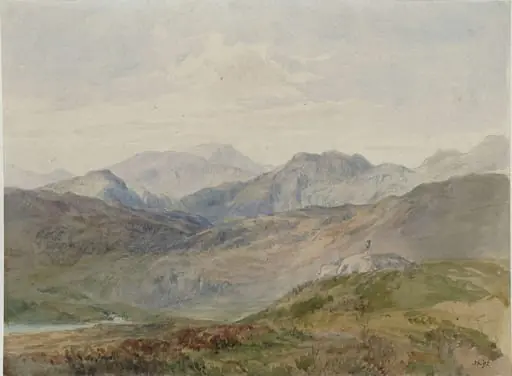
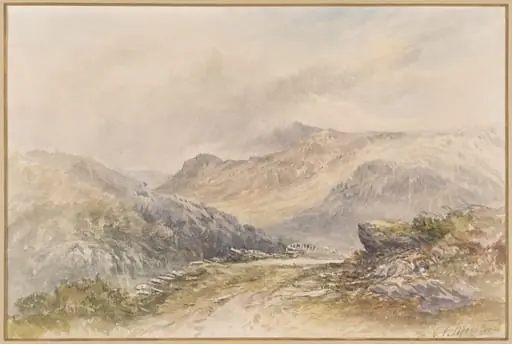
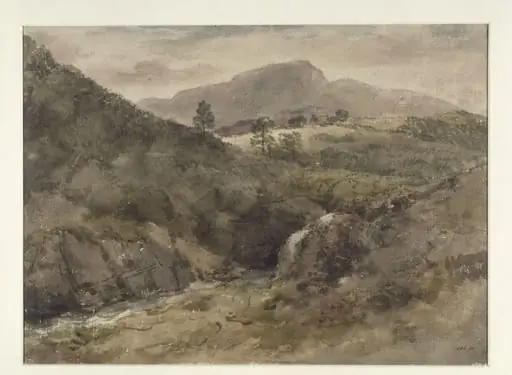
The scene depicts undulating hills, a distant mountain range, and a meandering river lined with faint human figures. In the foreground, a broken chair and scattered tools suggest recent human presence now abandoned. These elements evoke solitude and the passage of time, framing nature as a quiet witness to fleeting human activity rather than a stage for drama.
Technique & Style
Hardwick employed loose, rapid brushwork and subtle washes to convey atmosphere rather than detail. Muted greens and browns blend softly into a hazy horizon, while minimal line work defines form. The technique prioritizes mood over precision, using tonal gradations to suggest light filtering through clouds and the dampness of the air.
History & Provenance
The drawing entered the Victoria and Albert Museum’s collection as part of a broader acquisition of 19th-century British drawings. Its origin before museum acquisition is undocumented, but its intimate scale and unfinished quality suggest it was a personal study, possibly made during travel through Wales. No record of exhibition or sale prior to its museum acquisition exists.
Context
Made during the height of Romanticism, the work reflects the era’s interest in nature’s emotional resonance, though without overt grandeur. Unlike dramatic Alpine scenes by contemporaries, Hardwick’s focus on quiet decay and subdued light aligns with a quieter, more introspective strand of Romantic sensibility—emphasizing stillness over sublimity.
Legacy
The drawing remains a quiet example of British topographical practice, valued for its restraint and observational honesty. It contributes to understanding how landscape was recorded outside formal academic traditions, offering insight into the everyday visual habits of artists who worked beyond the public eye.
Own this work as a print
Artist & collection
Artist
This 19th-century British artist made quiet, pencil-and-watercolour views of English and Welsh countryside and coast.