Artwork
Study for 'The Siege of Gibraltar'
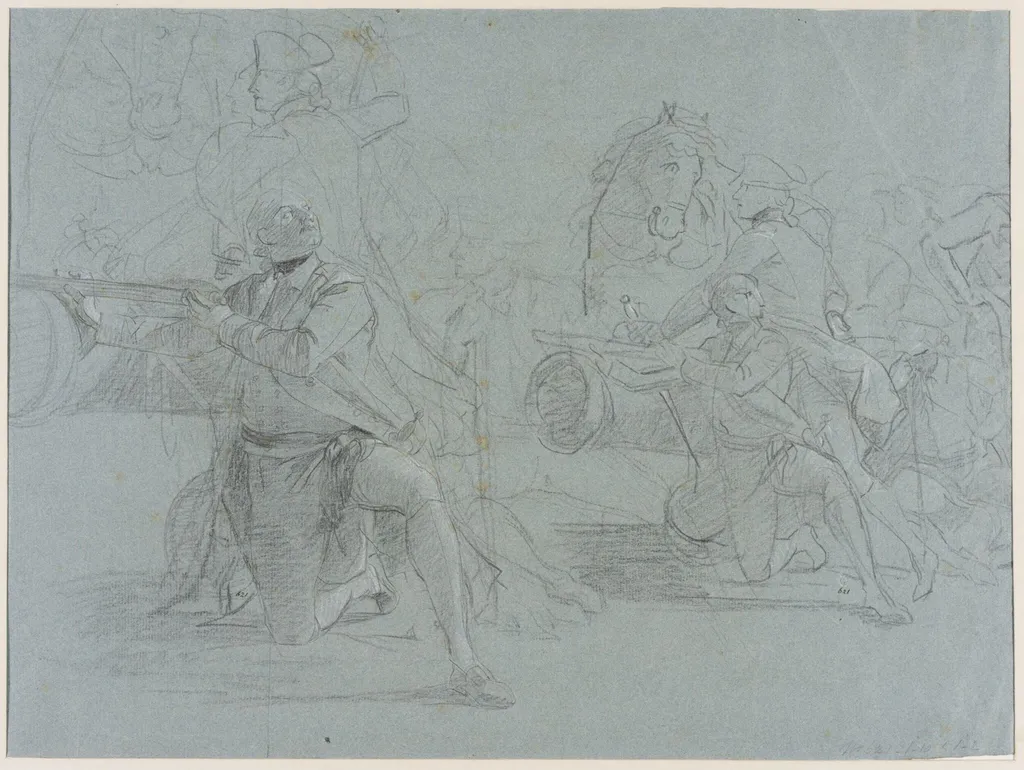
Study for 'The Siege of Gibraltar' is a drawing by the Romanticist artist John Singleton Copley. It dates from 1782 and is held in the collection of the Victoria and Albert Museum.
About this work
Overview
Created in 1782, this chalk drawing by John Singleton Copley served as a preparatory study for his larger oil painting depicting the Siege of Gibraltar.
Created in 1782, this chalk drawing by John Singleton Copley served as a preparatory study for his larger oil painting depicting the Siege of Gibraltar. Executed with rapid, energetic strokes, it captures the turbulence of battle without final polish. The work reflects Copley’s process of exploring composition and movement before committing to the finished piece, revealing the artist’s focus on dynamic action over detail.
Subject & Meaning
The scene portrays a moment of intense conflict during the 1782 siege, with soldiers engaged in disarray, a rearing horse, and a wagon surrounded by figures in flight or distress. The kneeling figure with a rifle anchors the foreground, suggesting resistance amid chaos. The drawing conveys the disorder of war rather than heroic triumph, emphasizing human struggle over military precision.
Technique & Style
Copley used chalk to build form through swift, overlapping lines and loose cross-hatching, creating depth and motion without refined shading. The sketch’s urgency is evident in its unfinished quality—areas are smudged, contours are tentative, and figures overlap ambiguously. This approach prioritizes energy and spatial relationships, allowing the artist to test compositional balance before painting.
History & Provenance
The drawing was made during Copley’s time in London as he prepared for a major commission from the British government commemorating the defense of Gibraltar. It remained in his possession until his death, later entering a private collection before being acquired by a public institution. Its survival offers rare insight into his working method for large-scale historical works.
Context
The Siege of Gibraltar (1779–1783) was a prolonged British victory against Spanish and French forces, celebrated in Britain as a symbol of resilience. Copley, then established as a painter of historical and military subjects, was commissioned to document the event. This study reflects the era’s demand for visual narratives that honored imperial endurance, even as it captures the raw reality of combat.
Legacy
The drawing stands as a testament to Copley’s commitment to capturing lived experience in historical scenes. Unlike polished final works, this sketch reveals the artist’s engagement with movement and emotion, influencing later preparatory practices in academic art. Its rawness continues to inform studies of 18th-century artistic process and the transition from sketch to grand narrative.
Artist & collection
Artist
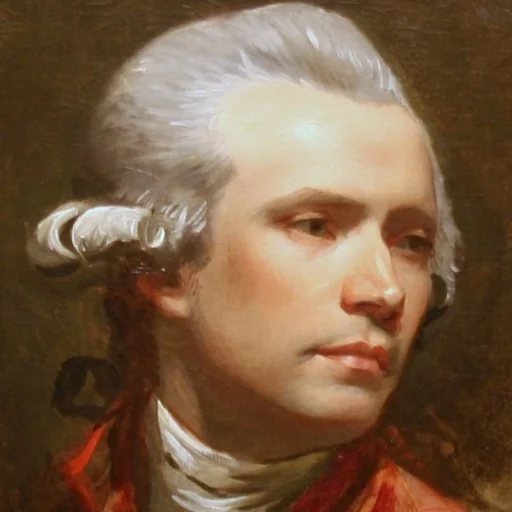
John Singleton Copley (July 3, 1738 – September 9, 1815) was an American-born British painter active in both the Thirteen Colonies and England.

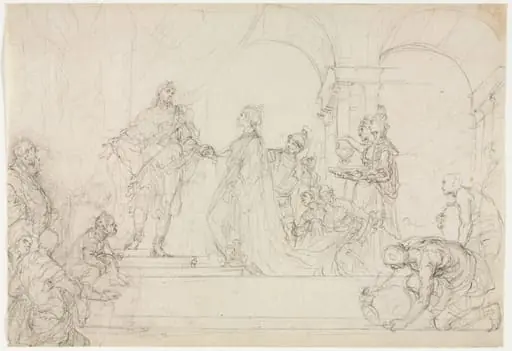 Meeting of Solomon and Queen of Sheba
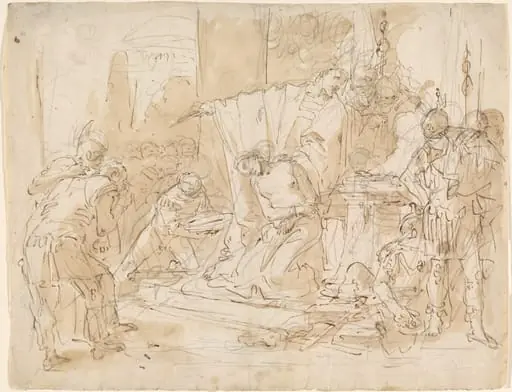 The Sacrifice of Iphigenia (recto) / Study of a Male Nude (verso)
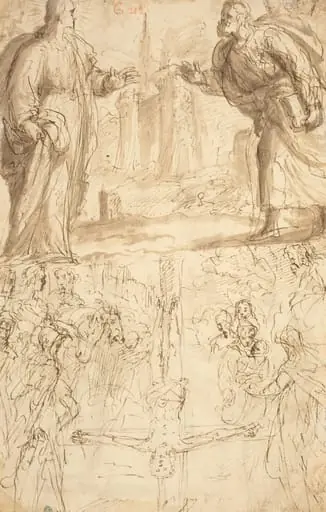 Crucifixion of Saint Peter
![The Adoration of the Magi [recto], by Donato Creti](https://artifactworldgallery.com/img/donato-creti--the-adoration-of-the-magi-recto--2cfd5d76b55e821e-w320.webp) The Adoration of the Magi [recto]
The Adoration of the Magi [recto]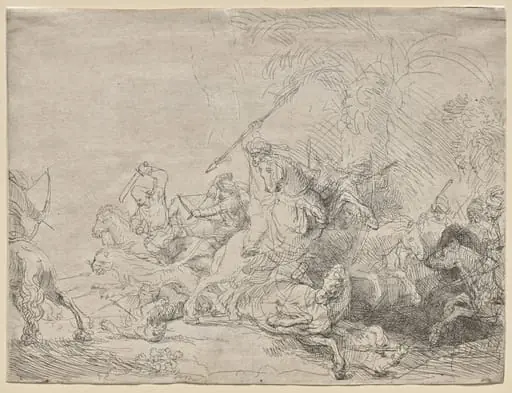 The Large Lion Hunt
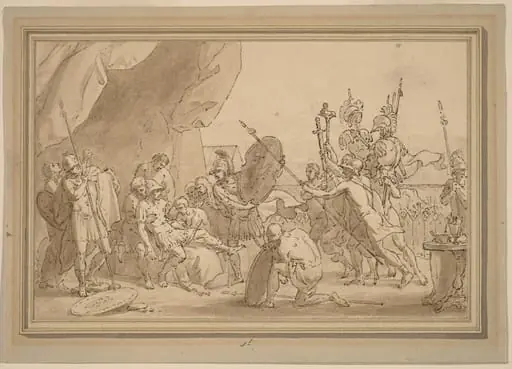 Death of a General
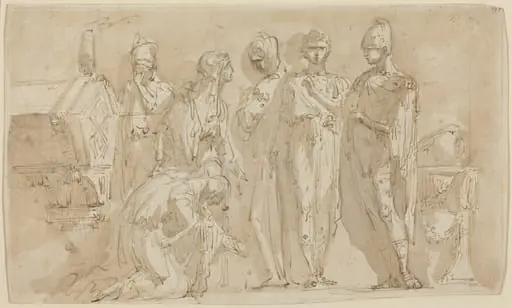 Coriolanus before the Women of Rome
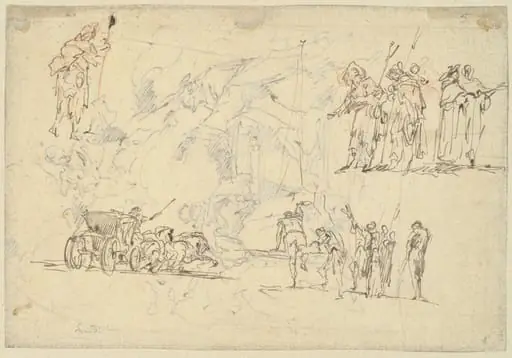 Figure Studies and a Horse-Drawn Carriage (recto)
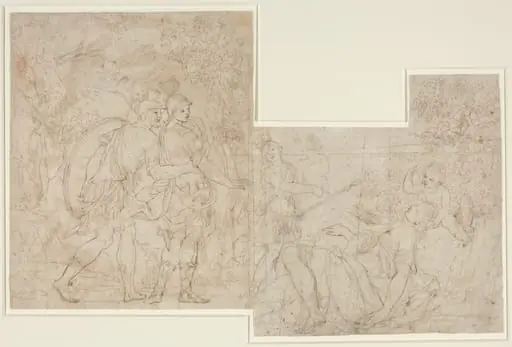 Three Soldiers Discovering a Sleeping Woman
![Figure Studies [recto], by Giovanni Battista Cipriani](https://artifactworldgallery.com/img/giovanni-battista-cipriani--figure-studies-recto--32b47b1a71716a78-w320.webp) Figure Studies [recto]
Figure Studies [recto]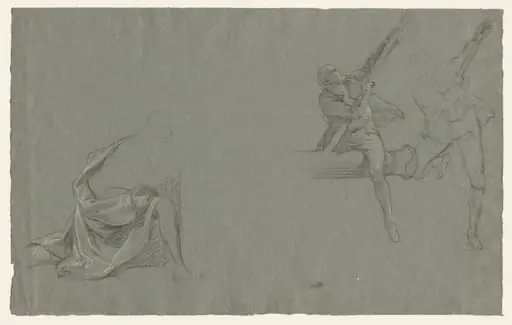 Drapery Study; Two Figures Pulling a Pole
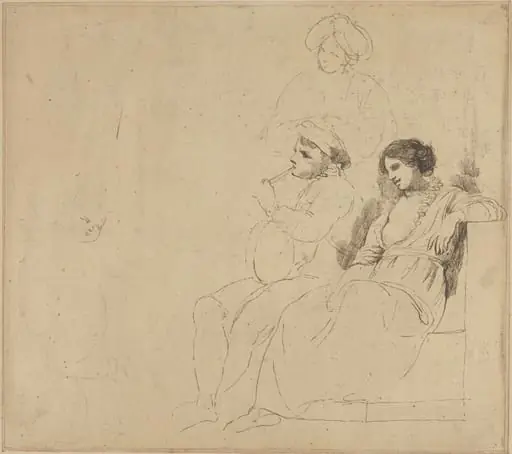 Study for "The Rustic Dancers"