Artwork
Doppelbildnis mit Skelett (Double Portrait with Skeleton)
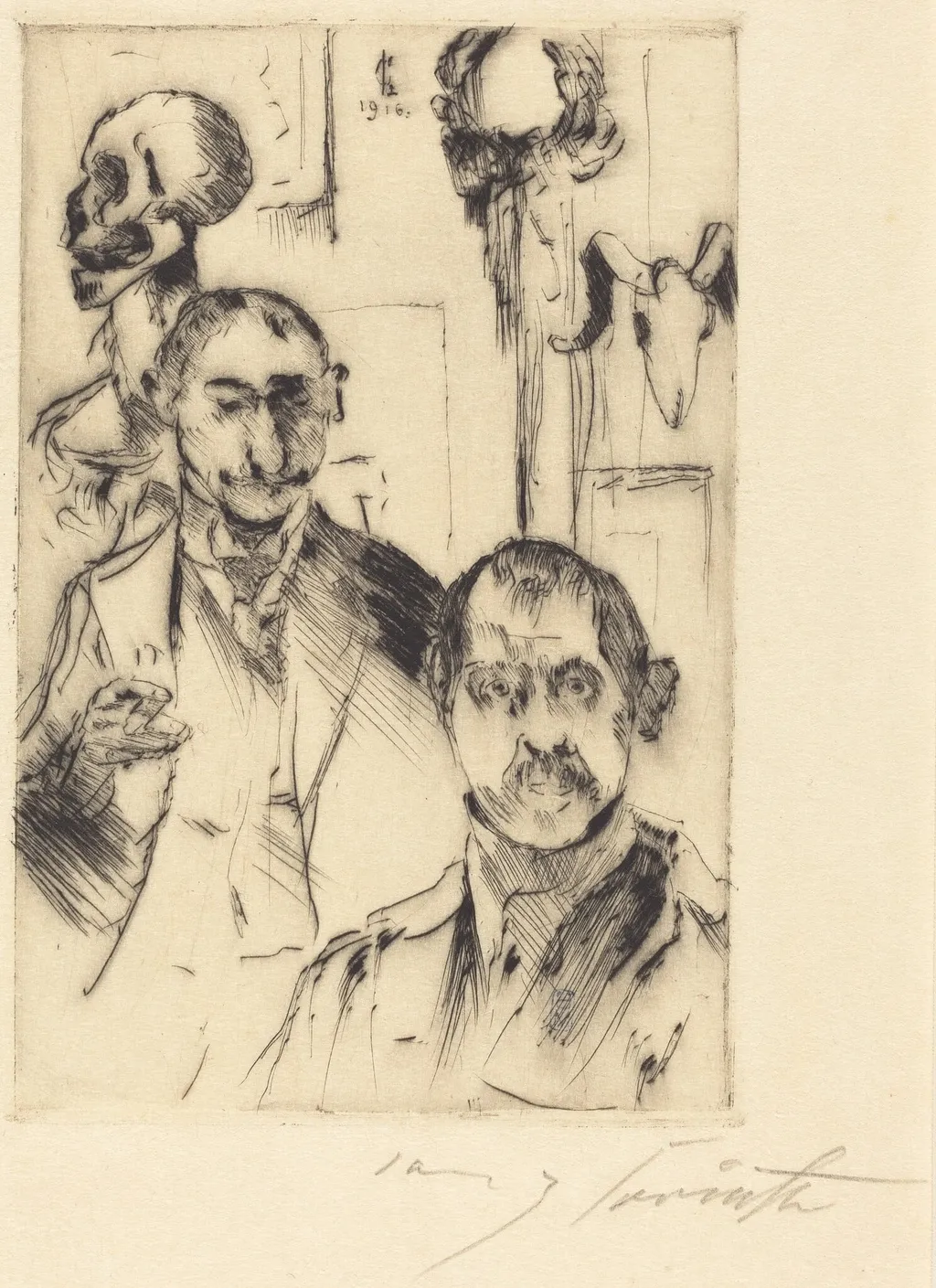
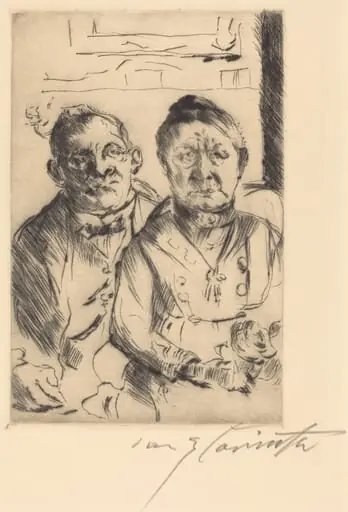
Doppelbildnis mit Skelett (Double Portrait with Skeleton) is an ink print by Lovis Corinth. It dates from 1916 and is held in the collection of the National Gallery of Art.
About this work
Overview
Doppelbildnis mit Skelett (Double Portrait with Skeleton) is a 1916 drypoint print on wove paper by German artist Lovis Corinth, blending impressionist and expressionist elements.
Subject & Meaning
The print depicts two suited men with short hair, standing solemnly with a skeleton looming behind, its skull face mirroring their serious gazes at the viewer, invoking themes of mortality and reflection.
Technique & Style
Executed in drypoint, the work features expressive lines and nuanced shading, characteristic of Corinth's post-1911 style, which favored looser, more emotive forms following a life-altering stroke.
History & Provenance
Created in 1916, the piece reflects Corinth's artistic evolution after his stroke and his presidency of the Berlin Secession, a movement he was deeply involved with after training in Paris and Munich.
Context
Part of the portraiture genre, this print stands out for its inclusion of a skeleton, a symbol of transience, alongside the living subjects, contrasting vitality with mortality in the early 20th-century European context.
Legacy
Doppelbildnis mit Skelett contributes to Corinth's legacy as a bridge between impressionism and expressionism, with its unique blend of techniques and somber themes influencing subsequent generations of artists.
Own this work as a print
Artist & collection

Artist
Lovis Corinth was a German artist and writer whose mature work as a painter and printmaker realized a synthesis of impressionism and expressionism.