Artwork
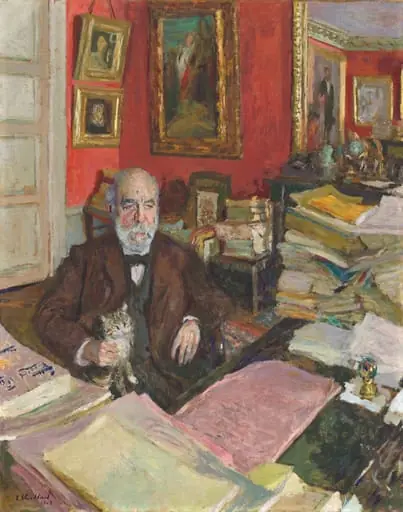
Portrait of Theo van Rysselberghe
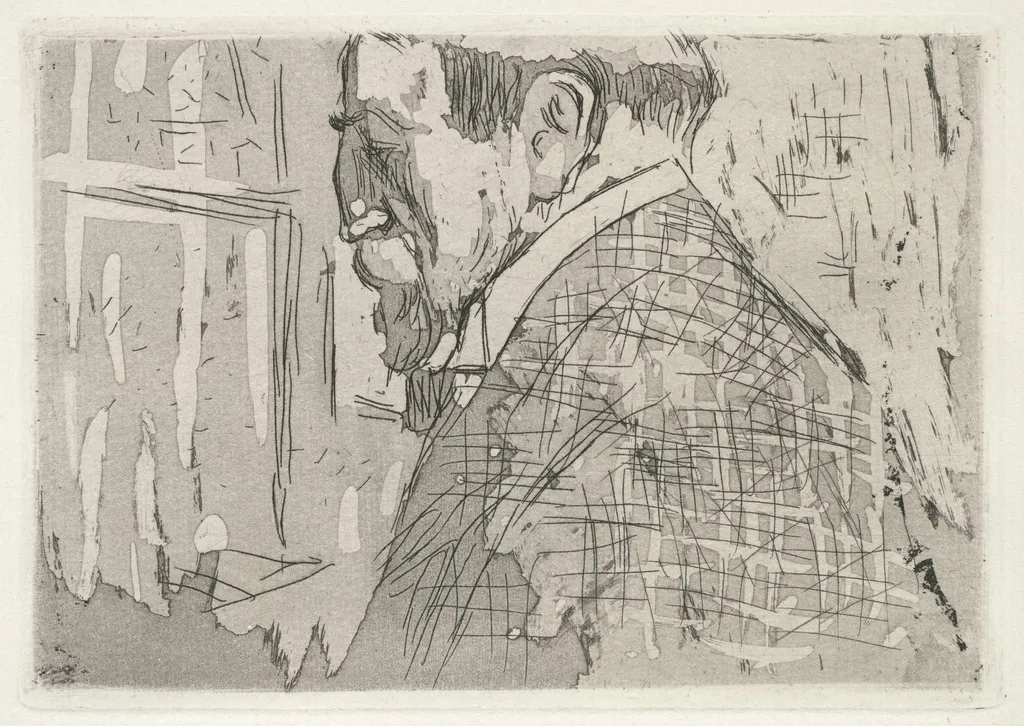
Portrait of Theo van Rysselberghe is a print by the Impressionist artist Édouard Vuillard. It dates from 1898 and is held in the collection of the Cleveland Museum of Art.
About this work
Overview
The portrait captures its subject not through dramatic detail but through restrained tonality and simplified form.
Created around 1898, this print by Édouard Vuillard portrays the Belgian artist Theo van Rysselberghe, a fellow traveler in the avant-garde circles of late 19th-century Paris. Executed during Vuillard’s active years with Les Nabis, the work reflects the group’s departure from academic realism toward a more intimate, pattern-driven aesthetic. The portrait captures its subject not through dramatic detail but through restrained tonality and simplified form.
Subject & Meaning
Theo van Rysselberghe, known for his pointillist technique, is depicted in quiet profile, his gaze lowered and expression inward. His dark beard and crisp white collar anchor the composition, suggesting both dignity and reserve. Vuillard’s choice to render him in stillness, without narrative context, emphasizes contemplation over action. The portrait functions less as a likeness and more as a meditation on character, aligning with the Nabis’ interest in psychological subtlety.
Technique & Style
Vuillard applies muted, flat planes of color with soft, blended brushwork, avoiding sharp definition. The background recedes into a neutral tone, drawing focus to the figure’s silhouette and the delicate modulation of light across the face. Influences from Japanese woodblock prints are evident in the flattened perspective and emphasis on line and surface. The absence of modeling or chiaroscuro reinforces a decorative intent, prioritizing harmony over illusionistic depth.
History & Provenance
The portrait was made during a period of close personal and artistic exchange between Vuillard and van Rysselberghe, both active in Parisian avant-garde circles. While the exact provenance of this print is not fully documented, it emerged from Vuillard’s broader practice of intimate portraiture among peers. Its survival as a print suggests it was likely produced in limited numbers, possibly for private circulation among artists and collectors.
Context
In the 1890s, Parisian artists like Vuillard rejected naturalism in favor of symbolic and decorative approaches. Les Nabis, influenced by Symbolism and Asian art, sought to transform painting into an expressive, non-narrative experience. This portrait aligns with that ethos—its quietness, lack of backdrop, and emphasis on surface reflect a broader shift away from traditional portraiture toward a more subjective, interiorized vision of the individual.
Legacy
Though less widely known than Vuillard’s interior scenes, this portrait exemplifies his ability to convey presence through restraint. It stands as a quiet testament to the artistic solidarity among Nabis members and their shared pursuit of emotional resonance over spectacle. The work continues to inform understandings of how modern portraiture evolved beyond likeness into psychological and formal experimentation.
Artist & collection
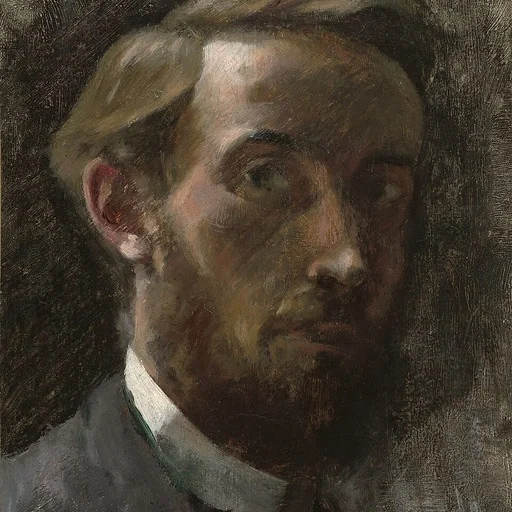
Artist
Jean-Édouard Vuillard (French: ; 11 November 1868 – 21 June 1940) was a French painter, decorative artist, and printmaker.

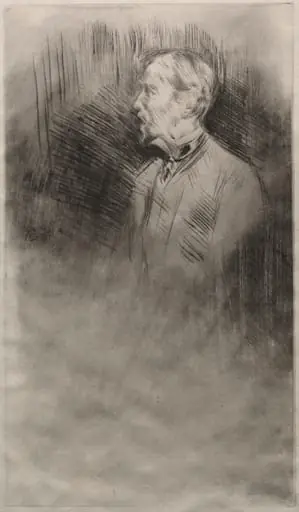 Lord Wolseley
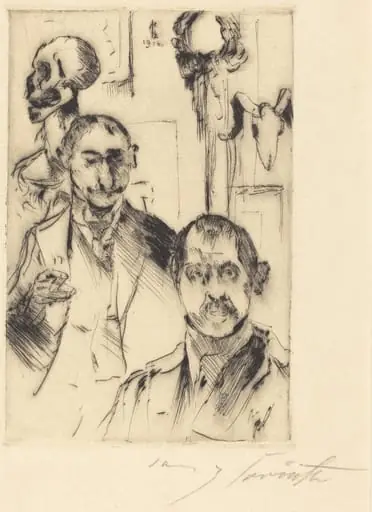 Doppelbildnis mit Skelett (Double Portrait with Skeleton)
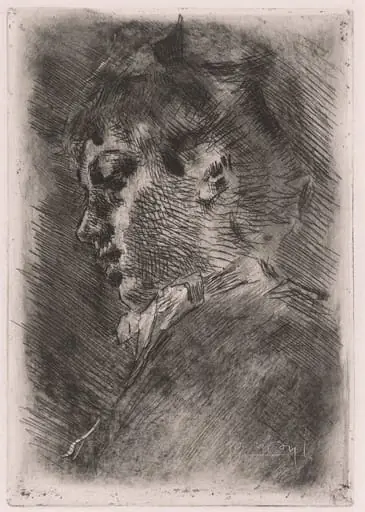 Portrait of a Young Woman in Profile
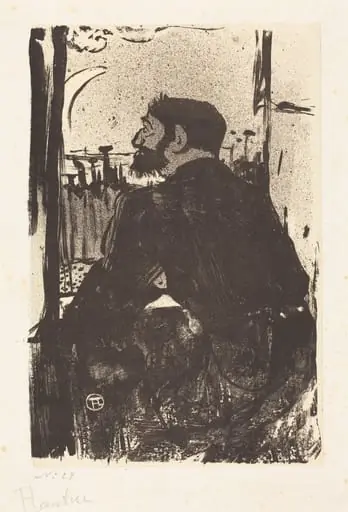 Sleepless Night (Nuit blanche)
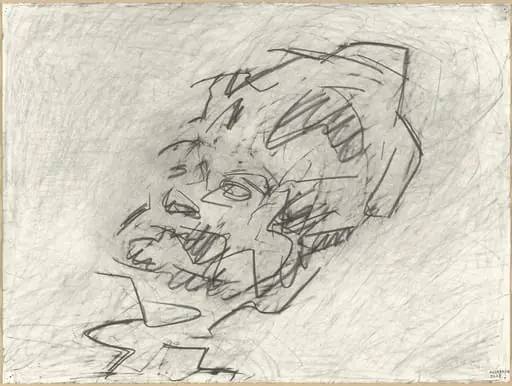 Untitled
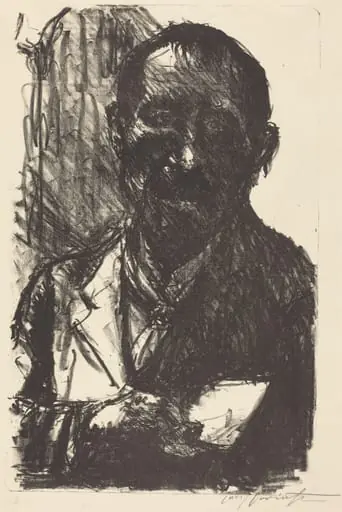 Selbstbildnis 1919 (Self-Portrait 1919)
 Sketch of a Blacksmith
 Sleepless Night (Nuit blanche)
 Frank Weitenkampf
 Männliches Bildnis mit Aufgestütztem Arm (Portrait of a Man Smoking)
 On the Street
 J.L. Forain