Artwork
Frau mit Handarbeit (Woman with Needlework)
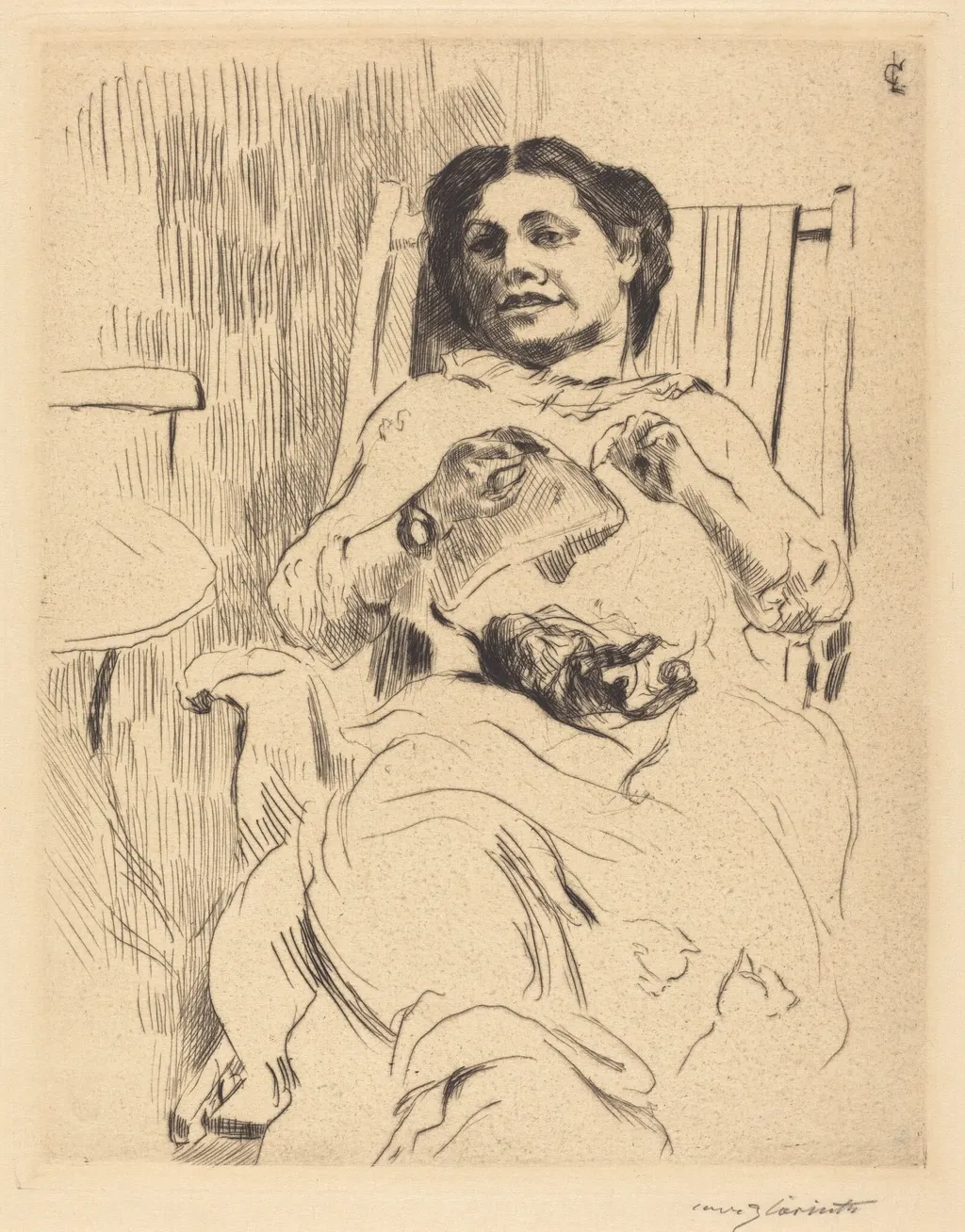
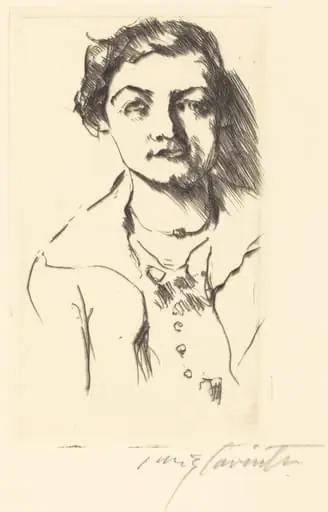
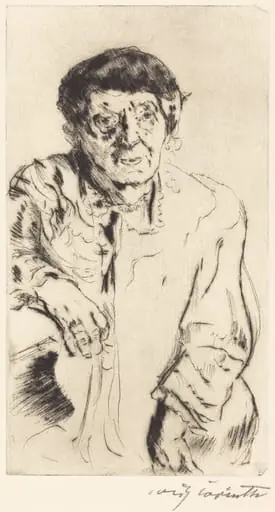
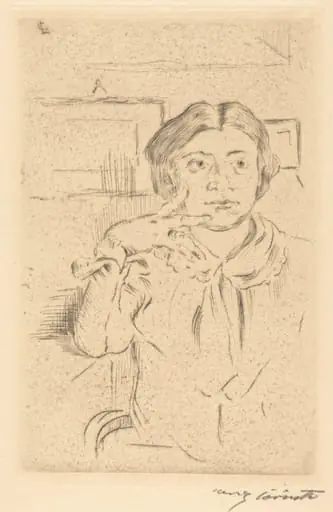
Frau mit Handarbeit (Woman with Needlework) is an ink print by Lovis Corinth. It dates from 1912 and is held in the collection of the National Gallery of Art.
About this work
Overview
Frau mit Handarbeit (Woman with Needlework), created by Lovis Corinth in 1912, is a drypoint print on wove paper. This work reflects Corinth's stylistic evolution following a significant life event.
Subject & Meaning
The print portrays a woman intently focused on needlework, conveying an atmosphere of quiet contemplation. Her absorbed state and the simple, muted background emphasize the ordinary, intimate nature of the scene.
Technique & Style
Executed in drypoint in black, the print exhibits a looser technique characteristic of Corinth's post-1911 work, which shifted toward expressionism after a stroke influenced his artistic approach.
History & Provenance
Corinth, having studied in Paris and Munich, later led the Berlin Secession. Frau mit Handarbeit was created in 1912, a year after his stroke, marking a period of stylistic transition in his career.
Context
This work sits within the broader context of early 20th-century European art's move towards expressionism, with Corinth's personal experience of a stroke in 1911 contributing to his adoption of looser, more expressive techniques.
Legacy
Frau mit Handarbeit contributes to Corinth's legacy as a pivotal figure in the transition from naturalism to expressionism in German art, though specific lasting impacts of this particular work on the broader art historical canon are not prominently noted.
Artist & collection

Artist
Lovis Corinth was a German artist and writer whose mature work as a painter and printmaker realized a synthesis of impressionism and expressionism.