Artwork
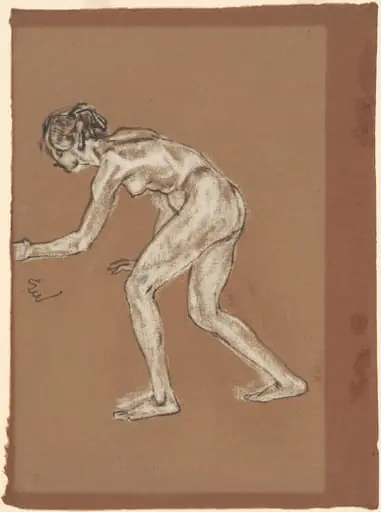
Gebeugter Akt (Nude Bending Forward)
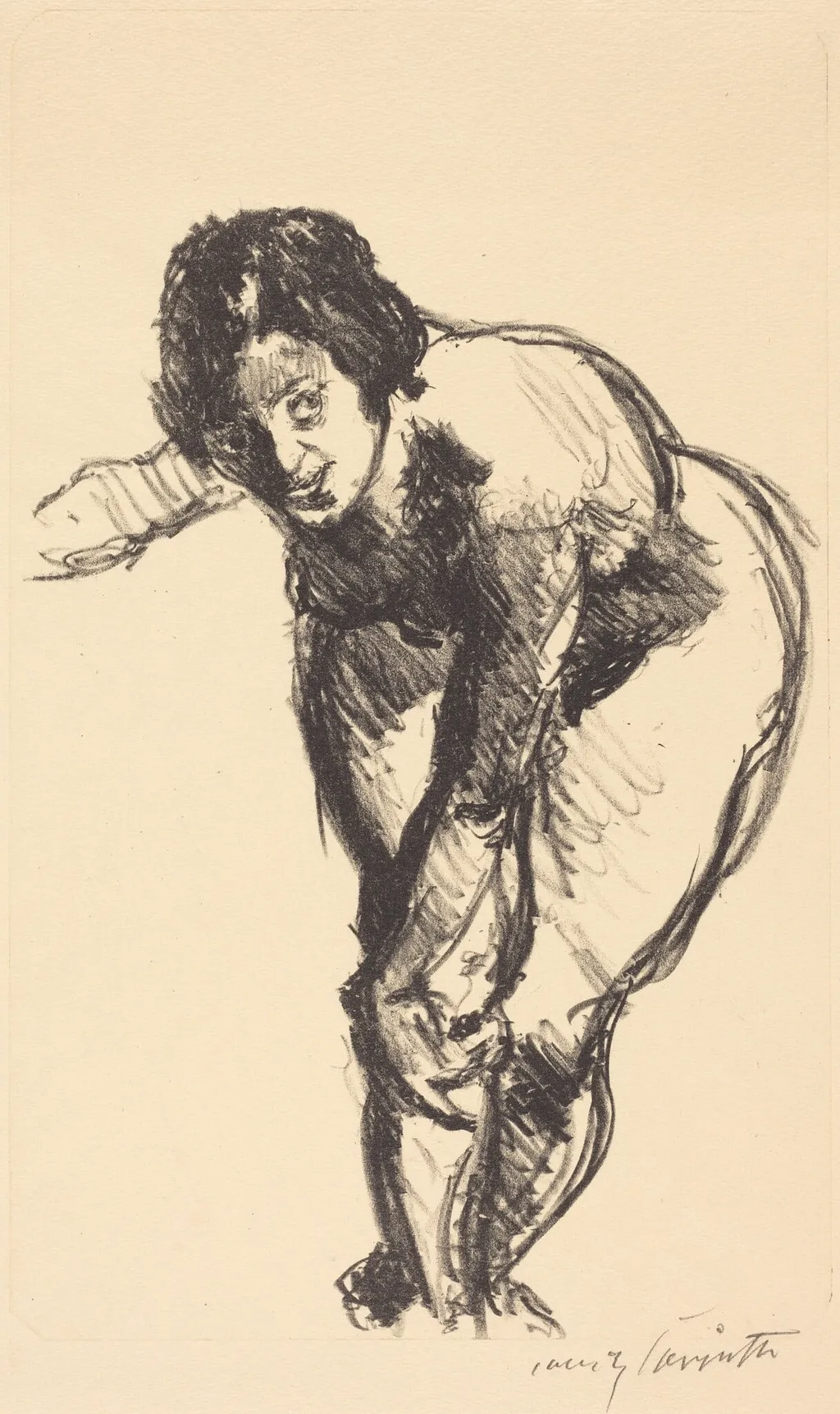
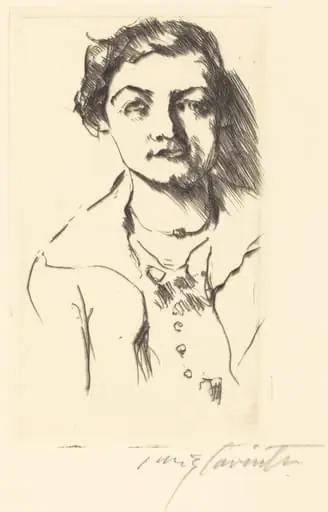
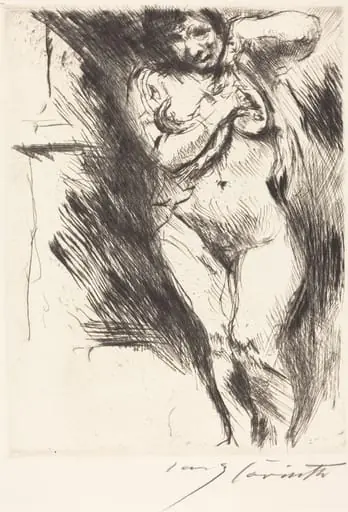
Gebeugter Akt (Nude Bending Forward) is an ink print by Lovis Corinth. It dates from 1916 and is held in the collection of the National Gallery of Art.
About this work
Overview
Created in 1916, *Gebeugter Akt (Nude Bending Forward)* is a lithograph by Lovis Corinth, executed in black ink on wove paper.
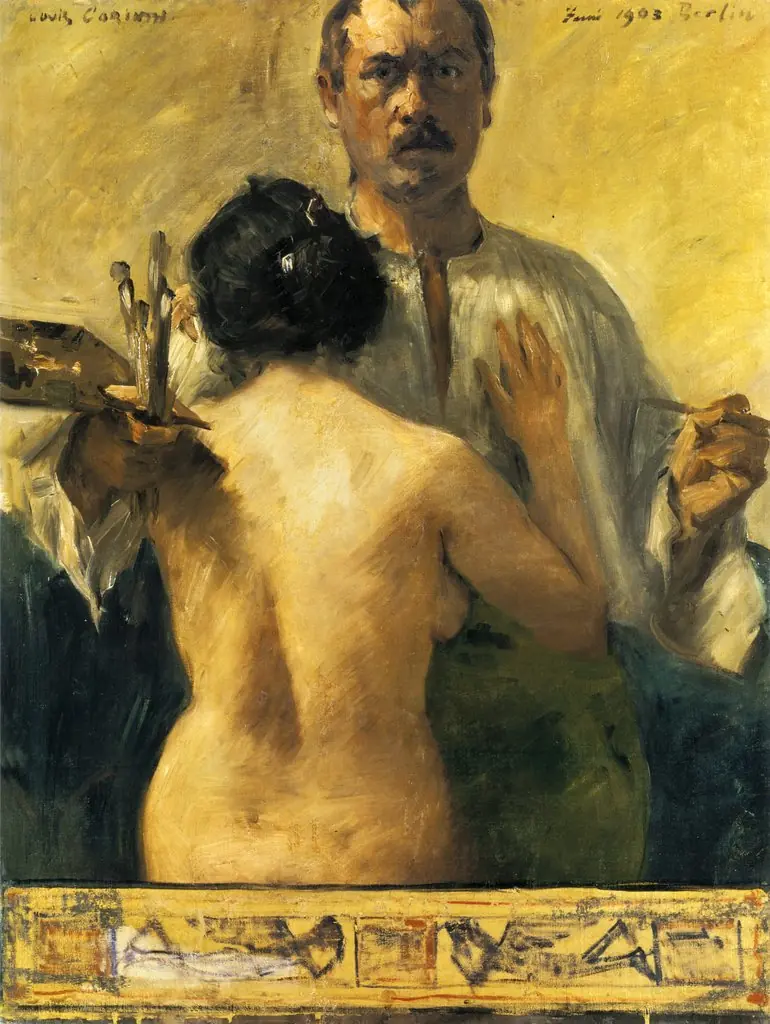
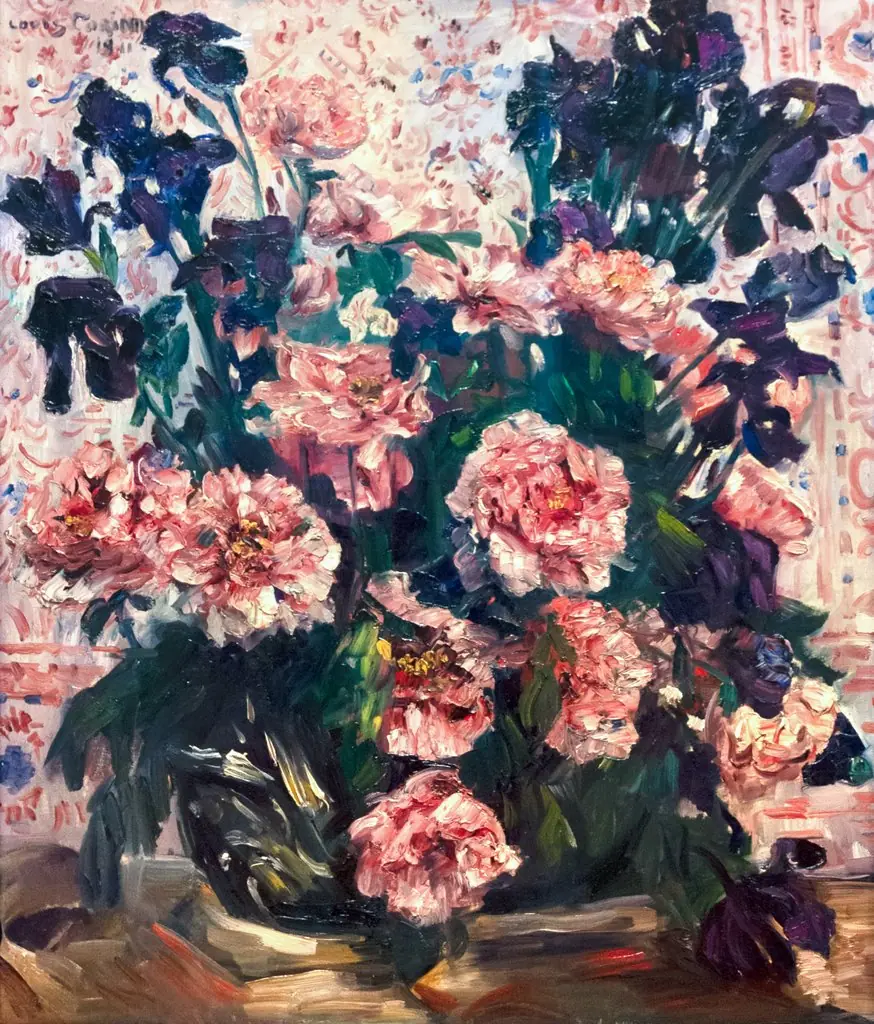
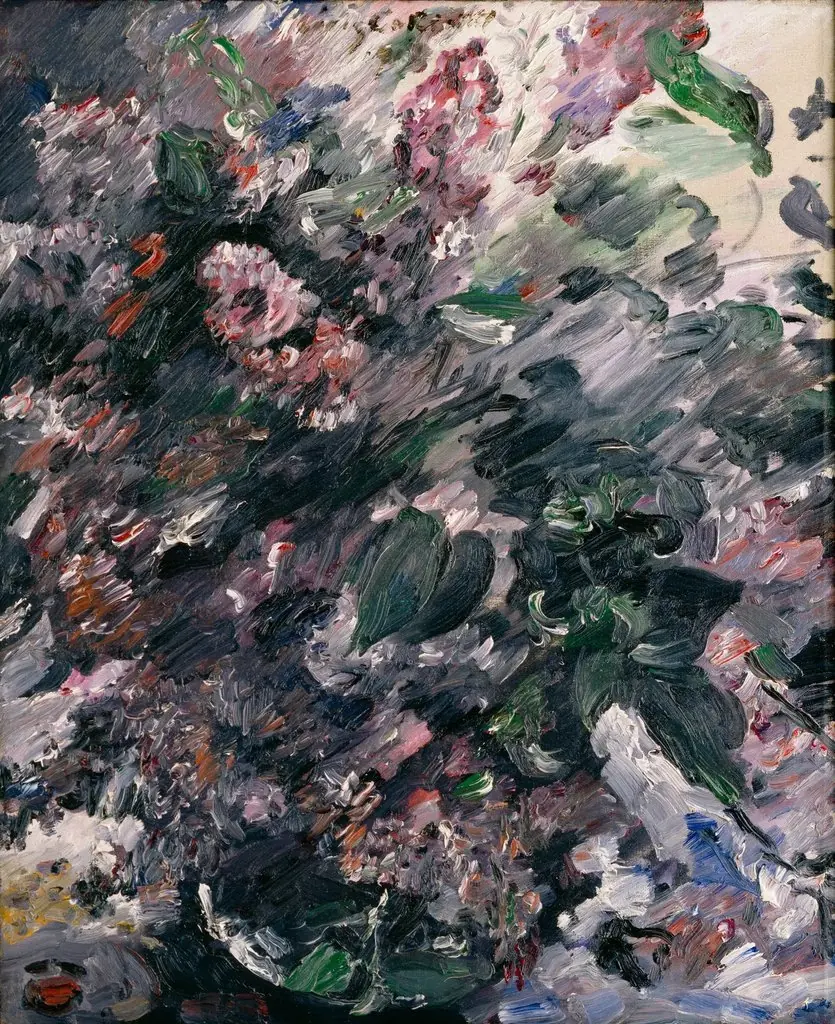
Created in 1916, *Gebeugter Akt (Nude Bending Forward)* is a lithograph by Lovis Corinth, executed in black ink on wove paper. The work belongs to a phase of his career marked by intense physical and stylistic transformation following a stroke in 1911. Corinth, who had trained in Paris and Munich and later led the Berlin Secession, turned toward a more visceral, expressive mode of representation in his prints during this period, prioritizing emotional resonance over polished detail.
Subject & Meaning
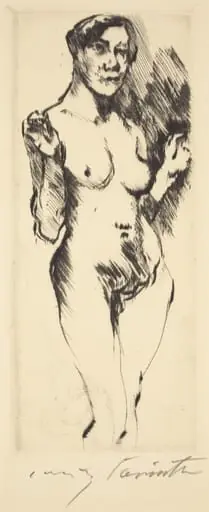
The figure is a nude, bent forward in a posture of quiet vulnerability, with head tilted upward and eyes wide. The pose suggests introspection or physical strain, devoid of idealization. The messy hair and unrefined form emphasize immediacy rather than classical beauty. The subject’s gaze, directed outward, introduces a psychological dimension—inviting observation without offering narrative resolution, aligning with Corinth’s interest in raw human presence.
Technique & Style
Corinth employed lithography to capture rapid, gestural marks that mimic sketching directly on stone. The black ink is applied with loose, energetic lines, suggesting movement rather than defining form with precision. Light and shadow are implied through tonal contrasts, not modeling. The absence of fine detail and the raw texture of the paper enhance the sense of spontaneity, reflecting his post-stroke shift toward expressive immediacy over academic refinement.
History & Provenance
The print emerged during a period of personal and artistic upheaval for Corinth, following his 1911 stroke, which altered his motor control and artistic approach. He increasingly turned to printmaking as a direct, accessible medium. While specific early ownership records are sparse, the work is part of a broader body of lithographs from this era that were widely circulated among German art circles and later acquired by public collections, reflecting its significance in his late oeuvre.
Context
In early 20th-century Germany, printmaking was a vital medium for artists seeking to break from academic traditions. Corinth’s work intersected with Expressionist concerns, though he remained distinct in his roots in naturalism and Impressionism. His lithographs from this time, including this one, responded to broader cultural shifts toward psychological depth and bodily authenticity, positioning him as a bridge between 19th-century realism and modernist experimentation.
Legacy
*Gebeugter Akt* exemplifies Corinth’s late style—unpolished, emotionally charged, and formally inventive. It influenced later generations of German artists who valued expressive line and psychological candor over technical finish. The work remains a key example of how printmaking enabled a direct, intimate mode of expression during a time of profound personal and artistic change, securing its place in studies of modern German graphic art.
Artist & collection

Artist
Lovis Corinth was a German artist and writer whose mature work as a painter and printmaker realized a synthesis of impressionism and expressionism.