Artwork
Kühe (Cows)
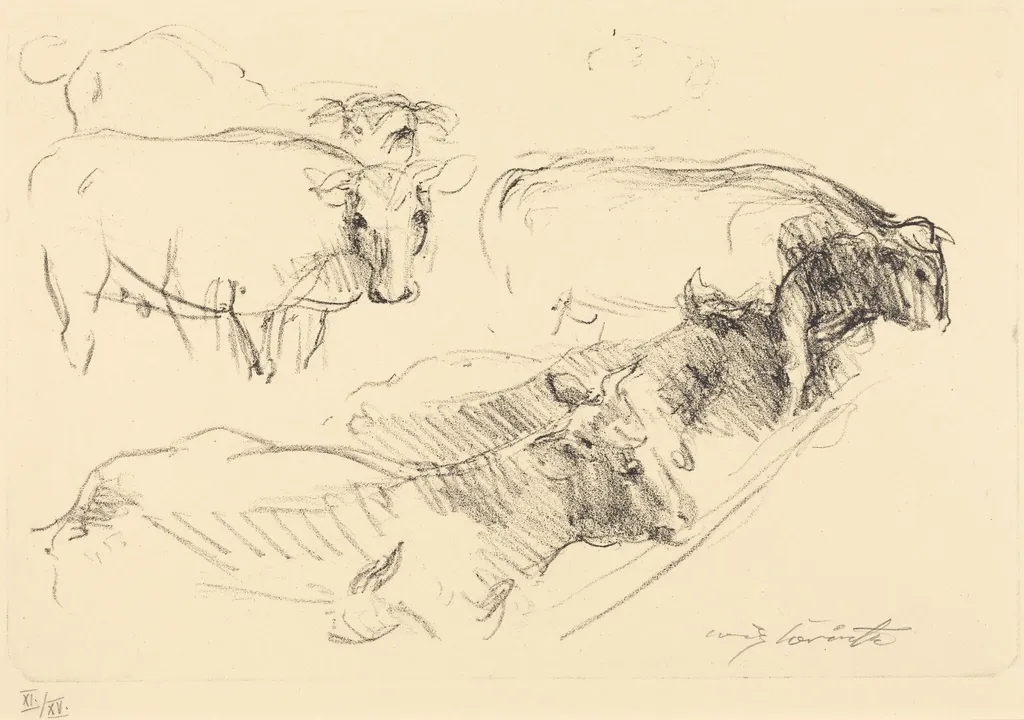
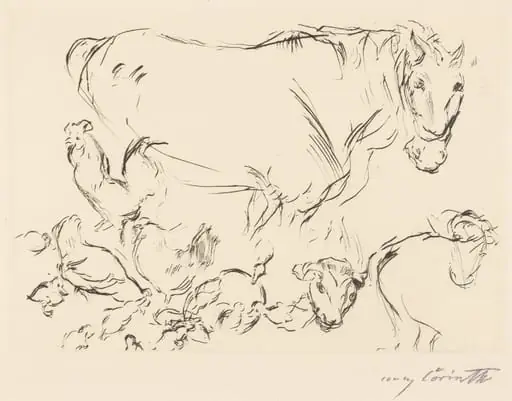
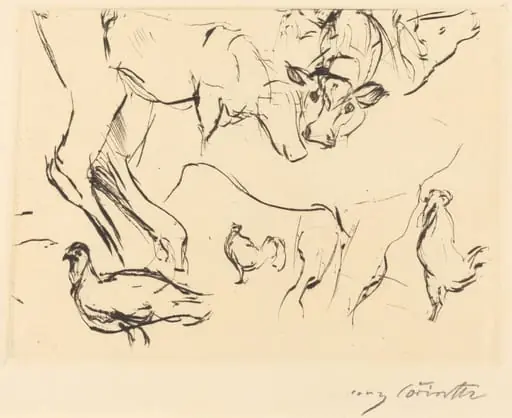
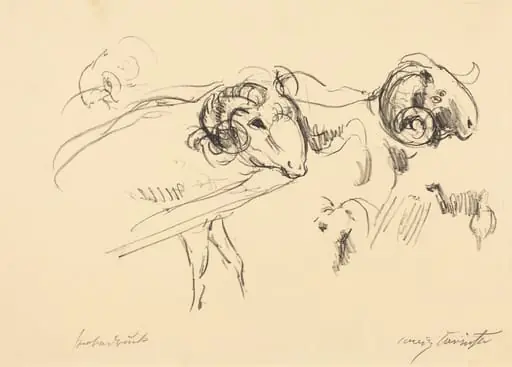
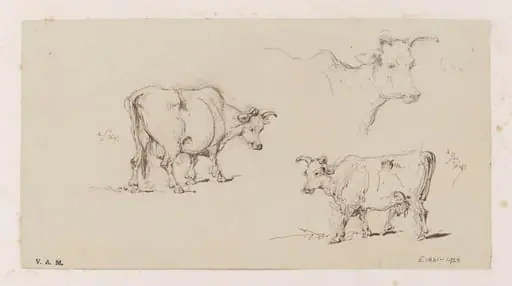
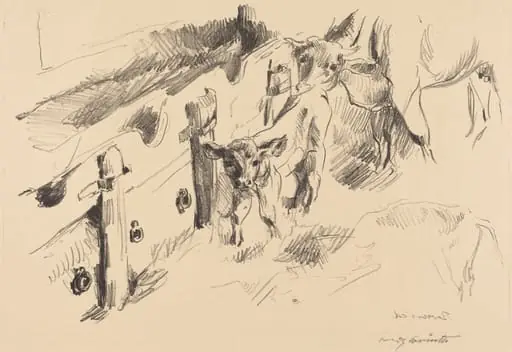
Kühe (Cows) is an ink print by Lovis Corinth. It dates from 1910 and is held in the collection of the National Gallery of Art.
About this work
Overview
The work belongs to the period when Corinth was integrating elements of Impressionism and Expressionism in his graphic output.
Lovis Corinth’s lithograph *Kühe* (1910) presents a stark black-and-white image of two cows rendered on wove paper. Executed in a single, vigorous drawing on a lithographic stone, the composition is reduced to bold outlines and minimal detail, emphasizing form over naturalistic representation. The work belongs to the period when Corinth was integrating elements of Impressionism and Expressionism in his graphic output.
Subject & Meaning
The print depicts a pair of cows standing side by side; one faces directly forward while the other turns slightly away. The simplified silhouettes and abrupt line work suggest a study of mass and presence rather than a documentary farm scene, inviting viewers to consider the animal as a basic visual motif within Corinth’s evolving artistic vocabulary.
Technique & Style
Created with greasy ink applied to a limestone slab, the lithograph captures the immediacy of a rapid sketch. Thick, assertive lines dominate the surface, reflecting Corinth’s tendency toward expressive brushwork translated into print. The monochrome palette and rough handling align with his broader shift from Impressionist light effects to a more gestural, Expressionist approach.
History & Provenance
Corinth produced *Kübe* during his Berlin Secession years, a time when he was both a member and later a leader of the group. The work exemplifies his printmaking activity concurrent with his painting practice, though specific exhibition or collection history for this particular lithograph remains limited in the record.
Artist & collection

Artist
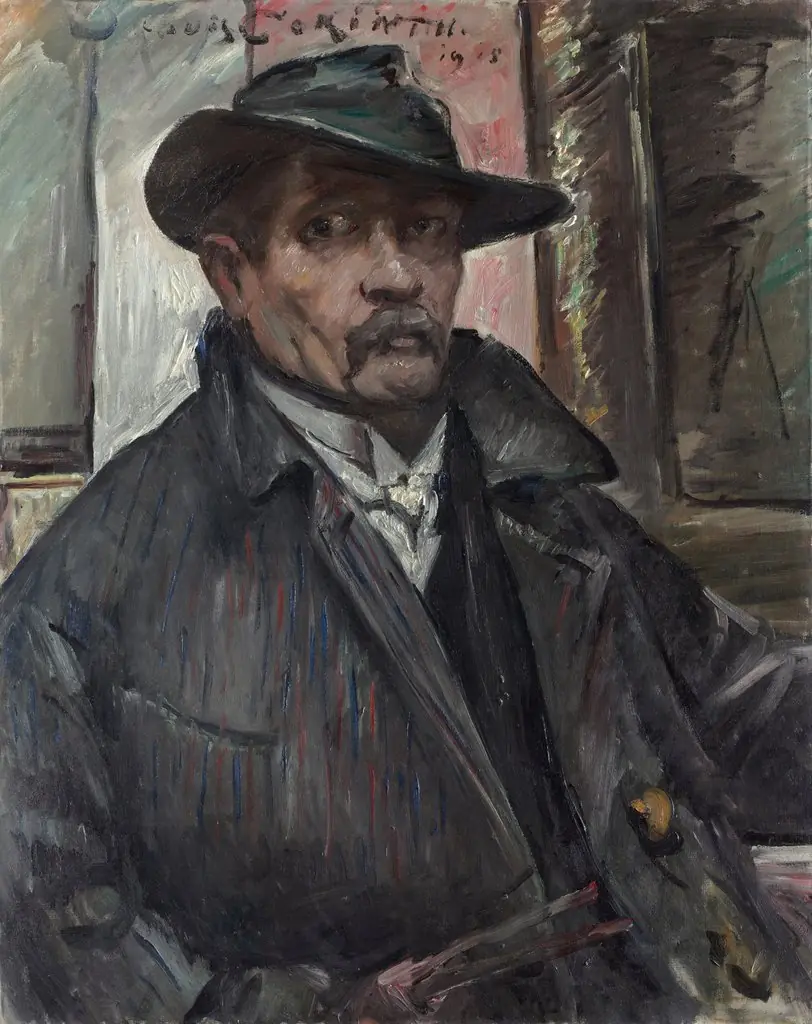
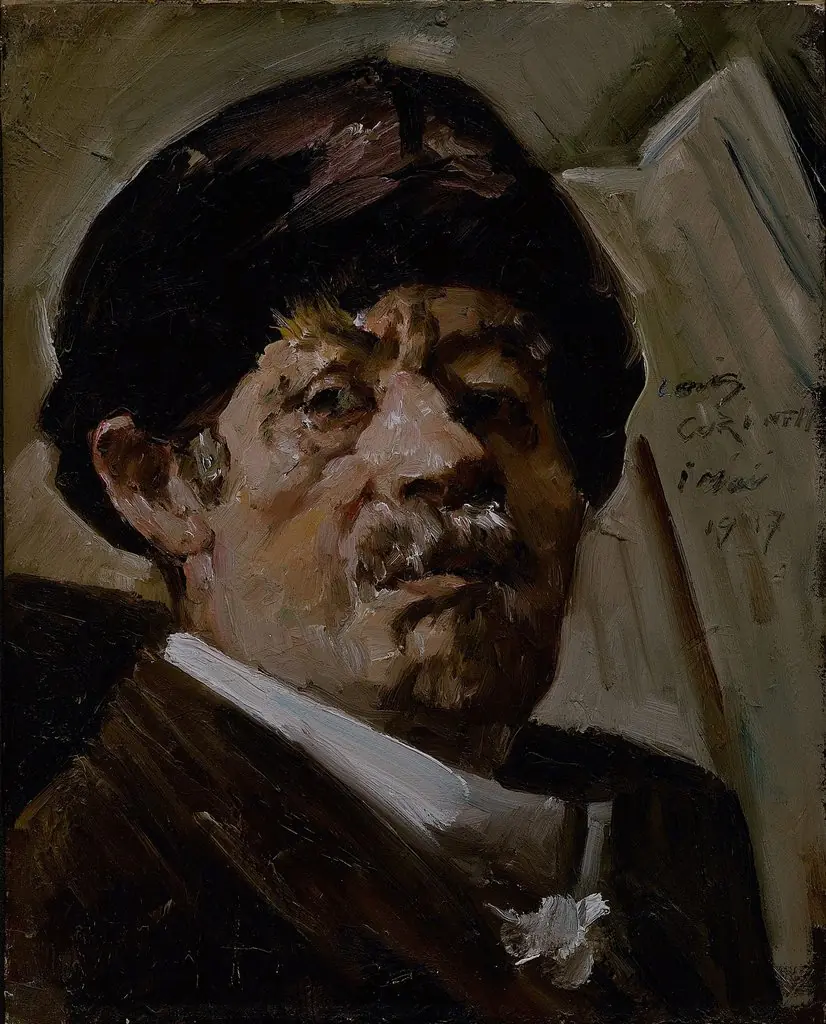
Lovis Corinth was a German artist and writer whose mature work as a painter and printmaker realized a synthesis of impressionism and expressionism.