Artwork
Stierkopf (Head of a Steer)
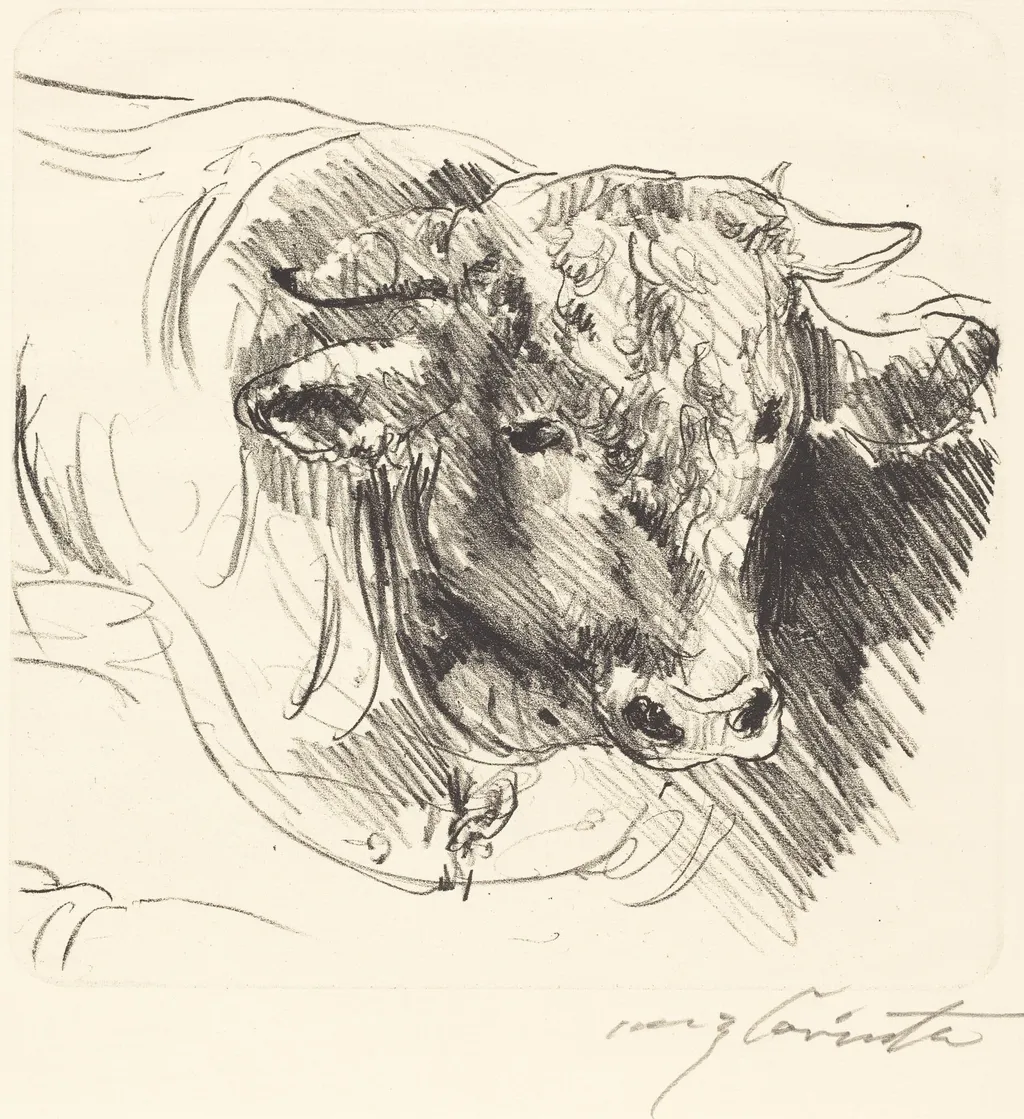
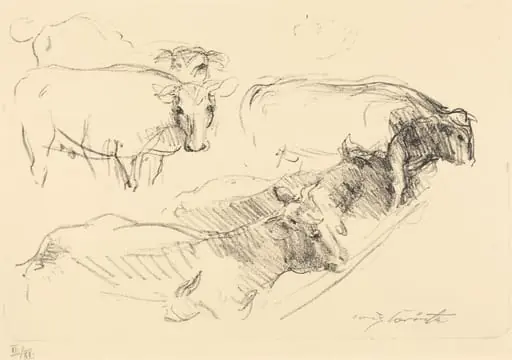
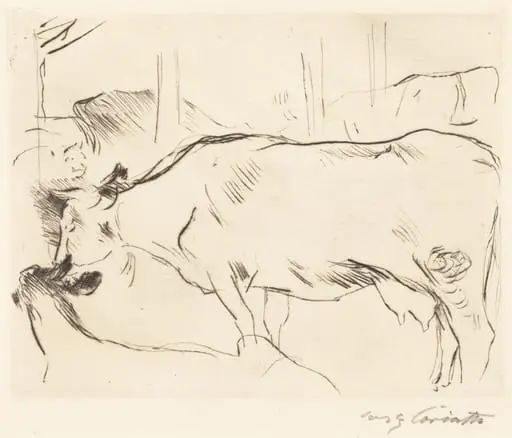
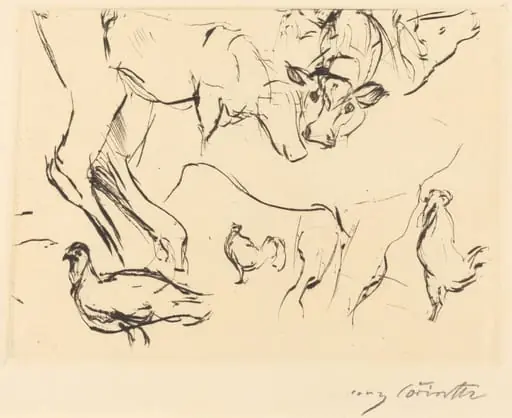
Stierkopf (Head of a Steer) is an ink print by Lovis Corinth. It dates from 1912 and is held in the collection of the National Gallery of Art.
About this work
Overview
Stierkopf (Head of a Steer) is a 1912 lithograph by Lovis Corinth, created during a period of stylistic transformation following a stroke the previous year. Characterized by bold, simplified forms, the work showcases Corinth's post-stroke expressive evolution.
Subject & Meaning
The print depicts a steer's head in profile, emphasizing textural suggestion, particularly the shaggy fur around the neck and shoulders, through varied line weights and shadowing.
Technique & Style
Executed in black on laid paper, the lithograph features quick, rough lines and selective shadowing, conveying a sense of spontaneity. The overall effect is loose and expressive, reflective of Corinth's adapted technique post-1911.
History & Provenance
Created by Lovis Corinth in 1912, a prominent German artist and former president of the Berlin Secession, following his training in Paris and Munich. Specific provenance details are not provided.
Context
Stierkopf (Head of a Steer) sits within the broader context of Corinth's post-stroke output, marked by a shift towards more expressive and less detailed work, influenced by his health and ongoing artistic evolution.
Legacy
As part of Corinth's later oeuvre, Stierkopf contributes to the artist's legacy of adapting to adversity while maintaining artistic innovation, though its individual impact within his corpus is not distinctly highlighted.
Own this work as a print
Artist & collection

Artist
Lovis Corinth was a German artist and writer whose mature work as a painter and printmaker realized a synthesis of impressionism and expressionism.