Artwork
Männliches Bildnis mit Aufgestütztem Arm (Portrait of a Man Smoking)
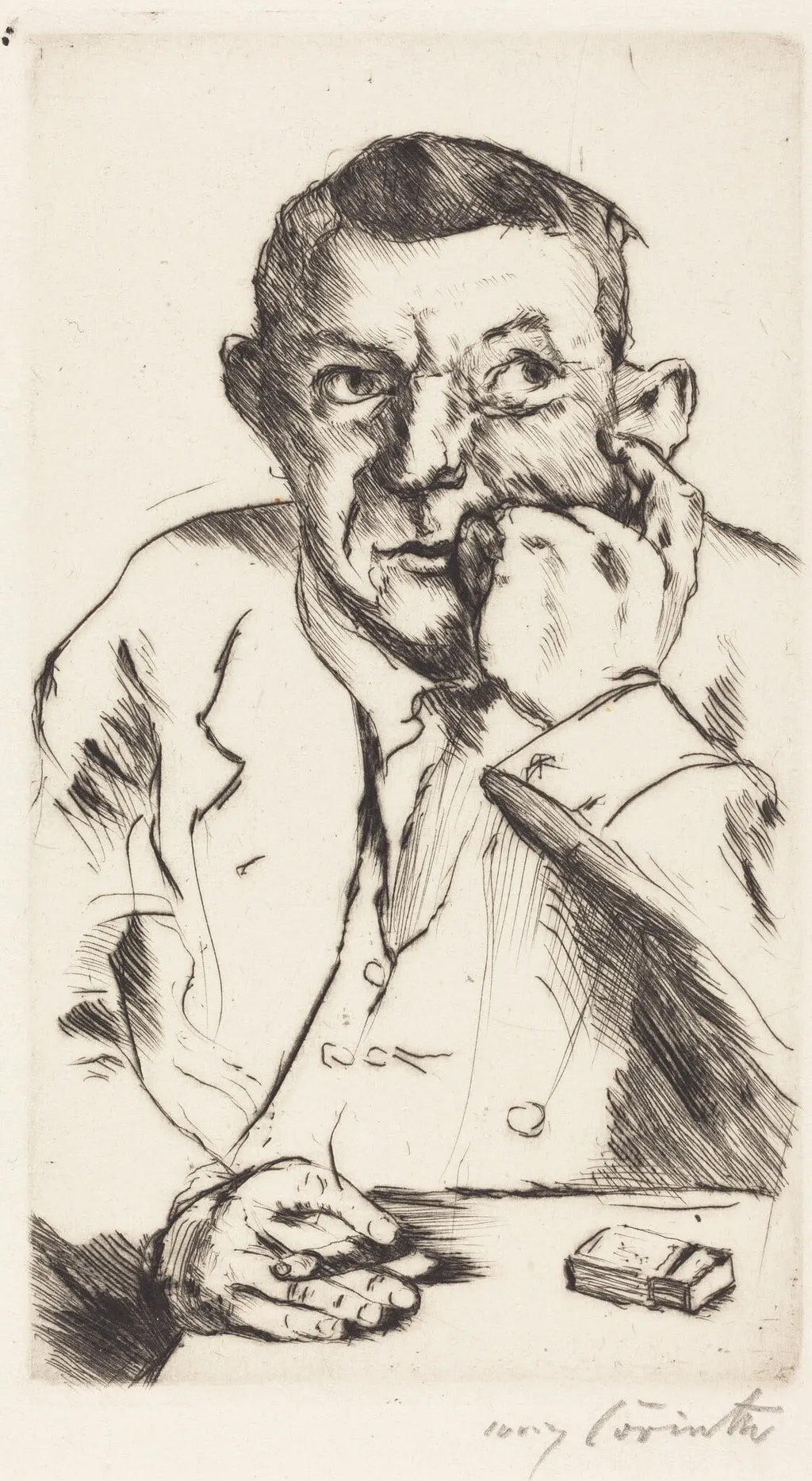
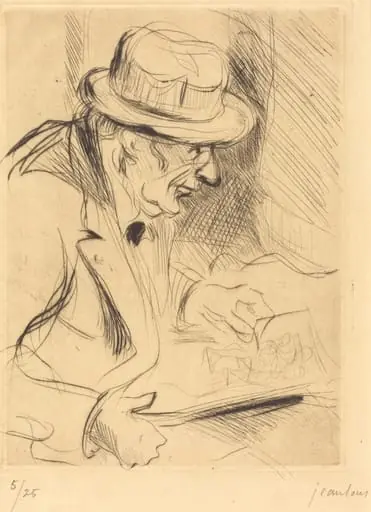
Männliches Bildnis mit Aufgestütztem Arm (Portrait of a Man Smoking) is an ink print by Lovis Corinth. It dates from 1916 and is held in the collection of the National Gallery of Art.
About this work
Overview
The medium’s tactile quality enhances the sense of intimacy and spontaneity, aligning with the artist’s evolving expressive language.
Created in 1916, this drypoint print by Lovis Corinth captures a man in quiet repose, cigarette in hand, arm resting on a surface. Executed in black ink on wove paper, the work belongs to Corinth’s post-stroke period, when his approach to portraiture became more immediate and emotionally direct. The medium’s tactile quality enhances the sense of intimacy and spontaneity, aligning with the artist’s evolving expressive language.
Subject & Meaning
The figure is a solitary man, engaged in the quiet act of smoking. His posture—arm propped, hand supporting his chin—suggests contemplation rather than performance. The presence of a small box on the table adds a subtle domestic detail, grounding the scene in everyday life. There is no overt narrative, but the stillness and focus invite reflection on solitude and routine, common themes in Corinth’s later portraiture.
Technique & Style
Corinth employed drypoint, a printmaking method involving direct scratching into the paper’s surface with a hardened needle. This produced rich, velvety lines with a rough, irregular edge that retained ink effectively. The resulting texture—loose, gestural, and deeply shaded—conveys the weight of the figure’s form and the softness of his clothing, emphasizing immediacy over precision, a hallmark of his post-1911 style.
History & Provenance
This print emerged during a period of personal and artistic transformation for Corinth, following a stroke in 1911 that altered his physical coordination and artistic method. Though he remained active in Berlin’s art circles, his work grew more introspective. The print’s origin lies within his private studio practice, likely made for personal or limited circulation rather than public exhibition, reflecting his shift toward intimate, self-directed subjects.
Context
In 1916, Germany was entrenched in World War I, yet Corinth’s focus remained on individual presence rather than public turmoil. His earlier association with the Berlin Secession had evolved into a more personal artistic path. This portrait reflects a broader trend among German artists of the time: turning inward, using portraiture to explore psychological depth amid societal upheaval, detached from political or propagandistic aims.
Legacy
Corinth’s drypoint portraits, including this one, contributed to the redefinition of printmaking as a vehicle for emotional expression rather than mere reproduction. His use of scratchy, tactile lines influenced later generations of German Expressionist printmakers. Though not widely exhibited in his lifetime, such works are now recognized for their raw humanity and technical innovation in early 20th-century graphic art.
Artist & collection

Artist
Lovis Corinth was a German artist and writer whose mature work as a painter and printmaker realized a synthesis of impressionism and expressionism.

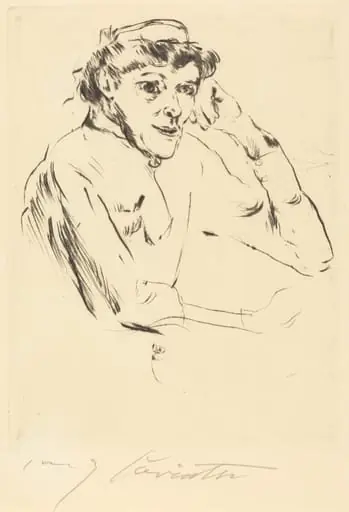 Pflegerin (Nurse)
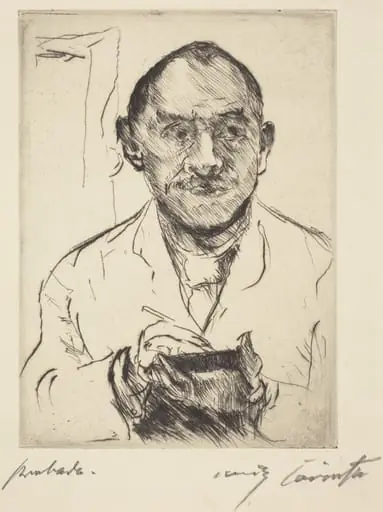 Selbstbildnis (Self-Portrait)
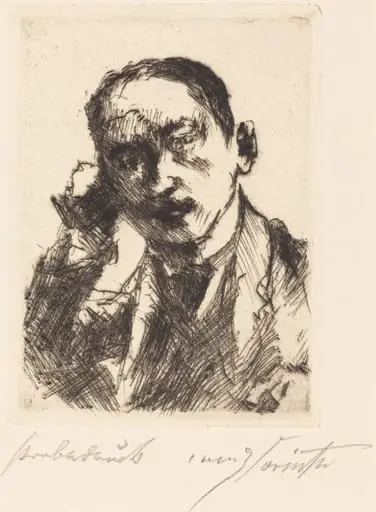 Bildnis K.S. (Portrait of K.S.)
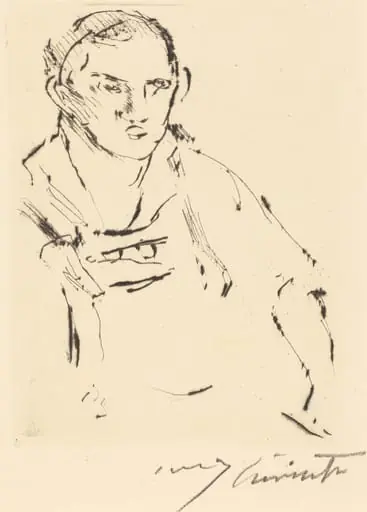 Thomas Corinth
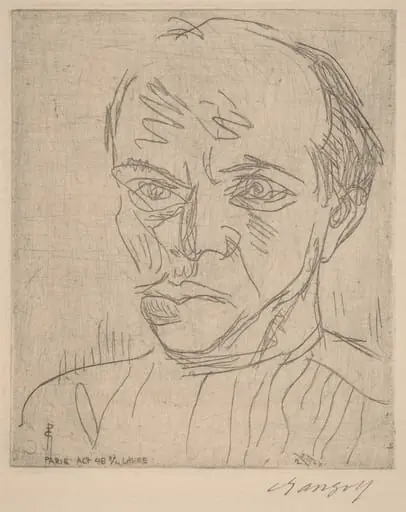 Self-Portrait (Selbstporträt)
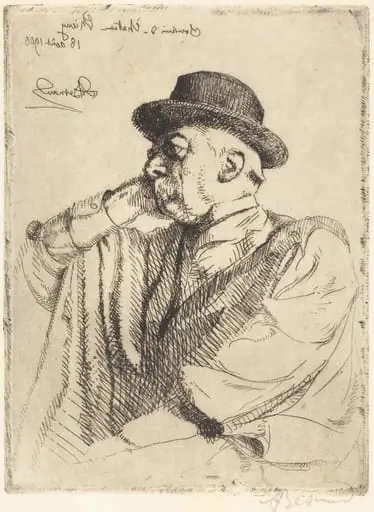 Edmond Pigalle
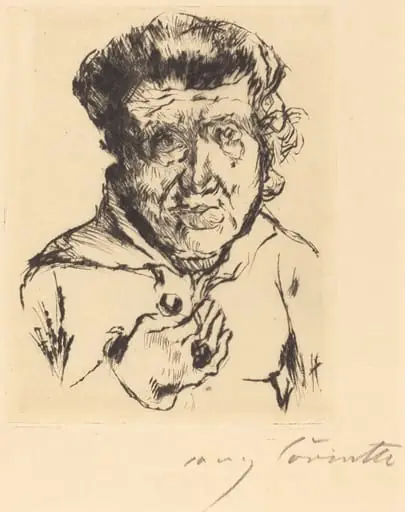 Des Künstlers Schwiegermutter (The Artist's Mother-in-Law)
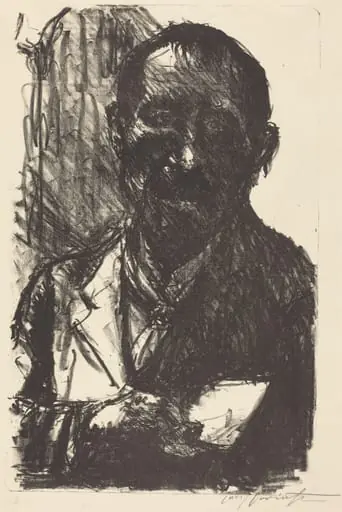 Selbstbildnis 1919 (Self-Portrait 1919)
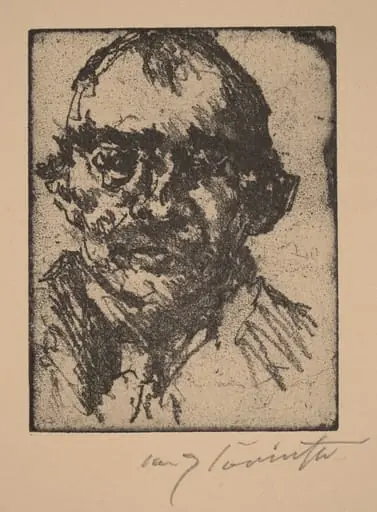 Selbstbildnis (Self-Portrait)
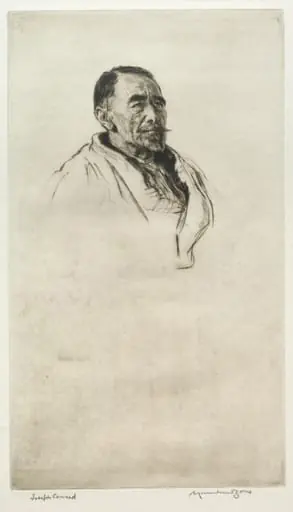 Arthur Joseph Conrad
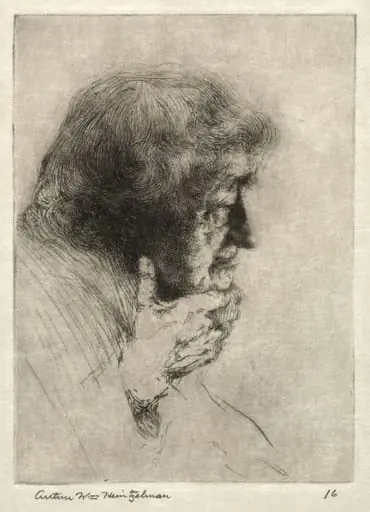 Old Man Thinking
 J.L. Forain